 Bellingham Exterior
 Building Decks for Sehome's Specific Conditions
Sehome sits close enough to Bellingham Bay that salt-laden air is a real factor in how a deck ages, and it's built on enough of a hillside that drainage, shade, and moisture patterns vary block to block. A deck that would hold up fine in a dry inland climate can start showing problems here within a few seasons if it wasn't designed and built with our specific conditions in mind. That's the whole premise of this page: what actually matters when you're putting a deck on a Sehome home, not generic advice that could apply anywhere in the country.
We build and repair decks throughout Bellingham and Whatcom County, and Sehome jobs come with a consistent set of considerations — older housing stock, mature landscaping that shades framing and slows drying, and the same salt air and long wet season that affects every neighborhood near the water. None of that makes a deck impossible to build well here. It just means the details have to be right.
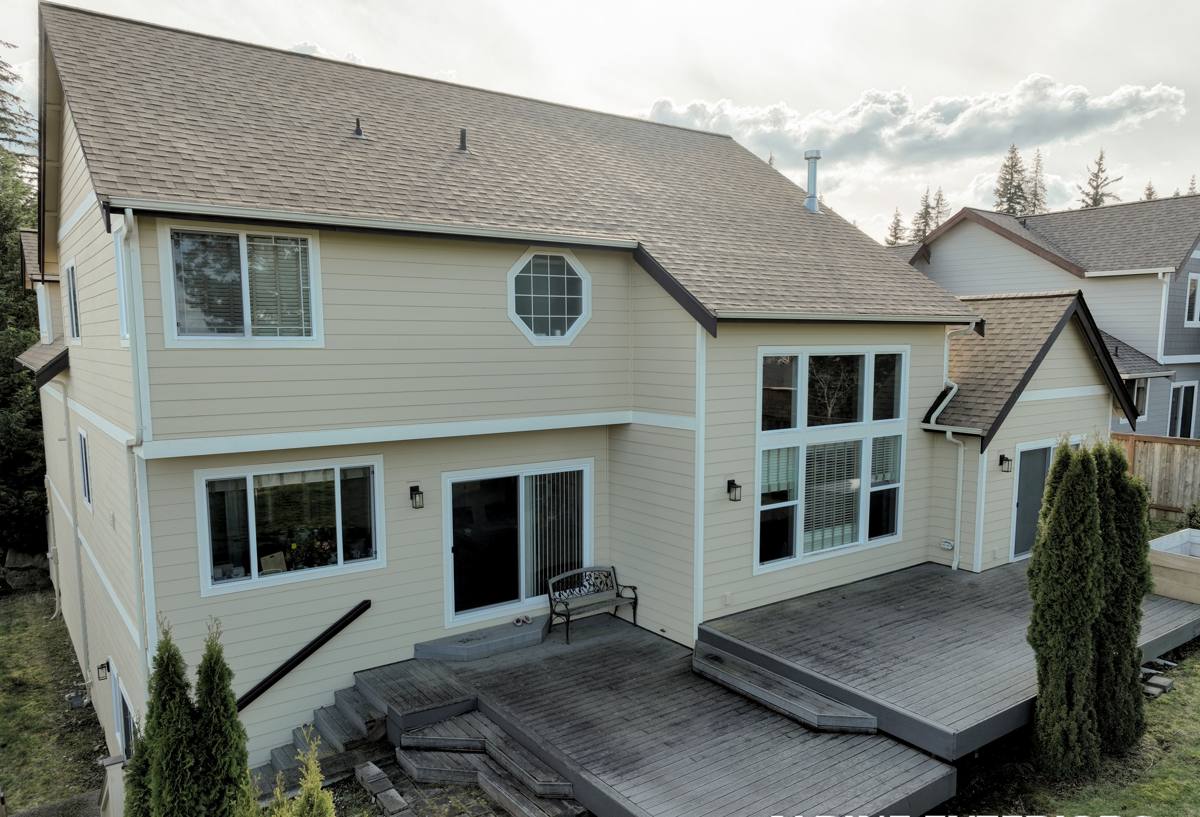
What Whatcom County's Climate Does to an Outdoor Structure
Three things drive almost every deck problem we see in this area: moisture that doesn't fully dry out between rain events, salt air that accelerates corrosion on hardware, and moss that establishes itself anywhere organic debris sits still long enough.
Driving Rain and Slow Drying
Bellingham doesn't get the heaviest rainfall in the state, but it gets a lot of low-intensity, extended rain — the kind that keeps wood surfaces damp for days at a stretch rather than a quick downpour that dries out by afternoon. Decking boards, joists, and especially the ledger board where a deck attaches to the house need to shed water and dry out between storms. When they can't, that's where rot starts.
Salt Air and Metal Fatigue
Proximity to the bay means airborne salt reaches structures further inland than people expect, especially on elevated or hillside lots that catch more open air. Standard fasteners and connectors corrode faster in this environment. Over years, corroding hardware is one of the most common reasons an older deck fails inspection or develops soft, unstable spots at structural connections.
Moss Season
Moss needs shade, moisture, and something to hold onto — and a lot of Sehome's older, tree-lined lots provide all three for a good chunk of the year. Moss on a deck surface isn't just cosmetic. It holds moisture against the board, stays wet long after the surrounding surface has dried, and turns the deck slippery, which matters on stairs and any elevated section.
Sehome's Housing Stock and What It Means for Deck Design
A lot of homes in this part of Bellingham were built decades ago, before composite decking or modern code requirements for ledger flashing and joist protection existed. That shows up in a few recurring ways when we're called out for a deck project:
- Older ledger connections that were nailed rather than properly bolted and flashed, which is a common source of hidden rot where the deck meets the house
- Sloped or uneven lots that need engineered footings rather than a simple flat-ground layout
- Mature trees and established landscaping that shade parts of the deck year-round, slowing drying and encouraging moss and algae growth
- Older decking material — sometimes original to the house — that's well past its service life and masking framing issues underneath
None of this is unusual for a neighborhood with this kind of housing age and terrain. It just means a correct deck project here often starts with an honest look at what's actually holding the structure up, not just what the surface boards look like.
Decking Material Options and How They Hold Up Here
There's no single "right" material for every home — it depends on budget, how much upkeep you want to do, and how exposed the deck is to sun, shade, and moisture. Here's how the common options actually perform in Bellingham's climate specifically.
| Material | How It Handles Our Climate | Maintenance | Typical Lifespan |
|---|---|---|---|
| Pressure-treated fir/pine | Budget-friendly; needs consistent sealing to resist moisture and moss in shaded areas | Annual cleaning and re-sealing recommended | 15-20 years with upkeep |
| Cedar | Naturally rot- and insect-resistant; still needs periodic sealing in a wet climate to hold color and resist moss | Cleaning and oil/sealant every 1-2 years | 20-25 years with upkeep |
| Composite decking | Resists rot and doesn't need sealing; can still grow moss/mildew film in deep shade if not cleaned | Periodic washing, no sealing needed | 25-30+ years, manufacturer-dependent |
| PVC decking | Fully synthetic, very low moisture absorption; performs well in shaded, damp spots | Occasional washing | 25-30+ years, manufacturer-dependent |
We don't push one material over another as a default. Wood decks built well and maintained on schedule last a long time here — the tradeoff is that "maintained on schedule" is a real commitment in a climate that grows moss on anything organic left alone. Composite and PVC cost more up front and take the sealing/staining task off your plate, but they still need to be washed periodically or they'll hold moss and mildew films just like wood does in shaded spots.
A Note on Hidden Fastener Systems
Many composite and PVC systems use hidden fastener clips instead of face screws. These give a cleaner look and reduce the number of penetration points where water can get into the board, which is a genuine advantage in a wet climate. The tradeoff is that hidden fastener systems are less forgiving of installation error — clip spacing and board gapping have to be exact, or boards can shift or gap unevenly over time. This is an installation-sensitivity issue, not a reason to avoid the product; it's why we're deliberate about how we install these systems rather than treating every decking product as interchangeable.
What a Correctly Built Deck Actually Involves
The decking boards are the part everyone sees, but they're the last thing installed and the least likely part to fail if everything underneath was done right. Here's what we're actually building when we frame a new deck for this climate:
Footings and Framing
Footing depth and size get engineered to the specific soil and slope conditions of the lot, especially on the hillside sections common in Sehome. Framing lumber is sized and spaced to the load requirements of the deck's use — a simple platform deck and a deck built for a hot tub need different joist spacing and beam sizing.
Ledger Attachment and Flashing
Where the deck attaches to the house is the single most important connection on the whole structure, and it's also the spot most prone to hidden water damage if it's not flashed correctly. A proper ledger installation uses through-bolts (not just nails or lag screws) and flashing that directs water away from the house sheathing rather than trapping it against the ledger board.
Joist Protection and Fastener Selection
Joist tape or an equivalent moisture barrier over the top of each joist keeps water from soaking into end grain through screw penetrations — one of the most common places rot starts on decks in wet climates. Given the salt air in this area, we also pay attention to fastener and hardware coatings so structural connectors aren't the weak point in twenty years.
Drainage and Board Spacing
Board gapping needs to account for material expansion and contraction while still letting water drain through rather than pool. Too tight and water sits on the surface longer than it should; too wide and it looks sloppy and can be a hazard for narrow items (or heels) to catch in.
Our Process, Start to Finish
- On-site assessment — we look at the lot's slope, drainage, sun/shade exposure, and the condition of anything existing before recommending a design or material
- Design and material selection — sized to your budget, how you'll use the space, and how much ongoing maintenance you actually want to take on
- Permitting — we handle the paperwork with the local jurisdiction where required so you're not chasing that down yourself
- Framing and structural work — footings, framing, ledger attachment, and flashing done to code, not just to look finished from above
- Decking, railing, and finish work — the visible layer, installed to the material manufacturer's specifications
- Final walkthrough — we go over the finished deck with you, including basic care and what to watch for over the first year
Permits and Code Considerations in Bellingham
Whether a deck project needs a permit generally depends on factors like height above grade, whether it's attached to the house, and its footprint — the specifics are set by the local jurisdiction and can vary depending on exactly where in Whatcom County a property sits. Rather than guess or have a homeowner track this down themselves, we confirm what's actually required for your property and handle that process as part of the job. Skipping a required permit on an attached deck isn't worth the risk — it can create real problems at resale and, more importantly, means the structural connections weren't independently checked.
Maintaining a Deck Through Bellingham's Wet Season
Whatever material you choose, a little regular upkeep goes a long way in this climate. Here's the baseline maintenance checklist we give homeowners after a deck build:
- Sweep or blow off leaves and debris regularly in fall — trapped organic material is what feeds moss growth
- Clean the deck surface at least once a year with a cleaner appropriate to the material (wood vs. composite/PVC cleaners are different)
- Check and clear drainage gaps between boards so water isn't pooling anywhere
- For wood decks, inspect the sealant or stain annually and reapply per the product's recommended schedule — don't wait until it's visibly failing
- Look at railing posts and stair connections once a year for looseness, which can indicate hardware corrosion starting underneath
- Trim back overhanging branches and vegetation that keep sections of the deck in constant shade and slow drying
Catching a small issue — a soft board, a loose railing post, moss building up in one corner — early is always cheaper and easier than waiting until it's a structural repair.
What Deck Costs Depend On
We don't publish a flat price list because deck costs vary too much project to project, but these are the main factors that move the number:
| Factor | Why It Matters |
|---|---|
| Size and shape | More square footage and non-rectangular layouts increase material and labor |
| Material choice | Pressure-treated wood costs less upfront than composite or PVC, which cost more but need less upkeep |
| Height and slope | Elevated decks and hillside lots need more substantial footings and framing, and often stairs and additional railing |
| Site access | Tight side yards or limited equipment access can add labor time |
| Structural condition | Rebuilding on top of a compromised ledger or old footings costs more than building on a clean slate |
| Railing and features | Custom railing, built-in seating, or multi-level designs add both material and labor |
Why a Local Crew Matters for This Kind of Project
Deck problems in this region tend to be climate-specific — moisture trapped by shade, hardware corroding faster near the bay, moss building up in the same shaded corners every year. A crew that works Bellingham and Whatcom County regularly has already seen how these issues show up on real homes here, not just in a general building code manual. That matters for material selection, for how footings are engineered on sloped lots, and for knowing which permit and inspection process applies in this specific jurisdiction. It also means we're not driving in from out of the area if you ever need a warranty check or a question answered a few years down the road.
If you're planning a new deck or need an honest assessment of one that's showing its age, we're happy to come take a look. Reach out for a free, no-pressure estimate using the form below, and we'll walk the site with you and talk through what actually makes sense for your home.