 Bellingham Exterior
 Blaine sits at the northern tip of Whatcom County, close enough to Semiahmoo Bay and Drayton Harbor that salt air and wind off the water are part of daily life for most homes in town, not just the ones facing the shoreline. "Custom windows" covers a lot of ground in a town like this — an odd-sized opening in an older home built before manufacturers standardized window dimensions, a bay or picture window added to take advantage of a water view, an egress window cut into a bedroom or basement to meet code, or a matched set for an addition that has to line up with the rest of the house. We're based in Bellingham and work Blaine regularly as part of our normal Whatcom County service area, so this kind of project isn't occasional for us — it's routine.
What makes custom window work different from a standard swap is everything that surrounds the glass: the measuring, the flashing sequence, the lead time on a built-to-order unit, and the installation details that have to be right the first time. In a coastal town like Blaine, getting those details right matters more than it would a few miles inland, because the climate here gives a poorly flashed opening more ways to fail.
What Blaine's Climate Does to a Window Opening
Salt Air Off the Bay and Harbor
Homes near Semiahmoo Bay and Drayton Harbor take a steadier dose of salt-laden air than towns set further inland in the county. Salt accelerates corrosion on hardware, fasteners, and lower-grade frame components, and it wears down weaker finishes faster than a dry climate ever would. On a custom window, where hardware and finish choices already carry more weight than on a basic stock unit, that corrosion pressure is a real factor in picking materials, not an afterthought.
Driving Rain Off the Water
Storms coming ashore near the border don't drop rain straight down — wind pushes it sideways into wall assemblies and window openings, testing flashing details that a calmer climate would never stress. That sideways load finds gaps a rushed installation leaves behind, and it finds them fastest at the transition points around a custom shape: a bay window's roof line, a wide picture-window sill, the edges of a reframed opening.
A Long Moss Season
Mild temperatures and near-constant moisture give moss and mildew a growing season that can run most of the year on shaded or north-facing walls. Window sills and trim that stay damp longest are some of the first places it takes hold, and any surface with even a little porosity becomes a growth surface over time if water isn't shedding away from it correctly.
Why Blaine Homes End Up Needing Custom Windows
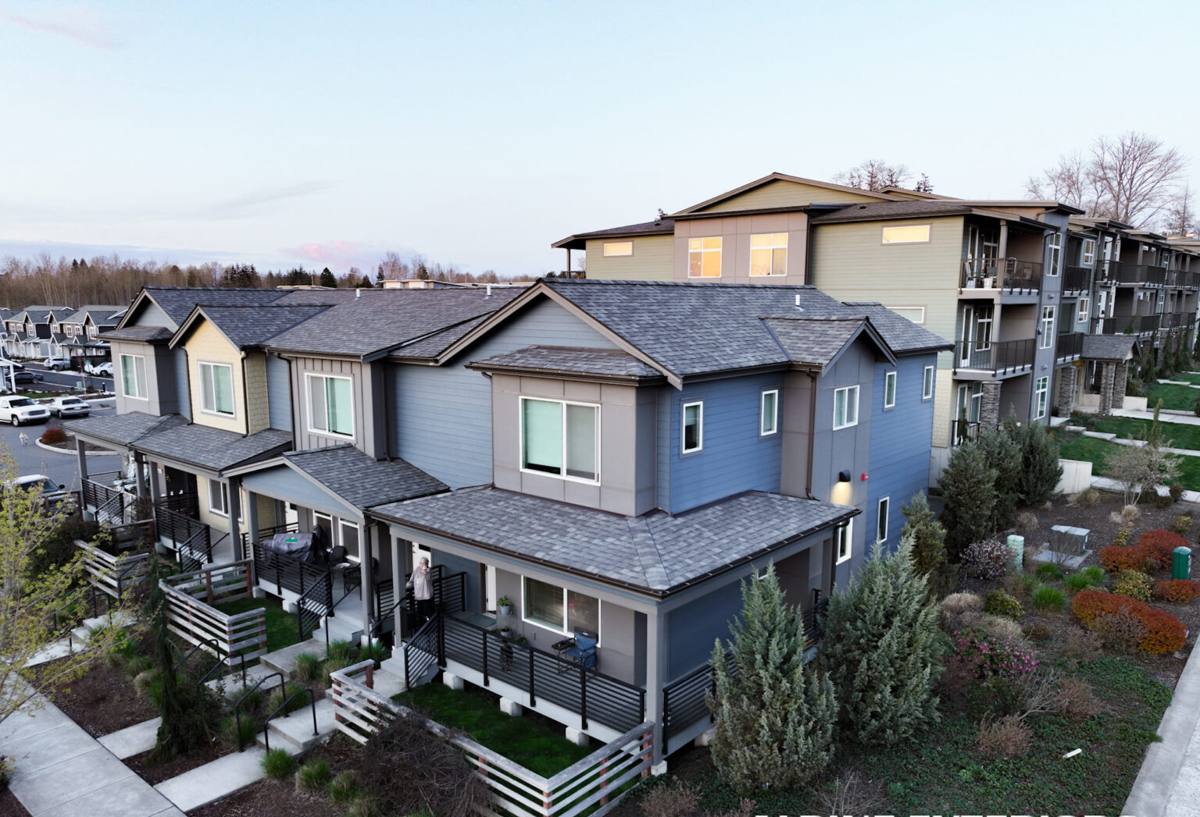
A handful of situations account for most of the custom window work we see in Blaine. Older homes near the water and further back from it were often framed to whatever dimensions made sense at the time, long before standard window sizes existed, so a straight replacement means either a custom unit or reframing the opening. Additions and remodels create openings that don't match anything original to the house. And a fair number of Blaine homes were built or renovated with bay windows, picture windows, or oversized units aimed at Semiahmoo Bay or Drayton Harbor views — by definition, not stock sizes. Bedroom and basement additions also bring egress code into play, where the opening size is set by requirement rather than convenience.
None of that makes a project unusual here. It does mean the job starts with careful field measurement and a straight conversation about lead time, since a custom unit is built to order rather than pulled off a shelf.
Window Types We Build For in Blaine
- Non-standard replacement sizes — matching an opening in an older home that predates modern window sizing standards
- Bay and bow windows — projecting units that add interior space and views but need their own roof, support, and flashing system
- Picture and large-format windows — fixed units used to open up a water view, with more glass to manage structurally
- Egress and code-driven openings — bedroom or basement additions where the opening size is set by code, not preference
- Arched or angled specialty shapes — architectural details that need custom-cut units and matching flashing work
- Matched sets for additions — new windows that need to sightline correctly with existing windows on the rest of the house
What a Correct Custom Window Job Involves
Measuring and Ordering
Custom work starts with a field measurement of the actual opening, not a guess off old plans. We note any out-of-square or out-of-level conditions common in older Blaine homes and account for the clearance the finished trim and flashing will need. Because custom units are built to order, this is also where we give a realistic lead-time estimate — custom windows take longer to arrive than stock sizes, and we'd rather tell you that up front than let it become a surprise mid-project.
Opening Prep and Structural Review
Larger custom units, bay windows especially, sometimes need structural support beyond what a standard opening requires, since they carry more weight and project outward from the wall. We check for that as part of the assessment. On older homes, this step is also where we typically find out whether the existing framing or flashing around the opening needs correction before a new unit goes in.
Flashing and Weatherproofing
This is the step that matters most in Blaine's climate. Every custom shape changes how flashing has to be sequenced: a bay window's roof needs its own weatherproofing separate from the wall flashing below it, a picture window's wide sill needs to slope water outward instead of letting it sit, and a reframed opening needs the house wrap and flashing tied back into the surrounding wall correctly rather than patched around. We build the flashing plan around the actual shape of the opening rather than applying one generic sequence to every job.
Frame Material Selection
Frame material matters more on a custom unit than a standard one, since a larger or more exposed window has more surface area for salt air and driving rain to work against over time. We walk through the honest trade-offs for the specific opening rather than defaulting to whatever's easiest to install.
| Frame Material | Coastal Durability | Maintenance | Best Fit |
|---|---|---|---|
| Vinyl | Good — resists corrosion, no paint to fail | Low; occasional cleaning | Budget-conscious replacements and additions |
| Fiberglass | Very good — dimensionally stable, low expansion in temperature swings | Low | Larger custom units and bay or picture windows carrying more glass weight |
| Aluminum | Fair — strong but prone to condensation and corrosion without a thermal break | Moderate | Modern designs where narrow sightlines matter more than insulation |
| Wood-clad (exterior-protected) | Good on the exterior face; interior wood needs interior humidity control | Moderate to higher | Homes where an interior wood look matters and the exterior stays fully clad |
| Solid wood | Weakest against sustained coastal moisture without diligent upkeep | High — regular sealing or painting | Historic restoration work where matching original material is the priority |
Our Process, Start to Finish
- On-site assessment — we measure the opening, check square and level, and evaluate any structural or flashing concerns specific to the shape or size involved
- Honest recommendation — custom order, modified stock size, or opening reframe, explained with the reasoning behind it
- Ordering and lead time — a realistic timeline for the custom unit to arrive, since it's built to order and not a same-week job
- Removal and opening prep — the old unit comes out carefully, and any hidden issues with the existing opening get addressed before the new window goes in
- Installation and flashing — the new unit is set, shimmed, and flashed to a sequence built for its specific shape and size
- Trim and finish — exterior trim is integrated to match the surrounding siding and architecture
Cost Factors for Custom Windows in Blaine
We won't quote a number without seeing the opening, but the factors that move price on custom work are consistent from job to job.
| Factor | Why It Matters |
|---|---|
| Size and glass area | Larger units cost more to manufacture and are heavier to install |
| Shape complexity | Bay, bow, arched, or angled units need specialty manufacturing and more flashing labor |
| Structural work | Bay and oversized units sometimes need added framing support |
| Frame material | Vinyl, fiberglass, aluminum, and wood-clad differ in cost and long-term maintenance |
| Opening condition | Rot, old flashing failures, or out-of-square framing add repair work before the new unit goes in |
| Number of units | A matched set for an addition usually has better per-unit economics than a single window |
Two houses in Blaine can need very different scopes once we're actually pulling trim or opening up a wall, especially on older homes closer to the water where hidden moisture damage is more common. That's why we walk the property and open things up enough to see what's really there before putting a number on the work.
Signs a Blaine Home's Windows Need Attention
- Drafts or a noticeable temperature difference near the window frame
- Fogging or condensation between panes on a double- or triple-glazed unit
- Soft or discolored trim and sill boards, especially on walls facing the water or shaded from the sun
- Rust staining around hardware or fasteners
- Difficulty opening, closing, or locking a window that used to operate smoothly
- Visible gaps between the frame and the surrounding wall or trim
- Moss or dark staining building up quickly on sills or trim after cleaning
Why It Matters That We Already Work Blaine
Manufacturer installation guides are written for average, standard-size conditions, and custom windows in Blaine rarely match that description — neither does the climate. Salt air, wind-driven rain, and a moss season that runs most of the year put more pressure on flashing and hardware decisions here than they would in a calmer, drier market. A crew that has actually built out bay windows, reframed odd-sized openings, and flashed additions in this specific stretch of Whatcom County knows which parts of the manufacturer's guidance are non-negotiable this close to the water and where extra time on flashing is worth it even when it's not strictly required elsewhere.
That experience shows up in the decisions that don't make it into a sales conversation — how a bay window's roof ties into the main wall's water management, how much lap a flashing course needs on a reframed opening, when a sill needs a sloped composite cap instead of relying on caulk alone. Those are the details that decide whether a custom window in Blaine is still performing cleanly in fifteen years or showing drafts and soft trim in five.
Get a Free, No-Pressure Estimate
If you're planning an addition, replacing an odd-sized opening in an older Blaine home, or considering a bay or picture window to make the most of a water view, it's worth having someone look at the actual opening before you start pricing units. We offer free, no-pressure estimates for custom window projects in Blaine and the rest of Whatcom County — use the form below to get a time on the schedule.