 Bellingham Exterior
 Windows Built for Cordata's Weather, Not Just Its Openings
Cordata sits on Bellingham's north side, close enough to Bellingham Bay and the Salish Sea that homes here deal with a steady mix of moisture and salt-laden air for most of the year. Add Whatcom County's long gray stretch of driving rain from fall through spring, and windows in this neighborhood work harder than windows almost anywhere else in the state. A window that's "fine" in a drier climate can fail here in half the time — swollen sashes, fogged glass, soft trim, and frames that never quite dry out between storms.
Custom windows aren't about luxury add-ons. In Cordata, "custom" usually means matching an oddball opening correctly, choosing materials that actually hold up to this climate, and installing with flashing and sealing details that account for how much water this region throws at a house every winter. That's the job we focus on.
What "Custom" Actually Means for a Cordata Window Job
Most Cordata homes were built across a range of decades, which means window openings are rarely a perfect match for off-the-shelf stock sizes. Custom work starts with getting the opening right, not forcing a standard unit to fit and papering over the gaps.
Matching the Home's Original Lines
Older homes in this area often have trim profiles, sightlines, and grid patterns that don't match what's sold at a big box store. A custom order lets us match sash width, grid pattern, and exterior trim so the new windows look like they belong — not like a mismatched retrofit sitting in an old opening.
Solving Problem Openings
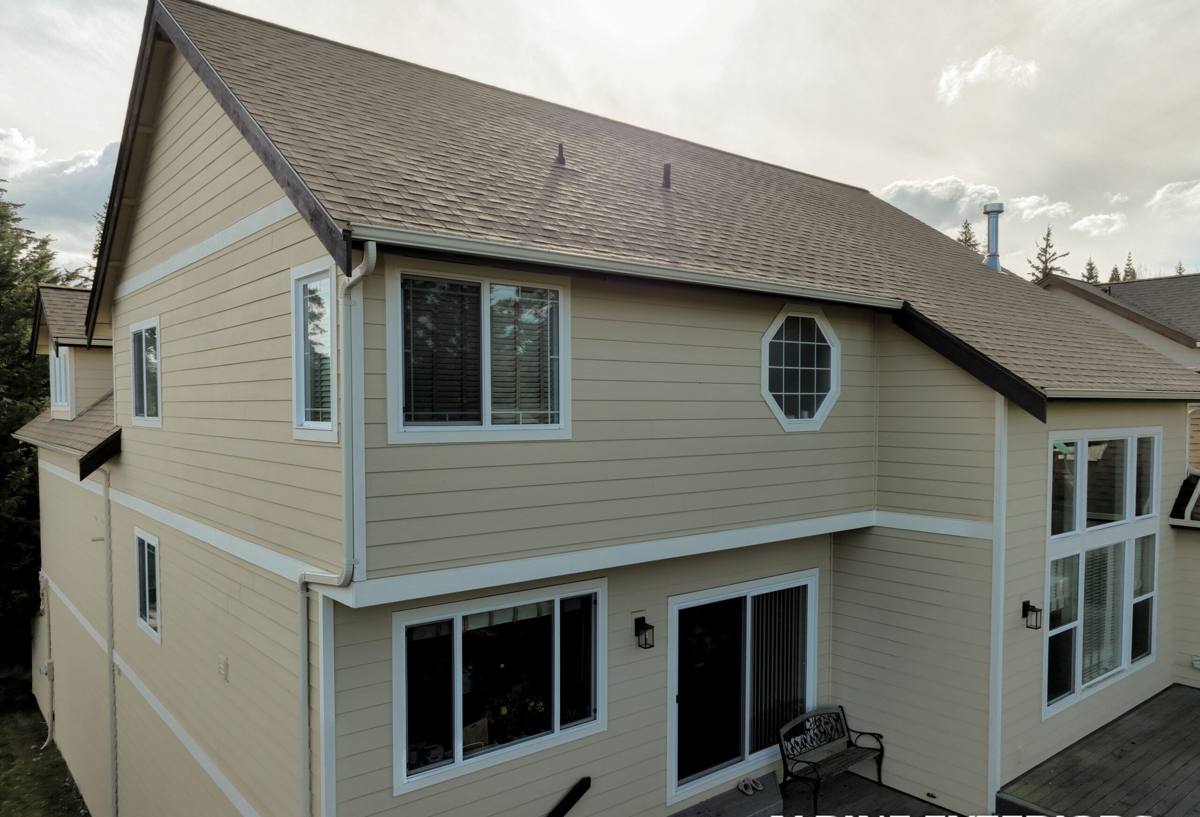
Out-of-square openings, additions with slightly different framing, sunrooms, or homes that have settled over the years all need windows measured and built to the actual opening — not the opening as it was framed on paper decades ago. This is where a lot of replacement jobs go wrong: forcing a stock size into an opening that's a half-inch off in one corner leaves gaps that get sealed with caulk instead of fixed with flashing, and caulk is not a long-term answer to water in this climate.
Materials and Glass: What Holds Up Here
Not every window product sold in this region is a good fit for a house exposed to salt air and near-constant seasonal rain. We steer customers toward materials and glazing that are proven in coastal Pacific Northwest conditions, and we're upfront about the trade-offs of each option.
| Material | How it handles our climate | Maintenance |
|---|---|---|
| Vinyl (quality-grade) | Won't rot or corrode from salt air; stable in constant moisture | Low — occasional cleaning |
| Fiberglass | Very stable dimensionally, holds paint well, strong against damp cycles | Low — repaint interval longer than wood |
| Wood-clad (exterior-protected) | Good performance if cladding and flashing details are done correctly | Moderate — depends on cladding integrity over time |
| Bare wood exterior | Highest exposure to rot and moss growth in constant damp shade | High — regular repainting and sealing required |
We generally don't recommend bare exterior wood for Cordata installations unless a homeowner has a specific historic or aesthetic reason and understands the upkeep involved. It's not that wood is a bad product — it's that this climate is unforgiving toward any exterior wood surface that isn't maintained on a strict schedule, and we'd rather set that expectation honestly upfront than sell a product that becomes a maintenance burden.
On glass, dual-pane with a low-E coating is the practical standard for this area now — it cuts down on condensation on the interior face during cold snaps and helps with the temperature swings between damp mornings and sunny afternoons. Argon-filled units add a modest efficiency bump; we'll walk through whether that's worth it for a specific home rather than upselling it by default.
The Moss, Rain, and Salt-Air Factor
Three regional conditions drive almost every window failure we see in this part of Whatcom County:
- Driving rain: Wind-driven rain pushes water sideways into joints and sills that would stay dry in a calmer climate — proper flashing and sill pan details matter more here than in most parts of the country.
- Long moss season: Shaded, north-facing, or tree-covered walls stay damp for months, which lets moss and algae take hold on sills, trim, and even glass corners. That constant dampness accelerates rot in any untreated wood component.
- Salt air: Proximity to the bay means airborne salt settles on hardware, screens, and metal components over time, which is part of why we favor corrosion-resistant hardware and frame materials for anything near the water side of the neighborhood.
None of this means Cordata is a bad place for windows — it means the details matter more here. A window and installation that would be considered "good enough" inland can underperform within a few years in this environment.
Our Installation Process
The install itself is where most long-term problems either get prevented or get built in. Our process for Cordata jobs follows the same core sequence every time:
- On-site measure and assessment — we check the opening, sill condition, and any existing water damage or rot before ordering anything.
- Custom order to the actual opening — sized and styled to match the home, not forced to a stock dimension.
- Removal and opening inspection — once the old window is out, we check the framing and sill for hidden rot or moisture damage, which is common in older Cordata homes.
- Flashing and sill pan installation — this is the step that determines whether water sheds away from the wall or works its way behind the siding over the next decade.
- Setting, shimming, and sealing — the window is leveled, secured, and sealed with materials rated for sustained damp exposure, not just standard interior-grade caulk.
- Interior and exterior trim finish — matched to the home's existing lines where possible.
- Final walkthrough — we check operation, seal lines, and answer questions before we consider the job done.
Signs Your Cordata Home's Windows Need Attention
Because so much window damage in this climate happens gradually and out of sight, it helps to know what to look for before a small problem becomes a bigger one:
- Sashes that stick, drag, or won't stay open — often a sign of swelling from trapped moisture
- Visible moss or dark staining building up on sills or exterior trim
- Fogging or moisture between the panes of a double-pane window, which means the seal has failed
- Soft or spongy trim or sill wood when pressed
- A noticeable draft or cold spot near the window frame in winter
- Paint that's peeling or bubbling specifically around the window opening, rather than the wider wall
- Hardware (locks, cranks, hinges) that's stiff, corroded, or no longer catches properly
Any one of these on its own isn't necessarily an emergency, but several together — especially soft wood plus visible moss — usually means water has been getting past the seal for a while.
Cost Factors for a Cordata Window Project
Every job is priced on the actual scope, but the same handful of factors move the price up or down on nearly every quote we write in this neighborhood:
| Factor | Why it matters |
|---|---|
| Number and size of openings | Straightforward multiplier on materials and labor |
| Material choice | Vinyl is typically the most budget-friendly; fiberglass and wood-clad cost more upfront |
| Condition of existing framing | Hidden rot found during removal adds repair scope before a new window can go in |
| Custom sizing or shape | Non-standard openings and specialty shapes cost more than stock-size replacements |
| Trim and finish work | Matching existing exterior trim profiles adds labor over a basic trim-out |
| Access and site conditions | Second-story or hard-to-reach openings take more time and equipment |
We don't quote a job over the phone with confidence — an accurate number depends on seeing the actual openings and framing condition, which is part of why we do an on-site assessment before giving a firm price.
Why a Crew That Already Works Cordata Matters
A contractor who works this specific area regularly already knows the common building patterns in the neighborhood, the typical framing quirks of homes from different eras nearby, and how badly a given wall orientation gets hit by wind-driven rain or holds shade and moss. That local pattern recognition shortens the guesswork on-site and helps us flag problems — like hidden rot behind an old window — before they turn into surprise costs mid-project.
It also means we're not learning Whatcom County's climate on your project. We already build every install around the assumption that this house will see months of sustained rain, periods of salt-laden wind, and shaded areas that barely dry out between storms — because that's simply what a Bellingham winter does to a home.
Get a Free, No-Pressure Estimate
If your Cordata home has windows that are sticking, fogging, drafting, or just showing their age, we're happy to take a look and give you an honest read on what's going on — no pressure, no upsell. Fill out the form below to schedule a free estimate.