 Bellingham Exterior
 Windows Built for Edgemoor's Marine Climate
Edgemoor sits close enough to Bellingham Bay that salt-laden air, wind-driven rain, and long stretches of gray, damp weather are just part of owning a home here. That combination is hard on windows in ways that inland Whatcom County properties don't experience to the same degree. Salt air accelerates corrosion on hardware and fasteners. Driving rain off the water finds any weak point in flashing or sealant. And the moss and algae that thrive in our wet season hold moisture against sills, frames, and glazing for months at a time. A window that's a good fit for a dry inland climate isn't automatically the right choice for a home exposed to this kind of weather.
Custom windows for an Edgemoor home means more than picking a style out of a catalog. It means choosing materials, glass packages, and hardware that are matched to a marine environment, and installing them in a way that keeps water moving out and away from the wall assembly instead of into it.
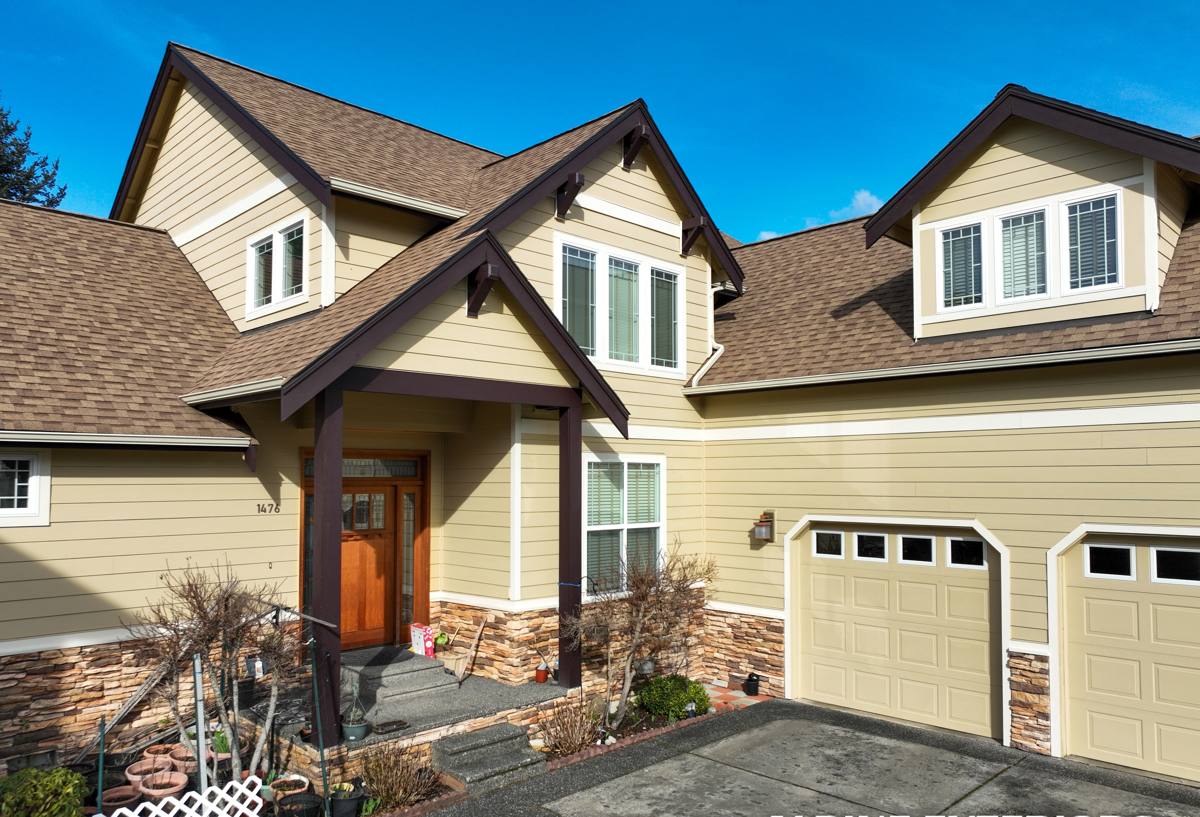
What Salt Air, Rain, and Moss Actually Do to a Window
It helps to understand the specific failure points before deciding what to replace or upgrade. In our experience working on homes throughout the Bellingham area, the damage usually shows up in a handful of predictable places:
- Hardware corrosion: Cheaper hinges, locks, and balance mechanisms pit and seize faster near the water, making windows harder to open and eventually letting them bind or fail to latch tightly.
- Sealant and glazing failure: UV exposure combined with constant damp cycles breaks down exterior sealants years before they would in a drier climate, opening small gaps that let wind-driven rain in.
- Wood rot at sills and corners: Any wood component that isn't properly protected and ventilated will hold moisture, and once rot starts in a sill it spreads into the surrounding framing.
- Moss and algae growth: Shaded, north-facing, or tree-covered elevations — common on wooded Edgemoor lots — grow moss on horizontal surfaces like sills and trim, which holds water against the material and shortens its life.
- Condensation and fogging: Older insulated glass units with failed seals fog up between the panes, which is a sign the argon fill and moisture barrier are gone for good — that's a glass problem, not a cleaning problem.
None of this means Edgemoor is an unusually harsh place to own a home. It means the materials and installation details matter more here than they would somewhere drier, and cutting corners shows up sooner.
Choosing the Right Frame Material
There's no single "best" window material for every home — it depends on your home's age, architecture, budget, and how exposed the elevation is to weather. Here's how the common options compare for a coastal Whatcom County property:
| Material | Moisture & Salt Air Performance | Maintenance | Best Fit |
|---|---|---|---|
| Vinyl | Won't rot or corrode; good baseline performance | Low — occasional cleaning | Budget-conscious replacements, rental or secondary properties |
| Fiberglass | Excellent — dimensionally stable, resists warping in wet/dry cycles | Low | Larger openings, view windows, long-term durability |
| Wood-clad (wood interior, metal or vinyl exterior) | Good if cladding and flashing are correct; exterior wood detailing needs care | Moderate | Traditional or higher-end homes wanting a wood interior look |
| Aluminum | Prone to corrosion near salt air unless marine-grade and properly finished | Moderate to high | Modern designs, narrow sightlines — best specified carefully in this climate |
For homes with real bay exposure, we typically steer clients toward vinyl or fiberglass for the best combination of durability and low upkeep, and we're careful about hardware specification on any material to avoid the corrosion issues above. If you want the look of wood or the narrow profile of aluminum, that's absolutely achievable — it just means being more deliberate about finish, cladding, and hardware grade.
Glass Packages That Make Sense Here
Frame material gets most of the attention, but the glass package matters just as much for comfort and durability. In our climate we generally recommend:
- Low-E coated glass to manage heat loss through our long heating season
- Argon-filled insulated glass units for better thermal performance than air-filled units
- Warm-edge spacer systems, which resist seal failure better than older aluminum spacers over years of temperature and humidity cycling
- Tempered glass where required by code — near doors, low sills, and other safety-glazing locations
None of these are exotic upgrades. They're standard on quality window lines, and they're worth specifying correctly the first time rather than finding out in a few years that a builder-grade unit fogged up early.
What a Correct Installation Actually Involves
Most window failures we see aren't a problem with the window itself — they're an installation problem. A well-built window installed with poor flashing or sealant work will leak eventually. A mid-grade window installed correctly will usually outperform it. This is especially true on an Edgemoor lot where wind-driven rain can push water sideways and upward into gaps that would never be a problem in calmer weather.
A correct installation, at minimum, includes:
- Removing the old window and fully inspecting the rough opening, sill, and surrounding framing for hidden rot or moisture damage before anything new goes in
- Repairing or replacing any compromised framing or sheathing — never installing a new window over a damaged opening
- Installing a sloped sill pan to direct any water that gets past the window back outside instead of into the wall
- Applying flashing tape and housewrap integration in the correct shingle-lap order so water always sheds downward and outward
- Setting the window plumb, level, and square, with proper shimming so it operates smoothly for years, not just on install day
- Sealing and insulating the gap between the window and framing correctly — not overfilled with expanding foam, which can bow the frame
- Finishing exterior trim and caulk joints with materials rated for continuous UV and moisture exposure
Skip any one of these steps and you can end up with a window that looks fine for a season or two before a leak shows up inside a wall where it's expensive to find.
A Practical Pre-Project Checklist
Before you commit to a window project, it's worth walking your home and noting a few things — either yourself or with a contractor during a walkthrough:
- Are any sills soft, discolored, or growing moss?
- Do any windows fog between the panes, indicating seal failure?
- Do any windows stick, fail to latch, or have corroded hardware?
- Is there visible gapping or cracked caulk around exterior trim?
- Are there drafts or cold spots near windows in winter?
- Which elevations get the most direct wind and rain exposure?
Answers to these help determine whether you're looking at a full-home replacement, a targeted replacement of the worst-affected elevation, or repair of a few problem units.
Our Process, Start to Finish
We keep the process straightforward because most homeowners are doing this once and want to understand what's happening at each stage:
- On-site assessment: We walk the exterior and interior, check existing window condition, note problem areas, and take accurate measurements.
- Product and glass selection: We go over frame material, glass package, and hardware options suited to your home's exposure and your budget — no pressure toward the most expensive option if it isn't the right fit.
- Written estimate: A clear scope and price before any work begins, so there are no surprises.
- Scheduling around weather: We plan installs to minimize how long any opening is exposed, which matters more here than in drier climates.
- Installation and flashing detail work: The steps outlined above, done in order, with attention to the details that actually prevent leaks.
- Final walkthrough: We check operation, seals, and exterior finish work with you before calling the job complete.
Matching Windows to Edgemoor's Architecture
Edgemoor has a mix of home styles and ages, from older established houses to newer builds, many on wooded or view-oriented lots. That variety matters for window selection. An older home may have original openings that are slightly out of square, requiring careful field measurement rather than assuming standard sizes. A newer home built to take advantage of water or mountain views often has larger glass areas, which raises the stakes on glass performance and structural window support. Homes tucked under mature trees deal with more shade, moisture retention, and moss than homes in more open, sun-exposed spots. Whatever the situation, the right approach starts with looking honestly at your specific home rather than applying a one-size answer.
Maintenance That Extends Window Life
Even a correctly installed, well-chosen window benefits from basic upkeep in this climate:
- Clear moss and debris from sills and tracks a couple of times a year, especially on shaded elevations
- Check and touch up exterior caulk joints as they age rather than waiting for a visible gap
- Keep weep holes on the exterior clear so water can drain out as designed
- Lubricate hardware periodically, especially on windows facing prevailing wind and rain
- Address any soft or discolored trim promptly — it's far cheaper to catch rot early than after it spreads into framing
Why a Crew That Already Knows This Neighborhood Matters
Every neighborhood in Bellingham has its own quirks, and Edgemoor is no exception — the mix of lot exposure, tree cover, and proximity to the bay means the right specification for one home can be the wrong one two streets over. A crew that's worked Edgemoor homes before has already seen how salt air treats different hardware finishes, how driving rain behaves against different elevations, and where moss tends to cause problems first. That local pattern recognition shows up in fewer callbacks and windows that perform the way they're supposed to for the long haul — not just guesswork applied from a generic install manual.
If you're weighing a window project for your Edgemoor home, we're happy to take a look and give you a straightforward, no-pressure estimate — what we'd recommend, why, and what it would cost. There's no obligation, and you'll walk away with a clearer picture of your options either way.