 Bellingham Exterior
 Building a Deck That Actually Holds Up in Lynden
A deck in Lynden isn't decorative furniture sitting on the back of the house — it's an outdoor structure that has to survive months of standing water, driving rain, and the kind of damp, shaded conditions that turn untreated wood green in a single season. We build and repair decks for homeowners throughout Lynden and the surrounding Whatcom County area, and most of the calls we get aren't about style. They're about a deck that's gone soft underfoot, railings that have started to wobble, or boards that grow a slick layer of moss every winter no matter how often someone hoses them off. Those aren't cosmetic problems. They're the predictable result of a deck that wasn't built, flashed, or fastened for this climate in the first place.
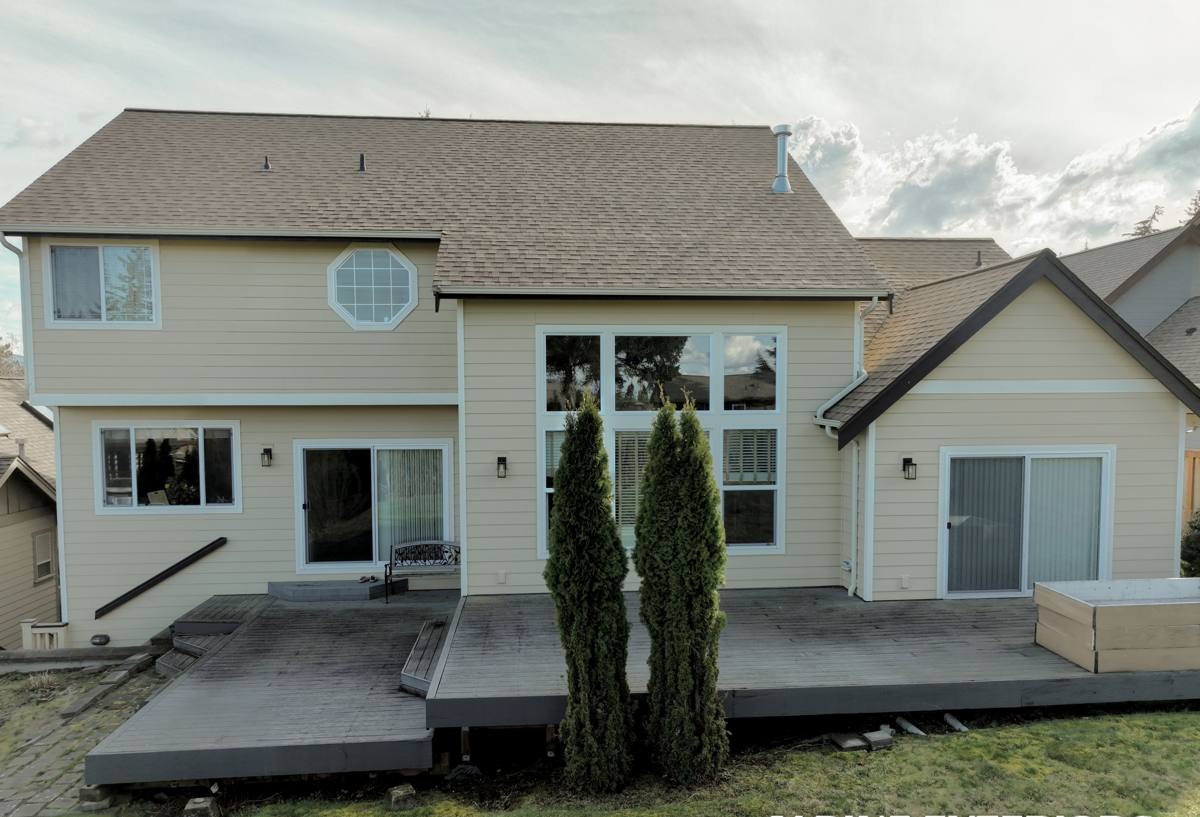
What Whatcom County Weather Does to a Deck Over Time
Lynden sits in a part of Washington that gets a long, wet season every year, with moisture-laden marine air moving in off the Puget Sound region and settling into low-lying areas for weeks at a time. That combination of driving rain, humidity, and limited direct sun in the winter months is hard on any exterior wood structure, and it's the single biggest factor we design around when we build a deck out here.
Wood Decay and Fastener Corrosion
Untreated or under-treated wood absorbs moisture faster than it can dry out during a Whatcom County winter. That constant wet-dry cycling is what causes cupping, splitting, and eventually soft, punky wood at joints and fastener points. The salt-influenced marine air common to this part of the state also accelerates corrosion in lower-grade fasteners and hardware — a galvanized screw that would last for years in a drier inland climate can start rusting and staining the decking within a few seasons here. That's why we spec stainless steel or high-grade coated fasteners and structural hardware on every deck we build, not just the visible screws.
Moss, Algae, and Slip Risk
Shaded decks, north-facing decks, and decks tucked under trees or overhangs are the ones we see moss and algae take over fastest. Beyond looking neglected, a mossy deck surface gets genuinely slippery when wet, which is most of the year here. Board spacing, airflow underneath the deck, and the surface texture of the decking material all affect how fast moss gets a foothold — it's something we plan for at the design stage, not something we tell homeowners to just pressure-wash away every spring.
What a Correctly Built Deck Involves
A deck that's going to last in this climate isn't just about the boards on top. Most of the failure points we get called out to repair are hidden underneath — the framing, the footings, and the connection where the deck meets the house.
Footings and Frost Depth
Footings need to be sized and set to the frost depth required by Whatcom County's adopted building code, on solid, undisturbed soil. In the flatter, lower-lying farmland areas around Lynden, drainage around footings matters more than it does on a well-drained hillside lot — a footing sitting in standing water for weeks at a time is a footing that's more likely to shift over the years. We assess drainage on-site before we finalize footing placement, not after.
Ledger Board Attachment and Flashing
The ledger board — where the deck attaches to the house — is the single most common failure point we find on older decks, and it's almost always a flashing problem. Water gets behind an improperly flashed ledger, soaks into the house's rim joist, and rots from the inside out where nobody sees it until the deck starts to pull away from the structure. Correct ledger flashing, with proper counter-flashing integrated behind the siding or trim (not just caulked over the top), is non-negotiable on every deck we attach to a house.
Framing and Joist Protection
We run self-adhering joist protection tape over the top of every joist and beam before decking goes down. It's a small material cost that keeps water from sitting directly on cut, exposed wood grain at the point where fasteners penetrate — which is exactly where rot starts first. Joist spacing, beam sizing, and post connections are all engineered to the load and span requirements for the decking material chosen, not just built to a generic rule of thumb.
Choosing Decking Material for Lynden Homes
There's no single "best" decking material — the right choice depends on how much maintenance a homeowner actually wants to do, how much sun or shade the deck gets, and budget. Here's how the common options compare for a climate like ours:
| Material | Moisture & Moss Resistance | Maintenance | Typical Lifespan |
|---|---|---|---|
| Pressure-treated pine | Fair — needs sealing to perform well | Annual cleaning and re-sealing | 10–15 years |
| Cedar | Good natural resistance, but surface still needs care | Regular cleaning, periodic oil/sealer | 15–20 years |
| Capped composite | Excellent — won't absorb moisture into the core | Occasional washing, no sealing | 25–30+ years |
| PVC decking | Excellent — fully synthetic, no wood fiber to rot | Occasional washing | 25–30+ years |
Composite and PVC cost more up front, but for a shaded or low-airflow deck in a climate that stays damp for months, the reduced maintenance and moisture resistance usually pay for themselves over the life of the deck. That said, plenty of homeowners still prefer the look and feel of real wood, and a well-built cedar deck with the right fasteners, sealing schedule, and airflow underneath will hold up fine — it just asks more of the owner in upkeep.
Railings, Stairs, and Code Requirements
Guardrail height, baluster spacing, and stair rise-and-run are all governed by the building code Whatcom County has adopted, and inspectors check these details closely — they're safety items, not style choices. We build every railing and stair system to meet code as a baseline, then work with the homeowner on the material and look on top of that. Stair stringers in particular need to be sized for the actual run and protected from standing water at the base the same way the rest of the frame is, since stair stringers are one of the first things to show rot on an older deck.
Our Deck Building Process
- On-site assessment — we look at drainage, sun/shade exposure, how the deck will attach to the house, and what's underneath the existing structure if we're replacing one.
- Design and material walkthrough — we go over decking material options, layout, railing style, and give an honest estimate with no pressure to upgrade beyond what makes sense for the home.
- Permitting — we handle the permit application and coordinate inspections through Whatcom County so the homeowner doesn't have to.
- Footings and framing — footings set to code depth, ledger properly flashed, joists taped and spaced to the load requirements of the chosen decking.
- Decking, railing, and stairs — installed with corrosion-resistant fasteners and hardware throughout.
- Final walkthrough — we check the whole structure with the homeowner before calling the job done, and go over basic maintenance for whatever material was installed.
Permits and Local Building Requirements
Most new deck construction and many deck replacements in Whatcom County require a building permit, and inspections happen at the footing stage and again at final. Skipping that process might save a few days up front, but it creates real problems later — unpermitted structural work can complicate a home sale or an insurance claim down the road. We pull permits as a standard part of every deck build, not an optional add-on.
Maintenance Checklist for Lynden Deck Owners
Whatever material a deck is built from, a little seasonal attention goes a long way in this climate. We give every customer a rundown specific to their decking material, but the basics apply across the board:
- Clear leaves and debris out of gaps between boards before fall rains set in — trapped debris holds moisture against the wood.
- Check and clear the area underneath the deck for standing water or blocked drainage each fall.
- Wash off moss and algae buildup before it gets established, rather than after it's already staining the surface.
- Inspect the ledger board area and any flashing for gaps or cracked caulk once a year.
- For wood decks, re-seal or re-stain on the schedule recommended for the specific product used — don't wait until it looks bad.
- Check railing posts and stair stringers for movement or soft spots, especially after a hard winter.
Why Hire a Crew That Already Works in Lynden
A deck built for a dry-climate spec sheet doesn't perform the same way once it sits through a Whatcom County winter. Knowing the local frost depth requirements, how the county's permitting and inspection process actually works, and which fastener and flashing details matter most in this specific climate isn't something you get from a national playbook — it comes from building and repairing decks in this area year after year. We've seen what fails first on decks around Lynden, and we build every new one to avoid those exact problems rather than finding out the hard way five years in.
If you're planning a new deck or need an honest look at whether an existing one is still sound, we're happy to come take a look. Use the form below to request a free, no-pressure estimate.