 Bellingham Exterior
 Deck Repair Built for Fairhaven's Marine Climate
Fairhaven sits close enough to Bellingham Bay that its decks live a different life than decks twenty miles inland. Salt-laden air off the water accelerates corrosion on fasteners and hardware, the tree canopy that gives the neighborhood its character also keeps deck surfaces shaded and damp for long stretches, and Whatcom County's wet season means driving rain finds its way into every seam, crack, and open joint that isn't sealed correctly. Add a moss season that can run from early fall through late spring, and you have a set of conditions that will find every weakness in a deck faster than almost anywhere else in the county.
We repair decks in Fairhaven regularly, and the pattern is consistent: the failures we see aren't random. They show up in the same spots, for the same reasons, on homes of a similar age and orientation. That's useful, because it means a correct repair isn't guesswork — it's addressing the specific ways this climate attacks a deck.
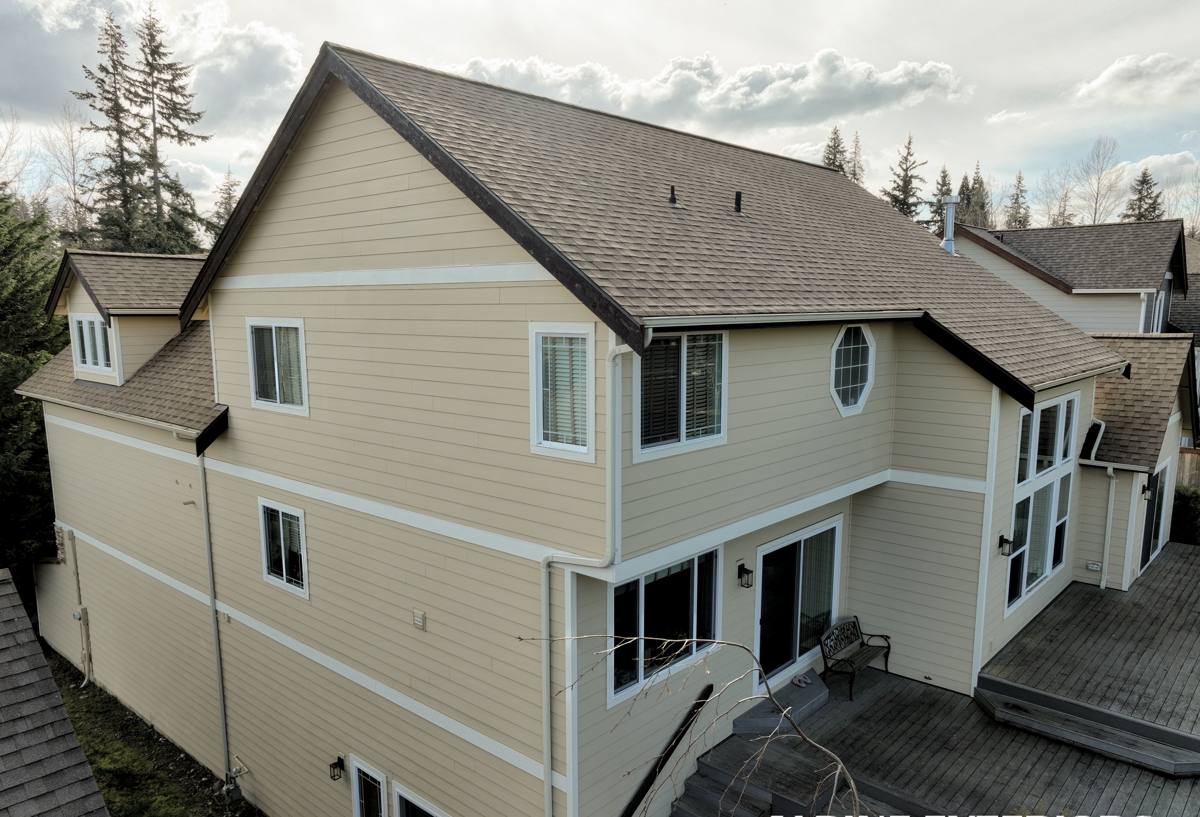
What Fairhaven's Climate Does to a Deck
Salt Air and Fastener Corrosion
Proximity to the bay means airborne salt settles on exposed metal — nails, screws, joist hangers, railing brackets — and speeds up rust and corrosion well beyond what you'd see on a deck built the same year further inland. Corroded fasteners lose holding strength quietly. A board can look fine on top while the screws underneath have rusted to the point of barely gripping the joist. This is one of the most common reasons a deck that "looks okay" turns out to have real structural weakness once we get underneath it.
Shade, Moisture, and Moss
Fairhaven's mature tree cover is part of what makes the neighborhood pleasant to live in, but it also means many decks stay shaded and slow to dry after rain. Combined with our long wet season, that creates ideal conditions for moss, algae, and mildew to take hold on decking boards and stairs. Beyond looking bad, moss holds moisture against the wood surface, and on stairs and ramps it turns into a genuine slip hazard.
Driving Rain and Water Intrusion
Wind-driven rain off the water doesn't just fall straight down — it gets pushed sideways into ledger boards, under flashing, and into any gap where the deck meets the house. Where the ledger board attaches to the structure is the single most consequential spot on the deck: it's a structural connection and the most common place we find hidden rot, because water intrusion there often isn't visible until you pull a board or probe the wood.
UV and Freeze-Thaw Cycling
Bellingham doesn't get brutal winters, but Whatcom County does see enough freeze-thaw cycling to widen small cracks in wood and concrete footings over time, especially where water has already gotten in. Summer sun, while milder here than in drier climates, still dries and checks exposed wood surfaces that aren't sealed or stained on a regular schedule.
Signs Your Fairhaven Deck Needs Repair
- Soft, spongy, or springy spots when you walk across the decking
- Visible moss, algae, or dark staining on boards, especially in shaded corners
- Rust streaks running down from screws, nails, or metal connectors
- Gaps opening up between the ledger board and the house siding
- Railings or posts that wobble or flex when pushed
- Stairs that feel uneven, loose, or have visibly worn or cracked treads
- Standing water that doesn't drain within an hour or two after rain
- Wood that sounds hollow when tapped, or a screwdriver that sinks in easily
Any one of these on its own might be minor. Several together, especially near the ledger board or main support posts, usually mean it's time for a proper inspection rather than another season of waiting.
What a Correct Deck Repair Actually Involves
Structural Inspection First
Before we touch a single board, we check the parts of the deck you can't see from the surface: the ledger board connection, the support posts and their footings, the joists, and the hardware holding it all together. A repair that only replaces worn decking while ignoring a compromised ledger board or a rusted-out post base isn't a real repair — it's a cosmetic fix on top of a structural problem.
Surface and Component Repair
Once we know what's structurally sound and what isn't, repairs typically fall into a few categories: replacing individual rotted or split boards, resetting or replacing loose railings and posts, correcting drainage so water doesn't pool, and re-securing or replacing corroded fasteners and connectors with hardware rated for this climate. We match repairs to the existing deck where possible rather than defaulting to a full rebuild when it isn't needed.
Fastener and Hardware Upgrades
Given how hard salt air is on standard hardware here, we typically repair using stainless steel or coated, corrosion-resistant fasteners and structural connectors rather than the standard-grade hardware that may have been used originally. It costs a little more up front and saves you from doing this same repair again in five years.
Cleaning, Treating, and Sealing
Where moss and algae have taken hold, we clean the surface properly rather than just pressure-washing it away, since pressure washing alone can drive moisture deeper into wood grain and damage the surface fibers. After cleaning and any board replacement, we reseal exposed wood so the repair holds up through the next wet season instead of reopening within a year.
Repair vs. Replacement: How We Help You Decide
Not every deck problem calls for a full rebuild, and not every deck is worth patching indefinitely. The table below outlines the factors we walk through with Fairhaven homeowners when deciding which direction makes sense.
| Factor | Leans Toward Repair | Leans Toward Replacement |
|---|---|---|
| Ledger board condition | Solid, no rot found on inspection | Soft or rotted, especially where it meets the house |
| Support posts & footings | Stable, plumb, no cracking | Shifting, cracked concrete, or visible rot at the base |
| Extent of damaged boards | Isolated boards or sections | Widespread soft spots across most of the deck |
| Deck age | Under 15-20 years, well-built originally | Original construction is old or was built to lower standards |
| Fastener corrosion | Surface rust only | Fasteners crumbling or pulling out of wood |
Most decks we're called out to in Fairhaven fall on the repair side of this table, especially when problems are caught before the ledger board or main posts are compromised. That's part of why we recommend inspection sooner rather than later — early intervention keeps a deck in the "repair" column instead of pushing it into "replace."
Our Deck Repair Process
- Inspection: We assess the ledger board, posts, footings, joists, decking, railings, and stairs, checking both what's visible and what's hidden underneath.
- Written estimate: You get a clear breakdown of what needs repair, what's optional, and what it costs — no pressure to upgrade beyond what the deck actually needs.
- Repair work: We replace damaged wood, correct structural issues, upgrade hardware where corrosion is a factor, and address drainage.
- Cleaning and sealing: Surfaces are cleaned properly and exposed wood is sealed or treated to hold up through Whatcom County's wet months.
- Final walkthrough: We check the deck with you before calling the job done, including railings, stairs, and any spots that flexed or moved before we started.
Materials That Hold Up in This Climate
Material choice matters more in a marine, moss-prone climate than in drier parts of the state. For repairs, we generally recommend matching or upgrading the existing material rather than mixing materials that expand, contract, or age at different rates.
| Material | Where It Works Well | Trade-Offs in Fairhaven's Climate |
|---|---|---|
| Pressure-treated lumber | Structural framing, cost-conscious board replacement | Needs periodic resealing to resist moisture and moss |
| Cedar decking | Natural rot resistance, matches older Northwest homes | Softer surface, still benefits from regular sealing |
| Composite decking | Low maintenance surface boards | Higher upfront cost; framing underneath still needs wood-appropriate care |
| Stainless/coated fasteners | All exposed hardware near the bay | Costs more than standard hardware but resists the corrosion that standard fasteners can't |
We're happy to work with whatever material your deck currently uses, and we'll walk you through the honest trade-offs — maintenance burden, moisture behavior, and cost — rather than pushing one option as universally "best."
Maintenance That Extends the Life of a Repair
A good repair lasts longer with basic upkeep, and in a climate like this, upkeep isn't optional if you want to avoid repeating the same repair in a few years.
- Clear leaves and debris from between boards regularly, especially in shaded areas prone to moss
- Check the ledger board area at the house connection once a year for gaps or soft wood
- Reseal or restain exposed wood on the schedule appropriate to the product used
- Address moss and algae buildup before it spreads across the whole surface
- Keep gutters and downspouts near the deck clear so runoff isn't draining directly onto it
- Have railings and stair connections checked periodically, since these take the most physical stress
Why a Crew That Already Works in Fairhaven Matters
Fairhaven's older homes, tree-shaded lots, and closeness to the bay create a specific set of conditions that a contractor who mostly works drier, more exposed sites won't automatically anticipate. We work throughout Bellingham and Whatcom County, and the repairs we make in Fairhaven specifically account for the salt air, shade-driven moss, and wind-driven rain that define the neighborhood. That means we're not guessing at what caused the damage — we're recognizing a pattern we've dealt with before and repairing it in a way that's built to hold up against the same conditions going forward, not just patched to look fine for a season.
Local familiarity also means faster, more accurate estimates. We're not learning the quirks of Fairhaven's older housing stock or its particular exposure to the elements on your job — that groundwork is already done, which means less time spent diagnosing and more time spent fixing.
Get a Free Estimate
If your Fairhaven deck has soft spots, moss buildup, loose railings, or you're just not sure whether it needs a full inspection, we're glad to take a look. Estimates are free and no-pressure — fill out the form below and we'll get back to you with a clear, honest assessment of what your deck actually needs.