 Bellingham Exterior
 Why Edgemoor's Setting Changes What a Roof Needs to Do
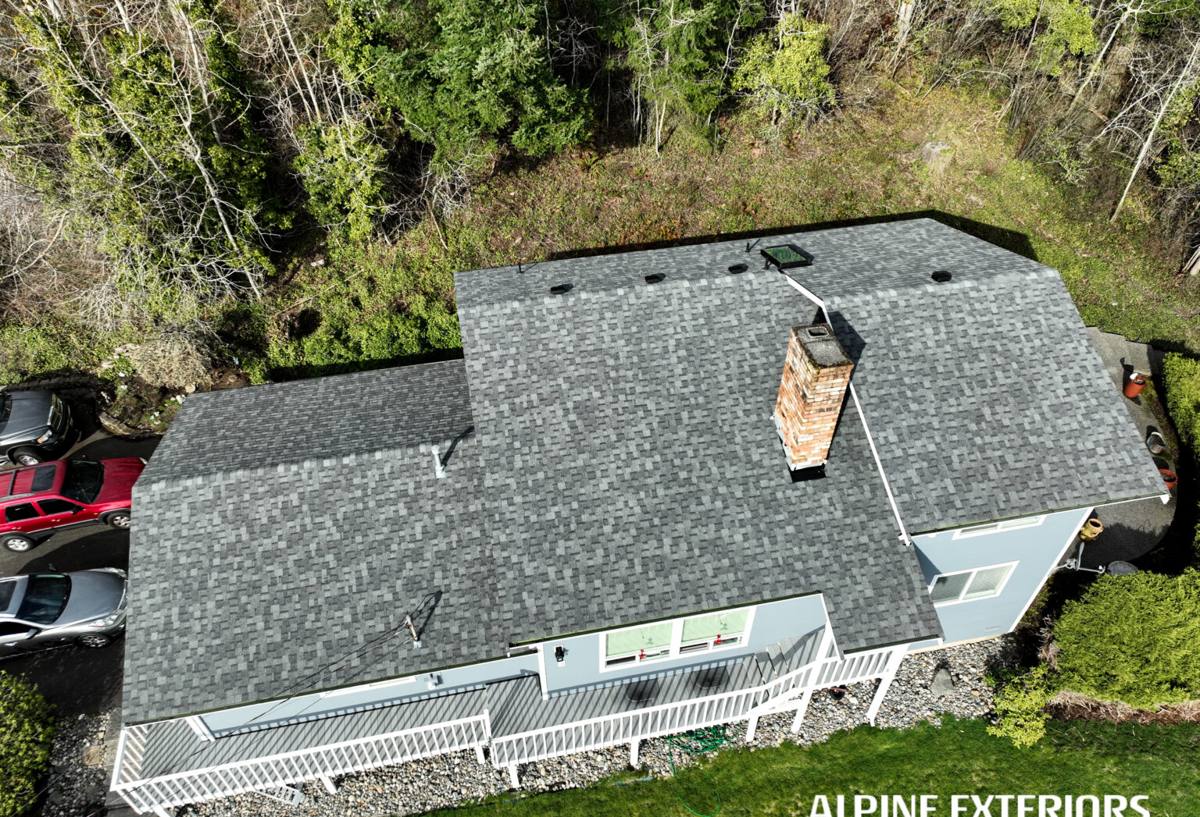
Edgemoor sits close enough to Bellingham Bay that salt-laden air is a constant, not an occasional weather event, and the mature tree canopy that gives the neighborhood its character also means shade, damp organic debris, and slow-drying roof surfaces for a large part of the year. Add Whatcom County's long, wet winters and the driving rain that comes with storms off the Sound, and you have a roofing environment that punishes shortcuts. A roof that would hold up fine in a drier, more open part of Whatcom County can wear out early here if it wasn't specified and installed with these specific conditions in mind.
That's the case for metal roofing done right in Edgemoor: not because it's trendy, but because its strengths line up directly with what this microclimate throws at a house year after year.
What Salt Air, Rain, and Moss Actually Do to a Roof
Salt-Air Corrosion
Airborne salt accelerates corrosion on any exposed metal — fasteners, flashing, gutters, vents. On a roofing system, that means the fine details matter as much as the field material. Uncoated or mismatched hardware can start rusting years before the roof panels themselves show any wear, and once corrosion starts at a fastener or seam, it creates a path for water to follow.
Wind-Driven Rain
Storms coming off the water don't just fall straight down — they drive rain sideways under eaves, around vents, and into any flashing detail that's slightly undersized or poorly lapped. A roof in this setting needs to shed water at steep angles, not just when rain is falling vertically.
Moss and Organic Growth
Shaded, tree-covered lots stay damp longer after every rain, and Whatcom County's moss season runs long. Moss holds moisture against a roof surface, works its way under shingle tabs and lap joints, and, on the wrong material, can hold enough water to accelerate rot in the roof deck underneath. It also adds weight and traps debris that clogs valleys and gutters.
Why Metal Roofing Fits This Environment
Metal roofing addresses each of those three problems directly, which is why it's become a common upgrade for homeowners in Edgemoor and other Bellingham neighborhoods close to the water:
- A smooth, hard panel surface gives moss and moss spores far less to grip onto compared to a textured shingle surface, so growth is slower and easier to keep in check.
- Continuous panel runs and properly lapped seams shed wind-driven rain more reliably than smaller, overlapping units with more seams and edges.
- Quality coated steel or aluminum, installed with matched, coated fasteners, resists salt-air corrosion far longer than mixed or uncoated materials.
- Metal sheds snow and rain load quickly, which matters under tree canopy where debris and moisture already sit on a roof longer than they should.
- A correctly installed metal roof routinely outlasts asphalt shingles by decades, which matters on a material investment homeowners don't want to repeat every 15-20 years.
None of this means metal roofing is maintenance-free or automatically the right call for every home — it means that, given Edgemoor's specific exposure, it solves more of the recurring problems than it introduces.
Choosing the Right Metal Roofing System
"Metal roofing" covers more than one product, and the differences matter more in a marine climate than they would somewhere drier. The two most common systems for residential work are standing seam and exposed-fastener panels.
| Feature | Standing Seam | Exposed-Fastener Panel |
|---|---|---|
| Fasteners | Hidden under the seam — not exposed to weather | Visible screws through the panel face |
| Long-term seal | No exposed penetrations to fail over time | Fastener gaskets degrade and need eventual replacement |
| Salt-air performance | Fewer exposed metal-on-metal contact points to corrode | More exposed hardware, higher long-term corrosion exposure |
| Upfront cost | Higher material and labor cost | More budget-friendly upfront |
| Best fit | Long-term, low-maintenance investment | Secondary structures, budget-conscious projects |
Panel Gauge and Coatings
Beyond panel style, the metal itself matters. Steel panels typically carry a factory paint or Kynar-type coating system that protects against both UV and corrosion — the coating quality and thickness affect how well the panel holds up to salt air over 20-30 years. Aluminum is naturally corrosion-resistant even without a coating, which makes it a reasonable option for homes with heavier salt exposure, though it comes at a cost premium and needs careful handling since it dents more easily than steel. We'll walk through the honest trade-offs of each option for your specific home rather than defaulting to whatever is easiest to install.
What a Correct Metal Roofing Installation Involves
Metal roofing fails early almost exclusively because of installation mistakes, not material defects. The system depends on every layer working together:
Underlayment
A high-temperature-rated synthetic or self-adhered underlayment is standard under metal in this climate — it's the backup layer that protects the deck if wind-driven rain ever gets past the panel seams, which it occasionally will during severe weather.
Flashing and Penetrations
Valleys, chimneys, skylights, and vent penetrations are where most metal roof leaks originate. Each needs flashing sized and lapped correctly for the panel profile, not a generic detail borrowed from asphalt shingle work.
Fasteners and Metal Compatibility
Mixing incompatible metals — say, the wrong fastener alloy against a steel or aluminum panel — sets up galvanic corrosion that can eat through hardware years before the panels themselves would fail. Every fastener, flashing piece, and trim component needs to match the panel material.
Ventilation
Metal roofs still need a properly vented attic or roof assembly underneath. Without it, condensation can form on the underside of the panels, which undermines a lot of the moisture resistance the metal was chosen for in the first place.
Our Process for Edgemoor Projects
Every metal roofing job we take on in this neighborhood follows the same sequence:
- On-site assessment — we look at the existing roof deck, tree exposure, moss and moisture patterns, and any current flashing or ventilation problems before recommending a system.
- Tear-off or overlay decision — most homes here need a full tear-off so we can inspect and, if needed, repair the deck underneath. We'll tell you honestly if an overlay is a viable option, but we won't recommend one over a deck we haven't inspected.
- Material and system selection — standing seam or exposed-fastener, steel or aluminum, coating and color, based on your budget and how the home is exposed to salt air and rain.
- Installation — underlayment, flashing, panels, and trim installed to manufacturer specification, with every fastener and flashing piece matched to the panel metal.
- Final walkthrough — we go over the finished roof with you, including what routine maintenance will look like given your specific lot and tree cover.
Maintenance and Longevity in a Marine Climate
Metal roofing needs less upkeep than shingles, but "less" isn't "none," especially under tree cover. A simple seasonal routine keeps a metal roof performing the way it's supposed to for decades:
- Clear needles, leaves, and debris from valleys and gutters at least once or twice a year, more often on heavily wooded lots.
- Check that gutters and downspouts are draining freely — clogged gutters back water up under roof edges.
- Look for any moss or algae buildup in shaded valleys and low-slope sections, and remove it before it holds moisture against the panel.
- After major windstorms, check for any lifted flashing or debris impact, particularly near trees.
- Have flashing and sealant points inspected periodically rather than waiting for a visible leak.
Why a Crew That Already Works Edgemoor Matters
Edgemoor's mix of wooded, view-oriented lots and close proximity to the water means every roof here deals with the same combination of shade, moisture, and salt exposure — but every lot handles it a little differently depending on tree cover, slope, and orientation to the water. A crew that's worked roofs throughout Bellingham and Whatcom County knows to check for the corrosion patterns and moss buildup specific to this kind of setting instead of applying a generic installation approach. That local familiarity shows up in the details: how flashing is detailed around penetrations, which fastener and coating combinations actually hold up here, and where a roof is likely to collect debris and moisture over a Whatcom County winter.
It also matters for judgment calls that come up mid-project — deck conditions found during tear-off, an unusual roof transition, a homeowner's preference balanced against long-term performance. Those calls are easier to get right with a crew that has already seen how roofs in this specific setting age, rather than one working from a generic playbook.
Get an Honest Look at Your Roof
If you're weighing a metal roof for your Edgemoor home, we're glad to come take a look and walk you through what your specific lot, tree cover, and exposure would mean for material choice and cost — no pressure, no upsell. Use the form below to request a free estimate.