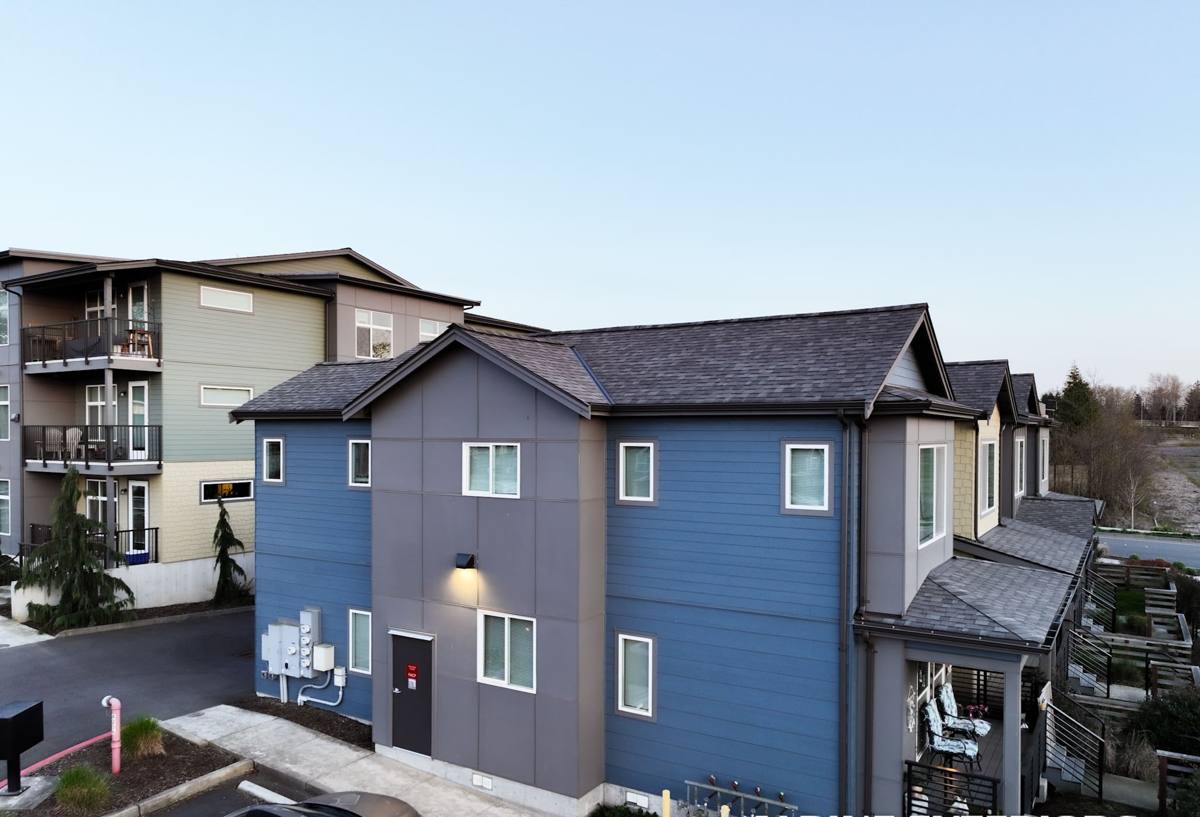
 Bellingham Exterior
 Fairhaven sits close enough to Bellingham Bay that its homes deal with a different mix of stress than houses further inland. Salt-tinged marine air, rain that comes in sideways more often than it falls straight down, and shaded, moss-prone lots that stay damp for much of the year all work against a window's seals, frame, and glazing at the same time they're trying to keep heat inside. When we talk about energy-efficient windows in Fairhaven, we're not just talking about a U-factor on a spec sheet — we're talking about whether that efficiency rating still means anything after a few winters of this specific climate.
A lot of what gets marketed as "energy-efficient" is really just a glass package tested under lab conditions. What actually determines how a window performs on a Fairhaven house, year after year, is the combination of glazing, frame material, and installation detail working together under real coastal exposure. Get one of those wrong and the energy savings on paper don't show up on the utility bill.
Why Energy Efficiency Is Harder to Get Right in Fairhaven
Whatcom County's marine climate is mild compared to a lot of the country, which sometimes leads homeowners to underestimate how much a window's air-sealing and moisture performance matter here. Mild doesn't mean gentle. Wind-driven rain off the bay tests a window's weatherstripping and flashing far more than a calm inland rain ever would, and salt-laden air accelerates corrosion on hardware and lower-grade frame components faster than a drier setting would. Add in Fairhaven's mix of older, established homes and newer infill on shaded hillside lots, and you get a moss and mildew season that can run most of the year on north-facing walls and window trim.
Every one of those conditions has a direct line to energy performance. A window that leaks air at the sash won't hold its rated efficiency no matter how good the glass is. A frame that's absorbing moisture at the corners is losing its dimensional stability, which opens gaps over time. And a window installed without attention to flashing can let water into the wall assembly around it, which shows up eventually as rot, not just a draft.
What "Efficient" Actually Means for a Coastal Window
Two numbers matter most for this climate: U-factor, which measures how well the window resists heat transfer, and air leakage rating, which measures how much outside air gets past the seals. In Fairhaven's damp, breezy conditions, a strong air leakage rating often matters as much as the glass package, because a well-sealed frame keeps both heat and moisture where they belong. Solar heat gain coefficient matters too, but it's a secondary consideration here compared to sunnier, hotter parts of the country — Whatcom County's cloud cover changes the math on how much a window needs to block summer sun versus how well it needs to retain winter heat.
What a Correct Energy-Efficient Window Job Involves
Glazing and Frame Selection
Double-pane, low-E, argon-filled glazing is the practical baseline for most Fairhaven replacements — it balances real-world efficiency against cost without pushing into triple-pane territory, which usually only pays for itself where winters are considerably colder than ours. Frame material matters just as much as the glass. In a marine climate, we lead with vinyl or fiberglass frames on most jobs because they hold up to sustained moisture and salt air with less ongoing upkeep than an all-wood exterior finish. Wood-clad interiors with a protected exterior cladding can still be the right call when the interior look matters, but that's a trade-off worth discussing against your specific home and budget, not a default.
Air Sealing at the Rough Opening
A window's factory air leakage rating only holds up if the gap between the window frame and the rough opening is sealed correctly during installation. That means backer rod and sealant or low-expansion foam at the perimeter, done in a way that allows for material movement without leaving gaps. This step gets rushed more often than any other part of a window job, and it's usually invisible once trim goes back on — which is exactly why it needs to be done right the first time.
Flashing and Water Management
Energy efficiency and moisture control are the same conversation on a Fairhaven home. Wind-driven rain finds any gap in a window's flashing that gravity-fed rain never would, so the flashing sequence has to shed water outward at the head, sides, and sill regardless of wind direction. A poorly flashed window doesn't just risk water damage — trapped moisture in the wall cavity around it degrades insulation performance over time, which quietly undercuts the efficiency gain you paid for.
Weatherstripping and Hardware
Locking hardware and weatherstripping do a lot of the actual air-sealing work over a window's life, and they're also what salt air attacks first. We check hardware quality and corrosion resistance as part of any efficiency-focused window recommendation, not just glass and frame specs, because a window that won't compress its seals correctly after a few seasons of salt exposure won't hold its efficiency rating no matter how good it was on install day.
Practical Checklist for an Energy-Efficient Window Job
- Ask for the window's U-factor and air leakage rating, not just a general "energy-efficient" label
- Confirm the frame material's track record in marine, salt-exposed conditions
- Ask how the installer seals the rough opening — backer rod and sealant, or low-expansion foam
- Confirm the flashing plan sheds water outward at the head, sides, and sill
- Check whether hardware and weatherstripping are rated for coastal corrosion resistance
- Get a written scope covering both the window unit and the installation labor warranty separately
Comparing Common Options for Fairhaven Homes
| Factor | Standard Double-Pane | High-Performance Low-E / Argon | Triple-Pane |
|---|---|---|---|
| Typical U-factor range | Higher heat loss, minimal coating | Meaningfully lower heat loss with low-E coating and argon fill | Lowest heat loss, but diminishing returns in a mild marine climate |
| Cost | Lowest | Moderate step up, generally the best value here | Highest, added weight and cost often outweigh the marginal gain locally |
| Best fit for Fairhaven | Budget-limited replacements where other upgrades are prioritized | Most homes — balances efficiency, cost, and coastal durability | Homes with unusually high exposure or specific comfort concerns |
| Moisture/seal sensitivity | Standard, still needs correct installation | Standard, still needs correct installation | Heavier sash puts more load on hardware and hinges over time |
Frame material, glazing package, window count, and the condition of the existing openings all move the price on a project like this. We won't put a number on a job without seeing the actual windows and openings, but we'll walk through which of these factors apply to your home before you commit to anything.
Older Fairhaven Homes and Retrofit Considerations
Fairhaven's older housing stock brings its own wrinkles to an energy-efficient window job. Original openings often aren't square or standard-sized after decades of settling, which affects how well a new window can seal against the frame without extra prep work. Older trim and siding details sometimes need to be adjusted or repaired to tie in cleanly with new flashing. And in some cases, the wall assembly behind an old window has taken on moisture damage over the years that needs to be addressed before a new, better-sealed window goes in — otherwise you're sealing a problem inside the wall instead of fixing it.
None of that makes the project unusual for a home in this neighborhood. It does mean the job should start with an honest look at the existing opening, not just a measurement for a replacement unit.
Our Process, Start to Finish
- On-site assessment — we inspect existing windows, openings, and surrounding trim for square, level, and any hidden moisture or framing issues
- Honest recommendation — glazing package and frame material matched to your home and budget, explained with the reasoning behind it
- Opening prep — any needed framing, trim, or flashing repair is addressed before the new window goes in
- Installation and air sealing — the new unit is set, shimmed, and sealed at the rough opening to hold its rated performance
- Flashing and weatherproofing — head, side, and sill flashing sequenced to shed wind-driven rain outward
- Trim and finish — exterior trim integrated to match the surrounding siding and architecture
Why a Local Fairhaven Crew Matters
Manufacturer efficiency ratings are generated under lab conditions, not on a shaded Fairhaven lot dealing with wind off the bay and a moss season that doesn't really end. A crew that installs windows in this specific neighborhood regularly knows which parts of the installation instructions are non-negotiable here and where extra time on flashing or air-sealing is worth it, even when it wouldn't be strictly necessary somewhere calmer and drier. That local experience is what keeps a window's actual, lived performance close to its rated performance instead of watching it drift apart over a few wet winters.
It also means knowing what Fairhaven's older housing stock tends to hide — where original flashing details fall short of current practice, which trim conditions signal a moisture issue behind the wall, and when an opening needs correction before a new window can seal properly. Those are judgment calls that come from working this neighborhood repeatedly, not from a general installation manual.
What to Ask Before Hiring for Window Replacement
- Ask for the specific U-factor and air leakage numbers for the windows being proposed, not just a general efficiency claim
- Ask how they handle rough opening sealing and flashing on a home exposed to wind-driven rain
- Confirm current Washington contractor licensing and insurance
- Get a written scope of work with a clear timeline before signing anything
- Ask how the window unit and the installation labor are each covered under warranty
If your Fairhaven home has drafty windows, fogged glass, or trim that's showing signs of moisture, it's worth having someone look at the actual openings before you start comparing window brands on paper. We offer free, no-pressure estimates for window replacement in Fairhaven and the surrounding area — use the form below to get a time on the schedule.