 Bellingham Exterior
 Composite Decking Built for Fairhaven's Marine Climate
Fairhaven sits close enough to Bellingham Bay that homes here deal with a different set of conditions than decks built further inland in Whatcom County. Salt-laden air off the water, long stretches of driving rain through fall and winter, and a moss season that can run from October well into spring all put real stress on an outdoor deck. Composite decking has become the go-to material for homeowners in this part of Bellingham precisely because it handles those conditions without the constant upkeep that wood demands. This page covers what composite decking needs to hold up in Fairhaven specifically, what a correct installation looks like, and how we approach the job.
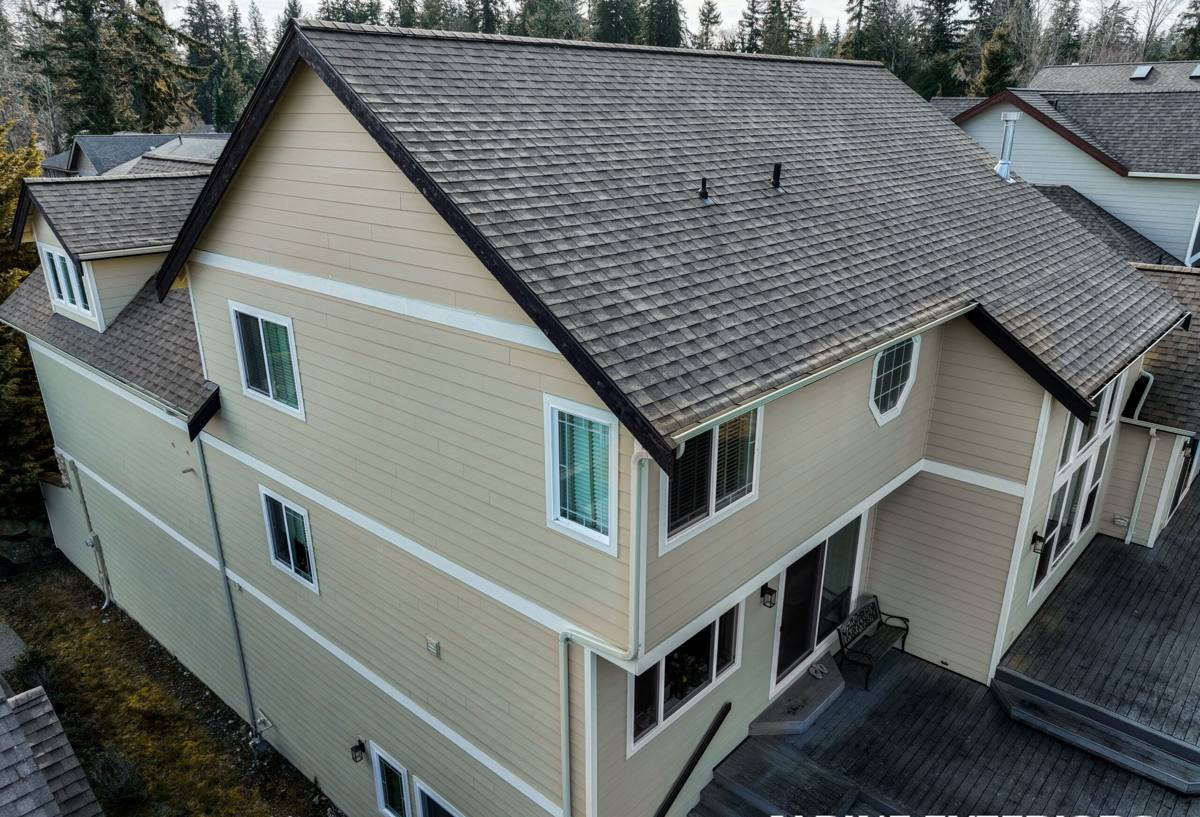
What Fairhaven's Climate Does to a Deck
Every material used outdoors in this neighborhood is fighting the same three things, more or less constantly.
Salt Air and Moisture
Homes closer to the water pick up airborne salt that settles on every horizontal surface, including deck boards, fasteners, and railing hardware. Over time, salt exposure accelerates corrosion in lower-grade fasteners and framing connectors, and it can dull or discolor finishes that weren't rated for coastal use. It doesn't damage quality composite boards the way it damages wood fibers or bare steel, but it does mean the hardware and substructure underneath the boards matter just as much as the boards themselves.
Driving Rain
Bellingham's rain doesn't just fall straight down — wind off the bay pushes it sideways, which drives moisture into board gaps, ledger connections, and any spot where flashing or drainage was an afterthought. A deck that isn't detailed correctly at the house connection will show it here faster than in a drier, more sheltered part of the county.
Moss and Shade
Many Fairhaven lots have mature trees and enough tree cover that parts of a deck stay damp and shaded for much of the year. That's exactly the environment moss and algae need to take hold. On wood decking, moss growth traps moisture against the fibers and speeds up rot. On composite, moss is mostly a surface and traction issue rather than a structural one, but it still needs to be planned for in board selection and layout.
Why Composite Decking Fits Fairhaven Homes
Wood decking isn't a bad product, and we still install it for homeowners who want that specific look and are willing to keep up with it. But given what this neighborhood's climate does to exposed wood, most homeowners here end up better served by composite. Here's the honest comparison:
| Factor | Wood Decking | Composite Decking |
|---|---|---|
| Moisture absorption | Absorbs and swells, especially at end cuts and fastener holes | Minimal absorption; engineered to resist swelling |
| Moss/algae resistance | Traps moisture under growth, accelerates rot | Growth stays surface-level, easier to clean off |
| Salt air effect | Can accelerate weathering and fastener corrosion | Board material largely unaffected; hardware still needs to be rated for coastal use |
| Annual maintenance | Sanding, staining or sealing every 1-3 years | Periodic washing; no staining or sealing needed |
| Upfront cost | Generally lower material cost | Higher material cost, offset by lower lifetime maintenance |
| Warranty structure | Varies by lumber grade; rarely covers rot or decay | Manufacturer warranties commonly cover fading, staining, and structural integrity for decades |
Composite isn't maintenance-free — nothing outdoors in this climate is — but it removes the sanding-and-sealing cycle that wood decks need to survive Whatcom County winters.
What a Correct Composite Deck Installation Involves
Composite boards are only as good as what's underneath them. A large share of the composite deck problems we get called out to inspect trace back to substructure or fastening mistakes made during installation, not the board material itself.
Substructure and Framing
Joists and beams need to be rated for exterior use and, in a salt-air environment, connected with coastal-rated or stainless fasteners rather than standard galvanized hardware. Joist spacing has to match the specific composite product's span rating — composite boards generally need tighter joist spacing than wood, and skipping that step leads to bounce and premature sagging.
Ventilation and Drainage
Composite decking needs airflow underneath it, especially in a shaded, damp neighborhood like Fairhaven. Low-clearance or poorly ventilated framing traps moisture against the underside of boards and framing members, which is where problems start even though the boards themselves resist water.
Ledger and House Connection
Where the deck attaches to the house is the single most common source of water intrusion into the structure itself. Correct flashing at the ledger board, combined with proper fastener spacing and a drainage gap, keeps driving rain from working its way behind the siding.
Board Layout and Fastening
Hidden fastener systems keep the surface clean and reduce the number of exposed metal points that could corrode over time. Expansion gaps have to be set correctly for temperature swings, and board direction should account for drainage rather than just appearance.
- Framing and fasteners rated for coastal/salt-air exposure
- Joist spacing matched to the specific composite product's span rating
- Adequate ventilation clearance beneath the deck
- Properly flashed ledger connection at the house
- Correct expansion gaps for board-to-board and perimeter joints
- Hidden fastener system installed to manufacturer spec
- Stair and railing hardware matched to the deck's exposure level
Our Process, Start to Finish
We keep the process straightforward and try not to waste a homeowner's time with back-and-forth.
1. On-Site Assessment
We look at the existing deck or the build site, check drainage and sun/shade exposure, and talk through how the space actually gets used.
2. Product and Layout Selection
We walk through board options, colors, and railing systems based on the home's exposure to salt air, shade, and rain, and give a straight recommendation rather than upselling whatever has the best margin.
3. Written Estimate
A clear, itemized estimate covering materials, framing work, and labor — no vague allowances that turn into surprise costs later.
4. Framing and Structural Work
Any needed repairs to ledgers, footings, or framing happen before a single composite board goes down. This is the step that gets skipped by crews trying to move fast, and it's the step that determines whether the deck lasts.
5. Installation
Boards, fascia, and railing go in to manufacturer spec, with attention to the fastening and ventilation details covered above.
6. Final Walkthrough
We walk the finished deck with the homeowner, cover basic care, and make sure everything meets expectations before calling the job done.
Choosing Boards and Color for a Fairhaven Property
Board color and finish matter more here than in a drier climate. Darker boards in a shaded, damp yard hold heat that can help discourage moss and algae buildup slightly, but they can also make small debris and pollen more visible. Lighter and mid-tone boards tend to show less surface residue between cleanings, which is worth considering on a lot with heavy tree cover. Capped composite boards, where a protective outer layer is fused around the core, generally hold up better against staining and moisture intrusion at cut ends than uncapped boards, which matters on a property exposed to salt air and rain. We'll walk through samples on site so you can see how a given color actually looks against your home rather than guessing from a small swatch.
Maintenance in a Moss-Prone, Salt-Air Environment
Composite decking cuts down maintenance dramatically compared to wood, but "low maintenance" isn't "no maintenance," especially in this neighborhood.
- Rinse or sweep debris and tree litter off the deck regularly, especially under heavy tree cover
- Wash the surface a couple of times a year with a soft-bristle brush and a composite-safe cleaner to prevent moss and algae from taking hold
- Check and rinse fastener and hardware points periodically if the home is close to the water, to keep salt residue from building up
- Keep gutters and downspouts near the deck clear so runoff isn't dumping extra water onto the surface
- Avoid pressure washing at close range or high PSI, which can damage the board's protective cap over time
Cost Factors to Expect
Every deck is different, but these are the main variables that move the price up or down on a composite deck project in this area.
| Factor | Impact on Cost |
|---|---|
| Deck size and shape | Larger and more complex layouts (angles, multiple levels) increase material and labor time |
| Framing condition | Existing rot or undersized framing adds structural repair costs before decking begins |
| Board tier | Capped composite and premium lines cost more upfront than base-tier composite |
| Railing and fastener system | Coastal-rated hardware and hidden fastener systems add cost but reduce long-term corrosion issues |
| Site access | Difficult access or sloped Fairhaven lots can add labor time for material handling |
| Height and stairs | Elevated decks and stair runs add framing, railing, and code requirements |
We give exact numbers on-site after seeing the actual space — broad online estimates rarely hold up once framing condition and access are factored in.
Why Hire a Crew That Already Works in Fairhaven
A contractor who mainly builds decks in drier, more inland parts of Whatcom County isn't necessarily going to default to coastal-rated fasteners, proper ventilation clearances, or flashing details sized for driving rain off the bay. Those choices come from having actually dealt with what happens when they're skipped. Working regularly in a neighborhood like Fairhaven means we've seen which framing details hold up and which ones fail early, and we build to the first standard as a matter of course, not as an upcharge.
If you're weighing a new composite deck or a replacement for an aging wood deck at your Fairhaven home, we're glad to come take a look and put together a free, no-pressure estimate. Use the form below to get started.