 Bellingham Exterior
 Siding That Has to Work in Ferndale's Conditions, Not Just Look Good on Day One
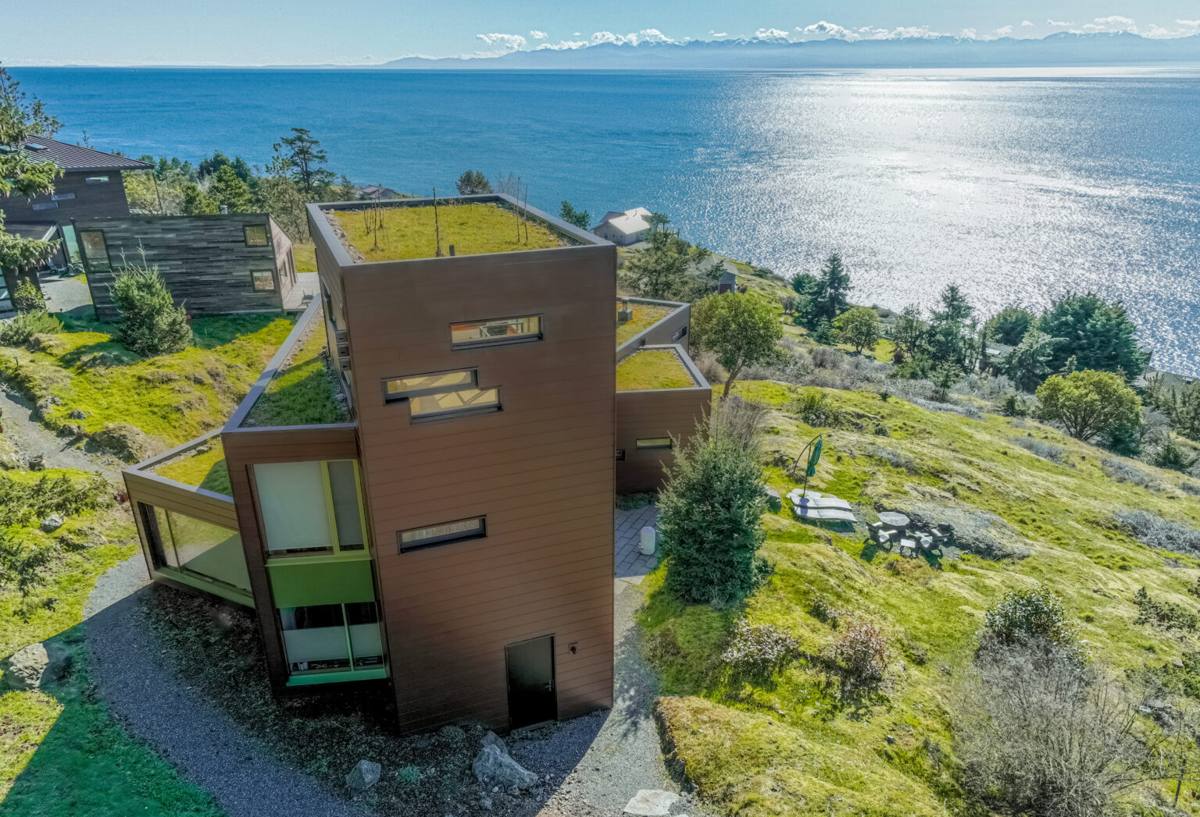
Ferndale sits close enough to the Salish Sea and the Nooksack River lowlands that homes here take on a specific mix of punishment: salt-tinged air moving in off the water, long stretches of driving rain through fall and winter, and a moss season that can run most of the year on shaded north and west walls. None of that is unusual for Whatcom County, but it adds up differently on a house than it does on a fence post or a deck rail. Siding is the layer standing between that weather and your sheathing, framing, and insulation, and over a few decades the cheap mistakes and the good decisions both show up on the wall.
We install James Hardie fiber cement siding exclusively, and this page is about what that looks like specifically for a Ferndale home: what the climate actually does to a wall assembly here, what a correct installation involves, and why a crew that already works this area day to day catches problems a first-timer to the region won't.
What Salt Air, Rain, and Moss Actually Do to Siding
Salt-tinged air
Homes closer to Bellingham Bay and the surrounding shoreline pick up airborne salt that accelerates corrosion on exposed metal fasteners, flashing, and hardware. It doesn't have to be a waterfront lot to matter — prevailing winds carry it further inland than most homeowners expect. Fiber cement itself doesn't corrode, but every screw, nail, and flashing detail on the wall does if the wrong materials or an incomplete finish is used.
Driving rain
Whatcom County doesn't just get a lot of rain, it gets a lot of wind-driven rain, which pushes water sideways into joints, laps, and penetrations that a straight-down rain would never reach. A siding system is only as good as its weakest lap, seam, or trim intersection. Water that gets behind the cladding and has nowhere to drain is the actual cause of most rot damage people blame on "bad siding," when the siding itself was fine and the water management behind it wasn't.
Moss and sustained moisture
Shaded elevations — commonly the north and west sides of a Ferndale home, especially under tree cover or close to a neighboring structure — can stay damp for weeks at a stretch during the wet months. That constant moisture is what lets moss and algae get a foothold on siding surfaces and, more importantly, keeps the material behind an poorly-sealed joint wet long enough to start breaking down wood trim, sheathing, or house wrap.
Why We Only Install James Hardie
We made a standard-practice decision to install James Hardie fiber cement and nothing else, and it's worth explaining plainly rather than just asserting it.
- Non-combustible material. Fiber cement doesn't feed a fire the way wood-based products can, which matters for insurance conversations and for peace of mind.
- Factory-applied ColorPlus finish. The color is baked on at the factory under controlled conditions, rather than field-painted on site where weather, temperature, and technique all vary. It holds up better against UV and moisture cycling and gives a more consistent finish than a job-site paint job.
- Climate-engineered product lines. James Hardie makes different formulations for different regions — the HZ5 line used in the Pacific Northwest is engineered for a wet, moderate climate rather than a generic all-climate compromise.
- Warranty backing. Hardie's warranty is transferable and well-established, which matters if you sell the home before the siding's functional life is up.
- Long track record. Fiber cement has been installed on Pacific Northwest homes for decades now, so we're not guessing at how it performs after 15 or 25 years of this specific climate — we've watched it.
We don't install LP SmartSide, vinyl, Cemplank, Allura, primed spruce, or cedar. Some of those are reasonable products in the right context; we simply chose to standardize on one system we can install to spec, warranty consistently, and stand behind without hedging.
What a Correct Fiber Cement Installation Involves
The material is only half of the job. The install details are what determine whether a Ferndale home stays dry behind the siding for the next 30 years or starts showing rot at year eight.
Water management behind the cladding
A correctly installed fiber cement system includes a drainage plane — house wrap or building paper, properly lapped shingle-style, with a rainscreen gap in many applications — so that any water that does get past the siding face has somewhere to go besides your sheathing. This is the single most common corner cut on rushed jobs, and it's invisible once the siding goes up, which is exactly why it has to be done right the first time.
Flashing at every penetration
Windows, doors, hose bibs, light fixtures, vents — every penetration through the siding is a potential entry point for wind-driven rain. Correct flashing, properly integrated with the house wrap (not just caulked over), is what keeps those points dry through a Whatcom County winter.
Fastener and clearance details
Corrosion-resistant fasteners matter more here than in a dry inland climate, given the salt exposure discussed above. Siding also needs proper clearance from grade, roofing, and decking surfaces so it isn't sitting in standing water or trapped moisture at those transitions.
Caulking and joint treatment
Hardie's specifications call for specific joint and butt-seam treatment, and following them (rather than shortcutting with generic caulk everywhere) is what keeps seams from becoming the first failure point.
Our Process for a Ferndale Project
- On-site assessment. We look at your home's specific exposure — which walls face prevailing wind and rain, which stay shaded and damp, where the existing water management is already failing.
- Tear-off and substrate check. Once old siding comes off, we check the sheathing and framing underneath for any hidden moisture damage before anything new goes up.
- House wrap and flashing. This is the part that never gets seen again once the project is done, so it's the part we don't rush.
- Hardie installation to spec. Fastener pattern, clearances, joint treatment, and trim details installed to James Hardie's published requirements, not a generalized approximation of them.
- Final walkthrough. We go over the finished work with you before calling the job done.
Why a Bellingham-Based Crew Matters for Ferndale Specifically
Siding contractors who don't work this region regularly tend to install the same way regardless of where the job is — the same wrap detail, the same fastener spec, the same assumptions about moisture exposure they'd use in a drier or milder climate. That approach can look fine at handoff and still fail early because it wasn't built for what Whatcom County actually throws at a wall over a full year.
A crew that works Ferndale and the surrounding Bellingham area regularly has already seen how the local rain pattern, the salt exposure near the water, and the shaded-wall moss problem play out on real houses over multiple seasons. That's not a marketing point — it changes concrete decisions on the job, like which walls get extra attention on the drainage plane or where flashing needs to be more conservative than the minimum spec.
Comparing Approaches: What Separates a Correct Job From a Rushed One
| Detail | Rushed / generic installation | Correct James Hardie installation |
|---|---|---|
| Drainage plane | House wrap installed but laps not consistently shingled | Properly lapped wrap, rainscreen gap where called for |
| Fasteners | Standard fasteners regardless of salt exposure | Corrosion-resistant fasteners specified for coastal-influenced air |
| Window/door flashing | Caulk relied on as the primary seal | Flashing integrated with house wrap, caulk as secondary defense |
| Clearance from grade/decking | Siding installed tight to grade or deck surfaces | Manufacturer-specified clearance maintained throughout |
| Joint treatment | Generic caulking at all seams | Hardie-specified joint and butt-seam treatment |
What to Ask Before Hiring Anyone for Fiber Cement Work in This Area
- Are they installing to James Hardie's published specifications, or to a general approximation of "how siding usually goes on"?
- Do they explain their house wrap and flashing plan before the old siding comes off, or only after you ask?
- Can they speak specifically to how they handle shaded, moss-prone walls versus wind-exposed walls on the same house?
- Are they using fasteners and hardware appropriate for a coastal-influenced climate, not just whatever is standard stock?
- Do they carry manufacturer certification or specific experience with the HZ5 product line used in this region?
- Is the warranty they're offering the manufacturer's transferable warranty, or just their own labor guarantee?
If your Ferndale home's siding is showing moss buildup that keeps coming back, soft spots near trim or window edges, or it's simply original to a house that's due, we're happy to take a look and give you a straightforward assessment. Reach out for a free, no-pressure estimate — the form below gets you started.