 Bellingham Exterior
 Siding That Actually Fits the Sudden Valley Microclimate
Sudden Valley sits in a pocket of Whatcom County that behaves a little differently than the rest of Bellingham. Tucked along the south shore of Lake Whatcom and wrapped in mature evergreen forest, homes here get less direct sun, more shade, and more standing moisture in the air than lots out on open ground. Add in the driving rain that rolls through the region every fall and winter, and you've got a siding environment that punishes anything that can't handle sustained dampness.
That combination — shade, tree cover, lake humidity, and hard rain — is exactly why we tell Sudden Valley homeowners to think past curb appeal when they're picking a siding material. The right product for a sunny, open lot in another part of Whatcom County isn't automatically the right product for a home tucked into the trees off Lake Whatcom Boulevard's neighborhood streets. What holds up here has to resist moisture absorption, resist moss and algae colonization, and hold its finish without constant repainting in a spot that dries slower than most.
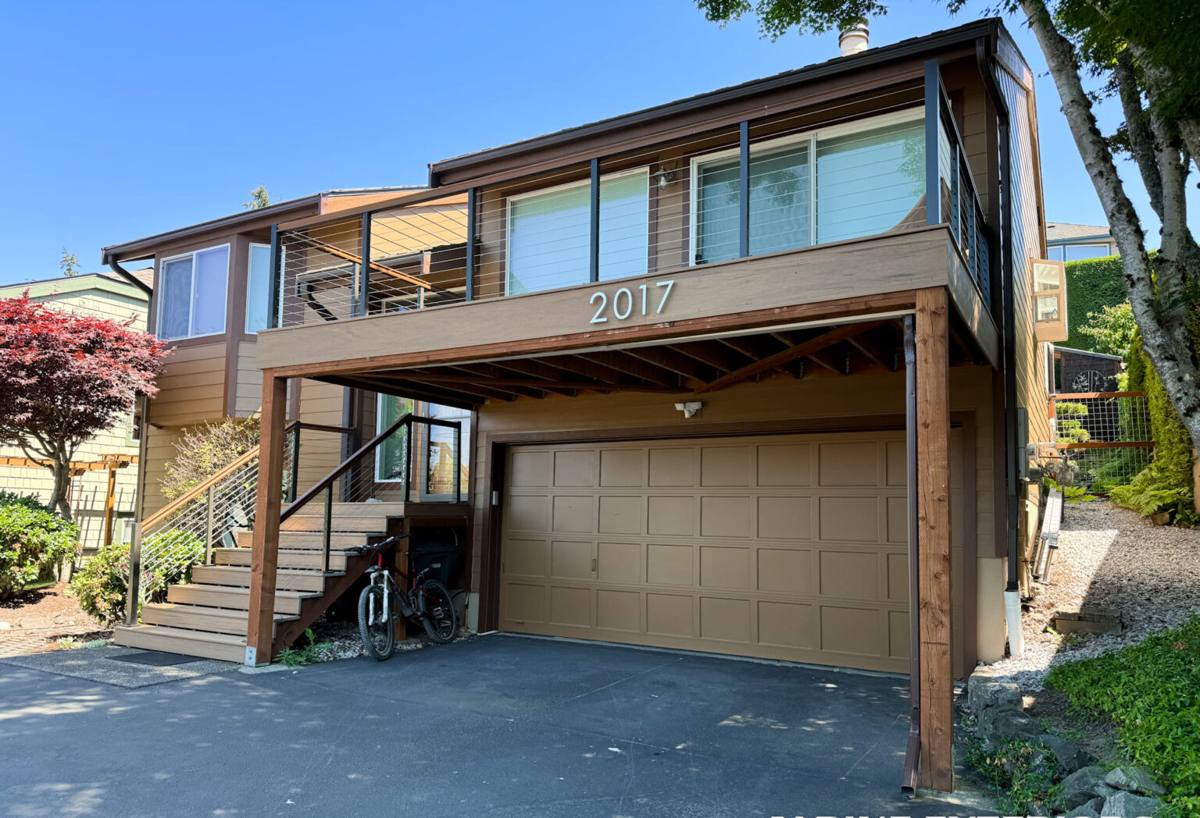
What Shade and Moisture Do to the Wrong Siding Material
Wood-based and wood-look products
Engineered wood siding and untreated wood trim depend on their outer coating to keep water out. In a shaded, slow-drying environment like Sudden Valley, any breach in that coating — a hairline check, a nail pop, an unsealed cut edge — gives moisture a place to sit for days instead of hours. Over time that leads to swelling, delamination at the edges, and soft spots, especially on north- and east-facing walls that see the least sun.
Vinyl siding
Vinyl doesn't rot, but it doesn't solve the shade problem either. In deep shade it can develop a persistent green or black film from algae and moss spores that thrive in still, damp air, and because vinyl is thin and flexible, pressure washing it aggressively enough to clear that growth risks cracking panels or blowing them off their nailing strip. It also fades and goes brittle with age, and once a panel is damaged, exact color matches years later are hit or miss.
Why fiber cement changes the equation
Fiber cement is dimensionally stable — it doesn't swell, cup, or warp with repeated wetting and drying cycles the way wood-based products can. It's also dense enough that moss and algae have a harder time getting a foothold, and a factory-applied finish holds its color instead of relying on field-applied paint that has to be redone every few years. That stability is what actually matters on a shaded, damp lot — not just how the siding looks the day it goes up.
Why We Install Only James Hardie — Not Other Fiber Cement Brands
Fiber cement as a category is the right call for this climate. But not all fiber cement is built or backed the same way, and we've standardized on James Hardie rather than alternatives like LP SmartSide (an engineered wood product, not fiber cement), Cemplank, or Allura. A few reasons drive that:
- ColorPlus factory finish: baked-on, multi-coat color that resists fading and chipping far better than field-applied paint, with touch-up product formulated to match.
- Climate-engineered product lines: Hardie builds different formulations for different climate zones rather than one generic board for the whole country.
- Non-combustible core: fiber cement doesn't contribute fuel to a fire the way wood-based sidings can, which matters given Whatcom County's wildland-urban interface concerns near forested communities.
- Warranty structure: a transferable, long-term warranty on both the substrate and the factory finish, which protects the next owner if you sell.
We'd rather install one product system correctly, understand its quirks completely, and stand behind it fully than juggle multiple manufacturers and give homeowners a watered-down answer on any of them.
HardieZone: built for where you live
James Hardie engineers its siding by climate zone. Western Washington, including Bellingham and Sudden Valley, falls into the wetter, colder HZ5 zone rather than the HZ10 formulation used in hot, dry, southern climates. HZ5 products are engineered with moisture and freeze-thaw cycling in mind — relevant here given how many wet-to-cold swings a Sudden Valley winter actually produces. Getting this detail right at the ordering stage, not just at the install stage, is part of what a correct job looks like.
What a Correct Installation Involves
Fiber cement siding is only as good as the assembly behind it. A beautiful board installed against the wrong prep work will still trap moisture and fail early — and in a shaded, slow-drying lot like Sudden Valley, mistakes in the water management plane show up faster and worse than they would on a sunnier property.
Drainage plane and moisture management
Correct installation starts with a code-compliant water-resistive barrier and a drainage gap (rainscreen) behind the siding so any moisture that gets past the outer layer has somewhere to go besides sitting against your sheathing. On a lot with less sun exposure to help dry things out, this drainage layer isn't optional — it's the difference between a wall assembly that sheds moisture and one that slowly rots from the inside.
Flashing and penetrations
Every window, door, hose bib, and vent penetration needs proper flashing integrated with the water-resistive barrier, lapped correctly so water is always directed outward and down. This is the single most common place we find prior installation shortcuts on older homes — flashing that was skipped, reversed, or taped over instead of properly lapped.
Fastening, clearances, and joints
Hardie's installation instructions specify fastener type, spacing, and minimum clearance from grade, roof lines, and other siding — clearances that exist specifically to keep splash-back and standing moisture away from the board's cut edges, which are the most vulnerable part of any fiber cement panel if left unsealed. Butt joints get factory-cut edges sealed and, where possible, backed with flashing rather than caulk alone.
Fiber Cement vs. the Alternatives in a Sudden Valley Setting
| Factor | James Hardie Fiber Cement | Vinyl | Engineered Wood |
|---|---|---|---|
| Moisture absorption | Very low, dimensionally stable | Doesn't absorb, but traps moisture behind panels if installed poorly | Absorbs at damaged edges/coating breaks |
| Moss/algae resistance in shade | Dense surface resists colonization | Prone to green/black film in still, damp air | Prone to growth where coating is compromised |
| Finish longevity | Factory ColorPlus finish, long fade resistance | Color molded in but fades and chalks over time | Field or factory paint, needs repainting cycles |
| Fire performance | Non-combustible core | Combustible | Combustible |
| Typical lifespan when correctly installed | Multiple decades | 20–30 years, brittleness increases with age | 15–25 years, shorter with moisture exposure |
Our Process for a Sudden Valley Project
Every job starts the same way: an on-site assessment before we ever talk product or price. That's especially true in Sudden Valley, where tree cover, slope, and how close the home sits to the lake all affect what we recommend and how we sequence the work.
- On-site walkthrough: we look at existing siding condition, trim and flashing details, current moisture problem areas, and how much sun exposure each elevation actually gets.
- Moisture and substrate check: where old siding is coming off, we check sheathing condition before covering anything back up — problems found now are far cheaper to fix than problems found in five years.
- Product and color selection: HZ5 Hardie boards in the profile and ColorPlus finish that fit the home and the neighborhood.
- Prep and removal: old siding and trim removed, water-resistive barrier and drainage gap installed or repaired as needed.
- Flashing and installation: windows, doors, and penetrations flashed correctly, then siding installed to Hardie's fastening and clearance specifications.
- Finish work and walkthrough: caulking, touch-up, cleanup, and a final walkthrough so you know exactly what was done and why.
Living With Fiber Cement Siding in a Shaded, Damp Lot
Fiber cement is low-maintenance compared to wood or vinyl, but "low-maintenance" isn't "no-maintenance," especially tucked into the trees around Lake Whatcom. A little seasonal attention keeps a correctly installed job looking correct for decades.
- Rinse siding gently once or twice a year, more often on shaded north/east walls prone to moss or algae film.
- Keep gutters clear so overflow isn't running down the siding face and staying wet longer than it should.
- Trim back branches and foliage that hold siding in constant shade or brush directly against the wall.
- Re-caulk any joint where sealant has cracked or pulled away — small gaps let water track behind the board.
- Have flashing and caulking around windows and doors checked every few years, since these are the first places a leak shows up.
Why Local Experience in Sudden Valley Matters
A siding crew that mostly works drier, sunnier lots elsewhere in Whatcom County can still do a technically correct install and still get the wrong result here — because they're not used to planning around slower drying times, heavier moss pressure, and the access challenges that come with wooded, sloped lake-adjacent lots. Knowing to double-check drainage details on shaded walls, or to plan installation around a wet week instead of forcing it, comes from having actually worked this specific kind of site before, not just from reading a manufacturer's install manual.
We also know the practical side of working in a lake community: respecting narrower access, protecting landscaping and shoreline-adjacent plantings during tear-off, and coordinating around the debris and material staging that a more open suburban lot wouldn't require.
Get a Straight Answer for Your Home
If you're dealing with siding that's holding moisture, growing moss faster than you can clean it, or just due for an honest assessment, we're happy to walk your property and tell you what we actually see — no pressure, no upsell. Fill out the form below for a free estimate on James Hardie fiber cement siding for your Sudden Valley home.