 Bellingham Exterior
 Roofing Built for Happy Valley's Conditions
Happy Valley sits close enough to the water and under enough tree cover that its roofs work harder than roofs in drier, more open parts of Whatcom County. The combination of salt-laden air drifting up from Bellingham Bay, driving rain that comes in sideways during winter storms, and a moss season that can stretch from October through May means a roof here is rarely just sitting idle. It's shedding water, resisting corrosion, and fighting off organic growth almost year-round. A new roof installation in this neighborhood needs to account for all three, not just the one problem that happens to be visible when you call for an estimate.
We've replaced and repaired roofs across Bellingham and Whatcom County long enough to know that a roofing system that performs well in a drier inland town can underperform here. The right materials, the right underlayment, and the right ventilation plan matter more in Happy Valley than they do in places that don't sit under this much tree canopy and marine moisture.
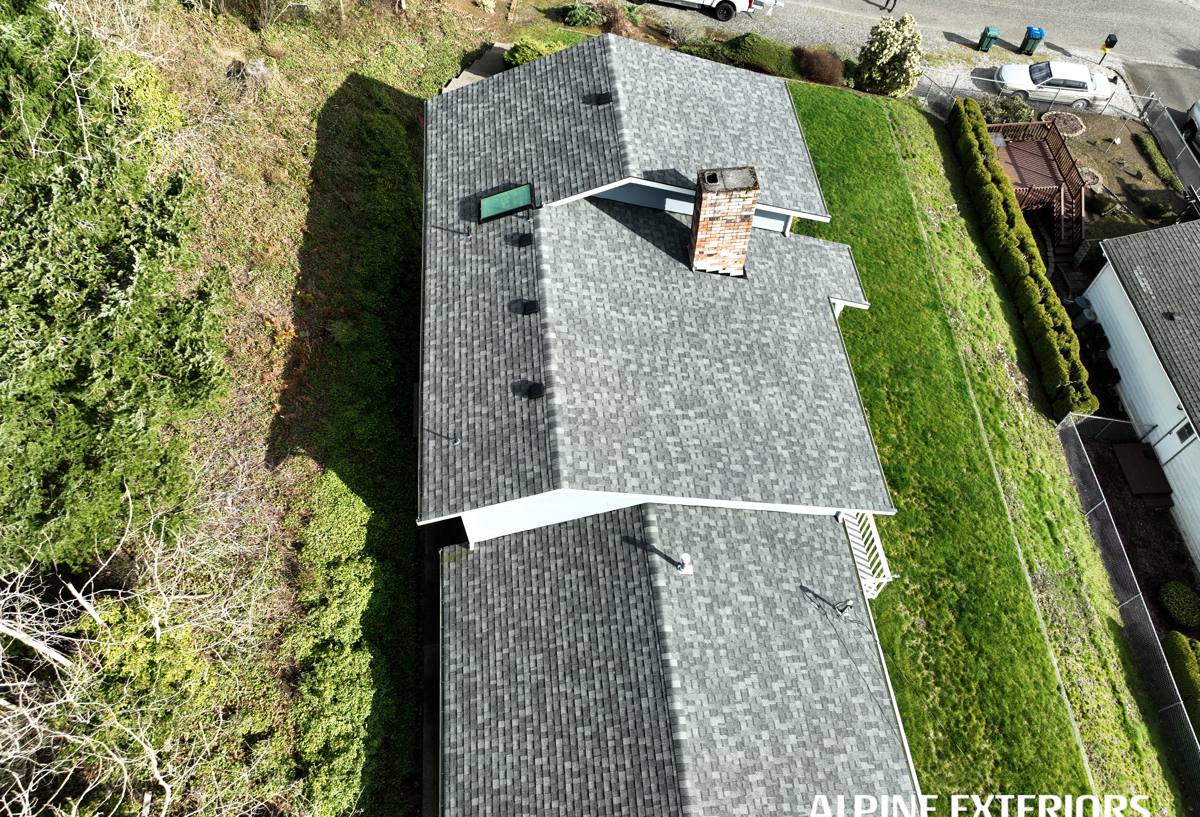
What Happy Valley's Climate Does to a Roof
Salt Air and Metal Corrosion
Proximity to the bay means airborne salt settles on roofing surfaces, flashing, fasteners, and exposed metal edges. Over years, untreated or low-grade metal components corrode faster here than they would ten or fifteen miles inland. This is one of the main reasons we're particular about the grade of flashing, drip edge, and fastener hardware we use on any new roof in this area — it's cheap insurance against a failure that would otherwise show up as rust streaks and leaks well before the shingles themselves are worn out.
Driving Rain and Wind-Driven Water
Bellingham gets plenty of straight-down rain, but Happy Valley's exposure also brings storms where rain comes in at an angle, pushed by wind off the water. That kind of weather tests every seam, every flashing detail, and every transition point on a roof — chimneys, skylights, valleys, and wall intersections. A roof that only has to shed water falling straight down can get away with looser detailing. A roof that has to resist wind-driven rain cannot. This is where installation quality separates a roof that lasts from one that develops slow leaks within a few winters.
Moss, Shade, and a Long Growing Season
The tree cover that makes Happy Valley a pleasant place to live also keeps roofs shaded and damp longer than roofs in open, sun-exposed neighborhoods. Moss and algae take hold in those conditions and, left unchecked, work their way under shingle edges, lift tabs, and hold moisture against the roof deck. A roof designed with this in mind — proper ventilation, the right underlayment, and material choices that resist organic growth — needs far less maintenance over its life than one that wasn't.
What a Correct New Roof Installation Involves
A new roof is more than swapping old shingles for new ones. The parts you don't see are what determine whether the roof performs for its full expected lifespan or starts causing problems in year five.
Tear-Off and Deck Inspection
We remove the old roofing down to the deck rather than layering over it. That lets us actually see the plywood or plank sheathing underneath, which is the only way to catch soft spots, rot, or old water damage before they're sealed under a new roof for another 25-plus years. In a shaded, moisture-prone neighborhood like Happy Valley, deck problems are more common than they are in drier areas, so this step matters.
Underlayment
The underlayment is the roof's backup line of defense — the layer that protects the deck if wind, ice, or a failed shingle lets water through. Given the wind-driven rain this area sees, we use underlayment products rated for that kind of exposure, with extra attention to eaves, valleys, and any low-slope sections where water sits longer.
Flashing and Penetrations
Chimneys, vent pipes, skylights, and wall-to-roof transitions are where most roof leaks actually start — not in the open field of shingles. Correct flashing means new metal, not reused old flashing, formed and sealed to shed water at every one of these points. Given the salt air in this area, we pay particular attention to the corrosion resistance of the metal itself, not just how it's installed.
Ventilation
A roof deck that can't breathe traps moisture, which accelerates rot and gives moss and mold a head start. Balanced intake and exhaust ventilation keeps the underside of the deck dry and helps the shingles themselves last longer by preventing heat and moisture buildup in the attic space. This is a step that's easy to skip or under-do, and it's one of the most common reasons a roof underperforms its rated lifespan.
Final Details
Drip edge, ridge caps, fastener pattern, and cleanup all affect how the roof performs and how it looks. We nail to manufacturer spec, not to the minimum needed to pass a quick inspection, and we don't leave a job site with debris and stray nails scattered across the yard.
Material Choices for a Moss-Prone, Salt-Exposed Neighborhood
There's no single "best" roofing material for every home — the right choice depends on the home's structure, the homeowner's budget, and how much long-term maintenance they want to take on. What we can tell you honestly is how common options tend to perform under Happy Valley's specific mix of shade, moisture, and salt air.
| Material | How It Handles Moss/Moisture | How It Handles Salt Air | Typical Maintenance |
|---|---|---|---|
| Architectural asphalt shingles | Algae-resistant granule options reduce staining and growth | Performs well; metal components need corrosion-resistant hardware | Periodic moss removal in shaded areas |
| Standing seam metal | Sheds moisture quickly, minimal moss adhesion on smooth panels | Requires marine-grade coatings/fasteners to avoid corrosion | Low; occasional gutter and seam check |
| Cedar shake | More prone to moss and moisture retention in heavy shade | Generally fine, but moisture exposure is the bigger long-term concern | Higher; regular treatment and inspection needed |
| Composite/synthetic shingles | Resists moisture absorption well; less food source for organic growth | Good; check manufacturer specs on metal trim components | Low to moderate |
We're not going to tell you cedar shake "fails" in this climate — plenty of homeowners choose it and maintain it well. What we will say honestly is that in a heavily shaded, moisture-heavy neighborhood, it demands a more disciplined maintenance schedule than asphalt or metal, and we walk every homeowner through that trade-off before they commit to a material, not after.
Our Process for a Happy Valley Roof Replacement
- On-site assessment. We look at the existing roof, the deck condition where accessible, attic ventilation, and the home's specific sun/shade exposure and drainage patterns.
- Written estimate. A clear scope of work and pricing, with material options explained honestly — no pressure toward the most expensive option if it isn't the right fit for the home.
- Scheduling around weather. Roofing tear-offs need a dry window. We plan around Whatcom County's rain patterns rather than rushing a job into a storm system.
- Tear-off and deck inspection. Old roofing removed, deck inspected and repaired as needed before anything new goes down.
- Installation. Underlayment, flashing, ventilation, and roofing material installed to manufacturer and code specifications.
- Final walkthrough and cleanup. We review the finished roof with the homeowner and make sure the property is left clean.
Why Local Experience in Happy Valley Matters
A crew that's worked roofs across Bellingham and Whatcom County develops a feel for how specific neighborhoods behave — which streets sit under heavier tree cover, which lots catch more wind off the bay, where moss tends to build up fastest. That knowledge shapes decisions on the job: where to add extra underlayment protection, which flashing details need the most attention, and how to set up ventilation for a specific roof's shade exposure. It's the difference between a roof that's technically installed to code and one that's actually built for the conditions it will face for the next two or three decades.
We also know the practical side of working in this area — permitting through the City of Bellingham or Whatcom County depending on the property's location, coordinating around wet-season scheduling, and understanding what inspectors here are looking for.
Signs Your Happy Valley Home May Need a New Roof
- Shingles that are curling, cracking, or losing significant granules
- Moss or algae growth that returns quickly after cleaning
- Daylight visible through the roof deck from inside the attic
- Sagging areas anywhere on the roofline
- Rusted or deteriorating flashing around chimneys, vents, or skylights
- Water stains on interior ceilings or upper walls
- A roof that's 20+ years old and hasn't had a full inspection recently
- Granules collecting in gutters after storms
Any one of these on its own isn't necessarily an emergency, but a few together usually mean it's time for a real inspection rather than another round of patch repairs.
What Affects the Cost of a New Roof Here
Every home is different, so we won't quote a number without seeing the roof, but a few factors consistently move the price up or down for homes in this area:
| Factor | Why It Matters Locally |
|---|---|
| Roof pitch and complexity | Steeper or multi-plane roofs take longer and require more safety setup |
| Deck condition | Moisture-related deck repair is more common under heavy tree cover |
| Material choice | Asphalt, metal, and composite options carry different material and labor costs |
| Tree access and canopy | Overhanging trees can slow tear-off and require extra debris handling |
| Ventilation upgrades | Older homes often need added intake/exhaust venting, which adds labor |
| Flashing and penetrations | Chimneys, skylights, and multiple vents add material and installation time |
As a general range, most full roof replacements on homes in this area run from the mid five figures for straightforward asphalt roofs on modest homes up to considerably more for larger homes, steep or complex rooflines, or premium materials like standing seam metal. We'll always walk you through exactly what's driving your number, not just hand you a total.
Maintaining Your Roof After Installation
A correctly installed roof still benefits from basic upkeep, especially in a neighborhood prone to moss and shade-driven moisture:
- Clear gutters and downspouts at least twice a year, more often under heavy tree cover
- Have moss growth addressed before it builds up thickly, not after
- Trim overhanging branches to reduce shade and debris buildup on the roof surface
- Schedule a walk-through inspection every few years, especially after major windstorms
- Address any small leak signs immediately rather than waiting for them to worsen
A little regular attention goes a long way toward protecting the investment of a new roof, particularly in a climate that doesn't give roofing materials much of a break.
If your Happy Valley home is due for a new roof, we're happy to come take a look and give you a straightforward, no-pressure estimate. Use the form below to get started.