 Bellingham Exterior
 What Happy Valley's Roofs Are Up Against
Happy Valley sits close enough to Bellingham Bay and the surrounding waterways that homes here deal with a different mix of weather stress than roofs further inland. Salt-laden air moves in off the water and settles on exposed metal, fasteners, and flashing, quietly speeding up corrosion on anything that isn't rated for it. Add Whatcom County's long wet season — months of driving rain that comes in sideways as often as it falls straight down — and you get a roof that's under near-constant moisture pressure for a good chunk of the year.
Then there's the tree cover. Happy Valley's mature trees are one of the neighborhood's best features, but they also mean more shade, more debris in the gutters, and a moss season that can run from fall through spring. A roof that isn't detailed correctly for this combination — proper ventilation, the right underlayment, flashing that actually sheds water instead of just blocking it — will show problems years before a comparable roof in a drier, sunnier part of the state. Replacing a roof here isn't just about swapping old material for new; it's about building one that's specifically set up to handle what this neighborhood throws at it.
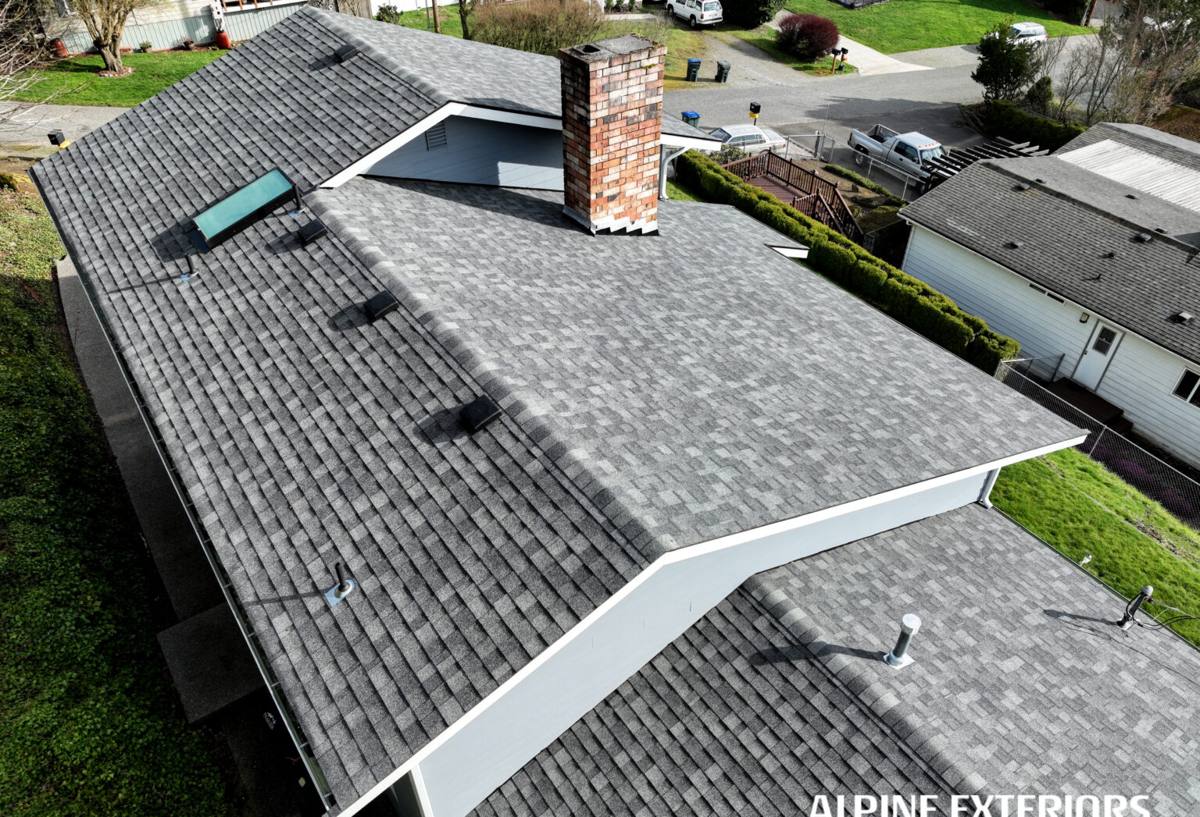
Signs Your Roof Has Reached the End of Its Service Life
Not every roof problem calls for a full replacement — plenty of issues can be repaired if they're caught early. But there's a point where patching stops making financial sense and a full tear-off and replacement is the honest recommendation. Common signs we look for on Happy Valley homes include:
- Shingles that are cupping, curling, or losing their granules in large patches, especially on north- and west-facing slopes that stay damp longest
- Moss that keeps returning within a season or two of cleaning, which usually means it's found a foothold in aging or damaged shingle material
- Soft spots or sagging in the roof deck when walked, which can indicate the plywood or sheathing underneath has taken on moisture
- Daylight visible through the attic roof boards, or water stains on interior ceilings and around chimneys
- Rusted, cracked, or missing flashing around vents, skylights, and chimneys
- A roof that's simply reaching the end of its material's realistic lifespan, even if it looks okay from the ground
If your roof is showing more than one of these, it's worth getting an honest look before you're dealing with an active leak.
What a Correct Roof Replacement Actually Involves
A roof replacement done right is a system, not just a layer of new shingles. Every piece has to work together, especially in a climate that gives moisture this many chances to find a weak point.
Tear-Off and Deck Inspection
We remove the old roofing down to the deck rather than layering over it. That's the only way to find out what's actually happening underneath — soft or rotted sheathing, old leaks that were never fully dried out, or framing issues that need to be addressed before anything new goes down. Covering that up with a fresh layer of shingles just hides the problem for a few more years.
Underlayment and Water Protection
Given how much rain this area sees, the underlayment matters as much as the shingles themselves. We use synthetic or ice-and-water-shield underlayment in the areas most prone to wind-driven rain and ice-damming — eaves, valleys, and around penetrations — so there's a real second line of defense if wind ever pushes water up under the shingle edge.
Ventilation
A roof that can't breathe traps moisture in the attic, which shortens the life of the decking and the shingles from underneath. Proper intake and exhaust ventilation keeps air moving, reduces condensation buildup during our wet, cool months, and helps prevent the kind of hidden rot that isn't visible until it's serious.
Flashing Details
Most roof leaks don't start in the open field of shingles — they start at the transitions: chimneys, skylights, sidewalls, and valleys. We install new flashing at every one of these points rather than reusing old pieces, since flashing is inexpensive compared to the water damage it prevents.
Choosing a Roofing Material for This Climate
There's no single "best" roofing material for every home — the right choice depends on your roof's exposure, your budget, and how much long-term maintenance you're willing to take on. Here's how the common options stack up for a coastal, moss-prone, rain-heavy neighborhood like Happy Valley:
| Material | How It Handles This Climate | Maintenance Burden |
|---|---|---|
| Architectural asphalt shingles | Solid moisture resistance and wind rating when installed with proper underlayment; widely available and easy to match or repair later | Moderate — periodic moss treatment and gutter care |
| Metal roofing | Sheds rain and moss very effectively due to its smooth surface; needs corrosion-resistant fasteners and coatings given the salt air near the bay | Low, once installed correctly with the right hardware |
| Cedar shake | Traditional look, but wood is more sensitive to constant moisture and moss growth in shaded, damp settings | High — regular treatment and inspection needed to manage rot risk |
| Composite/synthetic shingles | Engineered for moisture resistance with less organic material for moss to latch onto | Low to moderate |
We'll walk through these trade-offs honestly during your estimate rather than pushing whatever's easiest for us to install. For a lot of Happy Valley homes, the deciding factor ends up being how much shade the roof gets and how much upkeep the homeowner wants to commit to.
Our Process, Start to Finish
- On-site inspection. We look at the roof, the attic, and the areas most exposed to weather before recommending anything.
- Honest estimate. You get a clear breakdown of materials, labor, and what we found — no pressure to decide on the spot.
- Material selection. We help you weigh cost, appearance, and long-term performance for your specific roof and exposure.
- Tear-off and deck repair. Old material comes off, the deck is inspected, and any damaged sheathing is replaced before anything new goes down.
- Underlayment, flashing, and ventilation installed. This is where a roof's long-term durability actually gets decided.
- New roofing installed to manufacturer and code specifications.
- Full site cleanup, including a magnetic sweep for stray nails and debris.
- Final walkthrough so you can see the finished work and ask questions before we consider the job done.
Living With a New Roof: Moss and Long-Term Care
A new roof in Happy Valley isn't maintenance-free — no roof in this climate is — but a correctly installed one is far easier to keep in good shape than an aging one. A little routine care goes a long way toward protecting the investment:
- Keep gutters clear of leaves and needles, especially heading into the wet season, so water has somewhere to go
- Trim back overhanging branches where practical to reduce shade and debris buildup on the roof surface
- Have moss and algae growth treated before it establishes rather than after it's visibly thick
- Schedule a walk-through inspection every year or two, particularly after a hard winter
- Address minor flashing or sealant issues right away rather than waiting for a leak to appear inside the house
Why Local Experience in Happy Valley Matters
Roofing crews who work outside this area regularly can install a technically correct roof and still miss the details that matter most here — how much salt exposure a given block actually gets, which slopes hold shade and moss longest, or how Bellingham's permitting and inspection process works in practice. Working in Whatcom County day in and day out means we're not guessing at any of this. We know what tends to fail first on homes in this kind of setting, and we build the replacement to address those specific weak points rather than following a generic checklist.
It also means accountability. If a question comes up after the job is finished, we're not a crew that drove in from out of the area for one project — we're working in this neighborhood on an ongoing basis.
What Affects the Cost of a Happy Valley Roof Replacement
Every roof is different, so we don't quote pricing until we've actually seen yours, but a few factors consistently move the number up or down:
| Factor | Why It Matters |
|---|---|
| Roof size and pitch | Larger and steeper roofs take more material and labor time |
| Number of layers being removed | Tearing off multiple old layers adds disposal and labor cost |
| Deck condition | Rotted or soft sheathing found during tear-off needs to be replaced before new roofing goes down |
| Material choice | Asphalt, metal, and composite options carry different material and installation costs |
| Roof complexity | Valleys, dormers, skylights, and chimneys all add flashing work and time |
| Ventilation upgrades needed | Older homes sometimes need added intake or exhaust venting to meet current standards |
Broadly, most full replacements land somewhere between a modest single-layer asphalt job on a simple roof and a larger investment for metal or a complex, multi-plane roof — but the only way to get a real number is a look at your specific roof.
If your roof is showing its age or you just want an honest opinion on whether repair or replacement makes more sense, we're happy to take a look. Use the form below to request a free, no-pressure estimate for your Happy Valley home.