 Bellingham Exterior
 Building a Deck That Actually Holds Up in Lynden
Lynden sits in a part of Whatcom County where the weather doesn't do anything extreme — it just doesn't stop. Long stretches of drizzle, heavy fall and winter rain, morning fog off the farmland, and a marine-influenced climate that keeps humidity high for most of the year. None of that is dramatic on its own, but stacked up over a few seasons it's exactly the kind of steady moisture exposure that separates a deck built correctly from one that starts showing rot, moss, and soft framing within a few years. We build custom decks for Lynden homeowners with that reality in mind from the first footing to the last board.
A deck here isn't just an outdoor living space — it's a structure that has to shed water efficiently, resist moss and algae on every horizontal surface, and keep fasteners and connectors from corroding in a climate where things rarely get a chance to fully dry out. Get those fundamentals right and a deck can last decades. Skip them, and you're looking at repairs long before the structure should need them.
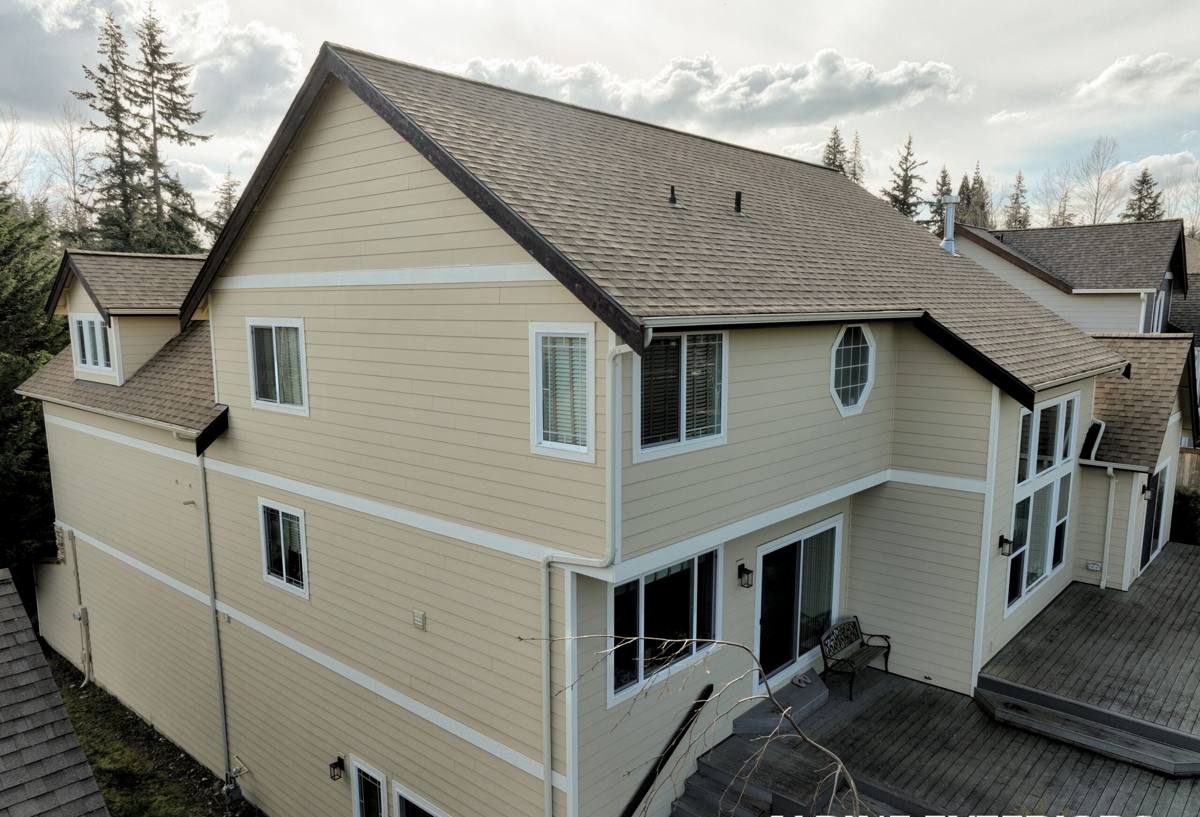
What a Correct Deck Build Involves
Most deck problems we get called out to fix in this area don't come from bad decking boards — they come from what's underneath and behind them. A custom deck done right starts below grade and works its way up.
Footings and Frost Depth
Whatcom County soil holds moisture, and freeze-thaw cycles here, while not severe, are frequent enough that footings need to go below the local frost depth and bear on stable, well-drained soil. We size and space footings based on the actual load of the deck — including any hot tub, pergola, or roof structure planned for it — rather than defaulting to a generic spacing. Undersized or shallow footings are one of the most common causes of a deck that starts to feel bouncy or uneven within a few years.
Ledger Board Attachment and Flashing
If a deck attaches to the house, the ledger board connection is the single most important detail on the whole project. This is where the deck meets the home's wall assembly, and it's the number one place we see water intrusion causing hidden rot — sometimes into the house framing itself, not just the deck. A correct ledger installation means proper flashing that directs water out and away from the wall, a gap or drainage path behind the ledger so water doesn't pool against the house, and structural lag bolts or through-bolts sized for the actual load, not just deck screws. In a climate that sees as much sustained rain as Whatcom County, cutting corners here is how a deck problem turns into a siding or framing problem.
Framing and Joist Protection
We use joist tape or an equivalent moisture barrier on top of framing members before decking goes down, protecting the wood from standing water and slowing rot at the fastener points — the spots most exposed to repeated wetting. Joist hangers, post bases, and structural connectors are specified for exterior/coastal-rated exposure, since galvanized hardware that's fine in a dry climate can start corroding within a few years under Whatcom County's consistent moisture.
Decking Material Options for This Climate
There's no single "best" decking material — it depends on how much upkeep a homeowner wants to do and what look they're after. Here's how the common options actually perform under Lynden's rain-and-moss conditions:
| Material | How it handles our climate | Maintenance reality |
|---|---|---|
| Cedar / wood | Natural rot resistance when new, but surface greys and softens with sustained moisture exposure over time | Needs cleaning and sealing roughly every 1-2 years to keep moss off and preserve the wood |
| Composite decking | Won't rot, but can hold surface moisture and grow moss/algae on shaded or low-airflow areas if not cleaned | Low maintenance, but periodic washing is still needed to prevent buildup — not a "never touch it" product |
| PVC / capped composite | Fully moisture-resistant surface, performs consistently in wet, low-sun conditions | Lowest maintenance of the group; occasional rinsing to clear moss spores keeps it looking new |
We'll walk through these tradeoffs honestly during design — wood gives a warmth and price point some homeowners want, but it's an ongoing commitment in this climate. Composite and PVC cost more up front but shift the long-term burden away from annual sealing and toward simple periodic cleaning.
Fasteners and Hardware: Where Corrosion Actually Starts
A deck can have great decking boards and still fail early if the hardware underneath isn't rated for the exposure. In a climate with this much sustained humidity and rainfall, we specify stainless steel or coated exterior-rated fasteners and connectors as our standard, not an upgrade option. Standard interior-grade or economy-grade screws and brackets corrode faster here than in drier parts of the state, and once a fastener starts rusting, it weakens the connection long before it's visible from the surface.
Railings, Stairs, and Code Requirements
Railings and stair details aren't just aesthetic — they're governed by Washington building code for height, baluster spacing, and load capacity, and Whatcom County and local jurisdictions enforce permitting on most deck projects above a certain height or footprint. We handle the permitting and inspection process as part of the build so homeowners don't have to navigate it themselves. Beyond code minimums, railing material choice matters for this climate too — wood railings need the same maintenance commitment as wood decking, while metal or composite rail systems hold up with less upkeep.
Drainage, Grading, and Moss Management
Moss doesn't grow because a deck is old — it grows because moisture sits somewhere it shouldn't. Two things drive that in Lynden: shaded areas that don't get enough sun to dry out between rain events, and decking that's installed without enough gap spacing or slope to let water run off instead of pooling.
When we design a deck, we account for:
- Proper board spacing so water drains through rather than sitting on the surface
- Slight slope away from the house so water doesn't collect against the ledger
- Grading and drainage underneath the deck so standing water isn't trapped against footings or posts
- Airflow considerations for lower decks or areas with limited sun exposure, where moss pressure is highest
None of these details cost much to get right during construction. Retrofitting drainage after a deck is already built is far more disruptive and expensive.
Our Process for a Custom Deck Project
Every project starts with a site visit, not a phone quote. Deck pricing depends heavily on site-specific factors, and we'd rather see the actual conditions than guess.
| Cost factor | Why it matters here |
|---|---|
| Ground slope and access | Steeper or harder-to-access lots need more excavation and footing work |
| Ledger vs. freestanding design | Freestanding decks avoid house-attachment risk but need more footings and framing |
| Decking material selection | Material cost and long-term maintenance commitment vary widely, as shown above |
| Railing and stair complexity | Multi-level decks or added stairs increase both material and labor |
| Drainage and grading needs | Sites with poor natural drainage need extra grading work to protect the structure long-term |
From there, the process is straightforward:
- On-site assessment of the space, grade, sun exposure, and how the deck will attach to (or sit apart from) the house
- Design and material discussion, including an honest look at maintenance tradeoffs for the climate
- Permitting and engineering as required by the local jurisdiction
- Footings, framing, ledger flashing, and structural connections built to the standards outlined above
- Decking, railing, and stair installation with corrosion-rated hardware throughout
- Final walkthrough covering care and maintenance specific to the material chosen
Maintenance Checklist for Lynden Decks
A well-built deck still needs some seasonal attention in this climate. This is roughly what we recommend to homeowners regardless of material:
- Clear leaves and debris from between boards before fall rains set in
- Rinse or scrub moss and algae off the surface at least once or twice a year, more often in shaded areas
- Check that gutters and downspouts near the deck aren't dumping extra water onto or under it
- Inspect railings and stair connections annually for looseness or corrosion at fasteners
- For wood decking, plan on cleaning and re-sealing on a 1-2 year cycle to prevent moisture absorption
- Keep vegetation trimmed back from deck edges to improve airflow and sun exposure
Why a Crew That Already Works in Lynden Makes a Difference
Deck-building fundamentals are the same everywhere on paper — footings, framing, flashing, fasteners. What changes is how much margin for error the local climate gives you, and in Whatcom County, that margin is thin. A crew that builds decks regularly in this area already knows which details can't be shortcut here: the ledger flashing that has to be right the first time, the hardware grade that actually holds up to the moisture, the drainage planning that prevents moss before it starts. That's not something you pick up from a single job — it comes from building and later maintaining decks through multiple wet seasons in this specific climate.
If you're planning a new deck or replacing one that's showing its age, we're happy to come take a look and talk through what makes sense for your property, your budget, and how much upkeep you actually want to take on. Reach out for a free, no-pressure estimate using the form below.