 Bellingham Exterior
 "Custom" gets used loosely in the window business, so it's worth being precise about what it means for a Lynden home: any window that isn't a standard stock size or shape pulled straight off a manufacturer's shelf. In practice that covers a lot of different situations around Lynden — a replacement opening in an older farmhouse framed decades before window manufacturers standardized their sizing, a picture window built to take in an open view across the fields, a matched set of windows for a room addition, or an arched or angled opening on a newer build. Each of those is a different project with a different set of risks, and each one has to be built around the same demanding regional weather that every exterior product in this part of Whatcom County has to answer to.
What "Custom" Actually Means for a Lynden Home
Lynden sits inland in the Nooksack River valley, in an agricultural stretch of northern Whatcom County near the Canadian border. A lot of the housing stock reflects that history — older farmhouses and outbuildings framed to whatever dimensions made practical sense at the time, long before today's standard window sizes existed, sitting alongside newer construction built to modern spec. That mix is exactly why custom window work comes up so often here. A straight, same-size replacement on an older farmhouse frequently isn't an option once you actually measure the opening; either the window gets custom-built to fit, or the opening gets reframed, and reframing brings its own cost and disruption most homeowners would rather avoid if a custom unit solves the problem instead.
The other common driver is intentional design rather than an odd old opening. Additions and converted outbuildings create new rough openings that don't match anything else on the house. Homeowners looking to open up a view across open farmland often want a picture window or a wider-than-standard unit that a catalog size won't cover. None of that is unusual work for us — it's routine in this part of the county — but it does mean the project starts differently than a simple swap: with careful field measurement, an honest conversation about what the opening actually allows, and realistic expectations on lead time, since custom units are built to order rather than pulled from a warehouse shelf.
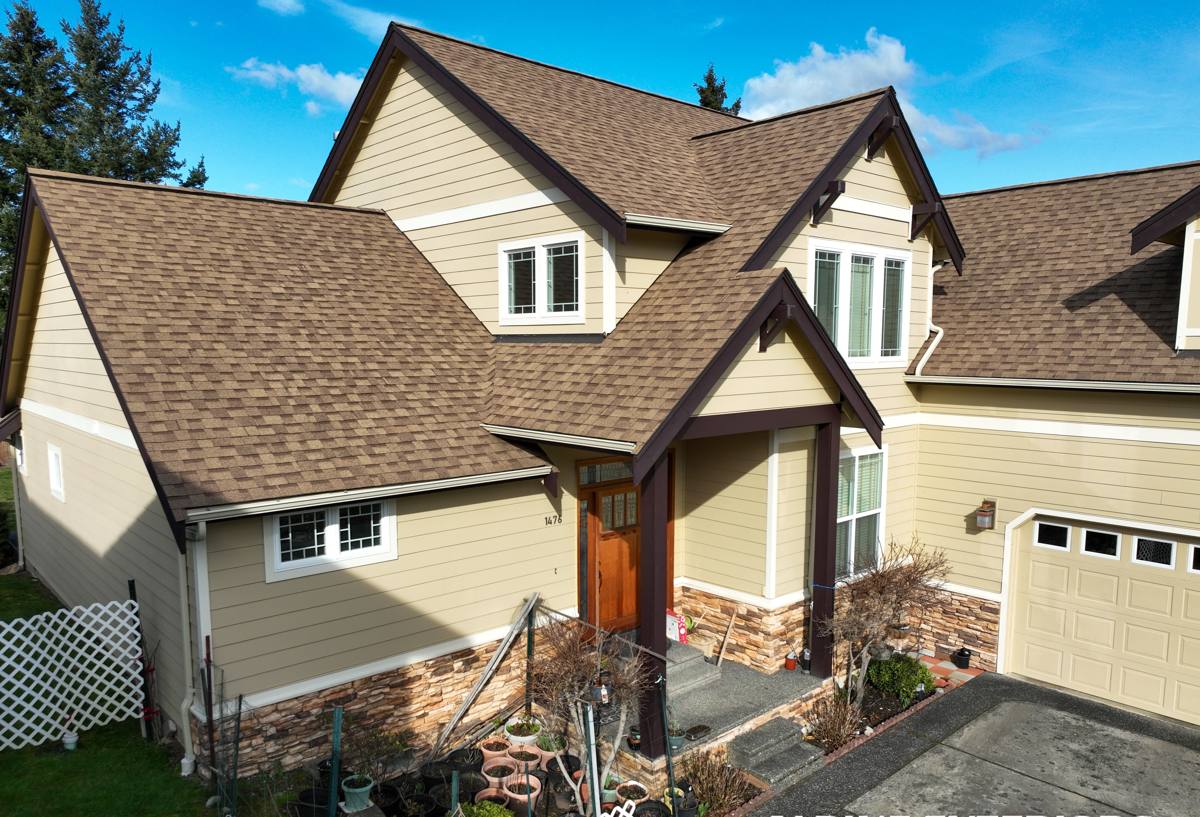
The Regional Weather Every Custom Window Has to Answer To
Being inland from the coast, Lynden doesn't take the direct salt spray some of our waterfront service areas see. It still sits inside the same marine-influenced weather system that shapes exterior work across this whole corner of Washington. Moist, salt-tinged air moves up the valley off the Sound, rain through fall and winter is frequent and usually driven sideways by wind rather than falling straight down, and mild temperatures give moss and mildew a long season to work on anything that stays shaded or damp. A window sits right at the seam between the inside of the house and all of that, which is why so many exterior moisture problems in this region trace back to a window opening rather than the wall field around it.
Custom windows raise the stakes on all of that. A larger picture window or a wide matched set has more perimeter to flash correctly and more glass area for wind load to push against. An arched, angled, or oversized opening has cuts in the surrounding wall assembly that are harder to flash cleanly than a plain rectangular rough opening. None of that makes custom windows a bad idea in this climate — it means the installation plan has to account for the added complexity instead of treating it like a routine stock swap.
Where the Risk Actually Concentrates
It's rarely the glass or the frame material that fails first on a custom unit here. It's the transition points — where a wide sill meets the siding below it, where a matched set's mullions tie into the framing between units, where an arched or angled top gets cut into the wall. Those spots need extra flashing attention, and they're also the spots a rushed installation is most likely to shortcut, simply because they take longer than a standard opening.
Common Custom Window Situations We See Around Lynden
- Non-standard replacement sizes — matching an existing opening in an older farmhouse or outbuilding that predates modern window sizing
- Matched sets for additions — new windows that need to line up in size, height, and sightline with existing windows elsewhere on the house
- Picture and large-format windows — fixed units built to open up a view across open land, with more glass area to manage structurally than a standard unit
- Converted outbuildings and barns — openings cut into structures never originally built to hold residential-grade windows, which usually need real structural review before a unit goes in
- Egress and code-driven openings — bedroom or basement conversions where the opening size is set by code minimums, not convenience
- Arched, angled, or specialty shapes — architectural details on newer builds that call for custom-cut units and matching custom flashing
Frame and Glass Choices That Hold Up in This Climate
Frame material matters even more on a custom unit, since a larger or more exposed window has more surface area for salt-tinged air and sustained moisture to work against. We'll walk through the honest trade-offs for the specific opening rather than defaulting to whatever's easiest to install.
| Frame Material | Moisture & Corrosion Behavior | Typical Maintenance | Best Fit |
|---|---|---|---|
| Vinyl | Won't rot; performs well if welds and seams are installed correctly | Low | Budget-conscious custom replacements, most standard shapes |
| Fiberglass | Dimensionally stable, holds up well to sustained moisture and temperature swings | Low | Larger custom units and wide picture windows carrying more glass load |
| Wood-clad | Attractive interior finish; exterior cladding still needs to be moisture-managed at every joint | Moderate to higher | Homes where an interior wood look matters and the exterior detailing is done right |
| Aluminum | Can corrode over time in salt-influenced air unless well-finished; conducts cold | Moderate | Narrow-sightline architectural designs where thin frames matter more than thermal performance |
On glass, a low-E coating with argon fill is standard on most jobs at this point and makes a real difference in comfort and condensation resistance without adding much to the cost. Triple-pane glass is worth discussing on larger picture windows or north-facing custom units that tend to run colder on the interior surface, but it isn't automatically the right call for every project — we'll size that recommendation to the specific opening and how the room gets used, not sell it as a blanket upgrade.
What a Correct Custom Install Actually Involves
- Field measurement and assessment — the opening gets measured on site, not estimated from old plans, and we check for out-of-square or out-of-level conditions common in older Lynden farmhouses
- Structural review where it's needed — larger picture windows, wide matched sets, and openings cut into converted outbuildings sometimes need added framing support before a unit can go in
- Honest sizing and material recommendation — custom order, modified stock size, or a reframed opening, explained with the reasoning rather than whatever's fastest to sell
- Ordering and realistic lead time — custom units are built to order, so we give you a real timeline up front instead of a best-case guess
- Careful removal and opening prep — the old unit comes out without damaging surrounding trim or siding, and any hidden rot or old flashing failures get addressed before the new window goes in
- Installation set to the specific shape — shimmed level, plumb, and square, with a flashing sequence built around the actual geometry of the opening rather than a generic template
- Insulation and air sealing — the gap around the frame gets filled properly, without trapping moisture against the framing
- Trim and finish integration — exterior trim matched to the surrounding siding and architecture so the finished window looks intentional, not added on
Flashing and Sealing: The Detail That Decides Whether It Lasts
Manufacturer installation guides are written for a standard rectangular opening in average conditions. A custom unit changes the flashing sequence every time — a wide sill needs to be pitched to shed water outward instead of letting it pool, a matched set needs continuous flashing carried across the shared mullions rather than treated as separate windows, and an arched or angled top needs flashing cut and lapped to follow the curve instead of running in a straight course. Skip or rush any of that and the window itself can be flawless while water still finds its way behind the wall.
This is where driving rain in the Nooksack valley actually tests an installation. Wind pushes rain sideways into head flashing, jamb flashing, and sill pans rather than letting gravity carry it straight down and off the wall. A well-made window with sloppy flashing will leak; a modest window installed with a correct, shape-specific flashing plan usually won't. On shaded or tree-lined lots, that moisture also lingers longer, which is part of why moss and mildew take hold at window sills and lower corners before homeowners notice anything else is wrong. None of this shows up on install day — it shows up two or three wet seasons later, which is exactly why it's worth getting right the first time rather than treating it as a step to move through quickly.
Cost Factors for Custom Window Projects in Lynden
We won't quote a number without seeing the actual opening, but the factors that move price on custom work are consistent from job to job.
| Factor | Why It Matters |
|---|---|
| Size and glass area | Larger units cost more to manufacture and are heavier and more time-consuming to install correctly |
| Shape complexity | Arched, angled, or non-rectangular units require specialty manufacturing and more flashing labor |
| Structural work | Converted outbuildings and oversized picture windows sometimes need added framing support |
| Frame material | Vinyl, fiberglass, wood-clad, and aluminum differ in both material cost and long-term maintenance |
| Opening condition | Rot, prior flashing failures, or out-of-square framing on an older home add repair work before the new unit goes in |
| Number of units | A matched set for an addition typically has better per-unit economics than ordering one custom window alone |
Custom windows cost more than a like-for-like stock replacement — that's a straightforward trade-off, not a surprise we spring on you after the fact. The added cost reflects the manufacturing complexity and the extra labor a non-standard opening genuinely requires.
Questions Worth Asking Before You Order
- Has the opening actually been field-measured, or is the quote based on a rough estimate?
- What does the flashing plan look like for this specific shape or size, not a generic answer?
- What's the realistic lead time once the order is placed, in writing?
- Does this opening need structural review before a new unit goes in?
- What's covered under warranty — the window unit and the installation labor are often separate
- How will the exterior trim be matched to the rest of the house?
Why a Crew That Already Works in Lynden Matters
Custom window work rewards experience with the specific conditions of a place more than standard replacement work does, because there's no catalog spec to fall back on. A crew that has actually measured odd-sized openings in Lynden's older farmhouses, flashed wide picture windows facing open farmland, and reframed converted outbuildings in this stretch of the Nooksack valley knows which details in the manufacturer's guidance are non-negotiable here and where extra time on flashing or sealant is worth it even when it isn't strictly required in a milder climate. That knowledge shows up in decisions that never make it into a sales conversation — how much lap a flashing course needs on an angled opening, when a sill needs a sloped composite cap instead of relying on caulk, how a converted barn opening's framing actually needs to be reinforced before a window goes in it.
It also means being available if something needs a second look after the fact, rather than chasing down an out-of-town crew that bid the job and moved on. Custom work is exactly the category of project where that kind of accountability matters most, since a mistake on an unusual opening is more expensive to correct than a mistake on a standard one.
Ready When You Are
If you're dealing with an odd-sized opening in an older Lynden home, planning an addition, converting an outbuilding, or just want a wider view across the property than a stock window allows, it's worth having someone look at the actual opening before you start pricing units. We offer free, no-pressure estimates for custom window projects in Lynden and the surrounding Whatcom County area — use the form below to get a time on the schedule.