 Bellingham Exterior
 Why Silver Beach Roofs Wear Differently Than Roofs Inland
Silver Beach is one of Bellingham's older, well-treed residential neighborhoods, and that combination of mature tree cover and Whatcom County's marine-influenced weather puts a specific kind of stress on a roof. Salt-tinged air moving through the region corrodes exposed metal fasteners and unprotected edges faster than it would in a drier inland climate. Driving rain, often pushed sideways by wind off the water, finds its way into laps, seams, and flashing details that would stay dry in a gentler storm. And the shade from mature landscaping keeps roof surfaces damp long after the rain stops, which is exactly what moss needs to take hold.
None of that means metal roofing is a bad fit here — it's actually one of the better options for this kind of exposure. But it does mean the details matter more in Silver Beach than they would on a roof in a wide-open, sun-baked lot. A metal roof installed with coastal-grade fasteners, proper underlayment, and real attention to ventilation will handle this climate for decades. One installed with shortcuts will show problems — streaking, fastener corrosion, moss buildup in valleys — much sooner than the manufacturer's warranty would suggest.
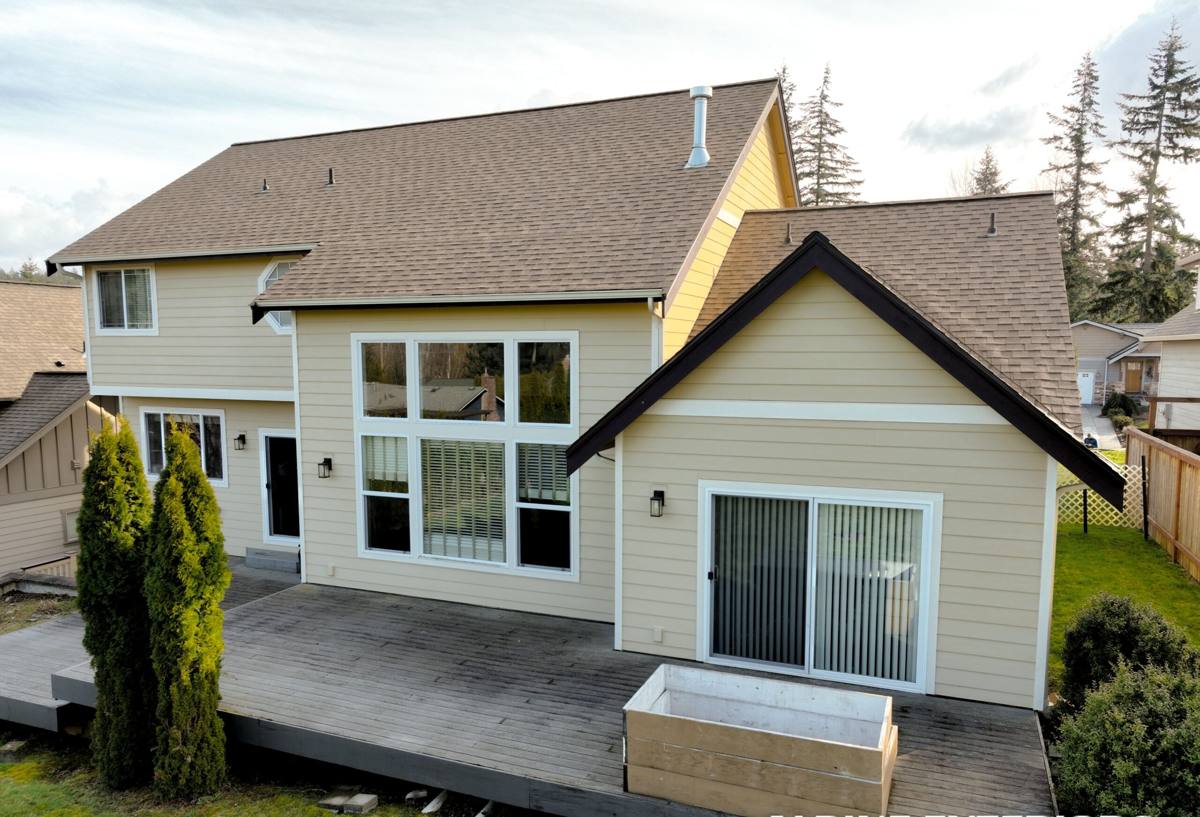
What Salt Air, Rain, and Moss Actually Do to a Metal Roof
Salt-laden air and fasteners
Metal panels themselves are usually well protected with factory paint or coating systems. The weak point is almost always the fasteners and cut edges — anywhere the protective coating is thin, missing, or was compromised during installation. Standard fasteners can start showing rust streaks in a marine climate well before the panels around them show any wear at all.
Driving rain and lap direction
Wind-driven rain in this part of Whatcom County doesn't always fall straight down. It can push up under laps and around fastener heads if a roof was installed without attention to prevailing wind direction, lap overlap, and sealant placement at penetrations. A roof that looks fine on a calm day can still leak during a sideways autumn storm if these details were rushed.
Moss and shaded, damp conditions
Moss doesn't grow on bare metal the way it does on shingles or moss-friendly cedar, but it does establish in debris that collects in valleys, around chimney flashing, and in any spot where leaves and needles sit against damp metal. Left unaddressed, that trapped moisture is what eventually leads to coating breakdown and corrosion underneath the debris, not the metal panel failing on its own.
Choosing the Right Metal Roofing System for a Silver Beach Home
Not all metal roofing is built the same way, and the right choice depends on your roof's pitch, how much tree cover surrounds the house, and your budget. Here's how the common options compare for a home in this kind of environment.
| System | Coastal/Marine Durability | Moss Resistance | Typical Cost Position |
|---|---|---|---|
| Standing seam (concealed fastener) | Excellent — no exposed fastener heads to corrode | Very good; smooth panel sheds debris well on adequate pitch | Higher upfront, lowest long-term maintenance |
| Exposed-fastener metal panel | Good, if coastal-rated fasteners and washers are used and maintained | Good, though fastener rows can catch fine debris over time | Mid-range |
| Stone-coated steel shingle/tile | Good; coating protects the steel base well | Moderate — textured surface can hold debris longer in shaded areas | Mid to upper-mid range |
| Corrugated/ribbed steel panel | Fair to good depending on coating quality and gauge | Good on steep pitches, weaker on low-slope sections | Lower upfront |
For heavily shaded, low-slope sections common on older Silver Beach lots, we generally steer homeowners toward standing seam or a well-detailed exposed-fastener system with upgraded fasteners, rather than a lower-cost option that will need more attention sooner. This isn't a knock on any manufacturer's product — it's about matching the system's maintenance profile to how much shade and moisture your specific roof actually sees.
What a Correct Metal Roofing Installation Involves
Deck inspection and tear-off
Every metal roofing job starts with removing the old roofing down to the deck and inspecting it for soft spots, rot, or prior water damage — especially around valleys, chimneys, and any area that's been shaded and damp for years. Metal installed over a compromised deck will still fail early, regardless of how good the panels are.
Underlayment and ice/water protection
A high-temperature synthetic underlayment, with self-adhered ice-and-water membrane at eaves, valleys, and penetrations, is the layer that actually keeps a home dry if wind-driven rain gets past the metal panels themselves. In this climate, we treat this layer as non-negotiable, not an upgrade.
Panel installation and fastening
Panels are run with attention to prevailing wind and water flow direction, with laps and seams sealed correctly at the manufacturer's specified overlap. Fasteners — or clips, on standing seam systems — are rated for coastal exposure, not generic hardware-store fasteners that will streak and corrode within a few seasons.
Flashing and penetrations
Chimneys, vents, skylights, and wall transitions are where most roof leaks actually originate, metal roofs included. Correct flashing detail here — not just caulk over a gap — is what keeps water out through decades of driving rain.
Ventilation
Proper intake and exhaust ventilation keeps moisture from condensing on the underside of the deck, which matters even more under a metal roof in a shaded, damp neighborhood like Silver Beach. Poor ventilation is a common, avoidable cause of hidden deck rot.
Our Process, From Estimate to Finished Roof
We keep the process straightforward and give you a clear picture of what you're getting at every step:
- On-site assessment — We look at your current roof, deck condition, ventilation, tree cover, and pitch, and talk through which metal system actually fits your home rather than pushing a single product.
- Written estimate — You get a clear scope of work and pricing before anything is scheduled, with no pressure to decide on the spot.
- Material selection — We help you weigh panel type, finish, and color against your budget and how much upkeep you want to take on long-term.
- Tear-off and deck prep — Old roofing comes off, the deck is inspected and repaired as needed, and any damage is documented and discussed with you before we cover it up.
- Installation — Underlayment, flashing, panels, and ventilation go in following manufacturer specifications and the coastal-exposure details this neighborhood needs.
- Final walkthrough — We go over the finished roof with you, clean up the site, and make sure you know what maintenance, if any, the system requires going forward.
Maintaining a Metal Roof in a Shaded, Damp Neighborhood
Metal roofing is low-maintenance compared to most other roofing materials, but "low-maintenance" isn't "no-maintenance," especially with the tree cover common around Silver Beach. A short seasonal routine goes a long way:
- Clear leaves, needles, and debris out of valleys and off of low-slope sections at least once or twice a year, especially after fall
- Keep gutters and downspouts clear so water isn't backing up under eave flashing
- Trim back overhanging branches that keep sections of the roof shaded and damp longer than necessary
- Do a visual check after major windstorms for lifted panels, damaged flashing, or debris buildup
- Have flashing and sealant at penetrations inspected every few years rather than waiting for a visible leak
Most of this is well within reach for a homeowner comfortable on a ladder, but we're also happy to handle periodic inspections for clients who'd rather not get up there themselves.
Why Local Experience in Silver Beach Actually Matters
A metal roofing job in Silver Beach isn't quite the same job as one on an open, treeless lot across town. Crews familiar with this neighborhood know to plan around narrower access on some properties, protect landscaping during tear-off, and account for the shade and moisture patterns that come with mature tree cover. They also know which flashing and fastener upgrades are worth the extra cost here versus in a less exposed part of Bellingham, because they've seen how roofs in this specific setting actually age over time — not just how a spec sheet says they should perform.
That local pattern-recognition is hard to substitute for. It's the difference between a crew executing a generic install and one making the small, correct decisions — lap direction, fastener grade, valley detailing — that determine whether your roof is still performing well in twenty years or showing problems in five.
Get a Straightforward Estimate for Your Silver Beach Home
If you're weighing metal roofing for a home in Silver Beach, we're glad to come take a look, answer your questions honestly, and put together a clear, no-pressure estimate. There's no obligation — just a straight assessment of what your roof actually needs. Use the form below to get started.