 Bellingham Exterior
 Building or Framing Out in South Hill? The Windows Have to Match the Site
South Hill sits up above downtown Bellingham on elevated, often view-facing ground, which means new construction here deals with more direct exposure than a lot of the flatter parts of Whatcom County. Wind off Bellingham Bay, driving rain that comes in sideways during fall and winter storms, salt-tinged air, and a long stretch of damp, shaded months that grow moss on anything that stays wet too long — all of that lands directly on a window opening before the siding, trim, and paint ever go on. If the window and its flashing aren't installed correctly at the framing stage, no amount of good siding work later will fix it.
This page is about one job done right: new-construction window installation for homes being built or fully re-sided down to the studs in South Hill. It's a different job than swapping out an old window in an existing wall, and treating it the same way is one of the more common — and expensive — mistakes we see corrected years later.
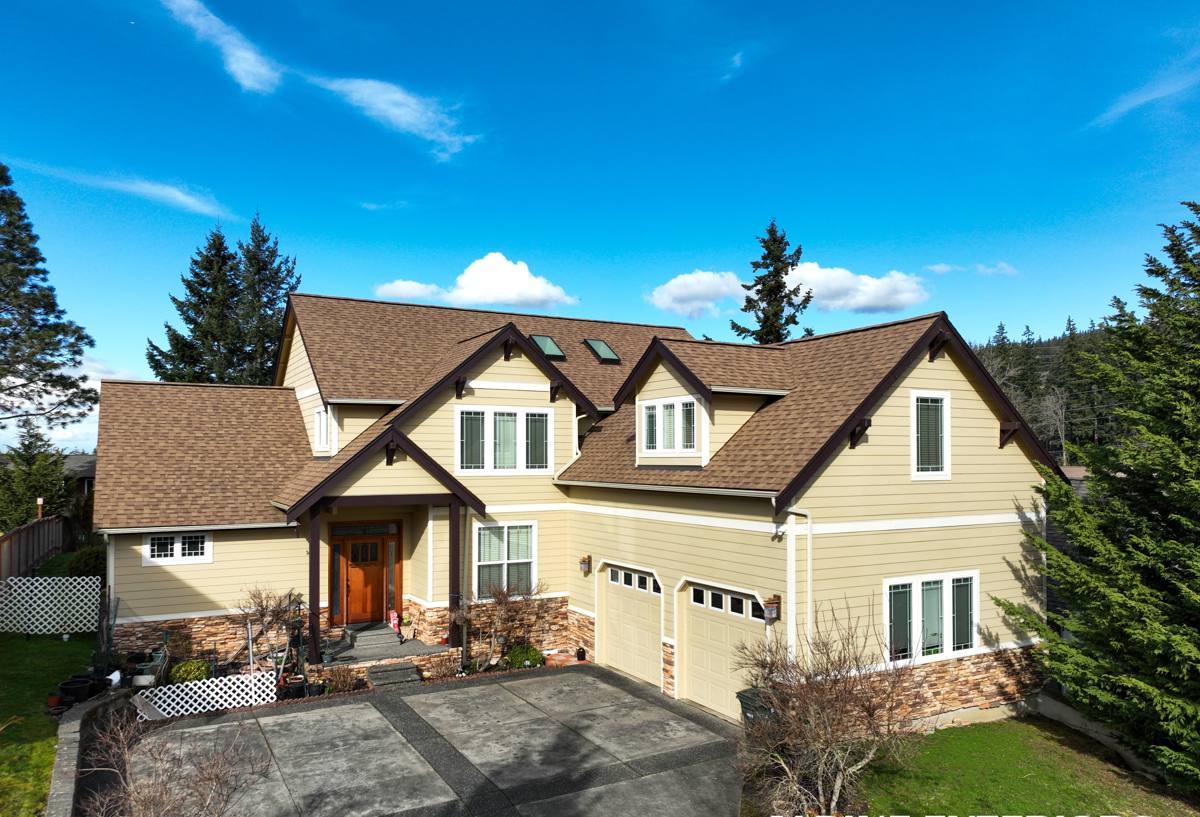
New-Construction Windows Are Not the Same Job as Replacement Windows
The terms get used loosely, but the distinction matters for how the job is priced, scheduled, and executed.
New-Construction (Nail-Fin) Windows
These have a flange, or "nailing fin," around the perimeter of the frame that gets fastened directly to the wall sheathing before the weather-resistive barrier and siding go on. They're used on new builds and on remodels where the wall is opened up to the studs. Because the fin integrates into the water management system of the whole wall, the flashing sequence around it is what actually keeps water out — the window itself is only part of the system.
Replacement (Pocket) Windows
These are sized to fit into an existing frame without disturbing the siding around it. Faster and less invasive, but they're relying on the old flashing and framing already being sound, which isn't the right approach for new construction or a full building envelope re-do.
If your South Hill project is new framing, an addition, or a re-side that's exposing the sheathing, you want a true new-construction install — not a pocket window pressed into a rough opening.
What Bellingham's Climate Does to a Window Opening Over Time
Driving Rain
Whatcom County gets sustained wind-driven rain, and elevated South Hill lots often catch more of it than sheltered valley locations. Water doesn't just fall on a window — it gets pushed sideways and upward under trim and siding edges. A correct install relies on shingle-lap flashing (each layer overlapping the one below it, sill to head) so water is always directed outward and down, never trapped behind the window.
Salt Air
Proximity to the bay means airborne salt settles on exterior surfaces, including fasteners, flashing, and window hardware. Uncoated or poorly rated fasteners and flashing tape corrode faster here than they would inland, which is why material selection at the flashing and fastener level matters as much as the window brand itself.
Moss Season
Bellingham's long damp season — often stretching from fall through spring — keeps north- and shade-facing surfaces wet for extended periods. Moss and algae take hold wherever water sits instead of shedding. Window sills, head trim, and any horizontal wood surface near the opening need a slope and a drainage path designed in from the start, or they'll stay damp long enough to grow moss and eventually soften.
What a Correct New-Construction Install Actually Involves
The window itself is often the easy part. The sequence around it is where quality shows up ten years later.
- Rough opening check — confirming the opening is square, level, and sized correctly before the window ever shows up on site.
- Sill pan flashing — a sloped, sealed pan under the window that catches any water that gets past the window itself and directs it back outside, rather than into the wall.
- Weather-resistive barrier integration — the housewrap or building paper has to be cut and lapped in a specific order so it sheds water over the flashing, not under it.
- Setting and fastening the window — shimmed level and plumb, fastened through the nailing fin per the manufacturer's schedule, without racking the frame.
- Head, jamb, and sill flashing — installed in the correct shingle-lap order so every layer overlaps the one below.
- Interior and exterior sealant — a continuous air and water seal, with a deliberate gap left at the bottom of the exterior sealant so any trapped moisture has somewhere to escape.
- Final inspection — checked for square, smooth operation, and a continuous, unbroken flashing line before siding closes it in.
Skip or rush any one of these steps and the failure usually doesn't show up until the drywall or siding is already covering it — which is exactly why it has to be done right the first time.
Choosing a Frame Material for South Hill's Exposure
There's no single "best" window material — it's a trade-off between maintenance, cost, and how the material handles this climate specifically. We'll walk through the honest trade-offs rather than pushing one option.
| Frame Material | How It Handles Local Exposure | Maintenance | General Cost Position |
|---|---|---|---|
| Vinyl | Good moisture resistance, no corrosion risk from salt air | Low — no painting or sealing needed | Most affordable |
| Fiberglass | Very stable in temperature swings and wind load, holds up well to coastal exposure | Low | Mid to upper range |
| Aluminum-clad wood | Attractive and durable on the exterior face, but any gap in the cladding or sealant lets moisture reach the wood core, which is a bigger risk in a wet, salt-air climate | Moderate — exterior finish inspection recommended periodically | Higher |
| Solid wood | Classic look but most sensitive to moisture, driving rain, and the region's long damp season | Highest — regular painting/sealing required | Highest |
For most new-construction projects on South Hill, we steer clients toward vinyl or fiberglass because the maintenance burden of wood and clad-wood products is a real, ongoing cost in this climate — not a one-time decision. If you want the look of wood on the interior with less exterior risk, that's a conversation worth having before you order windows, not after.
Our Process on a South Hill New-Construction Project
We work new-construction and full re-side jobs in South Hill regularly, so the sequence below is built around how this neighborhood's homes and lots actually behave, not a generic checklist.
- Site walk and measure — we confirm rough openings, note wind exposure and elevation on the lot, and check how the framing plan handles water management before ordering anything.
- Material and product selection — we go over frame material trade-offs for your specific exposure (view-facing wall, shaded side, ground-level vs. upper story) rather than a one-size answer.
- Flashing and WRB coordination — we coordinate window install timing with your general contractor or our own siding crew so the weather-resistive barrier laps correctly the first time.
- Installation — sill pan, window set, flashing sequence, and sealant, done in the order above, with photos taken before the wall is closed in for your records.
- Final walkthrough — every window checked for operation, seal, and squareness before we call the job done.
Cost Factors on a New-Construction Window Job
Every project is different, but the line items that actually move the number are consistent. Broad ranges only — your quote will be based on your specific opening count, sizes, and material choice.
| Factor | Why It Affects Cost |
|---|---|
| Number and size of openings | More and larger windows mean more flashing, labor, and material |
| Frame material | Vinyl is generally the most affordable; fiberglass and clad-wood cost more upfront |
| Glass package | Higher-performance glass (better insulating value, coastal-rated hardware) adds cost but pays back in comfort and durability |
| Wall height and access | Upper-story or steep-lot openings on South Hill's hillside sites can require additional staging or scaffolding |
| Coordination with siding/framing trades | Scheduling windows tightly with the WRB and siding install reduces exposure time and callbacks |
Why a Local South Hill Crew Matters Here
A window installer who mostly works drier, more sheltered parts of Whatcom County can still do a technically fine install and have it fail here — because the failure points on South Hill aren't generic. They're specific to wind-driven rain hitting an elevated, exposed wall, salt air working on fasteners over years, and a moss season that punishes any surface that doesn't shed water cleanly. A crew that installs windows on this hill regularly has already seen where those problems show up and builds the flashing and material choices around them from the start, instead of learning the lesson on a callback.
If you're framing a new build or re-siding down to the studs in South Hill, we're glad to walk the site, look at your plans, and give you a straightforward, no-pressure estimate on the window package and installation. Use the form below to get started.