 Bellingham Exterior
 Cordata sits inland from the waterfront, but that doesn't put its roofs out of reach of what Whatcom County weather does year-round. Marine air off Bellingham Bay still carries through the area, wind-driven rain still finds the same weak points it finds anywhere else in the county, and the tree cover common through Cordata's mix of newer subdivisions and older streets keeps plenty of roof lines shaded and slow to dry. New roof installation here isn't a different trade than anywhere else in Bellingham, but it does need to account for a specific combination of conditions rather than following a generic checklist. This page covers what a Cordata home actually needs from a new roof, what a correct installation involves, and how our process works from first look to final walk-through.
What Cordata's Climate Puts a New Roof Through
Three factors do most of the work wearing down a roof in this part of Whatcom County, and they don't act alone — they compound each other over a wet season.
Salt Air
Cordata isn't waterfront, but Bellingham's marine air still reaches inland neighborhoods on a regular basis. It's a slower, lower-grade version of what a bayfront property deals with, but it's still enough to accelerate corrosion on undersized fasteners, cheap flashing metal, and vent stack hardware over the years. The effect is easy to underestimate precisely because it's not dramatic — it just quietly shortens the life of anything metal that wasn't specified with it in mind.
Driving Rain
Rain in this region rarely falls straight down for long. Wind pushes it sideways and up under shingle edges, into laps and seams that a roof built only for vertical rainfall never accounted for. Cordata's mix of open subdivision lots and more sheltered older streets means wind exposure varies block to block, but the underlying risk is the same: underlayment and flashing that meet minimum code, rather than being sized for wind-driven exposure, are where leaks eventually start.
Moss Season
Whatcom County's moss season runs long, and Cordata's tree cover — a mix of retained second-growth stands and mature landscaping through its older streets — keeps a good number of roof planes shaded well past when a more open roof would have dried out. Moss holds moisture against roofing material, works its way under shingle tabs over time, and grows back fastest on the same north-facing or shaded slopes year after year. A roof installed without moss-resistant materials or attention to airflow underneath the deck will grow it back faster than one installed with those factors considered from the start.
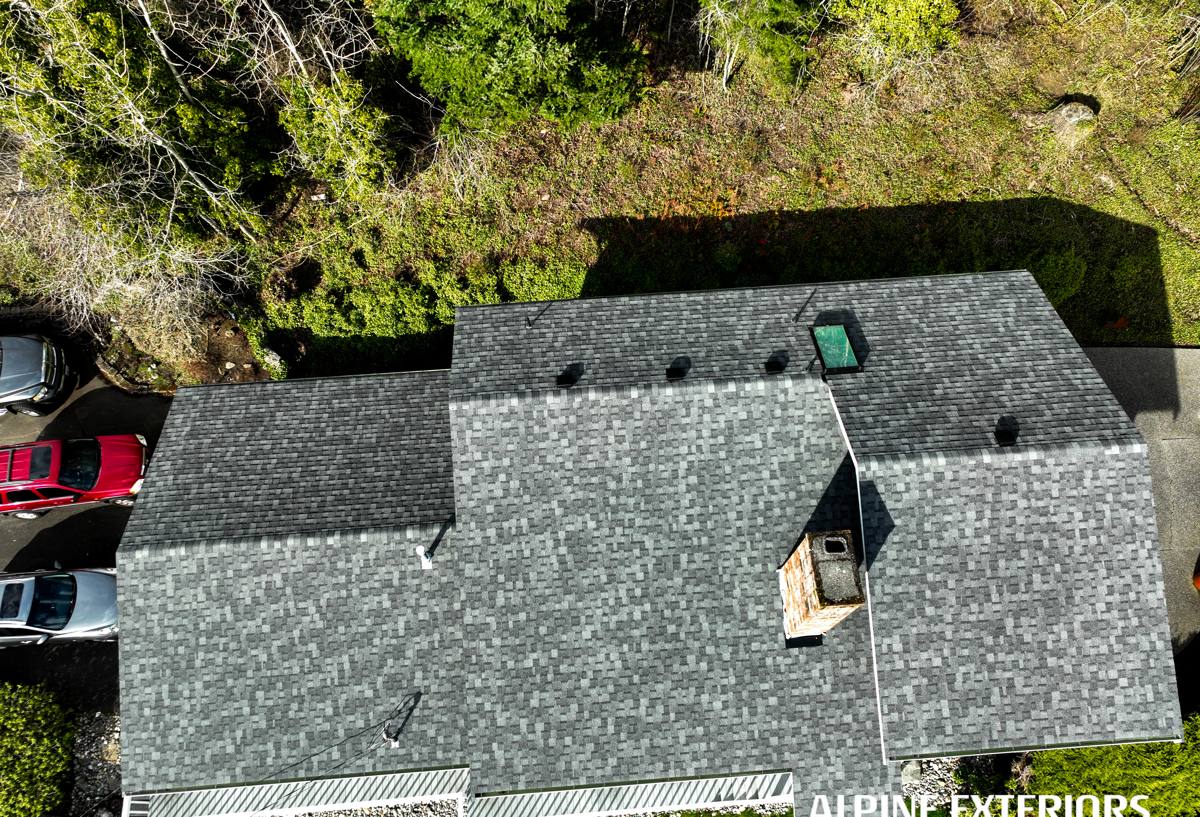
Signs a Cordata Home May Need a New Roof
Not every roofing problem calls for full replacement, but these are the signs that usually point toward it rather than a simple repair:
- Shingles cupping, curling, or losing granules across broad sections rather than one isolated spot
- Moss that returns within a season of cleaning, especially on shaded or north-facing slopes
- Rust staining at nail heads, flashing seams, or metal vent stacks
- Soft or spongy roof deck felt underfoot, or visible sagging from the ground
- Daylight visible through the roof deck when viewed from inside the attic
- Leaks appearing in more than one spot during a heavy wind-driven rain event
- A roof at or past its material's rated service life for this climate
- Granules building up in gutters well beyond normal light shedding
Choosing the Right Roofing System
Material choice matters more in this climate than in a drier, less exposed region. The comparison below is general — actual performance always depends on installation quality as much as the product itself.
| Material | How It Handles Rain & Marine Air | Moss Resistance | Typical Service Life |
|---|---|---|---|
| Architectural asphalt shingle | Solid with corrosion-resistant fasteners and proper flashing; standard hardware corrodes faster here over time | Moderate; algae-resistant granule versions help on shaded roofs | 25–30 years with correct installation |
| Standing seam metal | Excellent when specified with a coastal-rated finish; sheds wind-driven rain efficiently | High; smooth surface and steeper pitches discourage moss buildup | 40–50+ years |
| Cedar shake | Needs more upkeep in sustained damp conditions; can hold moisture against the deck | Low without regular treatment and cleaning | 20–30 years with active maintenance |
| Composition/synthetic shake | Good; manufactured for consistent weather resistance | Moderate to high depending on the product line | 30–50 years |
We walk through which option fits a given roof's pitch, sun exposure, and tree cover during the estimate rather than defaulting to one product for every home. A shaded, north-facing roof under mature trees and an open, sun-exposed roof a few streets over can reasonably end up with different recommendations.
What a Correct Installation Actually Involves
The visible shingle or panel layer is the smallest part of what determines how a roof holds up here. Most leaks and early failures trace back to what's underneath or around it.
Tear-Off and Deck Inspection
A full tear-off is the only way to see the actual condition of the roof deck underneath — soft spots, rot, or old water damage that a layover install would simply cover up. Any damaged sheathing is replaced before new material goes down; installing over a compromised deck just shortens the life of everything on top of it.
Underlayment
Given how often wind-driven rain shows up here, underlayment isn't an afterthought. A synthetic underlayment with strong water resistance, plus self-adhered membrane at eaves, valleys, and other vulnerable transitions, gives the roof a real second line of defense if rain ever gets past the primary surface.
Flashing
Flashing at chimneys, skylights, vent penetrations, and roof-to-wall transitions is where most older roofs in this area actually start leaking. We use corrosion-resistant flashing suited to marine-influenced air and take the time to integrate it properly with the underlayment rather than leaning on sealant to do the job alone.
Fasteners and Hardware
Standard fasteners corrode faster in this air than most homeowners expect, and a fastener failure years down the road is hard to trace and easy to prevent up front. We spec corrosion-resistant fasteners and hardware sized for this climate rather than whatever ships cheapest with a given shingle bundle.
Ventilation
Balanced intake and exhaust ventilation keeps the underside of the roof deck drier, which slows moss growth from below and protects against condensation damage during the long stretches of elevated humidity this region sees. A roof that looks fine from the curb can still be shortening its own life through poor attic airflow.
Our Installation Process
- On-site assessment. We inspect the existing roof, deck condition, ventilation, and any problem areas, and take accurate measurements for the estimate.
- Material selection. We go over the options that fit the home's exposure, pitch, and tree cover, with honest trade-offs for each rather than a single default recommendation.
- Written, itemized estimate. You get a clear bid covering tear-off, underlayment, flashing, ventilation, material, and cleanup — not a vague single-line number.
- Scheduling around the season. We build reasonable flexibility into the timeline, since wet-season delays are a normal part of working in Whatcom County rather than an excuse after the fact.
- Tear-off and deck repair. Old roofing comes off completely, and any damaged sheathing found underneath is addressed before anything new goes down.
- Underlayment, flashing, and roofing installation. Each layer goes on to manufacturer specification, with extra attention at valleys, penetrations, and wall transitions.
- Ventilation check. Intake and exhaust ventilation are confirmed to be functioning correctly before close-out.
- Final walk-through and cleanup. We review the completed roof with you and do a full site and magnetic nail sweep before calling the job done.
Cost Factors for a Cordata Roof
Bids on the same roof can vary by thousands of dollars, and the gap usually comes down to real differences in scope rather than one contractor simply charging more for the same work.
| Factor | Why It Matters in Cordata |
|---|---|
| Roof size and complexity | More valleys, dormers, and penetrations mean more flashing detail and labor time |
| Tear-off vs. layover | Whether hidden deck damage gets found and repaired before new roofing goes on |
| Underlayment grade | How well the roof resists wind-driven rain that gets pushed under shingle edges |
| Material choice | Metal and premium composites cost more upfront but often need less upkeep in this climate |
| Tree cover and shading | Heavily shaded lots may justify moss-resistant materials or added ventilation work |
| Roof pitch and access | Steep or hard-to-access roofs take longer and require more staging and safety setup |
A detailed, itemized estimate tells you far more than a single lump-sum figure, and it's worth asking any contractor to walk through exactly what's included before comparing numbers side by side.
Why Hire a Crew That Already Works in Cordata
A roofer who mostly works drier, more sheltered inland jobs isn't wrong about roofing in general — they're just working from a different set of defaults. Fastener specs, flashing choices, and underlayment coverage that are adequate on a typical dry-climate roof are often undersized for what Whatcom County throws at a roof year-round, especially on the shaded, moss-prone lots common through parts of Cordata. A crew that's already worked roofs in and around this neighborhood has seen which details actually fail here, not just which ones fail in a manufacturer's spec sheet.
It also matters for accountability after the work is done. A workmanship warranty is only as good as the company standing behind it, and a contractor with an established, ongoing presence in Bellingham is the one you can actually reach a few years later if a question comes up.
A Practical Checklist Before You Choose a Roofer
- Do they perform a full tear-off with deck inspection, not just a layover?
- Does the estimate specify underlayment type and shingle or panel product, not just "new roof"?
- Is flashing work at valleys, chimneys, and walls explicitly included in the bid?
- Do they carry current WA contractor licensing, liability insurance, and workers' compensation?
- Can they point to recent, verifiable local work in or near Bellingham?
- Does the bid separate material warranty coverage from their own workmanship warranty?
Maintaining a New Roof in This Climate
A correctly installed roof still benefits from basic upkeep given the conditions here:
- Keep gutters clear so water isn't backing up under roof edges during heavy rain
- Have moss growth addressed before it spreads across a full slope, not after it's established
- Trim back overhanging branches that keep a section of roof shaded and slow to dry
- Schedule a periodic check of flashing points, especially after major windstorms
- Address any small leak signs right away rather than waiting for the next dry stretch
If your Cordata home's roof is showing its age or you're planning ahead for a replacement, we're glad to take a look and talk through honest options. Use the form below to request a free, no-pressure estimate.