 Bellingham Exterior
 Roof Repair Built for Birchwood's Climate
Birchwood sits close enough to Bellingham Bay and the surrounding waterways that salt-laden air is a daily fact of life for anything on a rooftop. Add Whatcom County's long wet season, driving rain that comes in sideways off Puget Sound storms, and a moss season that can stretch from October well into spring, and you have a climate that is genuinely hard on roofing. This isn't a generic weather problem — it's a specific combination of moisture, salt, and shade that shows up on Birchwood roofs in predictable ways, and a repair that doesn't account for all three tends to fail early.
Homes in this part of Bellingham often sit under mature conifers or close to neighbors' trees, which means shaded roof sections stay damp longer after every rain. Combine that with salt air corroding exposed metal fasteners and flashing, and you get a roof that can look fine from the ground while quietly failing at the seams. A repair crew that understands this pattern knows to look past the obvious leak and check the areas most likely to be compromised next.
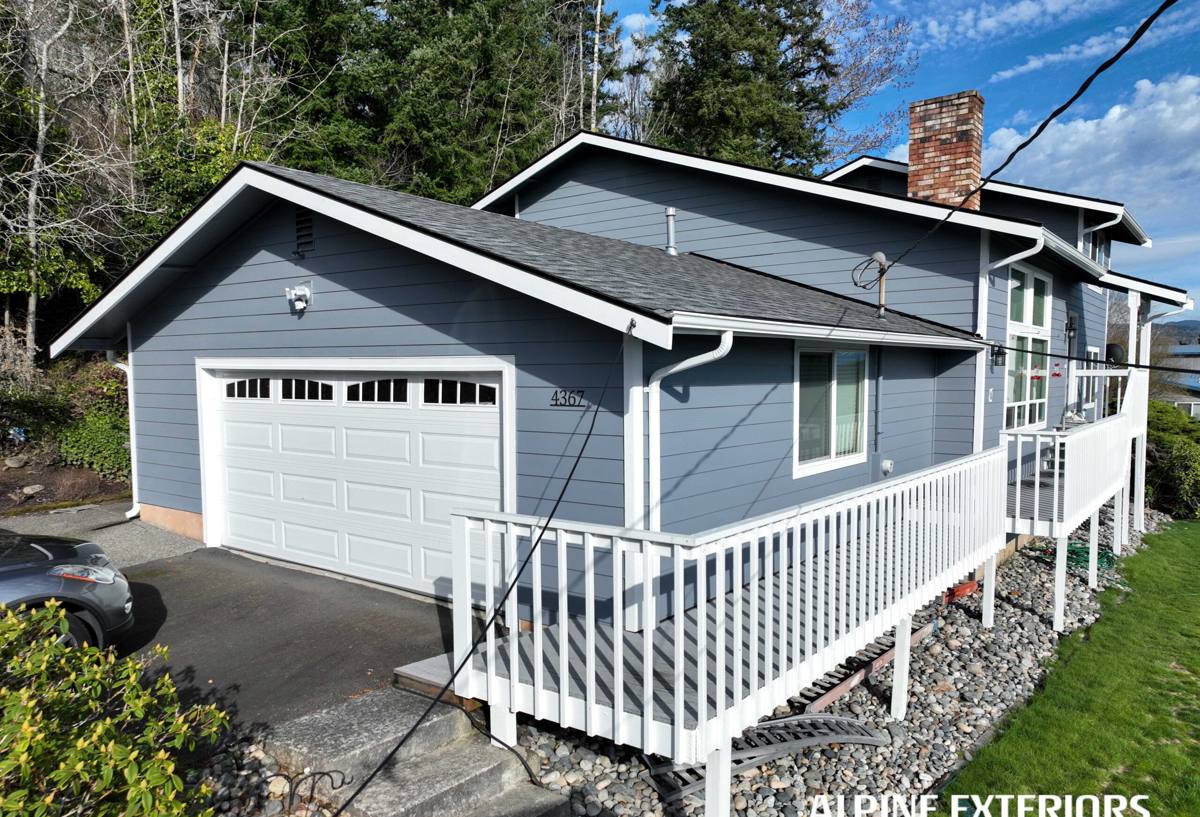
How Salt Air, Rain, and Moss Actually Damage a Roof
Salt Air and Corrosion
Salt-laden moisture accelerates corrosion on exposed metal — nail heads, flashing edges, gutter hardware, and any fasteners that aren't fully sealed or coated. Once a fastener rusts and loosens, the shingle or panel around it stops sealing properly, and that's where water finds its way in. This happens faster in Birchwood than it would further inland, which is part of why a roof that's only 12-15 years old here can already show fastener corrosion that an inland home wouldn't see until year 20.
Driving Rain and Wind-Driven Water
Storms that push rain sideways don't just test the shingles — they test every lap, seam, and penetration on the roof. Wind-driven rain can work its way under shingle edges, around chimney flashing, and through poorly sealed vent boots in ways that a straight-down rain never would. Repairs that only address the visible damaged shingle, without checking the flashing and underlayment beneath it, often leak again during the next windstorm.
Moss and Prolonged Moisture
Moss doesn't just look bad — it holds water against the roofing material far longer than bare shingles would dry out on their own. That prolonged dampness breaks down asphalt granules, softens wood shakes, and creates the exact conditions algae and rot need to spread. In shaded Birchwood yards, moss can establish itself within a couple of seasons if it isn't kept in check, and by the time it's visible from the ground, it's often already lifted shingle edges or worked into fastener holes.
Signs a Birchwood Roof Needs Repair Now
- Granules collecting in gutters or at downspout outlets — a sign asphalt shingles are wearing thin
- Dark streaking or green-black patches, especially on north-facing or shaded slopes
- Soft or spongy spots when walked on, which usually means the decking underneath has absorbed water
- Daylight visible around chimney or vent flashing from inside the attic
- Curling, cracking, or missing shingles after a windy rain event
- Water stains on interior ceilings, especially near exterior walls or below valleys
- Rust streaks running down from metal flashing or fasteners
- Consistently damp or moldy-smelling attic space, even without an obvious leak
Any one of these on its own might be minor. Two or more together, especially in a home that's had visible moss, usually means the roof needs a real inspection rather than a quick patch.
What a Correct Repair Actually Involves
A roof repair that holds up in this climate isn't just swapping a shingle or dabbing on sealant. It starts with figuring out how water is actually moving, not just where it's showing up inside the house — those two points are often several feet apart, since water can travel along rafters or sheathing before it drips through a ceiling.
A proper repair sequence looks like this:
- Locate the true entry point — tracing the leak path from the interior stain back to the actual breach in the roofing system, not just the nearest visible damage.
- Remove and inspect the affected area — pulling back shingles or panels to check the underlayment and decking for rot, softness, or prior water intrusion.
- Address the decking, not just the surface — replacing any compromised sheathing before new material goes back down, since roofing over soft decking just delays the same failure.
- Re-flash properly — corroded or undersized flashing around chimneys, vents, and valleys gets replaced, not just re-sealed, since sealant alone doesn't hold up to another wet season.
- Match and integrate new material — new shingles or panels are woven into the existing roofing so water sheds correctly across the repair, not around it.
- Clear and treat surrounding moss or debris — so the repaired section isn't immediately undermined by the same moisture buildup that caused the original damage.
Skipping any of these steps is how a "fixed" leak reappears a year later in a slightly different spot.
Repair vs. Replacement: How We Help You Decide
| Factor | Repair usually makes sense | Replacement usually makes sense |
|---|---|---|
| Roof age | Under 15 years, isolated damage | Approaching or past expected lifespan for the material |
| Extent of damage | One section, valley, or penetration point | Multiple sections, widespread granule loss, or repeated leaks in different spots |
| Decking condition | Solid, dry sheathing under the damaged area | Soft, rotted, or water-stained decking across large areas |
| Moss/algae history | Recent, hasn't caused structural moisture damage | Long-term moss coverage with visible material breakdown |
| Underlying material | Still in reasonably good shape overall | Brittle, cracked, or curling across most of the roof |
We'll always tell you honestly which side of that table your roof falls on. A repair that's clearly a stopgap isn't good service — it's just a delayed bigger bill, and we'd rather you know that up front.
Cost Factors Worth Understanding
Repair costs on a Birchwood roof typically depend on a handful of things: how many roof planes are affected, whether flashing needs to be replaced along with shingles, whether the decking is sound or needs partial replacement, and how steep or accessible the roof is. A single flashing repair around one chimney is a modest job. A repair that involves replacing rotted decking across a valley, re-flashing, and matching aged shingle color is a bigger scope — and it's worth getting that scope in writing before work starts, not discovering it mid-job.
Materials Common on Birchwood Roofs
Most homes in this part of Bellingham are roofed in asphalt composition shingles, with a smaller number of cedar shake, metal, or flat/low-slope roofs on additions and outbuildings. Each responds differently to this climate:
- Asphalt shingles — reliable and repairable, but granule loss accelerates under prolonged moss and moisture; flashing integration matters more than the shingle itself for long-term dryness.
- Cedar shake — attractive but especially vulnerable to moss and rot in shaded, damp conditions; needs more frequent moss treatment and closer inspection.
- Metal roofing — sheds water and moss well, but fastener corrosion from salt air is the main long-term watch point.
- Low-slope/flat sections — common over additions and porches; these rely on membrane integrity and proper drainage, and standing water here is often the first sign of a developing problem.
We don't push one material as a fix-all. The right repair approach depends on what's already on your roof and how it's held up so far — not on what's easiest to install.
Our Process for Birchwood Homeowners
We keep the process straightforward because a leaking roof is stressful enough without added confusion:
- Inspection — a full look at the roof, attic, and the specific area of concern, including flashing, valleys, and any moss coverage.
- Honest assessment — a clear explanation of what's actually wrong, whether it's a contained repair or something bigger, and why.
- Written scope and estimate — so you know what's included before any work starts.
- The repair itself — done to match the surrounding roofing and sealed against wind-driven rain, not just patched to stop the immediate drip.
- Cleanup and a final check — confirming the fix holds and flagging anything else worth keeping an eye on.
Preventive Maintenance Between Repairs
A repair lasts longer when it's not fighting the same conditions that caused the original damage. Simple, regular maintenance goes a long way in Birchwood's climate:
- Clear moss and debris from shaded slopes at least once a year, more often under heavy tree cover
- Keep gutters and downspouts clear so water doesn't back up under roof edges
- Trim back branches that keep roof sections shaded and slow to dry
- Check attic ventilation — poor airflow traps moisture and accelerates decking rot from the inside
- Have flashing and fastener points inspected every couple of years, especially after major storms
Why a Local Crew Matters
A roofer who works Birchwood regularly already knows which streets sit in heavier shade, which roof orientations take the worst of the driving rain off the bay, and how fast moss tends to come back in this specific pocket of Bellingham. That local pattern recognition matters when you're trying to figure out whether a leak is an isolated event or the first sign of something bigger. It also means faster response when weather turns — a crew based in the area isn't scheduling around a long drive every time a storm knocks something loose.
Whatcom County's coastal, tree-covered terrain isn't uniform, and a roof repair approach that works in a dry, open subdivision doesn't automatically translate to a shaded lot a few miles away. Experience with this specific mix of salt exposure, rainfall pattern, and moss pressure is what separates a repair that holds up from one that's back on the schedule next winter.
Get an Honest Look at Your Roof
If you're dealing with a leak, visible moss, or just want a second opinion before winter storms roll in, we're happy to take a look. The estimate is free, there's no pressure to book anything on the spot, and you'll get a straight answer about whether you're looking at a simple repair or something more. Use the form below to get started.