 Bellingham Exterior
 Siding Repair in Blaine: What the Climate Actually Demands
Blaine sits right on the water, close to the Canadian border, and that location comes with a specific mix of weather most inland Whatcom County homes never have to deal with in the same way. Salt-laden air off the bay, driving rain that comes in sideways during winter storms, and a long stretch of the year when conditions stay damp enough for moss and algae to take hold on a shaded wall. Siding repair here isn't just about patching a hole or replacing a cracked board — it's about understanding why the damage happened in the first place and fixing the actual cause, not just the symptom sitting on the surface.
We repair siding throughout Bellingham and the surrounding Whatcom County communities, and Blaine calls are consistently among the ones where a rushed or surface-level repair shows up fastest. A patch that looks fine for a season but doesn't account for moisture already trapped behind the cladding, or corrosion working on the fasteners, will fail again — usually within a year or two, and often worse than the original problem.
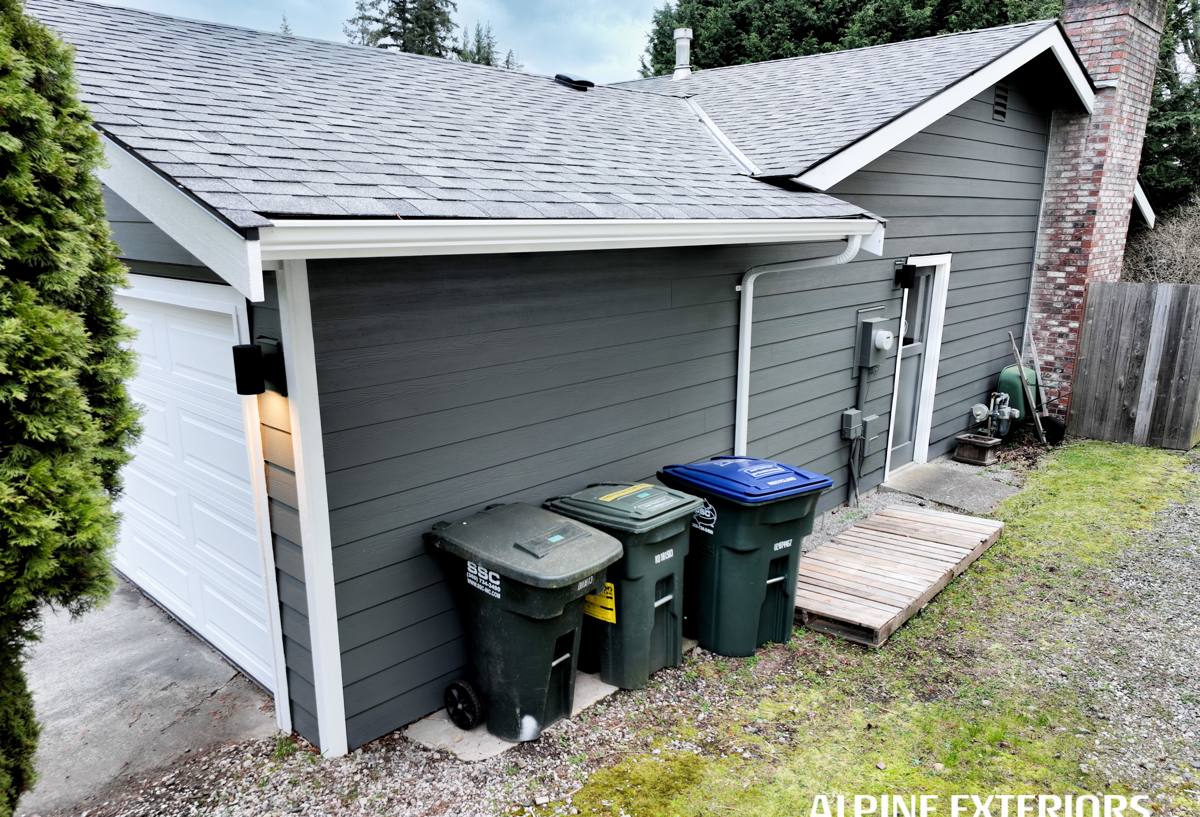
Signs Your Blaine Home Needs Siding Repair
Coastal, marine-influenced exposure tends to produce a fairly specific pattern of damage. If you're noticing any of the following, it's worth having someone take a close look before it spreads to more of the wall:
- Soft or spongy spots when you press on the siding, especially near the bottom courses and around window and door trim
- Persistent moss or dark green-to-black staining that comes back within weeks of being cleaned off
- Bubbling, peeling, or chalky paint that won't hold a fresh coat no matter how it's prepped
- Rust streaks bleeding from nail heads or other fastener locations
- Visible gaps, cracking, or warping at butt joints, corners, or seams
- A musty smell near exterior walls, which often means moisture has already worked its way inside the wall assembly
None of these are purely cosmetic. On a home this close to the water, small problems compound faster than they would a few miles inland, and waiting a season usually means a bigger repair later.
Salt Air and a Long Moss Season: Two Different Problems, One Wall
Salt air and corrosion
Airborne salt doesn't just sit on the surface — it works into fasteners, flashing, and any exposed metal, accelerating corrosion well beyond what you'd typically see further inland. Once a nail head starts rusting, it stains the siding around it and gradually loses its holding power, which is exactly the kind of slow failure that turns a small cosmetic issue into a full section of loose or falling siding if it isn't caught early.
Moss, shade, and moisture retention
Whatcom County's wet season runs long, and Blaine's proximity to the water adds humidity on top of that. Homes with mature trees, tight side yards, or north- and west-facing walls that don't get much direct sun stay damp longer after every rain, which is exactly the condition moss and algae need to establish and spread. Left alone, that growth holds moisture directly against the siding surface, and that's where paint failure and rot tend to start.
What a Correct Siding Repair Actually Involves
A proper repair isn't just swapping a damaged board for a new one. Done right, it means:
- Removing enough surrounding material to see the full extent of the damage, not just the visible edge of it
- Checking the water-resistive barrier and flashing underneath for tears, gaps, or improperly lapped seams
- Identifying and correcting whatever actually caused the failure — a missing kick-out flashing, a caulk joint that should never have been there, or a fastener pattern that let water track in
- Matching the replacement material's profile, reveal, and finish so the repair blends in rather than standing out as a patch
- Re-sealing and re-flashing every detail correctly so the same failure doesn't show up again in the same spot next winter
Mistakes we often find from prior repairs
A lot of the repair calls we get in Blaine are actually second repairs — someone else already patched the area once, and it failed again. The most common issues we find behind those earlier repairs are caulk used in place of proper flashing, replacement boards that were face-nailed or fastened incorrectly, and patches that were painted over without ever addressing the trapped moisture underneath. Skipping the diagnostic step is how a homeowner ends up paying for the same repair twice.
Repair or Replace? How We Make That Call
Not every damaged section needs a full re-side, but on homes with widespread moisture damage, repeated patch repairs can end up costing more over time than doing the job right once. Here's generally how we evaluate it during an inspection:
| Situation | Usual Recommendation | Why |
|---|---|---|
| Isolated impact damage or a single cracked panel | Spot repair | Damage is contained and the rest of the siding is sound |
| Rot at one or two trim or fastener locations | Targeted repair with flashing correction | Fixable once the moisture source is identified and addressed |
| Recurring moss or algae across multiple elevations | Cleaning plus repair of affected boards | The growth pattern usually points to a moisture issue, not just surface dirt |
| Widespread soft spots or multiple failed sections | Full or partial re-side | Underlying material and water barrier are likely compromised throughout |
| Old siding nearing the end of its service life | Replacement | Repeated repairs on aging material rarely hold up under continued coastal exposure |
We'll walk the exterior with you, point out exactly what we're seeing and why, and give you a straight answer about which category your home falls into — not just default to the most expensive option because it's easier to sell.
Why We Only Repair With James Hardie Fiber Cement
When we replace a damaged section, we use James Hardie fiber cement — the same product line we install on every full re-side we do. We don't stock vinyl, LP SmartSide, or other fiber cement brands, and that's a deliberate standard we've held to, not an oversight or a limitation of what we can get our hands on.
Fiber cement doesn't rot, and it isn't an organic food source for the moss and algae that thrive in this climate the way wood-based siding products can be. It's non-combustible, and it holds its shape and paint line through freeze-thaw cycles and heavy, wind-driven rain far better than materials that are more sensitive to moisture. Hardie's HZ5 product line in particular is engineered for exactly the kind of wet, marine-influenced weather Blaine sees most of the year. The factory-applied ColorPlus finish matters for repairs specifically, too — matching a weathered wall is far easier, and holds its color far longer, with a consistent factory-baked finish than with field-applied paint on a patched-in substrate.
We keep a range of Hardie profiles, reveals, and colors on hand specifically so repair sections can be matched closely to existing siding, rather than leaving an obvious mismatched patch on the wall.
Our Process for Blaine Siding Repair Calls
- Inspection: We examine the damaged area and the surrounding siding, plus flashing, caulking, and any signs the underlying problem extends further than what's visible from the ground.
- Diagnosis: We identify the actual cause of the failure — moisture intrusion, fastener corrosion, impact damage, or simple age — before recommending a fix.
- Straight quote: You get a clear scope and price before any work starts, including an honest recommendation on whether a spot repair or a larger fix makes more sense.
- Repair: We remove only what needs to come out, correct the underlying issue that caused the damage, and install matching Hardie material.
- Cleanup and final check: We confirm the repair is weathertight and finished to match before we consider the job done.
After the Repair: Keeping Moss and Moisture From Coming Back
A correct repair solves the underlying cause, but ongoing exposure to salt air and long wet seasons doesn't stop the day the work is finished. A few habits go a long way toward protecting the investment: keep gutters and downspouts clear so water isn't sheeting down the wall, trim back vegetation that's shading a wall and keeping it damp, rinse off accumulated salt spray and grime periodically rather than letting it sit, and have the exterior looked at after major storms for anything that shifted or came loose. None of this requires special equipment — it's routine upkeep, but it's the kind of upkeep that matters more in Blaine than it does a few miles inland.
Why Hiring a Crew That Already Works in Blaine Matters
A repair crew that mostly works inland won't necessarily think to check for salt-accelerated fastener corrosion, or know how quickly moss regrowth should be expected on a shaded, water-facing wall. We work throughout Bellingham and Whatcom County, including Blaine, and that means we've seen how this specific coastal exposure affects siding over time — not just in theory, but in the actual pattern of repair calls this area generates year after year.
That local pattern recognition changes what we look for during an inspection. It's the difference between patching what's visible and catching the flashing detail or fastener issue that would otherwise cause the exact same failure again next winter.
If you're seeing soft spots, recurring moss, or paint failure on your Blaine home's siding, we're happy to take a look. Reach out for a free, no-pressure estimate — we'll tell you honestly what we find and what it would actually take to fix it right.