 Bellingham Exterior
 Why Birch Bay's Waterfront Setting Is Hard on Siding
Birch Bay sits right on the water, and that location is both the reason people love living there and the reason siding fails faster on this stretch of Whatcom County coastline than it does a few miles inland. Homes here take a steady dose of salt-laden air blowing off the bay, wind-driven rain that gets pushed sideways into wall assemblies instead of falling straight down, and a moss and algae season that runs longer than almost anywhere else in Western Washington. Add in the freeze-thaw cycles of a Pacific Northwest winter and the UV exposure of open shoreline lots with little tree cover, and you have a climate that tests every seam, fastener, and finish on a house.
Siding that's rated for "Pacific Northwest weather" in general isn't automatically rated for waterfront exposure specifically. The difference matters when you're deciding what to put back on your home and who you trust to install it.
What Salt Air Actually Does
Airborne salt is corrosive to exposed metal fasteners, trim flashing, and hardware, and it accelerates the breakdown of lower-grade coatings and caulks. It also holds moisture against a wall surface longer than dry inland air does, which matters for any siding material that isn't fully engineered to handle sustained dampness.
What a Long Moss Season Does
Moss and algae need shade, moisture, and time to establish, and Birch Bay's marine humidity gives them plenty of both. Once organic growth takes hold on a siding surface, it holds even more water against the substrate underneath — which is exactly the condition that causes rot, swelling, and coating failure in materials that aren't built to shrug off constant moisture.
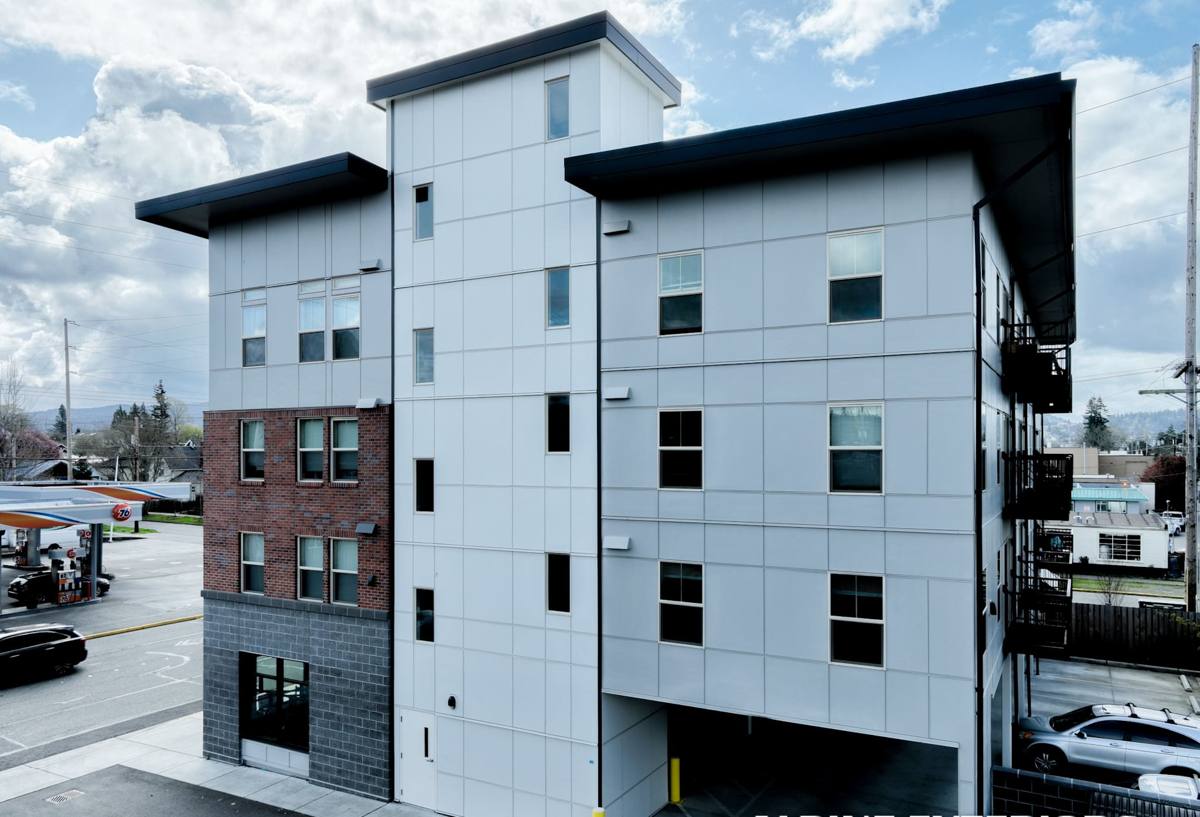
Signs Your Birch Bay Home Needs Siding Replacement
Siding damage in a marine climate doesn't always announce itself with an obvious crack or a missing board. More often it shows up as a slow pattern of small warning signs. If you're seeing more than one of these, it's worth having the wall assembly looked at, not just the surface:
- Soft or spongy spots when you press on the siding, especially near the bottom courses and around window and door trim
- Persistent moss, algae, or black streaking that comes back within a season of cleaning
- Bubbling, peeling, or chalky paint that won't hold a fresh coat
- Visible gaps, warping, or cupping in individual boards or panels
- Rust staining bleeding from fastener heads or trim corners
- Rising energy bills alongside drafts you can feel near exterior walls
- Interior signs — musty smells, discolored drywall, or trim separating from the wall on exterior-facing rooms
Why We Install Only James Hardie Fiber Cement Siding
We made a deliberate decision as a company to install James Hardie fiber cement siding exclusively, and we don't apologize for it. We don't install vinyl, LP SmartSide, Cemplank, Allura, primed spruce, or cedar. That's not because those products have no merit — vinyl is inexpensive and low-maintenance in the right setting, engineered wood has a warm look at a lower price point than fiber cement, and cedar has genuine curb appeal. But in a shoreline climate like Birch Bay's, each of those materials carries a trade-off that we're not willing to put our name behind.
Vinyl softens, warps, and can crack in temperature swings, and its seams and J-channels give wind-driven rain more opportunities to get behind the cladding. Engineered wood products rely on factory-sealed edges and strict field maintenance to resist moisture — miss a resealing cycle in a humid marine environment and the wood-based core is vulnerable to swelling. Cedar is a real wood product that needs ongoing staining or sealing to hold up against constant damp and salt air, and it's also combustible. James Hardie fiber cement is non-combustible, dimensionally stable, and manufactured specifically with moisture and climate performance in mind — which is exactly what a waterfront property needs from its exterior.
The Honest Trade-Off
Fiber cement costs more up front than vinyl and is heavier and more labor-intensive to install correctly than any of the alternatives. We think that trade-off is worth it for a house that has to stand up to salt air and driving rain year after year, but it's a real trade-off and we'll say so plainly when we walk your property.
What a Correct Siding Replacement Actually Involves
Siding is only as good as what's underneath it. A rushed re-side that just pulls off the old boards and nails up new ones over a compromised wall is common in this trade, and it's how homeowners end up with hidden rot problems a few years later. A correct job in a climate like Birch Bay's follows a specific sequence.
Tear-Off and Wall Inspection
We remove the existing siding down to the sheathing and inspect for water damage, soft framing, or prior repairs that were never done right. This is the point where hidden problems — the ones that don't show from the outside — get found and dealt with before anything new goes up.
Weather-Resistive Barrier and Flashing
A properly lapped weather-resistive barrier, correctly integrated flashing at windows, doors, and roof-to-wall transitions, and attention to drainage behind the cladding are what actually keep wind-driven rain out of the wall assembly. This layer does more to protect a Birch Bay home long-term than the siding material itself, and it's the layer that gets skipped or rushed on cut-rate jobs.
Installation to Manufacturer Specification
James Hardie engineers exact requirements for fastener type and spacing, board clearances from grade and roof lines, caulking at joints, and factory-finish touch-up. Installing off-spec doesn't just risk the workmanship — it can void the manufacturer's warranty. We install to spec every time, not as an upsell but as the baseline.
Choosing the Right Hardie Product Line for a Waterfront Home
James Hardie makes several siding profiles, and the right choice depends on your home's style and how exposed the lot is to wind and salt spray. For homes directly on Birch Bay's shoreline or on open lots with little windbreak, we generally lean toward Hardie's HZ5 climate-engineered product line, which is formulated for wetter, harsher climate zones.
| Product | Look | Best Fit |
|---|---|---|
| HardiePlank Lap Siding | Traditional horizontal lap, several width and texture options | Most Birch Bay homes; classic or modern exteriors |
| HardieShingle Siding | Staggered or straight-edge shingle profile | Cottage or coastal-style homes wanting a shingle look without wood's maintenance |
| HardiePanel Vertical Siding | Smooth or textured vertical panels | Modern accents, gables, and mixed-material facades |
| HardieTrim Boards | Corner boards, fascia, window and door trim | Finishing detail work on any of the above |
All of these are available with Hardie's ColorPlus factory finish, which bakes the color on under controlled conditions rather than relying on field-applied paint — an advantage in a climate where a fresh coat of site-applied paint has to cure in unpredictable marine weather.
Our Process From Estimate to Finished Job
1. On-Site Walkthrough
We look at your current siding, your home's exposure to wind and water, and any problem areas you've already noticed, and we're upfront about what we find.
2. Written Scope and Product Selection
You get a clear, itemized plan — which Hardie product and line, what happens with trim and flashing, and a realistic timeline — before any work starts.
3. Tear-Off, Repair, and Weather Barrier
Old siding comes off, damaged sheathing or framing gets repaired, and the weather-resistive barrier and flashing go in correctly the first time.
4. Installation and Finish Detail
Siding, trim, and caulking go in to manufacturer spec, with attention to the clearances and fastening details that keep water out over the long run.
5. Final Walkthrough
We walk the finished job with you, point out anything you should know for long-term care, and make sure the work matches what was scoped.
What Siding Replacement Costs Depend On
We don't publish blanket per-square-foot pricing because it's not honest — the real cost depends on your home's specific condition and scope. But the main factors are consistent from house to house:
| Factor | Why It Matters |
|---|---|
| Amount of hidden damage found at tear-off | Rotted sheathing or framing has to be repaired before new siding goes on |
| Home size and wall complexity | More corners, gables, and trim detail mean more labor |
| Product line and profile chosen | HZ5 versus standard lines, and lap versus shingle versus panel, price differently |
| Story height and access | Second-story and steep-lot work takes more time and equipment |
| Existing trim and flashing condition | Full trim replacement adds scope beyond the field siding |
Why Local Experience in Birch Bay Matters
A contractor who mostly works inland doesn't necessarily know to plan for the wind loading and moisture behavior that come with an open waterfront lot, or how much longer moss and algae linger on a shaded, humid Birch Bay wall than they would a few miles east. Crews that regularly work this specific stretch of Whatcom County coastline recognize salt-air corrosion on fasteners and trim early, know which sides of a house take the worst wind-driven rain, and plan flashing and drainage details accordingly. That local pattern recognition is the difference between a siding job that looks right on installation day and one that actually holds up through a decade of Birch Bay winters.
Caring for Your New Siding After Installation
James Hardie fiber cement is low-maintenance compared to wood or engineered wood, but "low-maintenance" isn't "no-maintenance," especially this close to the water. A periodic rinse to keep salt residue and organic growth from building up, prompt attention to any caulk lines that start to fail, and keeping vegetation trimmed back from walls to maintain airflow will keep the siding — and the ColorPlus finish — looking right for the long haul.
If your Birch Bay home is showing signs of siding wear or you're planning ahead for a replacement, we'll walk the property with you and give you a straight assessment of what's going on and what it would take to fix it right. The estimate is free, there's no pressure, and you'll get a written scope before any work begins — just fill out the form below to get started.