 Bellingham Exterior
 Why Siding Wears Out Faster in Birchwood
Homes in Birchwood sit inside Bellingham's marine climate zone, which is a mixed blessing for exterior materials. The same moderate temperatures that make Whatcom County pleasant to live in also mean siding almost never gets a hard, dry stretch to fully recover between storms. Salt-tinged air drifting in off Bellingham Bay accelerates corrosion on fasteners and metal trim. Driving rain, pushed sideways by wind off the water, works its way behind laps and around trim in ways that vertical rain never does. And the long, damp shoulder seasons here give moss and algae months at a time to colonize north-facing walls, shaded siding, and anything with a rough or porous surface.
None of this means siding is a bad investment in Birchwood — it means the products and the installation details have to be chosen for this climate specifically, not for a national average. A siding job that would hold up fine in a dry inland climate can fail here in a fraction of the time if the wrong material or the wrong detailing goes on the wall.
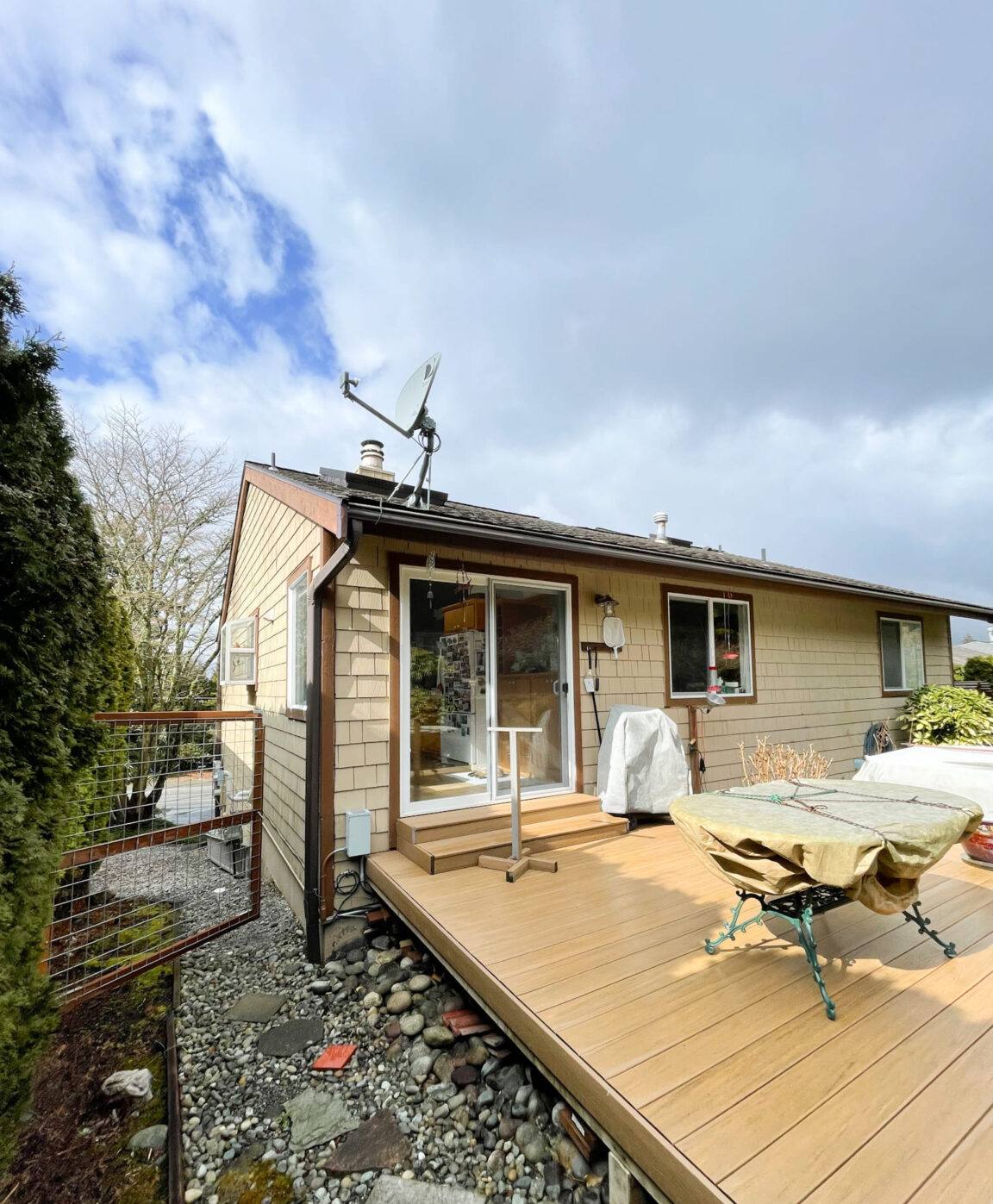
Signs a Birchwood Home Needs Replacement, Not Just Repair
Siding problems in this climate often start hidden and only show up once moisture has been working behind the surface for a while. Homeowners in Birchwood should treat these signs as a cue to get a professional look, not necessarily as an emergency, but as something worth acting on before the next wet season:
- Soft, spongy spots when you press on the siding, especially near the bottom courses or under windows
- Paint that's bubbling, peeling, or won't hold a fresh coat no matter how it's prepped
- Dark staining or streaking below seams, trim joints, or window heads
- Persistent moss or black-green algae growth that comes back within a season of cleaning
- Visible warping, cupping, or gaps opening up between boards or panels
- Rust bleeding from fastener heads or trim fasteners
One or two of these on their own might mean a localized repair. Several together, especially on a home that's had multiple paint jobs or patch repairs over the years, usually points to a siding system that's reached the end of its useful life.
What a Correct Siding Replacement Actually Involves
Siding replacement done right is not just swapping old boards for new ones. It's a chance to fix everything behind the siding that you can't normally see or reach. A proper job includes:
- Full tear-off down to the sheathing, not installation over existing siding
- Inspection of the sheathing for rot, delamination, or insect damage, with repair or replacement of any compromised sections
- Installation of a new weather-resistive barrier (WRB) — the housewrap layer that manages any moisture that gets past the siding
- Correct flashing at every window, door, deck ledger, and roof-to-wall intersection, so water is directed out and down rather than trapped
- Proper fastening pattern, lap exposure, and clearances specified by the siding manufacturer, not a generic "close enough" install
- Caulking used only where it belongs — at trim joints and penetrations — never as a substitute for correct flashing
Skipping any of these steps doesn't usually show up as a problem on installation day. It shows up two, five, or ten years later as rot, mold, or a premature repaint — right when it's most expensive to fix.
Why We Only Install James Hardie Fiber Cement
We install James Hardie fiber cement siding exclusively. We don't offer vinyl, LP SmartSide, or primed wood siding, and that's a deliberate standard, not a limitation of what we're able to install. Fiber cement is non-combustible, doesn't feed moss and mildew the way wood-based products can, and holds its shape and finish through the freeze-thaw and constant moisture cycling that's normal for this part of Washington. Hardie's ColorPlus factory-applied finish is baked on under controlled conditions, which gives it better fade and moisture resistance than field-applied paint, and the company backs its products with a long, transferable warranty that matters if the home ever sells.
Hardie also engineers regional product lines — its HZ5 formulation is built specifically for climates with more moisture exposure and freeze-thaw cycling, which describes Whatcom County well. We install to those specifications, not around them, because the warranty and the performance both depend on it.
Our Siding Replacement Process
Every Birchwood project follows the same sequence, whether it's one wall or a full re-side:
- On-site assessment. We look at the current siding, check for moisture intrusion at vulnerable points, and confirm whether repair or full replacement makes sense.
- Tear-off. Old siding and trim come off down to the sheathing so nothing is hidden or covered over.
- Sheathing repair. Any soft, rotted, or damaged sheathing is cut out and replaced before anything new goes back on.
- Weather barrier and flashing. A new WRB goes on, followed by flashing at every window, door, and penetration.
- Hardie installation. Panels or lap siding go on per manufacturer spacing, fastening, and clearance requirements.
- Trim and detail work. Trim, corners, and caulking are finished to shed water correctly at every joint.
- Final walkthrough. We go over the finished work with the homeowner before calling the job complete.
What Drives the Cost of Siding Replacement
Every Birchwood home is different, but the same handful of factors drive most of the price variation we see. This isn't a quote — it's a guide to what to expect a contractor to ask about:
| Factor | Why It Matters |
|---|---|
| Home size and number of stories | More square footage and multi-story access both add labor time |
| Siding profile (lap, panel, or shingle style) | Different Hardie profiles have different material and labor costs |
| Sheathing condition | Rot or water damage found during tear-off adds repair scope |
| Trim and accessory scope | Full trim replacement costs more than reusing sound existing trim |
| Old siding removal and disposal | Volume and type of debris affects hauling and disposal cost |
| Site access | Tight lots, tall walls, or obstructed elevations slow the work |
The only way to get real numbers is a walk-through, since sheathing condition in particular can't be fully known until the old siding comes off.
Detailing That Matters in Birchwood's Climate
The difference between siding that lasts and siding that fails early usually comes down to details most homeowners never see once the job is finished. In a climate with this much driving rain and salt-laden air, a few details matter more here than they would somewhere drier:
Kick-out flashing at rooflines that meet walls redirects water away from the wall instead of letting it run down behind the siding — a small piece of metal that prevents a lot of hidden rot. Deck ledger flashing keeps water from wicking into the wall where a deck attaches to the house. Window and door head flashing has to overlap the WRB correctly so water sheds outward at every opening. And a proper drainage gap behind the siding lets any moisture that does get through drain and dry out instead of sitting against the sheathing. None of these show up in a walkthrough from the street — they show up in whether the wall behind the siding stays dry for the next 30 years.
Why a Crew That Already Works Birchwood Matters
Siding installation isn't identical everywhere. A crew that's worked plenty of jobs in the Bellingham area already knows how moss behaves on shaded elevations here, how far driving rain travels up a wall in a winter storm, and which flashing details actually get tested by this climate versus which ones are just code minimums. That local repetition is what turns a technically correct install into one that holds up. It also means fewer surprises with City of Bellingham and Whatcom County permitting and inspection expectations, since those requirements are already familiar territory rather than something being looked up for the first time.
What to Ask Before You Sign a Siding Contract
Whoever you hire for siding replacement in Birchwood, these are worth asking directly before signing anything:
- Will you replace the weather-resistive barrier, or install over the existing one?
- How will you handle flashing at windows, doors, and the deck ledger?
- Are you a certified installer for the siding brand you're proposing?
- Is the manufacturer's warranty transferable if I sell the house?
- What happens if you find rotted sheathing once tear-off starts?
- Are you licensed, bonded, and insured in Washington State?
- How do you handle disposal of the old siding and job-site cleanup?
A contractor who answers these clearly and specifically, without hedging, is usually one who does this work correctly and often.
If your Birchwood home is showing signs of siding wear, or you're planning ahead for a replacement, we're happy to take a look and walk you through what we find. The estimate is free, there's no pressure to commit, and you'll get a straight answer about what your home actually needs.