 Bellingham Exterior
 Silver Beach Roofs Work Harder Than the Brochure Says
Silver Beach sits in one of the more mixed micro-climates in the Bellingham area — mature fir and cedar canopy on a lot of properties, close proximity to open water, and the kind of wind-driven winter storms that come off the Salish Sea and push rain sideways instead of straight down. Add in salt-laden air that travels inland on those storms, and a roof out here is dealing with more variables than a shingle warranty chart accounts for. None of that means asphalt shingle roofing is the wrong choice for this neighborhood. It means the installation details matter more than they would on a simple, open, sun-exposed roof somewhere drier.
We've worked on enough roofs in this part of Whatcom County to know which failure points show up here specifically: moss establishing in shaded valleys and north-facing slopes, gutters overwhelmed by needle drop before a storm even arrives, and fasteners or flashing that were fine for a milder climate but weren't specified for this much sustained moisture. A correct shingle job in Silver Beach isn't a different product — it's the same asphalt shingle system installed with those local realities built in from the start.
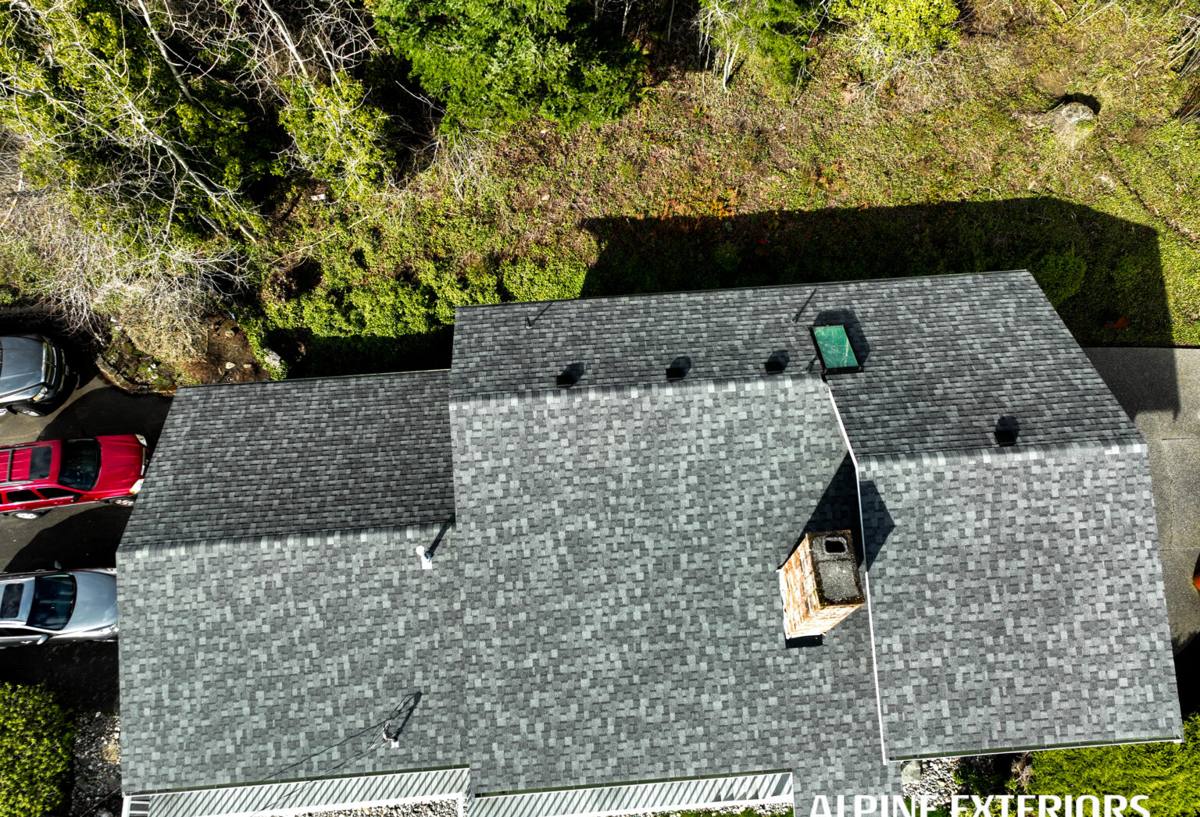
What Asphalt Shingle Roofing Needs to Do on a Silver Beach Home
Asphalt shingles are a good fit for this area when they're specified and installed correctly. The material itself is proven, repairable, and available in a range of price points — but a shingle roof only performs as well as the system underneath it. On a shaded, damp lot, three things matter more than the shingle brand printed on the wrapper.
Moisture management starts below the shingle
Ice and water shield at the eaves, valleys, and around every penetration isn't optional detailing here — it's the difference between a roof that sheds a wind-driven rain event and one that lets water find its way under the shingle line. Bellingham doesn't get the deep freeze-thaw cycles of colder climates, but the volume and duration of rain does the same kind of damage over time if the underlayment package is thin.
Ventilation has to move moist air out, not just hot air
In a lot of climates, roof ventilation is mostly about heat. In Whatcom County, it's just as much about moisture. A shaded roof deck that can't breathe stays damp longer after every rain, which is exactly the condition moss and algae need to get established. Balanced intake and exhaust ventilation keeps the underside of the deck drying out between storms instead of staying wet for days.
Flashing and fastening for sustained wind-driven rain
Storms here tend to arrive with sustained wind rather than short bursts, which pushes rain up under poorly lapped flashing that would hold up fine in calmer weather. Step flashing at walls, proper counterflashing at chimneys, and correctly nailed shingles (not just gunned in fast) are the parts of the job that don't show up in a photo but decide whether the roof holds up over the next storm.
Signs a Silver Beach Roof Needs Attention
Because so much of this neighborhood sits under tree cover, visual wear can be easy to miss from the ground. A few things are worth checking a couple of times a year, especially heading into the wetter months.
- Dark streaking or green-black staining, especially on shaded, north-facing slopes
- Moss growth at the shingle butt edges or in valleys, even if it looks minor
- Granules collecting in gutters or at downspout outlets after rain
- Shingle edges that look curled, lifted, or cupped rather than lying flat
- Soft or discolored decking visible from inside the attic near eaves or valleys
- Gutters that overflow during storms due to needle and leaf buildup
- Daylight visible around chimney flashing or plumbing vent boots
Any one of these on its own usually isn't an emergency. Several at once, or moss that's been left to spread for more than a season, is worth a closer look before it turns into a decking repair instead of a straightforward reroof.
What a Correct Asphalt Shingle Installation Involves
A shingle roof is a system, not a single product, and skipping steps is how roofs that look fine for the first year or two start failing early in year five or six. Here's what we consider non-negotiable on every tear-off and reroof, in this neighborhood or anywhere else in our service area.
- Full tear-off to the deck — no roofing over an existing layer, which traps moisture and voids most manufacturer warranties
- Deck inspection and replacement of any soft, delaminated, or water-stained sheathing before anything new goes down
- Ice and water shield at eaves, valleys, and all penetrations, sized for local rain volume rather than the minimum code requirement
- Synthetic underlayment across the full field for a secondary water barrier under the shingle
- Drip edge at eaves and rakes, installed in the correct sequence relative to the underlayment
- Step flashing and counterflashing at all walls, chimneys, and skylights — not just caulk over old flashing
- Balanced intake and exhaust ventilation sized to the attic volume, not just whatever vents were already there
- Shingles fastened per manufacturer specification for wind exposure, with ridge cap installed last
- Full cleanup, magnetic sweep for nails, and a final walk-through
Choosing a Shingle Product for a Damp, Shaded Lot
Most manufacturers offer several tiers of asphalt shingle, and the right one for a Silver Beach roof depends on how much shade and moisture exposure the specific lot actually gets — not just personal preference on looks. We'll walk through the real trade-offs with you rather than defaulting to whatever's easiest to install.
| Shingle Type | Typical Lifespan | Algae/Moss Resistance | Best Fit For |
|---|---|---|---|
| Standard 3-tab | Shorter end of the range | Low unless algae-resistant granules are specified | Budget-conscious projects on more open, sun-exposed roofs |
| Architectural / dimensional | Mid to upper range | Good when algae-resistant (AR) granules are included | Most Silver Beach homes — better wind rating and thicker profile |
| Premium/designer laminate | Upper end of the range | Best available granule resistance packages | Steeper, highly visible, or heavily shaded roof planes |
Cost naturally scales with tier, but the bigger factor on a shaded lot is whether the shingle line includes algae-resistant (AR) granule technology at all. It's a modest step up in material cost and worth it almost anywhere in this neighborhood — without it, dark staining from blue-green algae can show up within a few years regardless of how well the rest of the roof was installed.
Our Process, Start to Finish
We keep the process straightforward because most homeowners don't want to manage a construction project — they want a roof that's handled correctly and a clear idea of what's happening and when.
Inspection and honest scope
We get on the roof (not just a look from the driveway) and check the deck condition, ventilation, flashing points, and any moss or moisture damage already present. You get a written scope of exactly what's being replaced and why — not a vague line item.
Scheduling around the weather
Reroofing in this area means working around real rain windows, not just picking a date. We plan tear-off and dry-in in stages that limit how much of your roof deck is ever exposed at once, and we don't leave a deck open overnight if weather's coming in.
Daily site management
Tree-covered, sometimes tight lots mean debris control and yard protection take real planning, not an afterthought. Tarping, magnetic nail sweeps, and gutter/downspout protection are part of the daily routine, not just the final cleanup.
Final walk-through
Before we consider the job done, we walk the roof and the property with you, confirm ventilation and flashing details, and go over any manufacturer warranty registration paperwork.
Why a Crew That Already Works Silver Beach Matters
Roofing logistics change from neighborhood to neighborhood, and Silver Beach has its own set of practical realities: narrow or shared access roads, mature trees close to the roofline, and lots where equipment staging takes more planning than a wide-open suburban block. A crew that's already worked this area knows how to stage material delivery, protect landscaping, and manage debris without it becoming a bigger disruption than the roofing itself.
There's also the permitting and inspection side. Requirements can differ depending on whether a project falls inside Bellingham city limits or unincorporated Whatcom County, and whether the scope counts as a repair or a full replacement in the jurisdiction's eyes. A contractor who regularly pulls permits in this specific area already knows which office to call and what documentation gets a project through without delay — that's not something you want to be learning for the first time on your own roof.
Maintenance That Actually Matters Here
A correctly installed shingle roof in this climate still needs a bit of seasonal attention — it's not a "install and forget" system, especially under tree cover.
- Clear gutters and downspouts before the fall rain season starts, and again mid-winter if needles keep dropping
- Have moss growth treated and removed before it spreads under shingle edges — don't pressure wash it off, which can strip granules and shorten shingle life
- Trim back branches that keep a roof plane in constant shade or that drop debris directly onto the roof
- Check attic ventilation isn't blocked by insulation or debris, since airflow is what keeps moss from getting a foothold in the first place
- Have flashing points and penetrations checked every couple of years, since these fail well before the shingle field usually does
If you're weighing a repair against a full reroof, or just want an honest read on how much life is left in a Silver Beach roof, we're glad to take a look. The estimate is free, there's no pressure attached to it, and you'll get a straight answer about what your roof actually needs — you can request one using the form below.