 Bellingham Exterior
 Why Silver Beach Homes Take a Different Kind of Beating
Homes in Silver Beach deal with a combination of stresses that inland Whatcom County properties simply don't face to the same degree. Moisture off the water keeps humidity elevated for much of the year, driving rain gets pushed sideways into wall assemblies during winter storms, and the shaded, damp conditions that shoreline vegetation and tree cover create make this one of the more moss-prone pockets of the Bellingham area. Add in salt-tinged marine air, and you have a climate that is genuinely harder on exterior building materials than a typical suburban lot a few miles inland.
None of that means a house here needs anything exotic. It means the siding, the water management details behind it, and the crew installing it all need to be matched to these specific conditions instead of treated as an afterthought. A lot of siding failures we get called out to inspect aren't failures of the material itself — they're failures of installation choices that ignored the site's actual exposure.
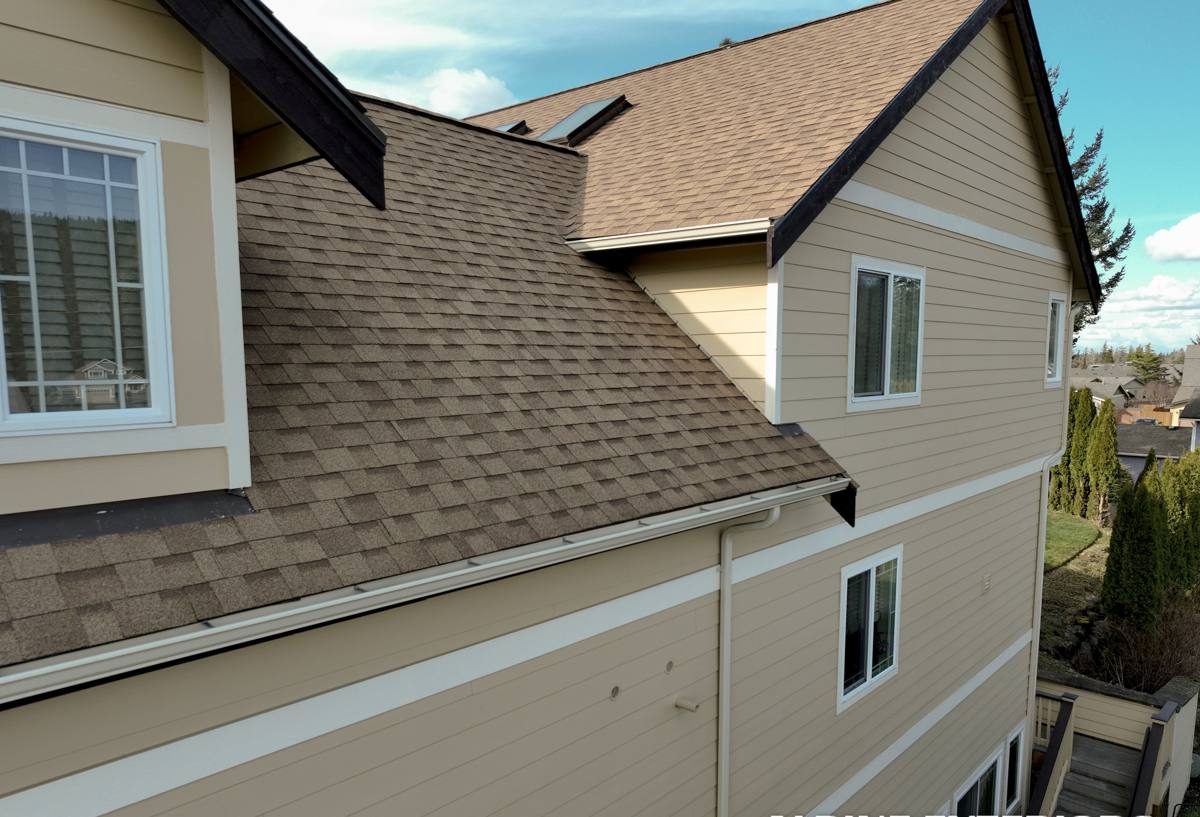
What Siding Actually Needs to Do in This Environment
Strip away the marketing and a good siding system for Silver Beach needs to do a short list of things consistently, year after year:
- Shed wind-driven rain without letting water track behind the panels
- Resist swelling, cupping, or rot when it stays damp for extended stretches
- Hold a factory finish that doesn't chalk, fade, or invite mildew growth in shaded, moist areas
- Stay dimensionally stable through repeated wet-dry cycles without joints opening up
- Remain non-combustible, which matters more each year as wildfire smoke and dry-season risk creep into Western Washington's summers
This is the list we measure every product against, and it's why our answer for Silver Beach homes is the same answer we give across Bellingham: James Hardie fiber cement.
Why We Install Only James Hardie Fiber Cement
We don't install vinyl, LP SmartSide, Cemplank, Allura, or unfinished wood siding like primed spruce or cedar. That's a deliberate standard, not a lack of options. Each of those products has legitimate strengths, but each also comes with a trade-off — moisture sensitivity, coating maintenance, seam behavior, or long-term durability in a wet marine climate — that we're not willing to put our name behind on a shoreline job.
What fiber cement gets right
Fiber cement is a blend of cement, sand, and cellulose fiber, cured into a rigid board that doesn't absorb and hold water the way wood-based products can, and doesn't expand and contract with temperature the way vinyl does. It's non-combustible, which is a meaningful difference from wood-fiber siding products. James Hardie backs its boards with a factory-applied ColorPlus finish — a baked-on, multi-coat process done under controlled conditions rather than a job-site paint job — and Hardie engineers different board formulations for different climate stresses, including the sustained moisture and humidity that define a Puget Sound shoreline climate. That's the version we spec for Silver Beach.
Why not the alternatives
Vinyl is affordable and low-maintenance in the sense that it doesn't need painting, but it's a thin, flexible material that can warp under heat, crack in cold snaps, and it doesn't hold up to the same wind-load and impact expectations as a rigid board. LP SmartSide and other engineered wood products use a wood-strand core, which performs well when installation and caulking are perfect, but any breach in that protective coating exposes a wood-based core to exactly the kind of sustained moisture Silver Beach delivers. Unfinished cedar or primed spruce look great on day one, but they commit the homeowner to an ongoing paint and sealant maintenance cycle that only gets harder in a shaded, damp microclimate. We'd rather tell a homeowner that upfront than sell a product we know will demand more from them later.
What a Correct Fiber Cement Installation Actually Involves
Fiber cement performs the way it's supposed to only when the installation details behind it are right. This is where most of the real value of hiring an experienced crew shows up — not in the board itself, but in the water management system built around it.
Flashing and drainage
Every window, door, and penetration needs proper flashing integrated with a drainage plane behind the siding, so any moisture that does get past the surface has somewhere to go besides the wall sheathing. On a shoreline lot with more wind-driven rain exposure, we pay particular attention to head flashing above openings and kick-out flashing where rooflines meet walls.
Fastening and clearances
Hardie specifies exact fastener types, spacing, and penetration depth, and it specifies minimum clearances from grade, roofing, and decking. Skipping these to save time is one of the most common causes of premature wear we see on inspections — not just on other brands, but on Hardie jobs done by crews unfamiliar with the manufacturer's own requirements.
Joints and caulking
Butt joints, corners, and trim intersections need the right sealant, applied correctly, and given room to move. In a climate with this much sustained moisture, a poorly sealed joint doesn't just look bad — it becomes a water entry point that can sit wet behind the siding for months at a time.
Our Process for a Silver Beach Project
- On-site assessment. We look at the home's specific exposure — prevailing wind direction, shade and moss patterns, existing moisture damage — not just a generic measurement.
- Tear-off and substrate check. Old siding comes off and we inspect the sheathing underneath for rot or hidden water damage before anything new goes up.
- Water management first. House wrap, flashing, and drainage details go in before a single board is hung.
- Installation to spec. Fastening, clearances, and joint treatment follow James Hardie's published requirements, not shortcuts.
- Final walkthrough. We check trim, caulking, and paint lines with the homeowner before calling the job done.
Siding Options Compared for This Climate
| Material | Moisture Behavior | Maintenance | Fire Resistance | Typical Longevity |
|---|---|---|---|---|
| James Hardie fiber cement | Rigid, doesn't absorb and swell like wood-based cores | Low — factory finish, occasional wash | Non-combustible | Decades, with correct installation |
| Vinyl | Doesn't rot, but can warp or crack with temperature swings | Low, but panels are hard to repair invisibly | Combustible | Variable, shorter in harsh exposure |
| LP SmartSide / engineered wood | Wood-strand core sensitive to prolonged moisture exposure | Moderate — depends on coating integrity | Combustible | Shorter if moisture gets past the coating |
| Cedar / primed spruce | Absorbs moisture, prone to swelling and rot without upkeep | High — ongoing paint/sealant cycle | Combustible | Shorter without consistent maintenance |
This isn't about declaring one product universally superior — it's about matching material behavior to a specific climate. In a drier, inland climate, some of these trade-offs matter less. On a Silver Beach lot, they matter a lot.
Living With Fiber Cement Siding in a Moss-Prone, Salt-Air Setting
Fiber cement is low-maintenance, not zero-maintenance. A little seasonal attention keeps it performing the way it's supposed to for the long haul:
- Rinse siding periodically to clear salt residue and organic buildup, especially on shaded north- and east-facing walls
- Keep gutters clear so overflow doesn't run down the siding face repeatedly
- Trim back vegetation and tree cover that keeps sections of the wall in constant shade and dampness
- Check caulking at joints and trim annually and re-seal any cracked or separated sections promptly
- Address any moss or algae growth early with a gentle wash rather than pressure-washing directly into joints
Why Local Experience in Silver Beach Matters
A crew that only occasionally works this stretch of Bellingham will treat every job as a generic install. A crew that regularly works Silver Beach knows which walls take the worst of the wind-driven rain, how much shade and moss pressure a given lot typically sees, and how the local permitting and inspection process runs in Whatcom County. That familiarity shows up in the details — the flashing choices, the fastener spacing, the sealant selection — long before it shows up as a problem five years down the road.
We built our standard around James Hardie fiber cement because it's the product we're willing to put our name behind on homes exposed to this much moisture and salt air, and we back that up with installation practices matched to this specific shoreline environment rather than a one-size-fits-all approach.
If you're weighing a siding replacement on a Silver Beach home, we're happy to walk the property, look at your specific exposure, and put together a free, no-pressure estimate — just fill out the form below to get started.