 Bellingham Exterior
 Roofing in South Hill Means Fighting Salt Air, Rain, and Moss All at Once
South Hill sits up in the trees on Bellingham's hillside, close enough to the water to catch salt-laden air off Bellingham Bay and high enough to hold onto fog and moisture longer than the flats below. That combination is hard on a roof. Salt air accelerates corrosion on exposed metal — flashing, fasteners, gutter hangers — while the neighborhood's tree cover keeps roof surfaces shaded and damp for a good chunk of the year. Add Whatcom County's long, driving-rain winters and you get a roof that rarely gets a real chance to dry out between storms.
That's the backdrop for almost every repair call we get in this part of Bellingham. It's not usually one dramatic failure — it's slow, cumulative moisture damage that finally shows up as a stain on a ceiling or a soft spot underfoot. A repair done right in this climate has to address the moisture problem, not just patch the symptom.
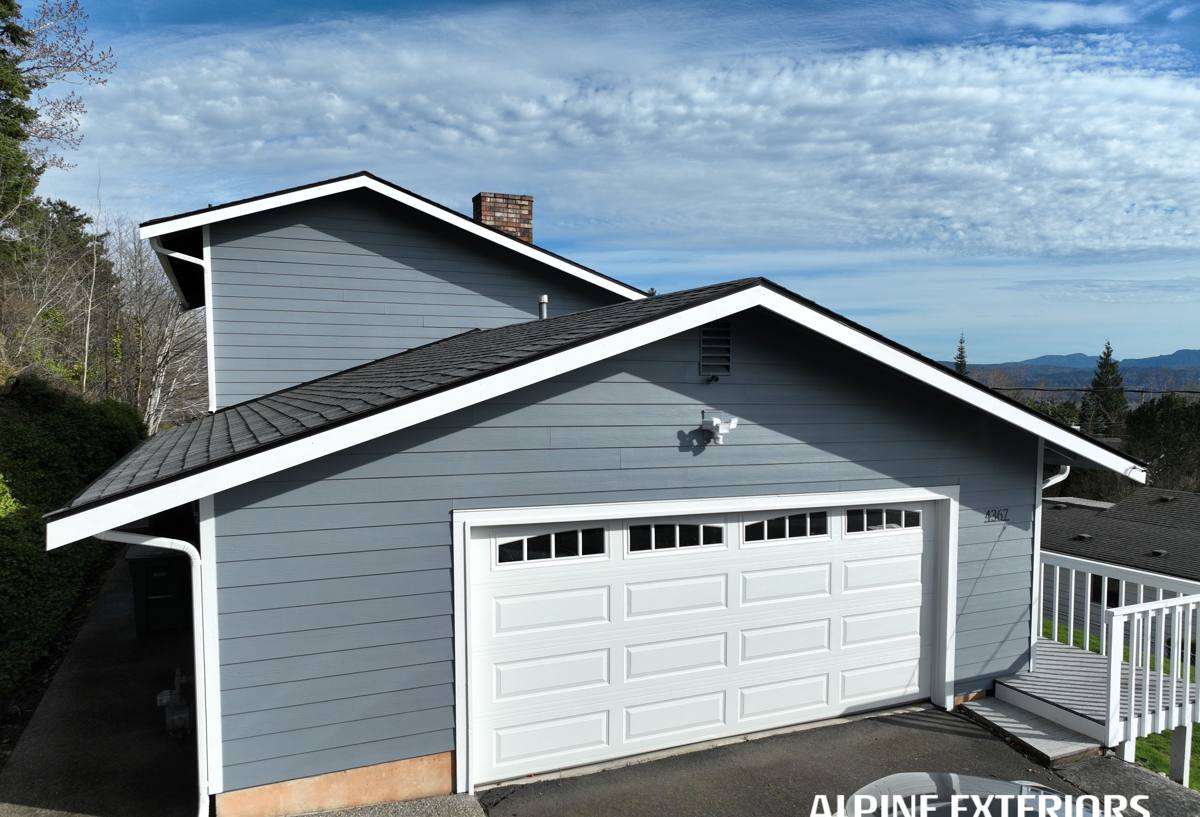
What South Hill Homes Actually Need Repaired
We see a fairly consistent pattern of issues on South Hill roofs, shaped by the terrain and tree canopy as much as by roof age:
Moss and organic growth
Moss isn't just cosmetic. On a shaded, north-facing slope — common on this hillside — moss holds water directly against the roofing material, and its root structure works into shingle mat and under flashing edges over time. Left alone through a wet Bellingham winter, moss growth is one of the most common reasons a roof starts leaking years before it should.
Flashing and penetration failures
Chimneys, skylights, vent stacks, and roof-to-wall transitions are where most leaks actually originate, not out in the open field of the roof. Salt air speeds up corrosion on galvanized flashing and fasteners, and once a flashing seam opens up even slightly, driving rain off the Sound finds its way in.
Gutter and drainage backup
Mature trees mean needle and leaf debris loads up gutters faster here than in more open parts of Whatcom County. A clogged gutter backs water up under the shingle edge or fascia, which shows up later as rot at the eaves — often mistaken for a roofing problem when the real cause is drainage.
Wind and storm damage
Winter windstorms off the water can lift shingle tabs or shift ridge caps without causing an obvious hole. These smaller failures often go unnoticed until a heavy rain event pushes water through the gap.
What a Correct Roof Repair Actually Involves
A roof repair that actually holds up starts with figuring out where water is entering — which is not always where the stain shows up inside. Water can travel along rafters or sheathing for several feet before it drips through drywall, so a repair based only on the visible interior damage often misses the real source.
A proper repair process includes:
- Finding the entry point, not just the symptom — tracing moisture back along the roof deck and framing rather than assuming the leak is directly above the stain.
- Checking the surrounding material for hidden rot or saturation, since exposed sheathing and framing near a leak are often softer than they look from the surface.
- Replacing damaged material — shingles, underlayment, decking, or flashing — rather than layering a patch over compromised material.
- Rebuilding flashing details correctly, with proper overlap and fastening, since a flashing repair that isn't sequenced right will fail again in the next hard rain.
- Confirming drainage around the repair area, including gutters and downspouts, so the fix isn't undone by water backing up from somewhere else.
Skipping any of these steps is how a homeowner ends up paying for the same leak twice.
Our Process for a South Hill Roof Repair
We keep the process straightforward, and we explain what we find along the way rather than handing you a surprise invoice.
1. On-roof inspection
We get up on the roof and physically inspect the area in question, along with common trouble spots — flashing, penetrations, valleys, and gutter lines — since a problem in one spot often points to a related issue nearby.
2. Straightforward assessment
We tell you what we found, what's causing it, and what it will take to fix — including whether we think a repair is the right call or whether the roof's age and condition mean a repair would just be a temporary fix on a roof that's near the end of its service life.
3. The repair itself
We remove and replace only the damaged material, tie new work into the existing roof correctly, and match materials where appearance matters, especially on street-facing slopes.
4. Cleanup and check
We clear debris, check gutters near the repair for blockages that could undermine the fix, and leave the site the way we found it.
Timing the work around moss season
Moss on this hillside tends to flush hardest in the shoulder seasons, when days are cool and damp but there's still enough light to keep growth active. We time moss removal and treatment for a stretch of dry weather where possible, since scraping and treating moss on a soaked roof is harder to do safely and less effective long-term. If your repair involves moss removal, expect us to talk timing with you rather than just showing up on the next open slot.
Repair or Replace? How We Help You Decide
Not every roof problem calls for a full replacement, and not every leak is best solved with another patch. We walk through the same factors with every South Hill homeowner:
| Factor | Leans Toward Repair | Leans Toward Replacement |
|---|---|---|
| Roof age | Roof is well within its expected lifespan | Roof is near or past the age its material is rated for |
| Extent of damage | Isolated to one area — a valley, a flashing detail, a section of shingles | Widespread across multiple slopes or recurring in different spots each season |
| Repair history | First or second repair on this roof | Third or more repair in a short span — a sign of underlying failure |
| Moss and moisture pattern | Surface growth without material breakdown underneath | Moss has been present long enough to compromise the shingle mat or decking |
| Cost relative to replacement | Repair cost is a small fraction of a new roof | Repair cost starts approaching a meaningful share of full replacement |
We'll give you an honest read on where your roof falls on that table — our goal is a roof that holds up through the next several Bellingham winters, not just the next invoice.
Materials and Methods We Stand Behind
For repair work in a climate like this, we favor materials and methods chosen for how they perform wet, not just how they look installed. That generally means quality asphalt shingle systems with proper self-sealing strips, corrosion-resistant flashing metal suited to salt-air exposure, and underlayment that actually sheds water if wind-driven rain gets past the surface layer.
We're selective about products that carry a heavier long-term maintenance burden in a wet coastal climate — anything prone to trapping moisture against the deck, sensitive to installation error, or reliant on frequent upkeep to perform as intended. That's a professional judgment call on our part based on how materials actually behave through a Whatcom County winter, not a claim about any manufacturer. If you're set on a specific product, we'll give you a straight answer on what it involves to install and maintain correctly in this climate.
Why a Crew That Already Works South Hill Matters
Roofing knowledge that applies generally across Washington doesn't always translate directly to a specific hillside neighborhood. Working South Hill repeatedly means we already have a feel for which slopes hold moss longest, how tree cover on a given block affects drying time, and how driving rain off the water tends to find its way into flashing details on this terrain.
That local pattern recognition shortens the diagnostic part of a repair — we're not guessing at how Bellingham's climate behaves on a hillside lot, we're confirming what we've already seen play out on similar roofs nearby. It also means we're realistic with you about timelines: moss removal and flashing work both go better in a dry weather window, and we plan around Bellingham's rain patterns rather than fighting them.
Working safely on a hillside lot
South Hill's terrain adds a layer most flat-lot repairs don't have to deal with — steeper pitches paired with sloped yards, retaining walls, and mature trees close to the roofline. That affects how we stage equipment, set up fall protection, and plan material access for the day. It's a routine part of working this neighborhood for us, but it's also part of why a roof repair here can take a little more planning than the same job on a flat lot elsewhere in Whatcom County.
A Homeowner's Roof Check: What to Look For
You don't need to get on the roof yourself to catch early warning signs. From the ground or an attic, watch for:
- Green or dark streaking on shingles, especially on shaded, north-facing slopes
- Granules collecting in gutters or at the base of downspouts
- Daylight visible through the roof deck from inside the attic
- Water stains on ceilings or upper walls, particularly after a heavy rain
- Sagging or soft-feeling spots on the roof surface
- Gutters overflowing during rain rather than draining clear
- Lifted, curled, or missing shingle tabs after a windstorm
- Musty smell in an attic or upper-floor closet, a sign of trapped moisture
Catching any of these early is almost always cheaper than waiting for the leak to show up inside the house.
Ready for a Straight Answer on Your Roof?
If you're seeing any of the signs above, or you just want a second opinion on a roof that's had a few too many patches already, we're glad to take a look. We'll give you a clear, no-pressure assessment of what your South Hill roof actually needs — repair, monitoring, or replacement — and why. Fill out the form below for a free estimate.