 Bellingham Exterior
 Storm Damage in Columbia Doesn't Wait for a Convenient Time
A hard blow off Bellingham Bay, a night of driving rain, or a heavy limb coming down from a mature tree can leave a Columbia roof compromised in ways that aren't always obvious from the ground. This is one of Bellingham's older, established neighborhoods, with a mix of home ages and roof types sitting close enough to the water that wind and moisture behave differently here than they do a few miles inland. When storm damage happens, the goal isn't just to stop a leak — it's to find everything the storm actually did, fix it correctly, and leave the roof able to handle the next one.
This page covers what storm damage repair looks like specifically for homes in this part of Bellingham: the conditions that make repairs here different, what a thorough job includes, and how to think about the decision between repairing and replacing when the damage is significant.
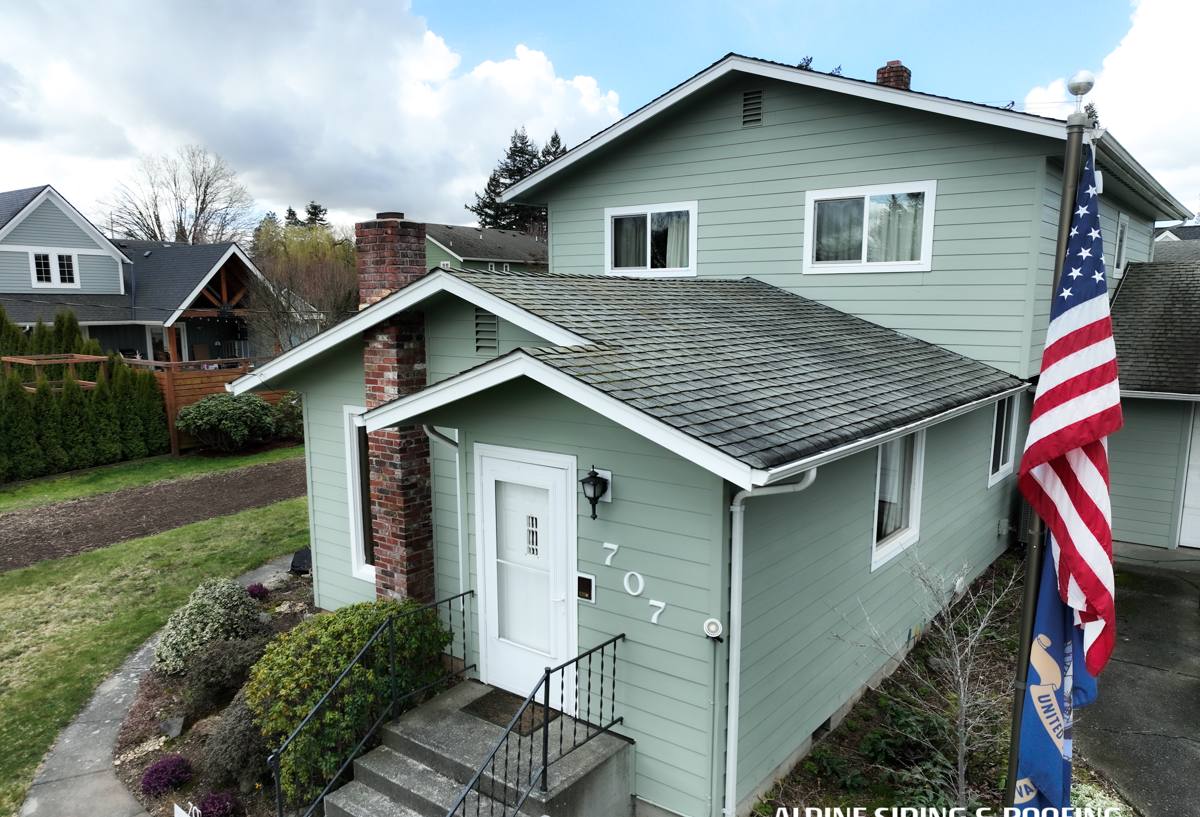
What This Neighborhood's Climate Does to a Roof Over Time
Salt Air and Metal Components
Proximity to Bellingham Bay means a steady, low-grade exposure to salt-laden air. It's not dramatic, but it's constant, and it shows up first in the metal parts of a roof — flashing, fasteners, gutter hangers, and vent caps corrode faster here than they would further from the water. A storm that wouldn't damage a roof in better condition can be enough to finish off flashing that salt air had already been quietly weakening for years.
A Long Moss Season
Whatcom County's wet, mild winters give moss and lichen a long growing window. Moss holds moisture against the roof surface, works into shingle laps, and lifts edges just enough for wind-driven rain to get underneath. A lot of what looks like "storm damage" after a windstorm is really storm damage that moss made possible — the wind didn't create a weak point, it exploited one that had been building for a season or two.
Driving Rain and Wind
Rain that falls straight down rarely causes problems on a roof in good condition. Rain driven sideways by wind is a different story — it finds gaps in flashing, exposed fastener heads, and lifted shingle tabs that would never leak in calm weather. Most of the emergency calls we get after a storm trace back to wind-driven rain finding one of these small openings rather than any single dramatic failure.
Common Storm Damage We Find on Columbia Roofs
After wind events and heavy rain, these are the issues we see most often on homes in this area:
- Lifted or missing shingles along ridges, edges, and any area where moss or age had already loosened the seal
- Granule loss from wind-blown debris, which accelerates aging on the affected slope even without a visible leak
- Flashing separation around chimneys, skylights, and roof-to-wall transitions, often at points where salt-air corrosion had already thinned the metal
- Impact damage from branches and debris, common given the mature tree cover found throughout this neighborhood
- Gutter and downspout damage from wind and debris, which redirects water onto fascia and siding if not repaired promptly
- Hidden moisture intrusion that doesn't show as an interior leak right away but shows up in the decking or insulation during inspection
What a Correct Storm Repair Actually Involves
Inspecting Beyond the Visible Damage
A rushed repair patches the spot where water is currently getting in and stops there. A correct repair starts by asking why water got in — was it a single storm event, or a pre-existing weak point the storm exposed? That means checking the surrounding shingles, the flashing at nearby penetrations, and the decking underneath for soft spots or staining, not just the immediate damage area. Skipping this step is how a homeowner ends up calling about a second leak a few months later, a few feet from where the first one was "fixed."
Matching Materials and Technique
Repairs should tie into the existing roof correctly — matching shingle type, color, and exposure as closely as possible, and re-flashing rather than caulking over old flashing that's already failing. Caulk and roofing cement have a place as short-term measures, but they aren't a substitute for proper flashing work, and using them as a permanent fix is one of the more common ways storm repairs fail early.
Checking Ventilation and Moisture Path
Storm repairs are also a natural point to check attic ventilation, since poor airflow traps moisture that mimics or worsens storm damage over time. It doesn't need a separate visit — it's part of doing the inspection properly the first time.
Repair or Replace? Factors We Weigh
Not every storm-damaged roof needs a full repair, and not every roof that gets a repair should have gotten one — sometimes the honest answer is that the roof was near the end of its service life and the storm just moved up the timeline. Here's how we think through that decision:
| Factor | Favors Repair | Favors Replacement |
|---|---|---|
| Roof age | Under roughly two-thirds of expected service life | Near or past expected service life |
| Extent of damage | Localized to one area or slope | Spread across multiple slopes or the whole roof |
| Decking condition | Solid, no rot found during inspection | Soft spots or rot found in multiple areas |
| Moss/lichen history | Minor, manageable with cleaning | Long-term moss damage affecting large sections |
| Material availability | Matching shingles still available | Discontinued product, visible mismatch likely |
We'll walk through these factors with you directly rather than defaulting to whichever option is more profitable — a repair that's the right call is better for everyone, including a contractor who wants a homeowner to call again next time.
Our Process, Start to Finish
- Initial contact and triage — we ask what happened, when, and whether there's active interior leaking, so we know how urgently to respond
- On-site inspection — a full look at the affected area plus the surrounding roof, flashing, and attic space where accessible
- Written scope and estimate — what we found, what needs to happen, and an honest range for the cost before any work begins
- Temporary protection if needed — tarping or emergency sealing to stop active water intrusion while repair materials are sourced
- Repair work — decking replacement if needed, correct flashing, matched shingles or roofing material, proper fastening
- Final walkthrough — reviewing the completed work with the homeowner before we consider the job done
Emergency Tarping and Temporary Protection
When a storm leaves an active leak, the first priority is stopping water from reaching the decking and interior of the home, not doing the permanent repair on the spot — that often can't be done safely or correctly in the middle of continued bad weather anyway. A properly installed tarp, secured so wind can't get underneath it and tear it loose, buys time to do the real repair right instead of rushing it. We treat this as a genuinely time-sensitive step, separate from scheduling the full repair.
Insurance Claims: What Homeowners Should Know
Most storm damage repairs in this area involve a homeowner's insurance policy, and a few honest points are worth knowing going in:
- Document the damage with photos as soon as it's safe to do so, before any temporary repairs change how it looks
- An independent roofing inspection and a licensed adjuster's assessment can differ — it's reasonable to ask questions if they don't match
- We can provide a written estimate and documentation of what we find, which many insurers require as part of a claim
- We don't inflate estimates to match a policy or tell a homeowner what to say to their adjuster — our job is an honest assessment of the roof, not managing the claim for you
Why a Crew That Already Works in This Neighborhood Matters
Storm response often comes down to speed and judgment, and both improve when a crew already knows the neighborhood. We're familiar with the roof types and ages common in this part of Bellingham, the way salt air and moss show up here specifically, and how to get equipment and materials to homes in this area without the delays that come from unfamiliar streets and access points. That local familiarity doesn't replace a proper inspection, but it means less guesswork and a faster, more accurate first visit.
After the Storm: A Quick Homeowner Checklist
- Check for water stains on ceilings or walls, especially near chimneys, skylights, and exterior walls
- Look at the yard and gutters for shingle granules, torn shingle pieces, or metal flashing fragments
- Note any branches or debris that came down on or near the roof, even if no damage is visible yet
- Avoid climbing onto the roof yourself, especially in wet or windy conditions
- Take photos of visible exterior damage from the ground for your own records
- Call for an inspection promptly — a small storm-related opening gets worse with every additional rain event, not better
If a recent storm has left your Columbia home with roof damage, or you're just not sure whether what you're seeing needs attention, we're glad to take a look. Reach out for a free, no-pressure estimate using the form below.