 Bellingham Exterior
 Why Sudden Valley Roofs Age Differently Than Roofs Elsewhere in Bellingham
Sudden Valley sits along Lake Whatcom under heavy tree cover, and that combination changes how a roof behaves compared to a roof out in the open on a treeless lot elsewhere in Whatcom County. Shade from surrounding trees keeps roof surfaces damp long after a storm has passed. Add in the salt-tinged marine air that moves through the region off the Puget Sound and driving rain that comes in sideways during winter storms, and you get a roof environment that punishes shortcuts. Moss and algae don't just grow here — they thrive, and the season for that growth runs long, often from fall through spring.
A roof built for a sunny, open lot in a different part of the state won't necessarily hold up the same way on a shaded Sudden Valley property. That's not a reason to panic about your roof — it's a reason to make sure the materials, ventilation, and installation details are matched to the actual conditions your home sits in.
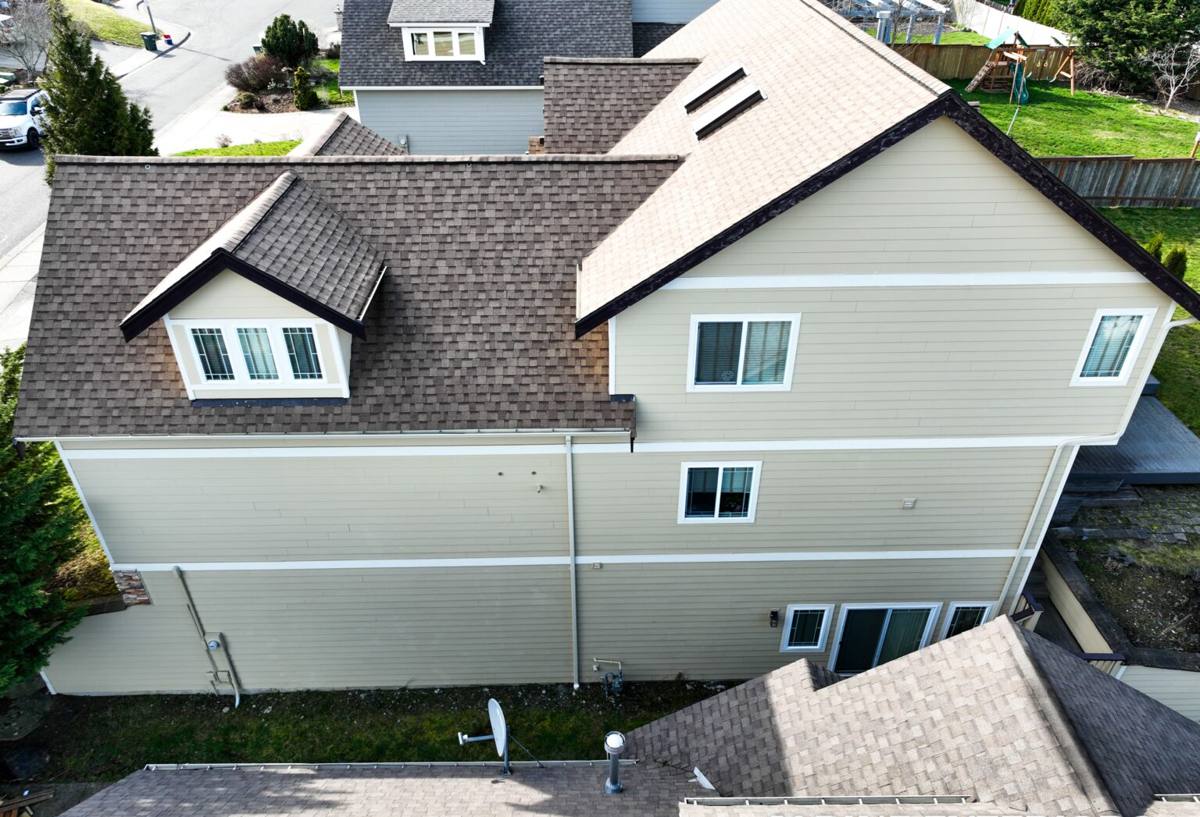
Signs a Sudden Valley Roof Needs Replacement, Not Another Repair
Homeowners in this neighborhood often ask us whether a problem area can just be patched. Sometimes it can. But there's a point where repeated repairs stop making financial sense and a full replacement becomes the smarter move. Watch for these signs:
- Granule loss showing up in gutters or at downspout outlets, especially after wind or hail events
- Moss or algae staining that keeps returning within a season or two of cleaning
- Soft spots or noticeable sag when walking the roof deck
- Shingles that are curling, cupping, or cracking rather than lying flat
- Daylight visible through the roof deck from inside the attic
- Interior water stains on ceilings or in the attic near valleys or chimneys
- A roof that's 20+ years old and has never had major ventilation or underlayment upgrades
If you're seeing two or more of these, it's worth getting a straightforward inspection before spending more money chasing individual leaks.
Choosing a Roofing System for a Shaded, Lakeside Lot
There's no single "best" roofing material for every home — the right choice depends on your roof's pitch, how much shade it gets, your budget, and how long you plan to stay in the home. Here's how the common options stack up for a property like the ones found in Sudden Valley:
| Material | Moss/Algae Resistance | Typical Lifespan | Relative Cost | Notes for This Area |
|---|---|---|---|---|
| Standard asphalt composition shingle | Fair — needs algae-resistant granules to hold up under shade | 20-30 years | Lower | Solid value if paired with proper ventilation and algae-resistant granules |
| Algae-resistant (copper-infused) composition shingle | Good | 25-30 years | Slightly higher than standard | Our default recommendation for heavily shaded lots |
| Standing seam metal | Very good — sheds moss and debris more readily | 40-50+ years | Higher upfront | Steep pitches shed moisture fast; good long-term option if budget allows |
| Synthetic/composite shake or slate | Good | 30-50 years | Higher | Won't rot like wood shake can in a damp, shaded setting |
We're honest about one thing: we steer most Sudden Valley customers away from traditional wood shake and shingle roofing. It's not that wood can't look good — it's that in a shaded, moisture-heavy environment, wood roofing needs far more upkeep to resist rot and moss than most homeowners want to take on, and the maintenance burden only grows with the tree canopy around this neighborhood. We'll always tell you the trade-offs plainly rather than sell you a product that fights the climate.
Underlayment and Ice/Water Protection
Regardless of the finish material, what's underneath matters as much as what's on top. We use synthetic underlayment rather than older felt products because it holds up better to the extended damp periods common here, and we install self-adhering ice-and-water membrane at eaves, valleys, and around every roof penetration — the spots where wind-driven rain and ice-dam backup cause the most damage.
What a Correct Installation Actually Involves
A new roof is only as good as the parts nobody sees once it's finished. Here's what we consider non-negotiable on every full tear-off and replacement:
- Full tear-off to the deck. We don't install over existing layers — it hides deck problems and voids most manufacturer warranties.
- Deck inspection and repair. Any soft, delaminated, or water-damaged sheathing gets replaced before anything new goes down.
- Drip edge and flashing at every transition. Chimneys, skylights, sidewalls, and valleys are where roofs actually fail — flashing quality here matters more than shingle brand.
- Ice-and-water shield in vulnerable zones. Eaves, valleys, and low-slope sections get this extra layer of protection.
- Synthetic underlayment across the field. Provides a secondary water barrier and better footing during install.
- Balanced intake and exhaust ventilation. Covered in more detail below — this is where a lot of otherwise-good roofs go wrong.
- Final walkthrough with the homeowner. We show you the finished roof, gutters, and cleanup before we consider the job done.
Ventilation and Moisture Control on Shaded Lots
Ventilation is the part of a roof job that's easiest to shortcut and hardest to notice until it costs you. On a shaded, tree-covered lot, warm moist air trapped in the attic has nowhere efficient to go without a properly balanced system of intake vents (usually at the soffits) and exhaust vents (usually a ridge vent running the length of the roof). Get this wrong and you can end up with premature shingle aging from the underside, condensation in the attic, and even mold — problems that have nothing to do with the roofing material itself and everything to do with airflow.
Because Sudden Valley properties often sit lower to the ground with tree canopy limiting sun exposure, roofs here dry out more slowly after rain and snowmelt than roofs on open lots. Correct ventilation sizing (calculated from actual attic square footage, not guessed) matters more here than it would on a roof that gets full sun most of the day.
Permits and HOA Considerations for Sudden Valley Homes
Most of Sudden Valley falls under an HOA with its own architectural review process, and many homeowners don't realize that roofing color and sometimes material type can be subject to community approval before work starts. We recommend checking your specific HOA guidelines early in the planning process — before you fall in love with a shingle color — so there's no delay once we're ready to schedule. On the county side, a roof replacement in unincorporated Whatcom County typically requires a building permit; we handle that paperwork as part of the job so you're not chasing it down yourself.
Our Installation Process, Start to Finish
We keep the process the same on every Sudden Valley roof, whether it's a straightforward single-story home or a steeper multi-pitch design:
- On-site inspection and estimate. We walk the roof (weather permitting) and the attic, not just eyeball it from the driveway.
- Written scope and pricing. You get a clear breakdown of materials, labor, and what's included — no vague allowances.
- Material order and scheduling. We confirm delivery timing around Bellingham's weather windows rather than promising a date we can't control.
- Site protection. Landscaping, driveways, and windows get covered before tear-off begins.
- Tear-off and deck inspection. Any deck repairs are flagged and priced before we cover them up.
- Installation. Underlayment, flashing, ventilation, and the finish material go on in that order, to code.
- Daily cleanup and magnetic sweep. We don't leave nails and debris in your yard overnight or after the job.
- Final walkthrough and warranty paperwork. You know exactly what's covered and for how long before we leave.
Why Hiring a Crew That Already Works in Sudden Valley Matters
Sudden Valley's roads wind through trees and along the lake, and access to some properties takes more planning than a typical in-town lot — for staging materials, positioning equipment, and managing driveway space safely. A crew that's already worked in this neighborhood knows what to expect before the trucks show up, which means less guesswork and fewer surprises on install day.
Local experience also means we've seen firsthand how roofs in this specific microclimate age — which valleys collect debris fastest, which north-facing slopes hold moss longest, and which ventilation setups actually keep up with the shade. That's the kind of judgment that comes from doing this work in Whatcom County, on homes like yours, not from a general contractor passing through once.
Protecting Your Investment After Installation
A correctly installed roof still benefits from basic upkeep, especially given how long the moss and debris season runs here. A simple annual routine goes a long way:
- Clear gutters and downspouts each fall before the heavy rains start
- Remove overhanging branches that keep sections of the roof shaded and damp
- Have moss or algae growth treated before it spreads, rather than waiting until it's heavy
- Check attic ventilation isn't blocked by insulation or storage
- Schedule a quick visual inspection after any major windstorm
- Address small flashing or sealant issues promptly rather than letting them become leaks
If you're weighing a full roof replacement for a Sudden Valley home, we're happy to take a look and give you a straight, no-pressure estimate — what your roof actually needs, what it will cost, and why. There's a form below to get that conversation started.