 Bellingham Exterior
 Asphalt Shingle Roofing Built for Sunnyland's Weather
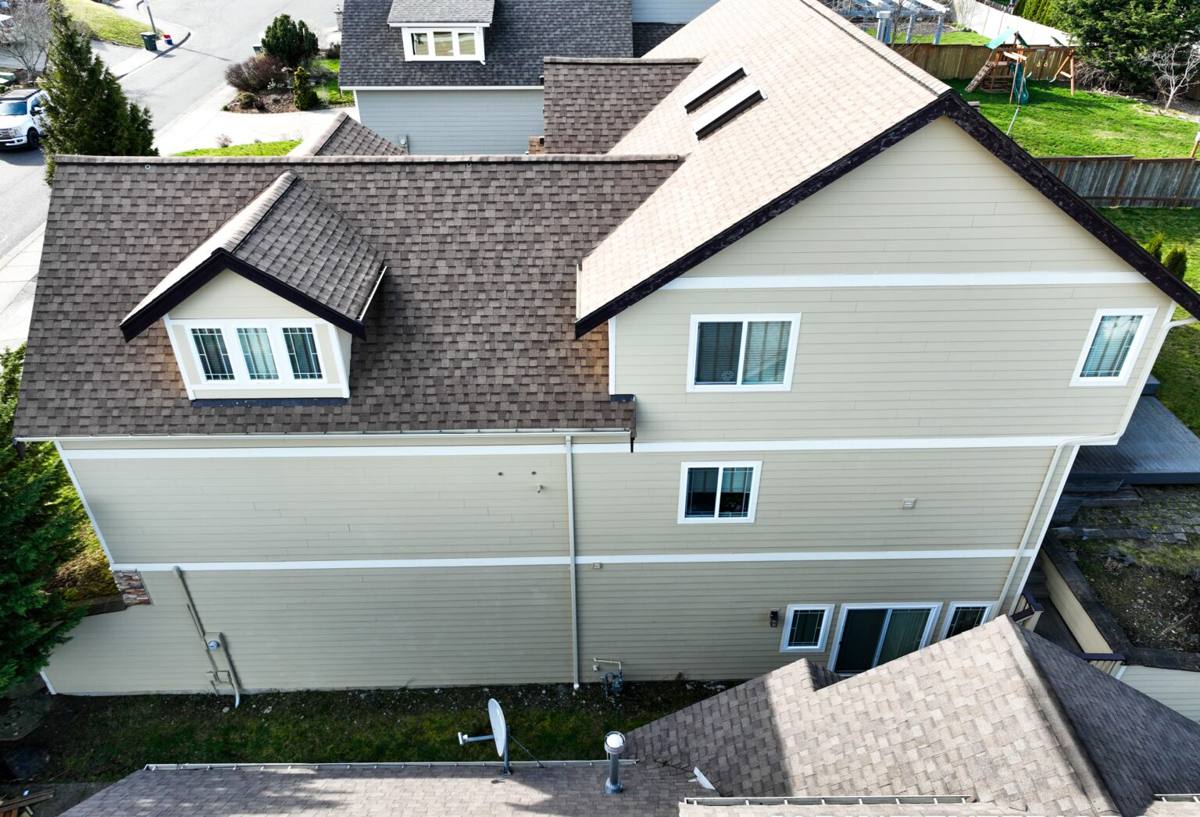
Sunnyland sits close enough to Bellingham Bay and the surrounding waterways that homes here take a different kind of beating than roofs a few miles inland in Whatcom County. Salt-laden air corrodes exposed metal faster, driving rain off the Strait pushes water sideways under poorly lapped shingles, and the shade from mature trees along many Sunnyland streets keeps roofs damp long after a storm has passed. Asphalt shingle roofing remains the most practical, cost-effective choice for most Sunnyland homes, but only when it's specified and installed with this exact climate in mind. A shingle roof built the same way you'd build one in a dry inland climate will underperform here — sometimes by years.
We work Sunnyland regularly, which means we're not learning the neighborhood's quirks on your roof. We already know which streets sit under heavier tree cover, which rooflines catch the worst of the wind coming off the water, and where moss tends to establish first. That local familiarity shapes every recommendation we make, from underlayment choice to ventilation layout.
What Sunnyland's Climate Actually Does to a Roof
Three conditions drive almost every asphalt shingle problem we see in this neighborhood:
Salt Air and Corrosion
Proximity to the bay means airborne salt settles on every exterior surface, including your roof. It accelerates corrosion on exposed fasteners, flashing, and any metal roofing accessories that aren't rated for coastal exposure. Over years, this shows up as rust streaking, weakened fastener holding power, and premature flashing failure at valleys, chimneys, and penetrations — long before the shingles themselves are worn out.
Driving Rain and Wind-Driven Water
Storms off the Strait of Georgia and the Sound don't always drop rain straight down. Wind-driven rain gets pushed sideways and upward under shingle tabs, into exposed nail heads, and through any gap in flashing that wouldn't leak in a calmer climate. This is why lapping technique, fastener placement, and flashing details matter more here than in drier parts of the country.
Extended Moss Season
Bellingham's moss season runs long — cool, damp conditions persist for much of the year, and shaded roof sections in Sunnyland rarely get a full dry-out between rain events. Moss and algae take hold in the granule layer, retain moisture against the shingle surface, and lift tabs as they grow. Left unaddressed, moss doesn't just look bad — it shortens the functional life of the roof by holding water against materials that were designed to shed it.
What a Correct Asphalt Shingle Job Looks Like Here
A roof that's actually built for Sunnyland's conditions differs from a generic install in several specific ways:
- Synthetic underlayment with a proven track record in wet coastal climates, not a bargain-grade felt that degrades under sustained moisture
- Ice-and-water shield at eaves, valleys, and any low-slope transitions — the spots where wind-driven rain and ice-dammed meltwater are most likely to find a way in
- Stainless steel or hot-dip galvanized fasteners and flashing, chosen specifically to resist salt-air corrosion rather than standard-grade metal
- Balanced intake and exhaust ventilation, so the attic can actually dry out between rain events instead of trapping moisture against the roof deck
- Wider, more deliberate flashing details at every chimney, skylight, and wall intersection, since these are the first places driving rain finds a weakness
- Shingle products with documented algae resistance for shaded, moss-prone sections of the roof
None of this is exotic. It's standard good practice applied consistently, without shortcuts, because the climate here doesn't forgive the shortcuts the way a drier region might.
Choosing the Right Shingle for a Sunnyland Roof
Not every asphalt shingle product performs the same way under sustained damp and shade. We steer Sunnyland homeowners toward products and specifications based on how the roof will actually be used, not just upfront cost.
| Shingle Type | Typical Lifespan (Local Conditions) | Best Fit |
|---|---|---|
| 3-Tab Asphalt | 15-20 years | Budget-conscious projects, sun-exposed roof planes with less shade |
| Architectural (Laminate) Asphalt | 25-30 years | Most Sunnyland homes — better wind resistance and more resilient under coastal exposure |
| Algae-Resistant Architectural | 25-30 years | Shaded roof sections and homes surrounded by mature trees, where moss and algae pressure is highest |
| Premium/Designer Asphalt | 30+ years | Homeowners prioritizing curb appeal and maximum longevity on a full re-roof |
For most Sunnyland properties, we recommend architectural shingles with algae-resistant granules as the baseline, not an upgrade — the moss season here makes that feature worth its modest added cost on almost every job.
Why We Don't Push the Cheapest Option
Basic 3-tab shingles can make sense on a detached structure or a low-slope accessory roof, but as a primary roof in a shaded, coastal-influenced neighborhood, they tend to show granule loss and moss colonization earlier than a laminate product. We'll always tell you honestly when a lower-cost shingle is a reasonable fit for your specific roof, and when it's a false economy given how long Sunnyland roofs stay damp.
Our Process, Start to Finish
1. On-Site Inspection and Roof Assessment
We walk the roof and the attic, not just the ground. We check deck condition, existing ventilation, flashing points, and how much moss or organic buildup has already accumulated in shaded areas. This tells us whether you're looking at a straightforward re-roof or whether deck repair, ventilation upgrades, or additional flashing work should be part of the scope.
2. A Written, Specific Estimate
You get a clear scope: shingle product, underlayment type, flashing plan, ventilation approach, and a realistic timeline. No vague line items. If moss remediation or deck repair is needed, that's called out separately so you know exactly what you're paying for and why.
3. Tear-Off and Deck Inspection
We remove the old roofing down to the deck and inspect every square foot before anything new goes down. Damp or damaged decking gets replaced — covering a compromised deck with new shingles just hides a problem that will resurface.
4. Underlayment, Flashing, and Ventilation Installed First
These are the components doing the real work of keeping water out. We install them to the standard described above before a single shingle goes down, because a beautiful shingle job over poor underlayment and flashing still leaks.
5. Shingle Installation
Proper nailing pattern, correct exposure, and consistent lapping — details that matter more in wind-driven rain than in calmer climates. We follow manufacturer specifications closely, since deviating from them can void the shingle warranty.
6. Final Walkthrough and Cleanup
We walk the finished roof with you, cover care and maintenance expectations — particularly around moss — and make sure the property is cleaned up, including a magnetic sweep for stray fasteners.
Maintenance That Actually Matters in This Climate
A well-built roof still needs some attention in a climate like Bellingham's. The maintenance that makes the biggest difference for Sunnyland homes:
- Keep gutters clear — clogged gutters back water up under the shingle edge, right where wind-driven rain is already testing the roof
- Trim back overhanging branches where practical, to reduce shade and debris on moss-prone sections
- Address moss early with appropriate treatment rather than letting it establish and lift shingle tabs
- Have flashing points checked periodically, since these fail before the shingle field does in salt-air conditions
- Confirm attic ventilation is working as intended — a musty attic smell or visible condensation is a sign it isn't
Cost Factors for a Sunnyland Re-Roof
Every roof is different, but the same factors move the price on most Sunnyland projects:
| Factor | Why It Affects Cost |
|---|---|
| Roof size and number of planes | More material, more labor, more flashing detail at each transition |
| Existing deck condition | Rot or damage found at tear-off requires repair before new roofing goes on |
| Shingle grade chosen | 3-tab, standard architectural, and algae-resistant/premium lines carry different material costs |
| Roof pitch and access | Steeper or harder-to-access roofs take longer and require additional safety setup |
| Ventilation upgrades needed | Adding or correcting intake/exhaust ventilation is sometimes necessary and adds scope |
| Flashing and penetration count | Chimneys, skylights, and multiple valleys each add labor and material |
We won't quote a number without seeing the roof first — anyone who does is guessing. What we can promise is a written estimate that breaks out these factors so you understand exactly what's driving the price.
Why a Crew That Works Sunnyland Already Matters
Roofing crews unfamiliar with this specific stretch of Whatcom County sometimes spec materials and details that are fine for a drier region but undersized for what a Sunnyland roof actually faces year-round. Working this neighborhood regularly means we're not guessing at how much shade a given roof plane gets, how exposed it is to wind off the water, or how aggressively moss establishes on that side of the house. That local knowledge shows up in better material choices and fewer callbacks — not as a sales pitch, but as the practical result of having done this work here before.
If your current roof is showing granule loss in the gutters, moss creeping across shaded sections, or staining around flashing points, it's worth having it looked at before a small issue becomes a deck-level repair. We're happy to provide a free, no-pressure estimate — walk the roof, tell you honestly what condition it's in, and lay out your options with no obligation. Use the form below to get started.