 Bellingham Exterior
 Roof Replacement in Sunnyland: Built for This Specific Neighborhood
Sunnyland sits close enough to Bellingham Bay that salt-laden air is a daily fact of life for the roofs here, and the tree cover throughout the neighborhood means shade, damp, and organic debris stick around longer than they do in more open parts of Whatcom County. Add in our long stretch of driving rain from fall through spring, and you've got a roof environment that punishes shortcuts. We've replaced roofs on Sunnyland's mix of older bungalows, mid-century ranches, and newer infill homes, and we size every job to what this specific neighborhood's weather actually does to a roof — not a generic spec sheet.
This page is about one service, one place: full roof replacement for Sunnyland homes. If you're trying to figure out whether it's time, what a correct replacement involves, and what to expect from a crew that works this area regularly, this is written for you.
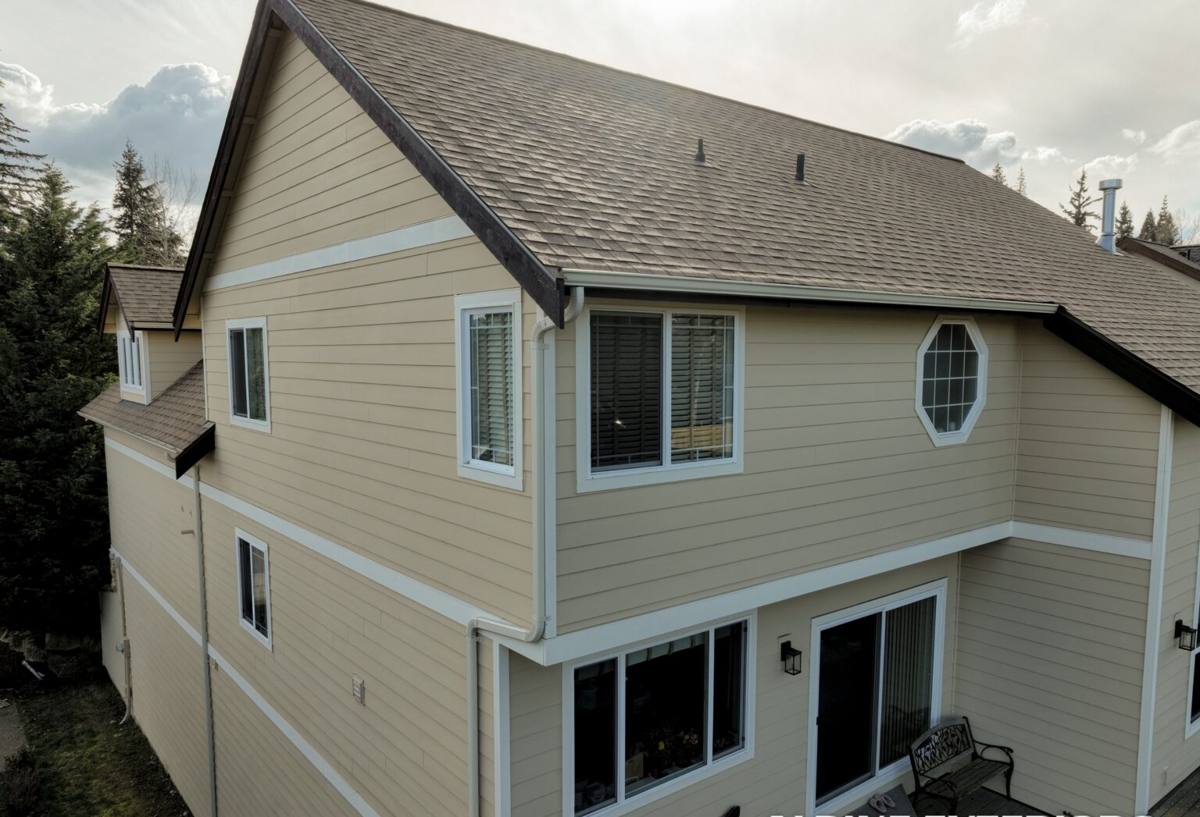
Why Sunnyland Roofs Wear the Way They Do
Salt Air and Metal Fatigue
Proximity to the bay means airborne salt settles on roofing materials, flashing, and fasteners year-round. Salt accelerates corrosion on exposed metal — nail heads, drip edge, flashing seams, and vent boots all corrode faster here than they would fifteen or twenty miles inland. A roof that would hold up fine in eastern Whatcom County can show rust streaks and flashing failure years earlier near the water.
Driving Rain and Wind-Driven Water
Bellingham's rain doesn't just fall straight down. Storms off the Strait push rain sideways, and that matters enormously for how a roof is detailed. Wind-driven rain finds its way under improperly lapped shingles, through under-sized flashing, and into any gap in the underlayment. On a roof with the right details, this is a non-event. On a roof where corners were cut, it's the difference between a dry attic and a slow leak that rots sheathing for two years before it ever shows up as a stain on a ceiling.
Moss, Shade, and a Long Growing Season
Sunnyland's mature tree canopy is part of what makes the neighborhood pleasant to live in, but it also means many roofs sit in partial shade most of the day. Combined with our mild, wet climate, that shade extends the moss season to nearly year-round on north-facing slopes and anywhere debris collects. Moss isn't just cosmetic — its root structure lifts shingle edges, holds moisture against the roof deck, and accelerates granule loss. A roof that's been fighting moss for a decade often has more underlying deck damage than its surface appearance suggests.
Signs a Sunnyland Roof Is Due for Replacement
- Granules collecting in gutters or at downspout outlets, especially after a hard rain
- Shingles that are cupping, curling at the edges, or visibly bald in spots
- Moss or dark streaking that comes back within a season or two of cleaning
- Soft spots underfoot on the roof deck, or sagging visible from the street
- Daylight visible through the roof deck from inside the attic
- Flashing around chimneys, skylights, or vent pipes that's rusted, lifted, or cracked
- Interior ceiling stains, especially ones that appear after wind-driven storms rather than steady rain
- A roof that's 20+ years old and has never had a full tear-off, only patches or overlays
Any one of these on its own might just need a repair. Several at once, or a roof that's simply reaching the end of its rated life, usually points to replacement being the more honest recommendation — patching an old roof repeatedly often costs more over a few years than one correct replacement.
What a Correct Roof Replacement Actually Involves
"Roof replacement" gets used loosely in this trade. A correct one, for a Sunnyland home, includes every step below — skipping any of them is how roofs fail early in this climate.
1. Full Tear-Off, Not an Overlay
We remove the existing roofing down to the deck. Overlaying new shingles over old ones traps moisture, hides deck damage, and voids most manufacturer warranties. It's not something we do, because it just postpones the real problem.
2. Deck Inspection and Repair
With the old roofing off, we can actually see the sheathing. Any wood that's soft, delaminated, or water-stained gets replaced before anything new goes down — this is the step that overlays and quick patch jobs skip entirely, and it's usually where hidden moss and leak damage shows up.
3. Ice-and-Water Shield at Vulnerable Points
Eaves, valleys, and areas around penetrations get a self-adhering waterproof membrane underneath the main underlayment. Given how much wind-driven rain this neighborhood sees, this layer is what keeps water out even if wind pushes it past the shingle surface.
4. Synthetic Underlayment Across the Full Deck
This is the roof's real waterproofing layer — the shingles are the wear surface, but the underlayment is what keeps the deck dry through the life of the roof. We don't skimp here.
5. Corrosion-Resistant Flashing and Fasteners
Given the salt air near the bay, we use flashing and fasteners rated for coastal exposure wherever the budget allows it. Standard galvanized components can start showing rust within a handful of years this close to the water; stepping up to a better-rated metal is one of the most cost-effective upgrades a Sunnyland homeowner can make at replacement time.
6. Proper Ventilation
Balanced intake and exhaust ventilation keeps the attic temperature and moisture level in check, which matters both for shingle life and for controlling condensation in our damp winters. A roof can be installed perfectly and still underperform if the attic underneath it is trapping moisture.
7. Moss-Resistant Details
On shaded lots — common throughout Sunnyland — we talk with homeowners about zinc or copper strips near the ridge, which release trace amounts of metal ions that discourage moss regrowth on the slopes below them. It's a small addition at install time that meaningfully extends the interval between cleanings.
Our Process for Sunnyland Jobs
- Roof and attic inspection. We look at the roof surface, flashing, ventilation, and attic from the inside — not just a drive-by look from the street.
- Written estimate with real options. You get a clear scope, material choices, and pricing before any commitment — no vague allowances.
- Material selection. We walk through the tradeoffs for your roof's exposure, shade, and slope, and help you land on a material and warranty tier that fits your home and budget.
- Scheduling around weather. Given how much of our year sees rain, we schedule tear-offs in windows where we can keep your home dry, and we tarp and protect the structure if weather turns mid-job.
- Tear-off, deck repair, and installation. Full removal, deck inspection and repair, underlayment, flashing, ventilation, and roofing material installed to manufacturer spec.
- Cleanup and magnetic sweep. Full site cleanup including a magnetic sweep for stray nails and fasteners around the property.
- Final walkthrough. We go over the finished roof with you before calling the job done.
Comparing Roofing Materials for Sunnyland's Conditions
| Material | Handles Salt Air | Moss Resistance | Typical Lifespan | Notes for Sunnyland |
|---|---|---|---|---|
| Architectural asphalt shingle | Good with corrosion-resistant flashing | Moderate; benefits from zinc strips on shaded roofs | 25-30 years | Most common choice; wide style and price range |
| Standing seam metal | Excellent with coastal-rated coatings | High; sheds moss more easily than shingles | 40-50+ years | Higher upfront cost, lower long-term maintenance |
| Composite/synthetic shake | Good | Moderate to good | 30-40 years | Good option where a shake look is wanted without wood's moisture issues |
| Cedar shake | Requires diligent maintenance near salt air | Lower without regular treatment | 20-30 years with upkeep | Higher maintenance burden in a shaded, damp neighborhood; we'll talk through the tradeoffs honestly if you're considering it |
There's no universally "best" material — the right call depends on your roof's exposure, how much shade it sits in, your budget, and how much long-term maintenance you want to take on. We'll give you an honest read on what fits your specific house rather than steering everyone toward the same product.
What Roof Replacement Typically Costs
Pricing depends on roof size, pitch, tear-off complexity, decking condition, and material choice, so we won't post a number here that wouldn't actually apply to your house. What we can tell you: a straightforward asphalt shingle replacement generally lands in the broad mid-range compared to premium metal or high-end shake systems, and the honest way to know your real number is a site inspection, not a phone quote. We'll walk your roof, explain what we find, and give you a written estimate with no pressure to sign that day.
Why Local Experience with Sunnyland Roofs Matters
A crew that only occasionally works this side of Bellingham may not think twice about coastal corrosion on fasteners, or about how much moss pressure a shaded Sunnyland lot puts on a north slope. Working this neighborhood regularly means we already know which details matter here: upgraded flashing near the bay, ventilation tuned for our wet winters, and moss-resistant detailing on shaded roofs. That local pattern-recognition is part of what you're paying for when you hire a crew that already knows the area, not just the trade in general.
We're also familiar with permitting and inspection expectations for Bellingham and Whatcom County, so there are no surprises mid-project on that front either.
Get a Straight Answer About Your Roof
If you're not sure whether your Sunnyland home needs a repair or a full replacement, the best next step is a real inspection, not a guess from the street. We'll take a look, tell you plainly what we find, and put together a free, no-pressure estimate using the form below.