 Bellingham Exterior
 Why Decks in York Take More Punishment Than People Expect
York is one of Bellingham's older, established neighborhoods, with mature trees, mixed housing ages, and the kind of tree cover that looks great in July and causes trouble in November. That combination — shade, moisture, and age — is exactly what wears a deck down faster than most homeowners realize. Add in the marine air that moves through all of Bellingham off the bay, the driving rain that comes sideways during Whatcom County's wet months, and a moss season that can run from October well into spring, and a deck in York is dealing with a tougher climate load than a similar structure would face in a drier inland town.
None of that means a deck is doomed. It means the repair has to account for those specific stressors instead of treating every deck the same way a generic handyman job would. A repair that ignores moisture behavior, drainage, and moss regrowth will look fine for a season and then fail again in the same spots.
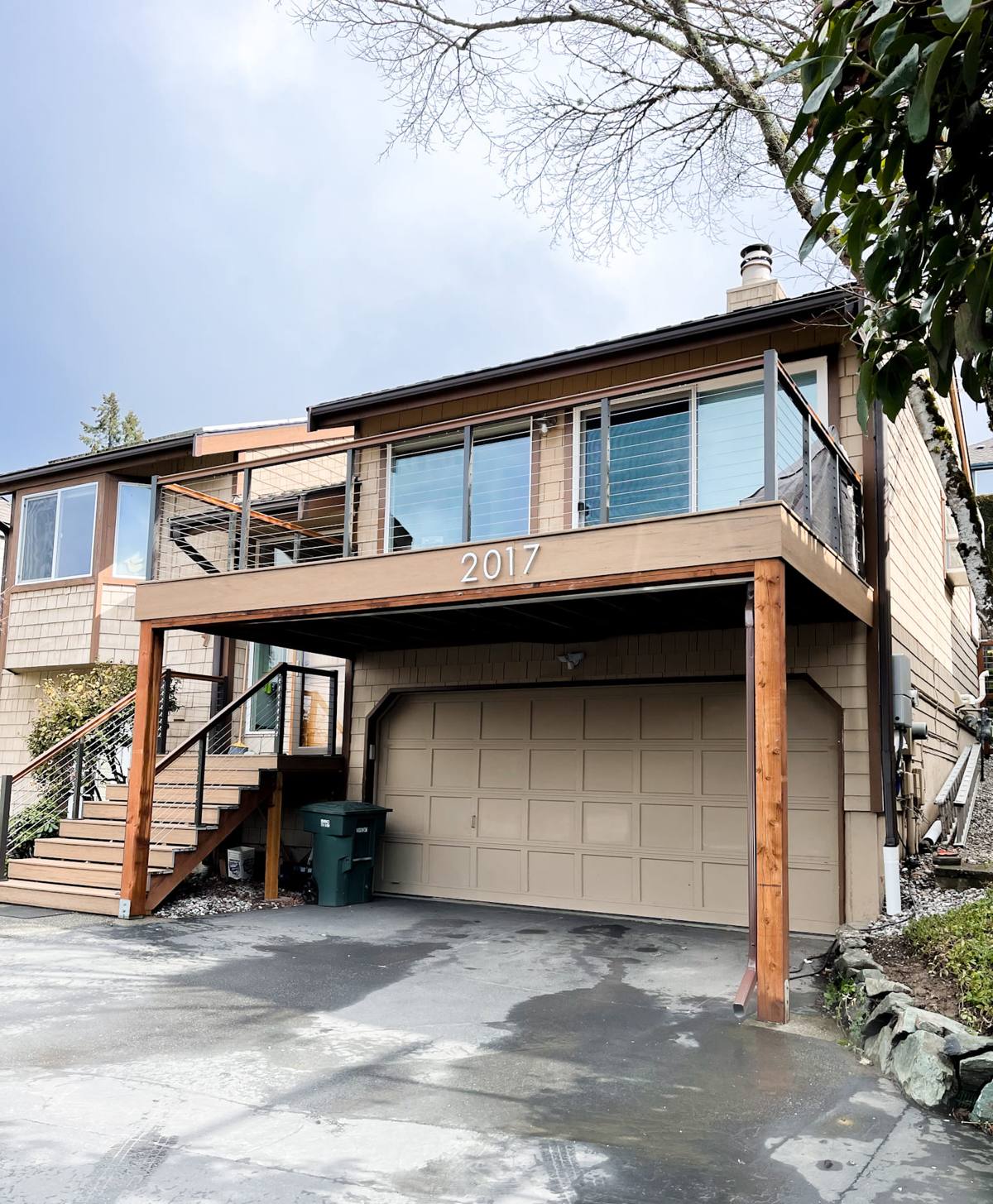
What Bellingham's Climate Actually Does to a Deck
Driving Rain and Standing Moisture
Rain that comes in at an angle gets up under railings, behind ledger boards, and into any gap where two pieces of wood meet. On older decks, that moisture doesn't dry out quickly because our air stays damp for long stretches at a time. Wood that stays wet longer than it stays dry is wood that rots, no matter how good the lumber was when it was installed.
Moss and Algae
Shaded, tree-covered lots like many in York give moss exactly what it needs: consistent moisture and low sun exposure. Moss on a deck surface isn't just cosmetic — it holds water against the boards, makes the surface slippery, and accelerates surface wear. Left alone for a full moss season, it can work its way into fastener heads and seams.
Salt Air and Fastener Corrosion
Bellingham sits close enough to the water that salt-laden air reaches homes well beyond the immediate waterfront, including inland neighborhoods. That air is hard on metal. Fasteners, brackets, and hardware that aren't rated for coastal exposure corrode faster than homeowners expect, and a corroded fastener is often the real cause behind a deck board that suddenly feels loose or a railing that starts to wobble.
Common Problems We Find on York Decks
Every deck is different, but a few patterns show up again and again on the repair calls we run in this part of Bellingham:
- Rot at the ledger board where the deck attaches to the house — usually from missing or failed flashing
- Soft or spongy decking boards, especially in shaded corners that never fully dry
- Rusted or corroded fasteners causing boards and railings to loosen
- Moss and algae buildup that's become slick and is holding moisture against the wood
- Undersized or rotted support posts and beams that were adequate when built but haven't held up
- Railings that no longer meet current safety spacing or height expectations
- Stair stringers showing rot or checking at ground contact points
What a Correct Deck Repair Actually Involves
A repair that's done right starts before anyone touches a board. It starts with figuring out why the damage happened in the first place, because replacing rotted wood without fixing the underlying moisture path just buys a few more years before the same repair is needed again.
Inspection First
We check the ledger board and flashing, the condition of the framing underneath the visible decking, the fastener types already in use, drainage and grading around support posts, and how much of the damage is cosmetic versus structural. This is also when we look for anything that's a safety issue rather than a maintenance issue — loose railings, undersized framing, or rot in a load-bearing member.
Addressing the Cause, Not Just the Symptom
If water is getting behind the ledger board, that flashing gets corrected as part of the repair, not left for later. If a shaded section is holding moisture because of poor airflow underneath the deck, we'll flag that too. Repairing the surface without addressing the moisture source is the single most common shortcut that leads to repeat calls.
Matching Materials to the Climate
Replacement lumber, fasteners, and hardware get chosen for what actually holds up in this climate — not just what's cheapest at the yard. That usually means corrosion-resistant fasteners and connectors, properly rated flashing, and lumber that's suited to ground or moisture exposure where relevant.
Finishing the Job
Depending on the deck, that can mean sealing or staining exposed wood, cleaning and treating remaining sections for moss and algae, and making sure new work blends reasonably with the existing structure rather than looking like a patch.
Repair or Replace? What Actually Drives That Decision
Homeowners often assume any visible rot means the whole deck needs to come out. That's usually not true — most decks we look at in York can be repaired section by section. The table below covers the main factors that push a job toward repair versus full replacement.
| Factor | Leans Toward Repair | Leans Toward Replacement |
|---|---|---|
| Extent of rot | Isolated boards or one section | Widespread rot through multiple structural members |
| Framing condition | Solid, undamaged beams and posts | Rotted or undersized structural framing |
| Age of deck | Under 15-20 years, well-built originally | Original construction is old, outdated, or under-built |
| Code / safety issues | None found beyond the repair area | Railing height, spacing, or footing issues throughout |
| Budget goals | Extend usable life at lower cost | Wanting a different layout, size, or material |
Cost for repair work varies a lot depending on scope — a single board and fastener repair is a modest job, while ledger board and framing repair with new flashing is more involved. We'll always give you the honest range for your specific deck rather than a one-size number, because a quick moss and fastener refresh and a structural rebuild of a rotted section are not the same job.
How We Approach a Deck Repair Job in York
- On-site inspection: We walk the full deck, check the framing where accessible, and identify both the visible damage and its likely cause.
- Written scope and estimate: You get a clear explanation of what needs to happen and why, broken down so you can see what's structural versus cosmetic.
- Repair work: We remove and replace only what needs it, correct the moisture or drainage issue behind the damage, and use fasteners and materials suited to our climate.
- Cleanup and finish: Moss and algae treatment where needed, sealing or staining as appropriate, and a full site cleanup.
- Walkthrough: We go over the completed work with you before calling the job done.
Materials and Hardware — What We Use and Why
Material choice matters more on a deck repair than almost any other exterior project, because a deck combines constant moisture exposure with structural load. A few of our default standards:
Fasteners and Hardware
We use corrosion-resistant fasteners and structural connectors rated for exterior and ground-contact use rather than standard interior-grade hardware. In a climate with regular rain and salt-bearing air, standard fasteners corrode faster and are often the actual root cause of a "loose deck" complaint.
Lumber and Decking
Replacement framing lumber gets matched to the exposure it will see — ground contact, direct weather exposure, or covered and protected. For visible decking, we'll talk through wood versus composite honestly: composite costs more upfront and doesn't need staining, but it has its own installation sensitivities around fastening and expansion; wood costs less upfront but needs periodic sealing and inspection. Neither is automatically "better" — it depends on your budget and how much upkeep you want to do.
Flashing and Waterproofing
Ledger board flashing gets particular attention, since it's the single most common source of hidden rot on an attached deck. Proper flashing directs water away from the house band board instead of letting it wick into the framing over several wet seasons.
Signs Your Deck Needs Attention Now
A few things are worth checking on your own before damage spreads. If any of these are true, it's worth having it looked at rather than waiting:
- Boards feel soft, spongy, or flex noticeably when you walk on them
- Railings wobble or move when pushed
- Visible rust streaks around screws or brackets
- Persistent green or black growth that comes back within weeks of cleaning
- Gaps or separation where the deck meets the house
- Stair treads or stringers that feel uneven or soft near ground level
- Standing water that doesn't drain off the surface within an hour or two after rain
Why a Crew That Already Works in York Makes a Difference
Deck repair isn't a one-size-fits-all trade. A contractor who works regularly in Bellingham and across Whatcom County has already seen how the local combination of tree cover, marine air, and long wet stretches plays out on real decks — which framing details tend to fail first, which fastener choices hold up and which don't, and how much moss treatment actually needs to happen versus how much is oversold. That's different from general familiarity with decks in a drier or less shaded climate. It also means a faster, more accurate estimate, because we're not guessing at how the regional weather has affected the structure — we're confirming what we already expect to find and adjusting from there.
If you're in York and dealing with a deck that's showing its age — soft boards, loose railings, moss that keeps coming back, or just general wear from years of Bellingham weather — we're happy to take a look. There's no pressure and no obligation: fill out the form below and we'll set up a free estimate to walk through what your deck actually needs.