 Bellingham Exterior
 Window Replacement for Blaine Homes
Blaine sits right up against the water in northern Whatcom County, a few minutes from the Canadian border, and that location comes with a specific kind of weather load. Windows here don't fail the way they might in a dry inland climate. They fail from years of salt-laden air working into seals, driving rain finding its way past worn weatherstripping, and a moss season that stretches long enough to keep wood trim damp for weeks at a time. If you're looking at foggy glass, swollen sashes, or a draft that wasn't there five years ago, it's worth understanding what's actually happening before you decide on a fix.
This page covers window replacement specifically for Blaine properties: what the climate does to windows here, what a correct installation actually involves, and how we run the job from estimate to final walkthrough.
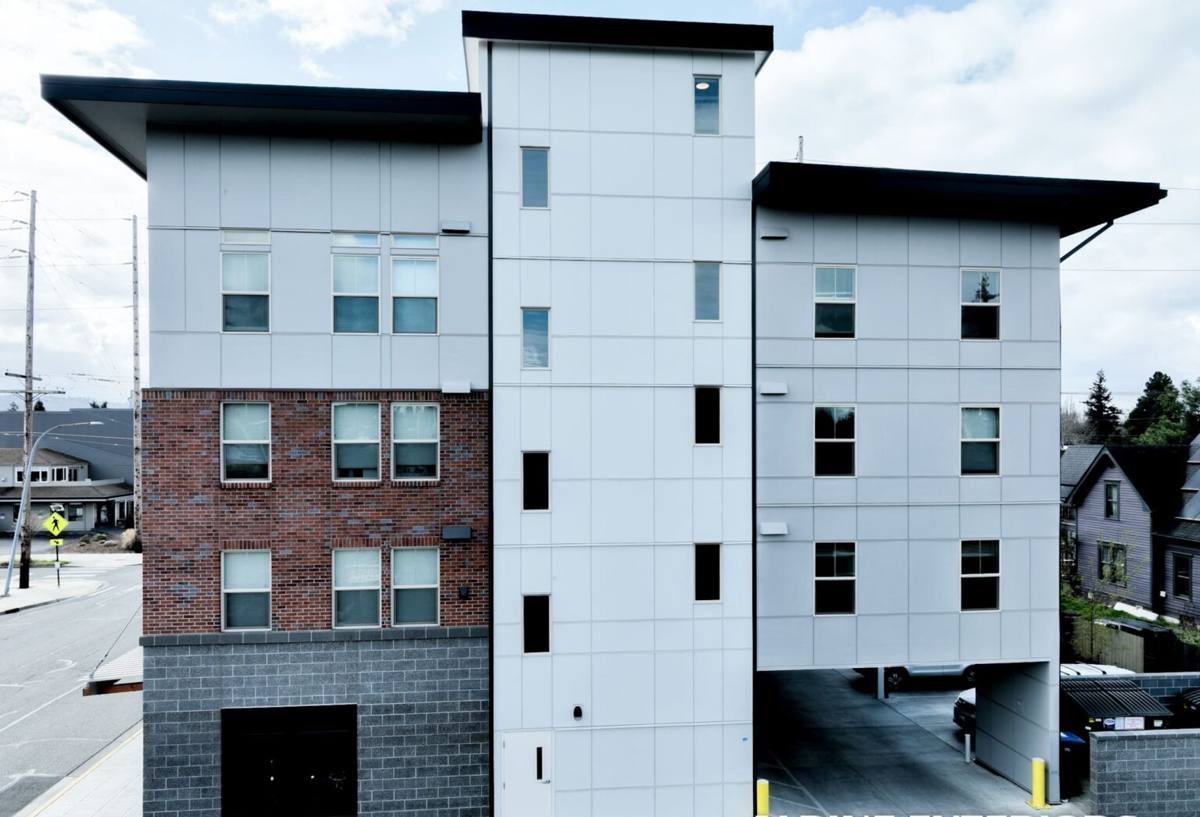
What Blaine's Climate Does to Windows
Three things are working against your windows year-round in this part of Whatcom County, and most homeowners only notice the combined effect once it's already caused damage.
Salt Air
Proximity to Semiahmoo Bay and the surrounding coastline means salt-laden air is a constant, not an occasional event. Salt accelerates corrosion on aluminum hardware, window balances, and screen frames, and it degrades certain sealants faster than manufacturers rate for inland climates. Cheaper hardware finishes can start pitting or staining within a handful of years in a coastal exposure like this.
Driving Rain
Storms off the Strait of Georgia don't just drop rain straight down — wind-driven rain hits windows at an angle, which puts real pressure on flashing details and sill pans that a calm-weather installation wouldn't be tested against. A window that's watertight in a light drizzle can still leak during a wind-driven storm if the flashing wasn't lapped correctly or the sill wasn't pitched to shed water.
Moss Season
Whatcom County's wet season runs long, and moss doesn't need much to take hold — shaded trim, north-facing walls, and horizontal ledges on older window profiles are all it needs. Moss holds moisture against wood and painted surfaces far longer than open air would, which is exactly the condition that leads to rot at sills and lower frame corners. It's a slow problem, which is part of why it goes unnoticed until the wood underneath is already soft.
None of these three issues is dramatic on its own. Together, over ten or fifteen years, they're the reason older windows in this area tend to show frame rot, seal failure, and hardware corrosion well before the glass itself gives out.
Signs It's Time to Replace, Not Repair
Not every window problem means full replacement. A single failed seal or a sticky lock can often be repaired. Replacement makes sense when the damage is structural or when the window is no longer doing its basic job. Signs worth taking seriously:
- Fogging or a visible haze between panes that doesn't clear — the seal has failed and the gas fill (if any) is gone
- Soft or spongy wood at the sill, corners, or lower frame when pressed with a thumb
- Visible gaps between the frame and siding, or daylight around the frame from inside
- Windows that are difficult to open, close, or lock, especially if this changed gradually
- A noticeable draft near the frame even with the window fully closed and locked
- Moss or persistent green staining building up on horizontal window ledges or trim
- Paint that keeps peeling or bubbling on wood trim no matter how often it's repainted
- A jump in heating costs that isn't explained by anything else in the house
If you're seeing two or more of these, especially frame softness or persistent moisture staining, replacement is usually the more cost-effective call than continuing to repair.
What a Correct Window Replacement Job Actually Involves
Window replacement looks simple from the outside — old window out, new window in — but the details that actually determine whether it holds up in a coastal climate happen in steps most homeowners never see.
Removal and Inspection
Once the old window is out, the rough opening gets inspected before anything new goes in. This is the point where hidden rot, damaged sheathing, or old flashing failures show up. A crew that rushes past this step is setting the new window on top of an existing problem instead of fixing it.
Flashing and Weatherproofing
This is the part that actually keeps wind-driven rain out, and it's also the part that's invisible once the job is finished. Correct flashing means a sloped sill pan, properly lapped house wrap and flashing tape (water always sheds over the layer below it, never under), and sealant used at the right joints — not as a substitute for proper flashing. In an area that gets real wind-driven rain, this step is where most future leaks are prevented or guaranteed.
Frame Material Selection
Material choice matters more here than in a drier, inland climate because of the salt air and moisture exposure. We'll go over the trade-offs for your specific exposure (how close to the water, how much sun and shade, how exposed to wind-driven rain) rather than defaulting to one product for every home.
Installation and Air Sealing
The window gets set plumb, level, and square, shimmed correctly so it isn't relying on the frame to hold its shape, and insulated around the perimeter without overpacking the gap, which can bow the frame. Interior and exterior trim gets sealed as the final air and water barrier, not the first one.
Frame Material Comparison for Coastal Whatcom County
| Material | How It Handles Salt Air | Maintenance | General Cost Position |
|---|---|---|---|
| Vinyl | Good — won't corrode or rust; UV-stable finishes hold up well | Low — occasional cleaning, no painting | Lower to mid-range |
| Fiberglass | Very good — dimensionally stable, resists pitting and salt staining | Low — very durable finish, minimal upkeep | Mid to higher-range |
| Wood-Clad | Fair — clad exterior protects the wood, but cladding seams and cut ends need attention | Higher — interior wood may need periodic finishing | Higher-range |
| Aluminum | Poor to fair in this exposure — hardware and frame components are more prone to salt corrosion over time | Moderate — finish and hardware need monitoring | Varies widely |
For most Blaine homes with direct or near-direct water exposure, we steer clients toward vinyl or fiberglass because they hold up to salt air with the least ongoing maintenance. Wood-clad is still a good option for homes further from direct salt exposure where the look matters more and the owner is comfortable with the added upkeep. We're honest about this trade-off upfront rather than selling whatever's easiest to install.
Our Process
1. On-Site Assessment
We look at each window individually — exposure to wind and salt air, existing frame condition, any visible rot or staining — rather than quoting a house sight unseen. Every home's exposure is a little different depending on which direction it faces and how sheltered it is.
2. Straight-Forward Estimate
You get a written estimate that spells out material, scope, and what's included. No pressure to decide on the spot, and no vague line items.
3. Scheduling Around the Weather
We plan installation windows with Whatcom County's rain patterns in mind. Openings aren't left exposed longer than necessary, and we don't start a job we can't reasonably finish before weather moves in.
4. Installation and Flashing Detail
This is where the work described above — sill pans, correctly lapped flashing, proper shimming and sealing — actually happens, on your house, not just in a brochure.
5. Final Walkthrough
We check operation, look at the interior and exterior finish work, and walk through it with you before calling the job done.
Why a Crew That Already Works Blaine Matters
Window installation done to a generic standard and window installation done for this specific coastline are not the same job. A crew that regularly works Blaine and the surrounding Whatcom County waterfront already knows which exposures need extra attention to flashing, which materials hold up against the salt air here versus further inland, and how long the wet season really runs when it comes to scheduling and curing time for sealants and finishes. That local pattern recognition is the difference between a window that's still tight in ten years and one that's showing seal failure or frame rot in five.
It also means less guesswork for you. We're not learning the local climate on your project — we've already seen how salt air and driving rain treat different products and installation details in this exact area, and we bring that experience to every job.
Cost Factors Worth Understanding
Window replacement costs vary by opening size, frame material, glass package, and how much of the surrounding trim or siding needs repair before the new window goes in. Broadly, homeowners in this area should expect a range depending on those factors — vinyl replacement windows tend to sit at the lower end, fiberglass and wood-clad at the higher end, and any hidden rot repair found during removal adds to the job. We'll always flag additional work like that before proceeding, not after.
What we won't do is quote a number without seeing the windows first. Exposure, existing condition, and access all affect the real cost, and a phone-quote number rarely survives contact with the actual house.
If your windows are showing any of the signs above, or you're just planning ahead for a coastal home that needs to hold up to Blaine's salt air, rain, and moss, we're happy to take a look. Estimates are free and there's no pressure to commit on the spot — use the form below to get started.