 Bellingham Exterior
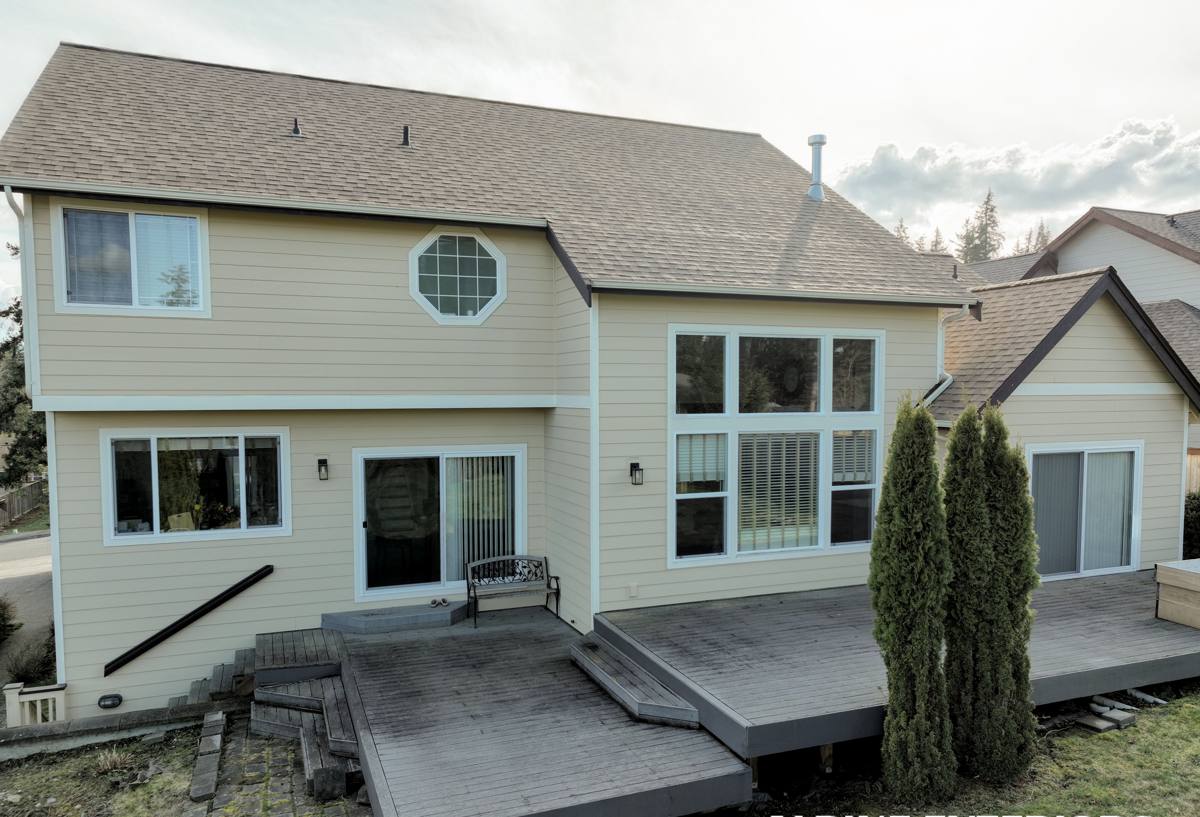
 Custom Decks Built for Sunnyland's Climate, Not a Catalog
Sunnyland sits close enough to Bellingham Bay that salt-tinged air, wind-driven rain, and a long, damp moss season are just part of owning a home here. A deck built the way a contractor in a dry inland climate would build it doesn't hold up the same way in Whatcom County. Wood that isn't protected right gets soft and gray within a few seasons. Metal that isn't rated for coastal exposure starts weeping rust stains down the siding. Flat, poorly drained boards grow a green film every winter that turns slick the moment it frosts. None of that is inevitable — it's a result of decisions made before the first board goes down.
This page is about one job, done right, in one part of town: custom deck construction and replacement for Sunnyland homeowners. We're not trying to sell every service we offer — we're explaining what actually matters when you build or rebuild a deck in this specific climate, so you can make a good decision whether that's with us or someone else.
What Bellingham's Weather Actually Does to a Deck
Driving Rain and Standing Moisture
Bellingham doesn't just get rain — it gets sustained, wind-driven rain that finds its way into joints, fastener holes, and any spot where two pieces of wood meet without a gap to dry. A deck that looks fine in July can be holding moisture in its framing by December if the ledger connection, joist tops, or board spacing weren't detailed for drainage. Rot doesn't start on the surface you can see; it starts underneath, where wood stays wet the longest.
Moss and Organic Growth
Whatcom County's moss season runs long — often five or six months of low light and near-constant dampness. Moss and algae don't just look bad; they hold moisture against the decking surface and turn stairs and low-traffic areas dangerously slick. Decks with poor airflow underneath, tight board spacing, or shaded northern exposures grow it fastest. Design choices made at construction — board gap, joist height off grade, whether there's cover from a roofline — determine how much of a moss fight you're signing up for every winter.
Salt Air and Metal Corrosion
Homes closer to Bellingham Bay deal with a mild but real salt-air exposure that standard interior-grade or basic exterior fasteners aren't built for. Once corrosion starts on a fastener head or a joist hanger, it weakens the connection from the inside, often long before you'd notice it by looking at the deck surface. This is one of the most common corners cut on lower-bid deck jobs, because the difference between a standard fastener and a coastal-rated one isn't visible once the decking is down — until it fails.
Choosing the Right Decking Material for Sunnyland
There's no single "best" decking material — there's a best material for your budget, your maintenance appetite, and how exposed your deck is to rain and shade. Here's how the common options actually compare in this climate:
| Material | How It Handles This Climate | Maintenance | Typical Lifespan Here |
|---|---|---|---|
| Pressure-treated fir/pine | Good rot resistance if properly fastened and sealed; needs re-coating to stay protected | Re-stain or re-seal every 1-2 years | 10-15 years with upkeep |
| Western red cedar | Naturally rot- and insect-resistant; still needs sealing to resist moss and graying | Clean and reseal every 1-2 years | 15-20 years with upkeep |
| Composite decking | Doesn't rot or splinter; some early-generation products can still trap moisture if drainage detail is poor | Periodic cleaning, no staining/sealing | 20-25+ years, manufacturer-dependent |
| PVC/capped polymer | Best resistance to moisture and moss buildup; higher upfront cost | Low — occasional washing | 25+ years |
We don't push one product line as the answer for every home. What we do insist on is matching the material to how much shade and moisture exposure your specific spot in Sunnyland actually gets, and being honest about the maintenance commitment each option carries. A composite deck under a heavily shaded tree canopy still needs occasional cleaning to stay moss-free — no material is fully maintenance-free in this climate.
Framing and Structure: Where Most Deck Failures Actually Start
Decking boards get all the attention, but the framing underneath is what determines whether a deck is safe and long-lived. A few details matter more here than in drier climates:
- Ledger board flashing: The connection where the deck attaches to the house is the single most common source of hidden rot. It needs proper flashing and a moisture barrier, not just lag bolts through siding.
- Joist protection: Joist tops should be capped with a protective tape or coating so fastener penetrations don't become entry points for water.
- Footing depth and drainage: Footings need to sit below the frost line and be set in soil that drains, not in a low spot that holds winter water against the post base.
- Post-to-footing hardware: Posts should sit on a base connector that keeps end grain off wet concrete — direct wood-to-concrete contact is one of the fastest ways to start rot at the bottom of a post.
- Airflow underneath: Adequate clearance and spacing beneath the deck lets it dry out between rain events instead of staying damp for days.
Fasteners and Hardware: The Detail That's Easy to Skip
In a climate with real salt-air exposure, fastener and hardware selection is not a place to save money. Standard fasteners can start corroding within a few years near the bay, and once a joist hanger or structural screw weakens, the failure isn't visible until it's serious. We use fasteners and connectors rated for coastal/ACQ-treated lumber exposure — stainless steel or heavy hot-dip galvanized, depending on the application — because the cost difference over the life of a deck is small compared to what it costs to repair hidden structural corrosion later.
Quick Reference: Why Fastener Rating Matters
| Fastener Type | Suitability Near Bellingham Bay |
|---|---|
| Standard electro-galvanized | Not recommended — corrodes faster in salt-air and ACQ-treated lumber contact |
| Hot-dip galvanized | Acceptable for most framing connections |
| Stainless steel (305/316) | Best performance for visible fasteners and high-exposure connections |
How Our Process Works, Start to Finish
A custom deck project runs smoother when the steps are clear up front. Here's what a typical Sunnyland deck project looks like with us:
- On-site walkthrough: We look at grade, drainage, sun/shade exposure, and how the deck will connect to the house before recommending anything.
- Design and material discussion: We go over decking material, railing style, and layout options based on your budget and how you'll use the space.
- Written estimate: A clear scope of work and price, with material choices spelled out — no vague allowances.
- Permit handling: We pull the necessary permits and coordinate inspections through the City of Bellingham or Whatcom County, depending on your property.
- Demolition and disposal: If replacing an existing deck, we remove and haul away the old structure.
- Framing with climate-appropriate hardware: Ledger flashing, joist protection, and corrosion-resistant fasteners as described above.
- Decking, railing, and finish work: Installed to the manufacturer's spacing and fastening specs for proper drainage and airflow.
- Final walkthrough: We go over care and maintenance specific to the material you chose before we consider the job done.
Permits and Code in Bellingham and Whatcom County
Most new decks and significant deck replacements require a building permit, and elevated decks typically need engineered guardrails and stair specifications reviewed as part of that process. Requirements can differ slightly depending on whether your property falls under City of Bellingham jurisdiction or unincorporated Whatcom County, and whether the deck is attached to the house or freestanding. We handle the permit application and inspection scheduling as part of the job so you're not stuck figuring out which jurisdiction's rules apply or chasing down inspection dates yourself.
Maintaining Your Deck Through Whatcom County's Wet Season
Even a well-built deck needs some seasonal attention in this climate. A simple annual routine goes a long way:
- Sweep leaves and debris off the surface regularly in fall — trapped organic matter is what feeds moss growth.
- Clean the deck surface at least once a year with a wood- or composite-safe cleaner to remove early moss and algae before it takes hold.
- Check and reseal wood decking every 1-2 years, more often on shaded sections.
- Inspect the ledger board connection and any visible fasteners annually for rust staining or looseness.
- Keep gutters and downspouts near the deck clear so runoff isn't dumping extra water onto the structure.
- Trim back vegetation that's shading the deck and keeping it damp longer than the rest of the yard.
Why a Crew That Already Works This Neighborhood Matters
Sunnyland's mix of older and newer homes means every deck project has its own quirks — different grade conditions, different sun exposure, different existing structures to tie into. A crew that regularly works this part of Bellingham has already seen how the local soil drains, how much moss pressure a given exposure typically gets, and which fastener and framing details actually hold up here versus what looks fine on paper. That local pattern recognition is worth more than a generic install — it's the difference between a deck that needs real repair work in eight years and one that's still solid in twenty.
If you're planning a new deck or need to replace one that's showing its age, we're glad to walk your property and give you a straight, no-pressure estimate. There's a form below — reach out and we'll set up a time to take a look.