 Bellingham Exterior
 Sunnyland's Housing Stock Faces a Specific Kind of Wear
Sunnyland is one of Bellingham's older, established residential neighborhoods, and that matters when you're talking about siding. Homes here span decades of construction styles, which means a wide range of original siding materials, wall assemblies, and moisture-management details are still in service today. Some houses were sided once and never touched again. Others have been through one or two re-sides already, sometimes covering up problems instead of solving them. A siding installation in this part of Bellingham isn't just about picking a product and nailing it up — it's about understanding what's underneath the current siding, how the house was built, and how well it's actually held up against the climate it's been sitting in.
That climate is the other half of the equation. Bellingham sits close enough to Bellingham Bay and the Salish Sea that salt-laden air is a real factor on exterior materials, not a theoretical one. Add Whatcom County's driving rain events, where wind pushes water sideways into wall assemblies instead of letting it run straight down, and a moss season that can stretch across most of the wet months, and you have an environment that is genuinely hard on siding. Any installation done in Sunnyland needs to be planned around those three things specifically, not treated like a generic re-side job.
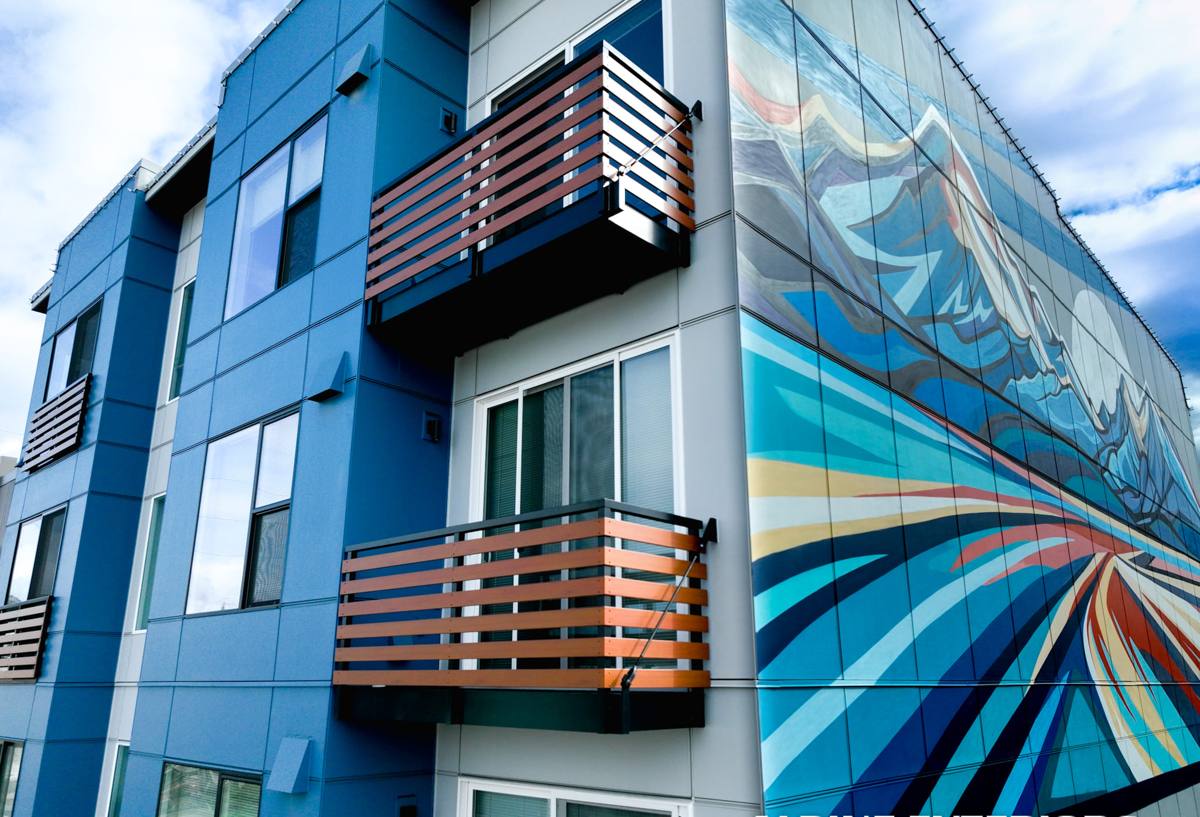
What Salt Air, Driving Rain, and Moss Actually Do to Siding
Salt Air and Moisture
Proximity to the bay means airborne salt and moisture settle on exterior surfaces more consistently than they would further inland. Over years, this accelerates corrosion on exposed fasteners, degrades some paint and coating systems faster than the label promises, and speeds up the breakdown of materials that aren't dimensionally stable when they absorb moisture. It's a slow process, so it's easy to underestimate until you're standing in front of siding that looks tired well before it should.
Driving Rain
Bellingham's storms don't always fall straight down. Wind-driven rain gets forced horizontally into siding laps, trim joints, and any gap in the water-resistive barrier behind the cladding. A siding system that isn't installed with the right overlaps, flashing, and clearances will let that water find its way behind the surface, where it can sit against sheathing and framing far longer than anyone can see from the outside.
The Long Moss Season
Between the marine climate and the tree cover common in older Bellingham neighborhoods, many homes stay damp and shaded for long stretches of the year. That's ideal growing conditions for moss and algae on any siding surface that holds moisture or has a rough, absorbent texture. Once organic growth establishes itself, it holds even more moisture against the siding, which compounds the original problem instead of just being cosmetic.
None of this means siding is doomed in Sunnyland. It means the material, the detailing, and the crew all need to be chosen with these three stressors specifically in mind — not just the ones a manufacturer's brochure talks about.
Why We Only Install James Hardie Fiber Cement Siding
We get asked fairly often why we don't offer vinyl, LP SmartSide, cedar, or other fiber cement brands. It's a fair question, and the honest answer is that we standardized on one product line because we got tired of watching other materials struggle with exactly the conditions Sunnyland and the rest of Whatcom County deal with every year.
Vinyl siding is affordable and low-maintenance in mild, dry climates, but it's a petroleum-based product that expands and contracts with temperature swings and can become brittle over time. In a marine climate with driving rain, keeping water from working behind vinyl laps over the long term is a real detailing challenge, and vinyl itself doesn't add any structural rigidity to a wall.
LP SmartSide and other engineered wood products perform well when installed and maintained exactly to spec, but they're wood-based, which means moisture intrusion — the kind driving rain is very good at causing — is the one failure mode that can shorten their life significantly. In a climate with this much sustained dampness, that's a risk we'd rather not build a customer's siding around.
Cedar and primed spruce are beautiful and have a long tradition in the Pacific Northwest, but real wood siding demands an ongoing maintenance commitment — refinishing, caulking, and moisture monitoring — that most homeowners don't want to sign up for indefinitely, especially in a moss-prone environment where organic growth on wood siding is a recurring, not one-time, issue.
James Hardie fiber cement is cement, sand, and cellulose fiber — non-combustible, dimensionally stable, and engineered specifically for climate zones like ours through its HZ5 product line. It doesn't rot, it resists moisture-driven warping, and its factory-applied ColorPlus finish is baked on under controlled conditions rather than field-painted, which means better adhesion and a longer color life against salt air and UV exposure. It's also backed by a strong transferable warranty when installed to Hardie's specifications. That combination is why it's the only product we put on homes — not because every alternative is bad, but because we've made a professional judgment that Hardie holds up best against what this specific climate does to a house.
What a Correct Siding Installation Actually Involves
Fiber cement siding only performs as well as its installation. A rushed or generic job can undercut even the best material, especially where salt air and wind-driven rain are involved. A correct installation in Sunnyland should include:
- Removal of old siding down to the sheathing so the wall assembly can actually be inspected, not just covered over
- Repair or replacement of any water-damaged sheathing, framing, or trim found during tear-off
- A continuous, correctly lapped water-resistive barrier behind the siding, with proper integration at seams
- Correct flashing at every window, door, and roofline penetration, so driving rain has nowhere to collect
- Rainscreen or furring where conditions call for it, to let moisture drain and the wall assembly dry
- Manufacturer-specified fastener type, spacing, and penetration depth — under-driven or corrosion-prone fasteners are a common failure point in salt-air environments
- Correct board overlaps, joint treatment, and caulking at butt joints and trim, done to Hardie's published installation instructions
- Proper clearance between the siding's bottom edge and grade, decks, or roofing to avoid constant wicking moisture
Skipping any one of these doesn't necessarily show up as a problem on day one. It shows up two, five, or ten years later — usually as moisture damage that's more expensive to fix than it would have cost to do right the first time.
Our Siding Installation Process for Sunnyland Homes
- On-site assessment. We look at your current siding, trim, and any visible signs of moisture damage, moss buildup, or past repair work, and we talk through what we find in plain terms.
- Tear-off and inspection. Old siding comes off so we can see the sheathing and framing directly, rather than guessing at what condition they're in.
- Repair before cover. Any compromised wood gets replaced. We don't install new siding over damage — that just hides a problem that will keep growing.
- Water management first. The water-resistive barrier, flashing, and drainage details go in before a single piece of Hardie siding is installed. This is the part of the job that determines whether the siding lasts.
- Installation to spec. Hardie panels or lap siding go up following the manufacturer's fastening, spacing, and clearance requirements — the details that keep the warranty valid and the wall assembly dry.
- Trim, caulking, and finish details. Joints, corners, and penetrations get sealed correctly, and the ColorPlus finish is inspected for any touch-up needs.
- Final walkthrough. We go over the finished work with you directly so you know what was done and why.
Comparing Siding Materials for a Whatcom County Home
| Material | Moisture Resistance | Maintenance | Fire Rating | Typical Lifespan |
|---|---|---|---|---|
| James Hardie Fiber Cement (HZ5) | Excellent — dimensionally stable, engineered for wet climates | Low — factory finish, occasional cleaning | Non-combustible | Multiple decades with correct install |
| Vinyl | Fair — dependent on lap detailing and can trap moisture behind it | Low, but can crack or fade over time | Combustible, can melt/warp near heat | Variable, shorter in harsh coastal exposure |
| LP SmartSide / Engineered Wood | Good if maintained; vulnerable if moisture gets behind or into panel edges | Moderate — edge sealing and inspection needed | Combustible | Shorter if moisture management lapses |
| Cedar / Primed Spruce | Fair — absorbs moisture, prone to moss and rot without upkeep | High — refinishing and moisture monitoring ongoing | Combustible | Shorter without consistent maintenance |
Signs Your Sunnyland Home May Be Due for New Siding
- Persistent moss or algae growth that returns soon after cleaning
- Soft, spongy, or discolored siding, especially near the bottom courses or below windows
- Visible warping, cupping, or gaps between siding boards
- Paint that's failing faster than a normal repaint cycle would suggest
- Corroded or popped fasteners along the siding face
- Musty smells or interior wall staining that could point to moisture getting in from outside
Any one of these on its own might be minor. Several together are usually a sign the current siding or its underlying water management has reached the end of its useful life.
What Siding Installation Costs Depend On
We don't publish flat prices because every Sunnyland home is different, but the cost of a siding installation generally comes down to a handful of factors:
| Cost Factor | Why It Matters |
|---|---|
| Home size and wall complexity | More square footage, corners, and trim detail means more material and labor |
| Condition of existing sheathing | Water-damaged sheathing found during tear-off adds repair scope |
| Siding profile chosen | Lap siding, panel systems, and trim styles carry different material costs |
| Story height and access | Multi-story homes or difficult access require more setup and safety measures |
| Amount of trim and detail work | Windows, dormers, and architectural trim add labor time |
The only way to get an accurate number is a direct look at the home, which is exactly what a free estimate is for.
Why It Matters That We Already Work in Sunnyland
Neighborhood familiarity isn't a marketing line — it changes how a siding job gets planned. A crew that already understands the mix of home ages in Sunnyland, how Bellingham's driving rain behaves against different wall orientations, and how aggressively moss takes hold under tree cover here can plan the water management and material choices around real conditions instead of generic assumptions. It also means we're not learning on your house — we've already worked through the kinds of tear-off surprises, older framing quirks, and moisture patterns that show up in this part of Bellingham.
If your Sunnyland home's siding is showing its age, or you're just planning ahead, we're happy to take a look and talk through what we find. There's no pressure and no cost to get an estimate — just a straight assessment of your home's siding and what it would take to do the job right.