 Bellingham Exterior
 Board & Batten Siding in the Puget Area: What Local Homes Actually Need
Board and batten is one of the most requested siding profiles we install around Bellingham, and the Puget area sees more than its share of requests for it. The vertical lines suit the craftsman, farmhouse, and modern-cabin styles common in this part of Whatcom County, and the profile does a genuinely good job shedding water when it's built correctly. The catch is that "built correctly" matters more here than almost anywhere else in the state. Puget sits close enough to the water to catch salt-laden air, gets pounded by driving, wind-blown rain for months at a time, and spends a long stretch of the year under the kind of persistent shade and dampness that grows moss on anything that holds moisture. A board and batten wall that isn't detailed for that combination will show problems in a fraction of the time it would take somewhere drier and calmer.
This page focuses specifically on what board and batten siding needs to hold up on a Puget-area home — not a generic overview of the profile, but the actual climate and installation factors that determine whether it lasts twenty years or needs rework in five.
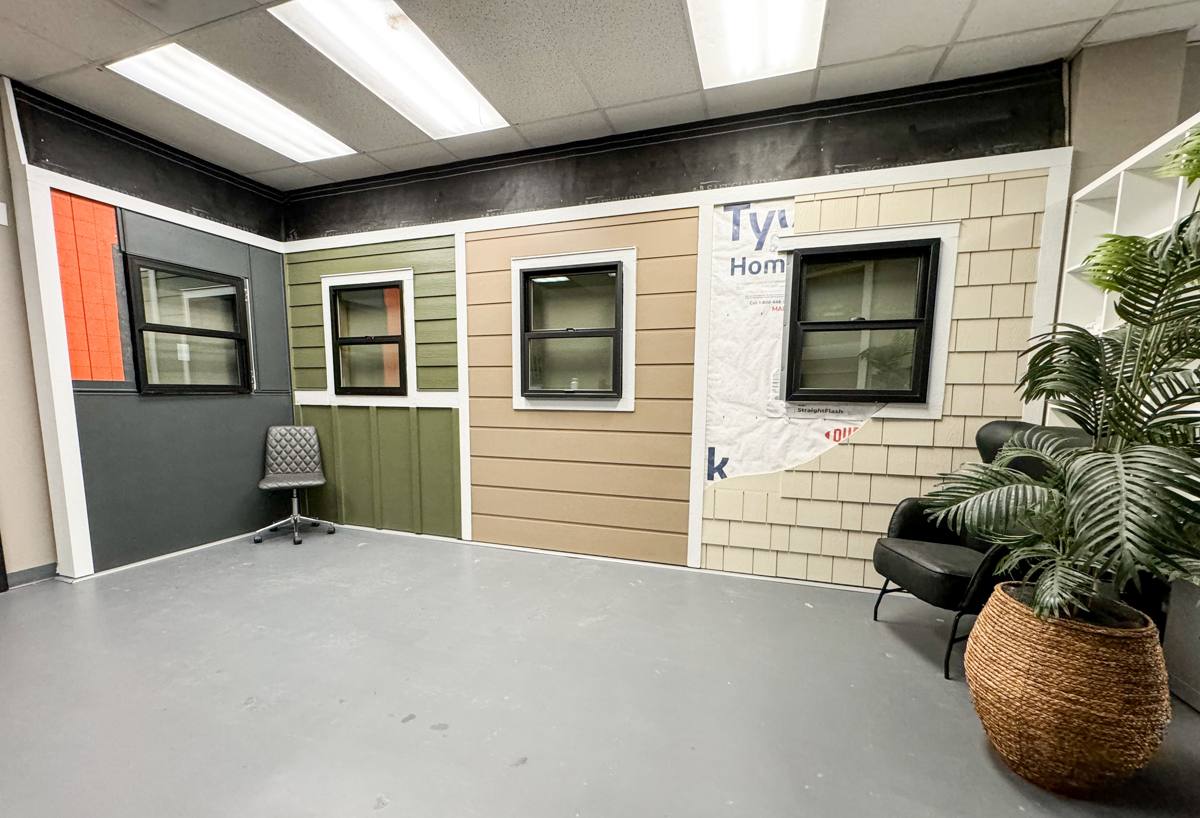
Why Puget's Climate Is Tougher on Board & Batten Than It Looks
Salt air
Homes in the Puget area sit within reach of salt-bearing air off the Sound. Salt is corrosive to fasteners and hard on finishes that aren't engineered for a marine-influenced environment. Over years, cheap or under-spec fasteners can corrode at the head, leaving rust streaks bleeding down the face of the boards and battens — a cosmetic problem that's really a sign of a materials problem underneath.
Driving rain
Bellingham's rain doesn't just fall — a good share of it comes in sideways during winter storms. Board and batten has more vertical seams than lap siding, and every seam is a place water can be driven against and, if the assembly behind it isn't right, pushed through. The batten strips need consistent, adequate coverage over the gaps between boards, and the water-resistive barrier behind the whole assembly has to be continuous and properly lapped, because the siding face is not the only line of defense.
Moss season
Whatcom County's long damp season isn't limited to trees and roofs. Any siding that stays wet too long, especially in shaded elevations or under overhangs with poor airflow, will grow moss and algae over time. That growth holds moisture against the material and, on the wrong substrate, accelerates deterioration. It's mostly a maintenance issue on Hardie fiber cement, but it's a structural one on materials that swell or rot when they can't dry out.
What a Correct Board & Batten Job Involves
Board and batten looks simple from the curb, but the assembly behind the face boards is where a job earns its lifespan. On every board and batten installation we do in the Puget area, the following pieces have to be right, not just present:
- Water-resistive barrier: A continuous, properly lapped weather barrier behind the siding, sealed at every penetration — this is the actual waterproofing layer, not the boards themselves.
- Rainscreen or furring strategy: A drainage gap behind the siding lets any water that gets past the face drain and lets the wall assembly dry, which matters enormously given how long Puget stays damp.
- Batten spacing and fastening: Battens need consistent width and spacing over the board joints, fastened into framing (not just sheathing) with corrosion-resistant fasteners rated for the exposure.
- Flashing at every transition: Windows, doors, roof lines, and butt joints all need proper flashing detail — this is where driving rain finds its way in if it's skipped or rushed.
- Bottom clearance: Correct clearance from grade, decks, and roof lines keeps the bottom edge of the siding from sitting in standing water or splashback.
- Factory-finished material: A factory-applied finish resists moisture and UV far more consistently than field-applied paint, especially on vertical board and batten where every seam is a potential failure point if the finish is thin or uneven.
Skip any one of these and the siding can still look fine going up. The problems show up two, five, or ten years later — exactly the kind of slow failure that's expensive to trace and expensive to fix because it's hidden behind the boards.
Why We Install James Hardie for Board & Batten — Not Alternatives
We install James Hardie fiber cement exclusively, and board and batten is one of the clearest cases for why. Wood-look board and batten profiles are available in several materials, and we've thought hard about each one before standardizing on Hardie:
| Material | How it holds up in Puget's climate |
|---|---|
| Cedar / primed spruce | Attractive but absorbs moisture at end grain and seams; needs ongoing refinishing and is vulnerable to rot and moss growth in a persistently damp climate |
| Vinyl | Won't rot, but the vertical board and batten look in vinyl reads as a lighter-gauge product, can warp with temperature swings, and doesn't hold a factory finish the way fiber cement does |
| LP SmartSide (engineered wood) | Wood-based core is more moisture-sensitive at cut edges and joints than fiber cement, which matters on a profile with this many seams |
| James Hardie fiber cement | Non-combustible, dimensionally stable in wet-dry cycles, factory ColorPlus finish resists fading and holds up to the coastal exposure, and it's engineered for wet Pacific Northwest climates specifically |
Hardie's HZ5 product line is engineered for climates that see exactly this kind of exposure — freeze-thaw cycling, sustained moisture, and coastal air. That's not marketing; it's a materials decision that matches what Puget actually throws at a wall. Combined with a ColorPlus factory finish, which is baked on rather than field-applied, board and batten in Hardie holds its look and its integrity far longer than a field-painted alternative, with a lot less maintenance in between.
Our Process for a Puget Board & Batten Project
1. On-site assessment
We look at your home's actual exposure — which elevations take the worst of the driving rain, where shade and poor airflow are likely to cause moss buildup, and what the existing wall assembly behind your current siding looks like.
2. Tear-off and inspection
Removing the old siding lets us check the sheathing and framing underneath for rot or moisture damage before anything new goes up. This step catches problems that would otherwise get sealed behind new siding and left to get worse.
3. Water-resistive barrier and drainage plane
We install a continuous weather barrier and a drainage gap so the wall can shed and dry, rather than trap, whatever moisture gets past the face.
4. Flashing and trim detail
Every window, door, and roofline transition gets flashed before board and batten goes up around it. This is the step that's easiest to shortcut and the one that causes the most callbacks industry-wide when it's skipped.
5. Installation to Hardie spec
Boards, battens, and fasteners go in following James Hardie's published fastening and clearance requirements — not shortcuts adapted from other siding types.
6. Final walkthrough
We walk the finished job with you, including the details that matter most for long-term performance: clearance from grade, caulking at penetrations, and how the finished product should be maintained.
Maintenance in a Puget Climate
Board and batten in Hardie fiber cement is low-maintenance, not no-maintenance. A few habits go a long way given the local climate:
- Rinse off moss and algae growth on shaded or north-facing elevations before it has time to build up — a garden hose and soft brush is usually enough.
- Keep gutters and downspouts clear so water isn't dumping directly onto siding or pooling near the base of a wall.
- Check caulking at trim and penetrations every year or two, since caulk is the one component that wears out faster than the siding itself.
- Trim back vegetation that keeps siding shaded and damp — airflow is one of the simplest ways to keep moss from taking hold.
Why Hiring a Crew That Already Works Puget Matters
Board and batten installation isn't exotic, but installing it correctly for a coastal Whatcom County exposure is a different job than installing it in a dry inland climate. A crew that already works this area knows which elevations on a Puget-area home take the worst weather, how much drainage gap the local rain load actually calls for, and where moss tends to establish first. That local pattern recognition is the difference between a crew executing a generic install and one that's building specifically for what your wall is going to face every winter for the next several decades.
If you're weighing board and batten for a home in the Puget area, we're happy to walk your property, look at your current siding and exposure, and give you a straight assessment — no pressure, no upsell. Reach out for a free estimate and we'll tell you honestly what your home needs.