 Bellingham Exterior
 Roof Repair Built for Columbia's Wet, Salt-Tinged Climate
Columbia is one of Bellingham's older, established neighborhoods, and that means a lot of the roofs here have already been through a few decades of Pacific Northwest weather. That's not a small thing. A roof in Whatcom County doesn't fail the way a roof does in a dry climate — it doesn't crack and curl from sun exposure so much as it gets worn down by moisture, cycle after cycle, year after year. Salt-tinged marine air off the bay, driving rain that comes in sideways during winter storms, and a moss season that can stretch from fall through spring all work against a roof in ways that are easy to miss until there's a stain on the ceiling.
We repair roofs in Columbia regularly, and the patterns repeat: valleys and flashing that trap moisture, moss holding water against shingles longer than it should sit there, and gutters that can't keep up with a hard rain. None of that is unusual for this part of Bellingham — it's just what the climate does to a roof over time. The point of a good repair isn't to patch the surface symptom, it's to understand why that spot failed and fix the actual cause.
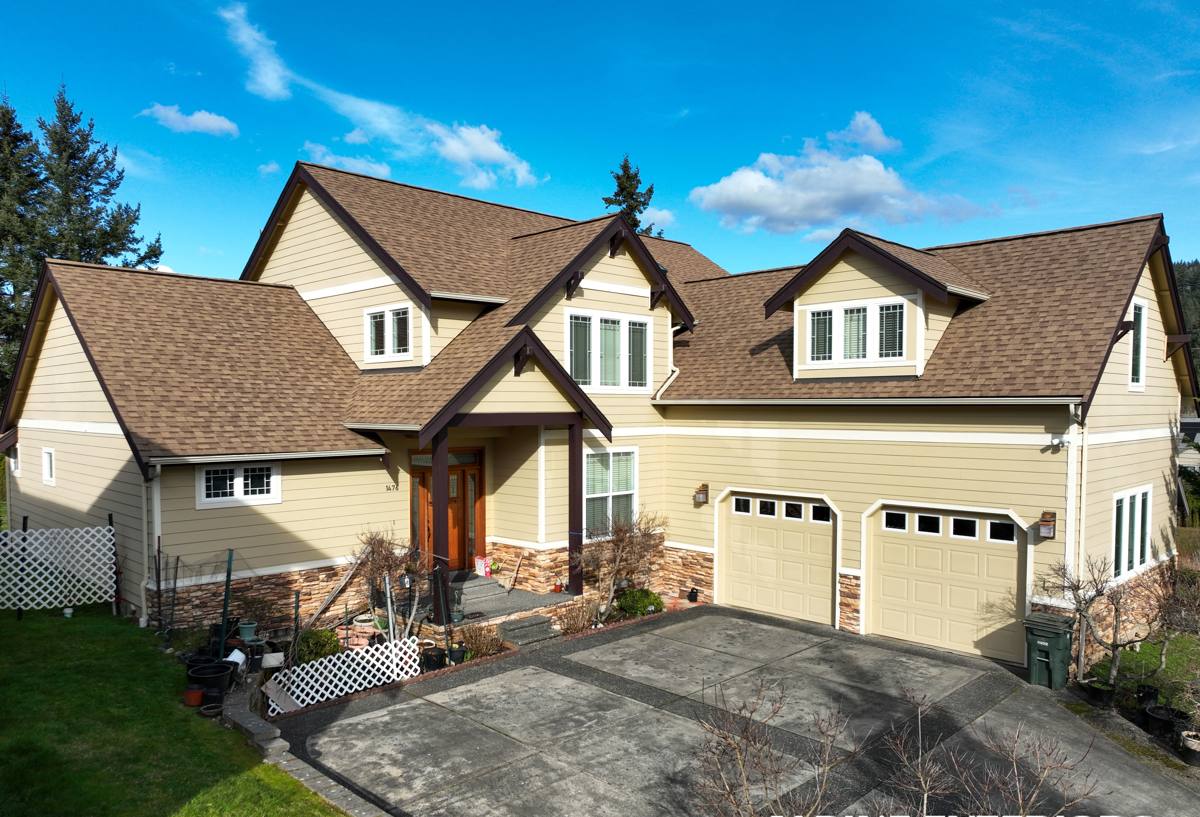
What Columbia's Housing Stock Is Up Against
Salt Air and Slow Corrosion
Being close to the water means Columbia roofs are exposed to salt-laden air more than homes further inland in Whatcom County. Over years, that air accelerates corrosion on exposed metal — nail heads, flashing, vent boots, and any fasteners that aren't fully protected. A fastener that rusts through doesn't announce itself; it just quietly stops holding, and the first sign is usually a leak somewhere downstream of it.
Moss: A Year-Round Concern, Not Just a Fall Chore
Bellingham's moss season is long enough that it's less a "season" and more a baseline condition to manage. Moss doesn't just look bad — it holds moisture directly against roofing material, works its way under shingle edges as it grows, and can lift tabs enough to let wind-driven rain in behind them. On north-facing slopes and anywhere tree cover keeps a roof shaded and damp, moss growth is faster and repair needs come up sooner.
Driving Rain and Wind-Driven Water
Straight-down rain is easy for almost any roof to shed. Driving rain — rain pushed sideways by wind during a storm — is a different problem. It gets under flashing that would otherwise be fine, finds its way past shingle laps that are a little short, and pushes water uphill at valleys if the underlayment isn't doing its job. This is one of the most common causes of "mystery leaks" we're called out to diagnose in Columbia.
Signs Your Columbia Home Needs Roof Repair
Most roof problems give some warning before they turn into a real leak. Worth checking for, especially after a windy winter storm:
- Dark streaks or green-black patches of moss and algae on shingles, especially on shaded or north-facing slopes
- Granules collecting in gutters or at the base of downspouts
- Shingles that look lifted, curled, or cracked, particularly near valleys and edges
- Rusty streaking around vent boots, flashing, or exposed fasteners
- Water stains on interior ceilings or in the attic, even faint or old-looking ones
- Daylight visible through the roof deck from inside the attic
- Sagging spots or soft areas when walking the roofline visually from the ground
- Gutters overflowing or pulling away from the fascia during heavy rain
Any one of these on its own might not mean much. A few of them together is usually a sign the roof needs an actual inspection rather than a guess.
What a Correct Roof Repair Actually Involves
Diagnosing the Real Problem, Not Just the Symptom
A ceiling stain rarely shows up directly below the leak — water travels along rafters and sheathing before it drips. A repair that just patches the spot above the stain often misses the actual entry point, which means the leak comes back after the next storm. Correct diagnosis means getting on the roof, checking the attic side where accessible, and tracing water back to where it's actually getting in — usually a flashing detail, a nail penetration, or a shingle lap that's failed.
Flashing, Underlayment, and the Details That Matter
Most roof leaks in this climate trace back to flashing — the metal that seals transitions at chimneys, skylights, valleys, and roof-to-wall junctions — rather than the field of the shingles themselves. Flashing that's been sealed with caulk instead of properly lapped and integrated with the underlayment will fail eventually, because caulk degrades and shingles don't move the way sealant does. A correct repair reworks the flashing and underlayment at the failure point so water sheds the way it's supposed to, not just seals the visible gap.
Matching Materials, Not Just Covering the Spot
Patching with mismatched shingles or the wrong underlayment can create a new weak point even while fixing the old one. We match shingle type, weight, and where possible, color, and we make sure any new underlayment or flashing ties into the existing roof system correctly rather than sitting on top of it as a stopgap.
Repair vs. Replacement: How We Help You Decide
Not every roof problem needs a full replacement, and not every leak can be permanently solved with a patch. The honest answer depends on the roof's age, how widespread the damage is, and what's causing it. Here's roughly how we think through it:
| Factor | Points Toward Repair | Points Toward Replacement |
|---|---|---|
| Roof age | Under 15-20 years, otherwise sound | Nearing or past the material's expected lifespan |
| Extent of damage | Isolated to one area (valley, flashing, one slope) | Widespread granule loss, curling, or moss across most of the roof |
| Decking condition | Solid, no soft spots | Soft, rotted, or delaminated sheathing found during inspection |
| Leak history | First occurrence, clear single cause | Recurring leaks in different spots, or previously patched multiple times |
| Underlayment | Newer, still intact where accessible | Original underlayment on an older roof, brittle or failing |
We'll always tell you honestly which category your roof falls into. If a repair will genuinely hold, we recommend the repair — a roof replacement isn't something we push on a homeowner who doesn't need one yet.
Our Roof Repair Process in Columbia
- Inspection. We walk the roof and check accessible attic space, looking for the actual source of the problem, not just the visible symptom.
- Honest diagnosis. We explain what we found, what's causing it, and whether a repair or a broader fix makes sense — in plain terms, before any work starts.
- Moss and debris removal. If moss or built-up debris is contributing to the problem, we clear it properly rather than pressure-washing in a way that strips granules.
- The repair itself. Flashing, underlayment, decking, and shingles are addressed as a system so water sheds correctly, not just at the surface.
- Cleanup and check. We clear debris and fasteners from gutters and the yard, and do a final check of the repaired area before we consider the job done.
Why a Crew That Already Works in Columbia Matters
A roofer who works this part of Whatcom County regularly already knows what moss season does to a north-facing slope, what salt air does to exposed fasteners over ten or fifteen years, and which flashing details tend to fail first on the kind of roofs common to this neighborhood. That's not something you can fully substitute with a quick internet search or a crew driving in from out of the area for a single job. It also means a faster response when a storm causes damage and a leak needs attention before it turns into interior repair costs, not just roofing costs.
Maintaining Your Roof Between Repairs
A repair holds a lot longer with a bit of regular attention. A few things worth doing on a normal schedule:
- Clear moss buildup before it thickens, rather than waiting until it's visibly heavy
- Keep gutters and downspouts clear so water isn't backing up against roof edges
- Trim back tree branches that keep sections of the roof shaded and damp
- Do a visual check from the ground after major windstorms for lifted or missing shingles
- Have small issues looked at promptly — a small flashing fix is far cheaper than the water damage that follows if it's ignored
Get a Free, No-Pressure Roof Repair Estimate
If you're seeing signs of a leak, moss buildup, or storm damage on a Columbia home, it's worth getting it looked at before the next round of Bellingham rain finds the weak spot for you. We'll give you an honest assessment of what's going on and what it actually takes to fix it — no pressure, no upsell. Use the form below to request a free estimate.