 Bellingham Exterior
 Sudden Valley's Deck Problem Isn't Like Everyone Else's
Sudden Valley sits in a wooded, hilly pocket of Whatcom County along Lake Whatcom, and that setting creates a specific set of problems for outdoor structures. Tree canopy keeps a lot of decks in partial shade most of the day, lake-adjacent humidity keeps surfaces damp longer than they would be in an open, sunny yard, and the region's driving rain off the Sound and Bellingham Bay adds to a long wet season that runs from fall into late spring. Add a moss season that can stretch six months or more in shaded lots, and you get decks that never fully dry out between storms.
That combination is hard on wood. It's easier on composite, but only if the material and the installation are matched to the actual site conditions — not just picked off a showroom sample board. A deck that works fine in an open, south-facing yard in Ferndale can still grow moss and trap moisture in a shaded Sudden Valley lot if it's built the same way.
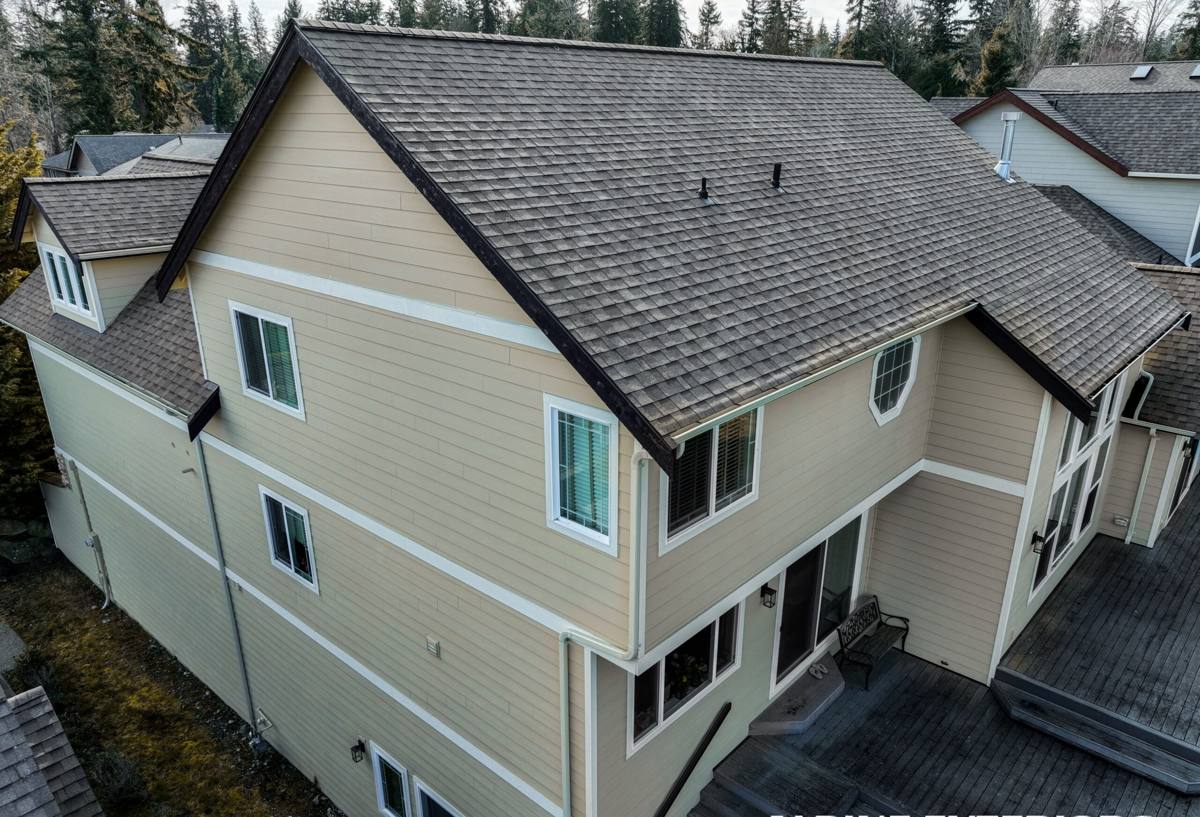
What Composite Decking Actually Fixes — And What It Doesn't
Composite decking solves the problems homeowners here complain about most: no annual staining, no splintering, no soft or rotting boards after a wet winter, and much better resistance to the algae and moss growth that shows up on shaded, damp wood decking. It's a reasonable, honest upgrade for this climate.
What it doesn't do is make moisture management optional. Composite boards don't absorb water the way wood does, but the framing underneath still can, and standing water or trapped debris on top of the boards will still grow moss and algae on composite — just more slowly and more removably than on wood. Anyone who tells you composite decking is "maintenance-free" in a shaded, damp Whatcom County lot is overselling it. It's dramatically lower-maintenance, not zero-maintenance.
Where Composite Makes the Most Sense in This Neighborhood
- Decks under or near tree canopy that never get full sun exposure to dry out naturally
- Lakeside or slope-facing decks exposed to wind-driven rain
- Homeowners replacing a wood deck that's already showing rot, soft spots, or persistent moss staining
- Anyone who wants to stop the annual pressure-wash-and-reseal cycle
Choosing the Right Composite for a Shaded, Damp Lot
Capped vs. Uncapped Boards
Capped composite — boards with a plastic polymer shell wrapped around a wood-plastic core — is the better call for most Sudden Valley lots. The cap sheds water and resists staining from tannins, tree debris, and algae far better than uncapped composite, which has exposed wood-composite material on at least one face and will pick up moss and mildew faster in constant shade. Uncapped boards are usually cheaper up front, but on a shaded lot that cost difference tends to show up again in a few years as a duller, greener-looking deck.
Board Texture and Color
Lighter, smoother board finishes show algae and moss staining faster and more visibly than deep, variegated wood-tone colors. On a lot with heavy tree cover, a darker or streaked composite color will simply look better longer between cleanings — it's not about hiding a problem, it's about picking a finish that doesn't broadcast normal seasonal buildup.
Gapping and Grooved Profiles
Board spacing matters more here than in a dry climate. Proper gapping between boards lets water drain through instead of pooling on the surface, and it lets air move underneath so the framing can dry between storms. Grooved-edge boards with hidden fastener systems also avoid the screw-head pockets that collect standing water and debris on face-screwed boards — small detail, but it matters when a deck sits wet for days at a time.
What a Correct Installation Involves in This Climate
Composite decking is only as good as what's underneath it. A few things we treat as non-negotiable on every Sudden Valley job:
Joist Spacing and Framing
Composite boards flex differently than wood and most manufacturers require tighter joist spacing than a traditional wood deck — commonly 12" on center for straight installations and tighter still for angled patterns. Building to wood-deck spacing is a common corner-cut that leads to bounce and long-term board sag.
Ventilation Underneath
On shaded, low-clearance decks, airflow under the deck is what keeps the framing dry between rain events. We build in enough clearance and, where the site allows it, venting so moisture isn't trapped against the joists and beams — the part of the deck that's still wood on almost every composite system.
Flashing and Ledger Connections
Where a deck attaches to the house, proper ledger flashing keeps water from working its way behind the siding and into the wall assembly — a bigger risk in a region that gets sustained, wind-driven rain rather than short, light showers. This is also where most structural failures and hidden rot actually start, not in the decking boards themselves.
Fasteners and Hardware
Everything below the boards — joist hangers, screws, structural connectors — should be corrosion-resistant hardware rated for ground contact and wet exposure. In a lake-adjacent, humid microclimate, cutting corners on fastener grade shows up as rust staining and hardware failure years before the decking itself would need attention.
Composite vs. Other Decking Options for a Shaded, Wet Lot
| Material | Upfront Cost | Moss/Algae Resistance | Maintenance | Typical Lifespan |
|---|---|---|---|---|
| Pressure-treated wood | Lowest | Poor in shade | Annual cleaning, periodic staining/sealing | 10–15 years in wet, shaded conditions |
| Cedar | Moderate | Fair, better than treated pine | Regular sealing to prevent graying and rot | 15–20 years with upkeep |
| Uncapped composite | Moderate | Fair | Periodic cleaning, more prone to staining in shade | 20–25 years |
| Capped composite | Higher | Best | Occasional rinsing/cleaning | 25–30+ years, manufacturer-dependent |
None of these numbers are guarantees — actual lifespan depends heavily on how much direct sun and airflow a specific deck gets, and Sudden Valley's tree cover pushes every material toward the lower end of its range unless the install accounts for it.
Our Process, Start to Finish
- On-site assessment. We look at sun exposure, tree cover, slope, drainage, and the condition of any existing structure before recommending a material or layout.
- Honest material walkthrough. We'll tell you where a cheaper board makes sense and where it doesn't for your specific lot — not just push the highest-margin option.
- Permitting. Whatcom County and any applicable HOA requirements for Sudden Valley are handled as part of the job, not left for you to sort out separately.
- Demo and framing. Old decking and, where needed, framing is replaced to current spacing and hardware standards before a single composite board goes down.
- Installation. Proper gapping, flashing, and fastening, built to the manufacturer's specifications for warranty coverage.
- Final walkthrough. We go over basic care for your specific board and finish before we call the job done.
Living With a Composite Deck in Sudden Valley's Conditions
Even a good composite deck under tree cover needs occasional attention. A seasonal rinse with a garden hose and stiff (non-metal) brush handles most surface algae and moss before it sets in. Keeping gutters and nearby tree debris clear of the deck surface reduces the organic matter that moss and mildew feed on. On lots with heavy shade year-round, an annual composite-safe deck cleaner in spring, after the wettest months, keeps boards looking like new rather than letting staining build up over several seasons.
What you should never need to do is sand, stain, or reseal a composite deck. If a contractor tells you your composite boards need refinishing, that's a sign something was installed wrong — usually drainage or ventilation — not a normal part of composite ownership.
Why It Matters That We Already Work in Sudden Valley
Sudden Valley's terrain isn't the easiest to build on — narrow, winding access roads, sloped lots, and lake-proximity considerations all affect how a deck job gets staged and built. A crew that's already worked in the neighborhood knows what to expect from site access, has a working sense of the local permitting and any HOA review steps, and isn't learning the terrain on your dime. That familiarity shows up in fewer surprises and a smoother timeline, not just faster work.
Questions Worth Asking Any Deck Contractor Before You Hire
- Do you carry current liability insurance and workers' comp, and can you provide proof?
- Will you pull the Whatcom County permit, and is that included in the quote?
- What joist spacing and fastener hardware do you use for composite specifically?
- Is the manufacturer's warranty registered under my name after the job, or does that fall on me?
- Have you worked in Sudden Valley or similar shaded, sloped lots before?
- What's your plan for ledger flashing where the deck meets the house?
If you're weighing a new composite deck or replacing an aging wood one, we're glad to walk your property, look at the sun, shade, and drainage you're actually dealing with, and give you a straight answer on what it'll take. There's a free, no-pressure estimate form below — reach out and we'll get you scheduled.