 Bellingham Exterior
 Decking in Cordata: A Different Set of Problems Than Most Composite Ads Assume
Most composite decking marketing is written for a generic backyard in a generic climate. Cordata isn't that. This part of north Bellingham sits close enough to the water and the foothills that decks here deal with a specific combination: salt-tinged air drifting in off Bellingham Bay, long stretches of driving rain through fall and winter, and shaded, damp conditions that keep moss and algae established on horizontal surfaces for months at a time. A deck built or sold without that combination in mind tends to show its age fast — not because the materials are bad, but because they were never matched to the job.
This page is about one thing: composite decking, done right, for homes in Cordata. Not a general overview of every decking material on the market, and not a sales pitch for a specific board line. Just what actually holds up here, what a correct installation looks like, and what to expect from a crew that already knows this neighborhood.
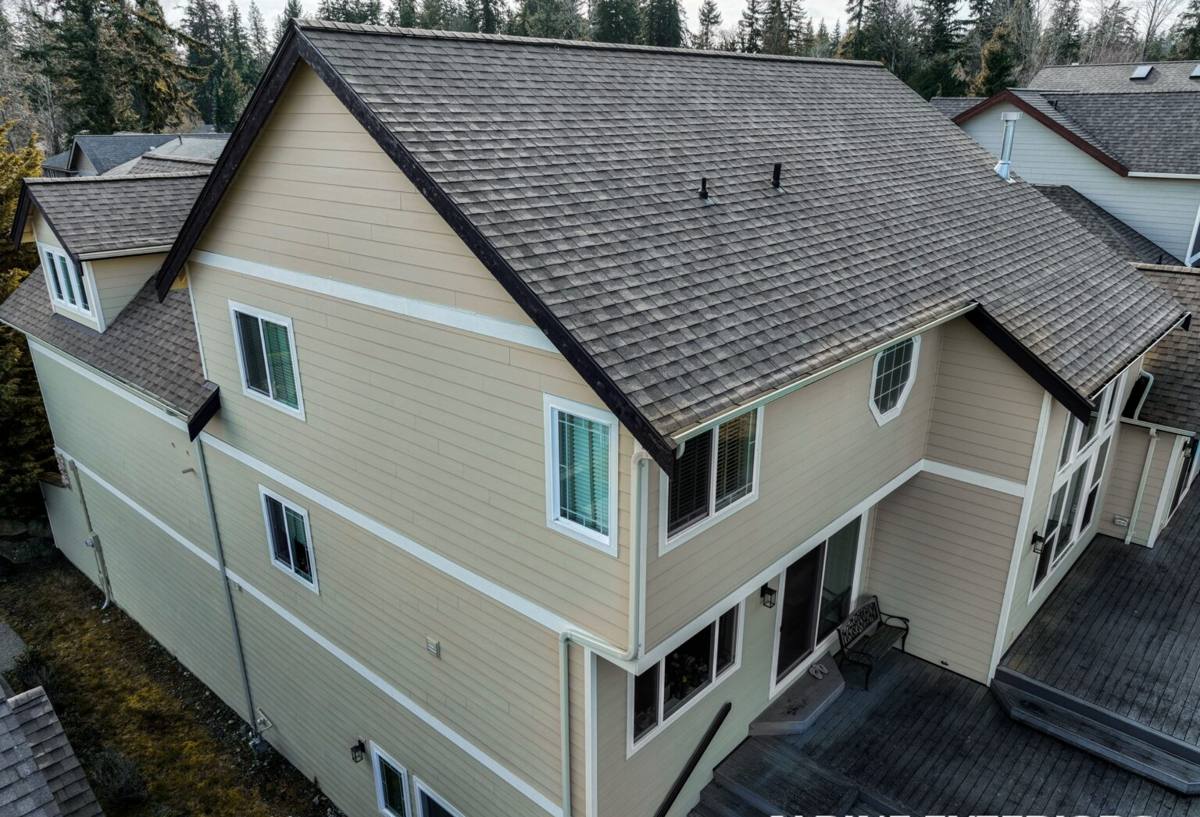
What Cordata's Climate Actually Does to a Deck
Salt air and metal fatigue
Whatcom County isn't a heavy salt-fog coastal environment like the outer coast, but Cordata is close enough to Bellingham Bay that airborne salt is a real, ongoing factor — especially on exposed, west- or north-facing decks. Over years, that salt exposure accelerates corrosion on fasteners, joist hangers, and any hardware that isn't rated for it. A deck can look fine on the surface while its structural connectors are quietly degrading underneath.
Driving rain and hidden moisture
Rain here doesn't just fall — it drives sideways often enough that ledger boards, board ends, and any point where the deck meets the house take on more water than a simple "rain exposure" would suggest. Composite boards themselves don't rot, but the substructure underneath them, the flashing where the deck meets siding, and any wood blocking or framing absolutely can — if the install didn't account for drainage and airflow.
Moss season
Bellingham's moss season isn't a two-week nuisance — it's most of the year on shaded or north-facing surfaces. Composite decking resists rot, but it doesn't resist moss and algae growth on its own. Boards with a smooth, low-texture cap layer shed moss much more easily during routine cleaning than deeply embossed or highly textured boards that give spores somewhere to grip.
Why Composite Makes Sense for This Neighborhood
We install composite decking in Cordata because it's a genuinely good match for this climate's failure modes, not because it's trendy. The trade-offs are real, though, and worth being honest about.
| Factor | Wood Decking | Composite Decking |
|---|---|---|
| Moisture/rot resistance | Requires sealing and ongoing upkeep to resist Bellingham's rain | Board itself won't rot; substructure still needs proper drainage |
| Moss/algae grip | Grain and texture give moss more surface to hold | Smoother cap boards shed moss more easily with routine washing |
| Fastener/hardware exposure | Same salt-air corrosion risk regardless of decking material | Same risk — requires coated or stainless hardware either way |
| Upfront cost | Lower material cost | Higher material cost, generally lower lifetime maintenance cost |
| Refinishing | Periodic staining/sealing needed | No staining or sealing required |
The honest caveat: composite is not maintenance-free, and any contractor who tells you it is hasn't lived through a Whatcom County winter with one. It's low-maintenance relative to wood, particularly against moss and rot, but the framing underneath, the fasteners, and the drainage path still need to be built correctly and checked periodically.
What a Correct Composite Deck Installation Actually Involves
The substructure comes first
The single biggest mistake we see on decks that fail early in this climate isn't the decking board — it's what's underneath it. Joists, beams, posts, and especially the ledger connection to the house need to be built with drainage and ventilation in mind, using hardware rated for coastal or high-moisture exposure. On a composite deck, the framing is doing more of the long-term work than people assume, because the decking board is only as good as what it's fastened to.
Ledger flashing and the house connection
Where a deck attaches to the house is the single most common point of hidden water intrusion. Correct flashing — installed so water sheds away from the house rather than behind the siding — matters more in a driving-rain climate like this one than it does in drier regions. This is also the step that's hardest to inspect after the fact, which is exactly why it needs to be done right the first time.
Hidden fasteners and board spacing
Hidden fastener systems keep the deck surface free of exposed screw heads, which both looks cleaner and removes small points where water and debris collect. Board spacing needs to account for composite's expansion and contraction with temperature — get it wrong and boards can buckle or gap unevenly over a few seasons.
Airflow underneath
A deck built low to the ground or over a moisture-prone area needs enough ventilation underneath to let the substructure dry out between rain events. Skipping this is one of the more common shortcuts that doesn't show up as a problem until several years in.
Our Process for a Cordata Composite Deck
- On-site assessment: we look at sun/shade exposure, existing structure (if replacing decking on an existing frame), drainage slope, and how exposed the site is to wind-driven rain.
- Framing evaluation or build: if we're replacing boards on an existing deck, we inspect the substructure and hardware before covering it back up — no installing new decking over compromised framing.
- Flashing and drainage detailing: ledger connections and any deck-to-house junctions are addressed before a single board goes down.
- Board installation: hidden fasteners, correct spacing for thermal movement, and layout planned around drainage rather than just appearance.
- Final walkthrough: we go over cleaning and moss-prevention basics specific to your deck's sun exposure before we consider the job done.
Living With a Composite Deck in a Moss-Prone, Salt-Air Climate
- Sweep or rinse debris off the deck regularly during fall — trapped leaves hold moisture and feed moss growth.
- Wash the deck surface with a soft-bristle brush and mild cleaner once or twice a year, more often on shaded sections.
- Avoid pressure washing at close range or high PSI — it can etch or dull the cap layer on some composite boards.
- Check fastener heads and any visible hardware periodically for early signs of corrosion, especially on decks with direct bay exposure.
- Keep gutters and downspouts near the deck clear so runoff isn't dumping extra water onto or under the structure.
- Trim back overhanging branches where possible — shade is good for comfort, bad for moss control.
What Drives the Cost of a Composite Deck Project
| Cost Factor | Why It Matters Here |
|---|---|
| Deck size and layout | Straightforward rectangular decks cost less per square foot than decks with multiple levels or angles |
| Substructure condition | Replacing rotted or corroded framing adds cost but is not optional if it's compromised |
| Board tier and cap style | Smoother, moss-resistant cap boards and higher-tier composites cost more upfront |
| Site exposure | Decks with heavier rain/wind exposure may need more robust flashing and hardware detailing |
| Railing and fastener systems | Coastal-rated hardware and hidden fastener systems add labor and material cost |
| Access and site conditions | Sloped lots or tight access around the home can add labor time |
We'd rather walk you through these factors on-site than throw out a number that doesn't hold up once we see the actual conditions. Every deck in Cordata is a little different depending on exposure and existing structure.
Why It Matters to Hire a Crew That Already Works This Neighborhood
Cordata's mix of newer residential construction and its proximity to Bellingham Bay means the right approach here isn't identical to what works on a deck twenty minutes inland, or in a drier part of Whatcom County. A crew that already works this area knows to plan for wind-driven rain on exposed sides, to spec hardware that won't corrode from salt air, and to steer homeowners toward board finishes that actually shed moss instead of collecting it. That's not a marketing point — it's the difference between a deck that looks the same in year eight and one that needs early rework because the substructure or hardware wasn't matched to the site.
Get a Straightforward, No-Pressure Estimate
If you're weighing a new composite deck or replacing worn decking in Cordata, we're happy to come take a look, walk the site with you, and give you an honest read on what your deck needs — no pressure, no upsell. Use the form below to request a free estimate.