 Bellingham Exterior
 Why Roofs in Cordata Wear Faster Than Homeowners Expect
Cordata sits in north Bellingham, close enough to Bellingham Bay and the Salish Sea to pick up salt-laden air, and far enough into Whatcom County's wet season to see months of steady, driving rain. That combination is harder on a roof than either factor alone. Salt air accelerates corrosion on fasteners, flashing, and exposed metal edges. Driving rain, especially when it comes in at an angle off the water, finds every weak seam, nail pop, and worn flashing detail a dry-climate roof would never expose. And because so many lots here carry mature tree cover, roofs also spend a long stretch of the year shaded and damp, which is exactly what moss and algae need to take hold.
None of this means a Cordata roof is doomed early. It means the materials, underlayment, ventilation, and flashing details matter more here than they would in a drier region, and a replacement that skips those details will show its age well before it should.
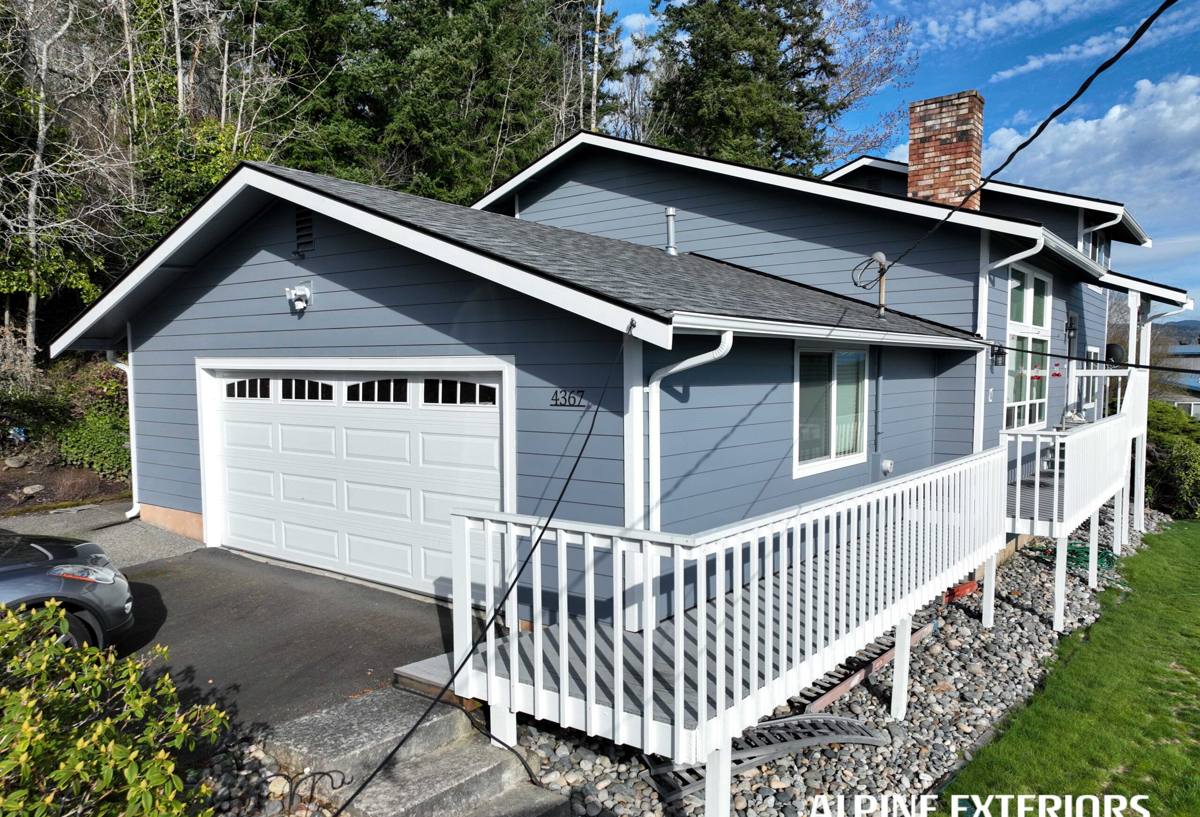
Signs a Cordata Home Needs Replacement, Not Another Repair
A patch can buy time. It cannot fix a roof that has reached the end of its service life or was installed without the moisture management this climate demands. Homeowners in this neighborhood typically start looking at full replacement when they notice:
- Granules collecting in gutters or at downspout outlets, a sign the shingle surface is wearing thin
- Shingles that are cupping, curling at the edges, or cracking in sheets rather than isolated spots
- Dark streaking or thick moss growth returning within a season or two of cleaning
- Soft spots in the decking, visible sagging along roof planes, or daylight through the attic
- Repeated leaks around the same valley, chimney, or vent boot despite prior repairs
- A roof that is already past 20-25 years old for standard asphalt shingle in this climate
If only one of these shows up in isolation, a repair may still make sense. When two or three show up together, it usually means the underlying materials are failing broadly rather than at one weak point, and repeated repairs stop being the economical choice.
Choosing the Right Roofing System for This Climate
There is no single "best" roofing material for every home, but some perform noticeably better than others once salt air, moss, and sustained rain are part of the equation. The table below compares the systems we install most often on homes in this part of Bellingham.
| Material | Typical Lifespan Here | Moss/Algae Resistance | Maintenance Needs |
|---|---|---|---|
| Standard asphalt composition shingle | 18-22 years | Moderate; benefits from algae-resistant granules | Periodic moss removal, gutter clearing |
| Algae-resistant (copper/zinc-infused) shingle | 22-28 years | Good; granules actively discourage growth | Lower, still needs gutter and valley checks |
| Standing seam metal | 40-50+ years | Very good; smooth surface sheds moss buildup | Low; occasional fastener and sealant checks |
| Synthetic/composite shingle | 30-40 years | Good, varies by product line | Low to moderate |
Cost, appearance, and how long you plan to stay in the home all factor into which system makes sense. What we won't do is recommend a premium material as a blanket fix for a roof problem that's actually about ventilation or flashing. A high-end shingle installed over a poorly ventilated attic will still fail early; the system underneath the surface layer is what determines how well any of these materials actually perform.
What a Correct Tear-Off and Replacement Actually Involves
Tear-Off and Deck Inspection
Every layer of old roofing comes off down to the decking. This is the point where hidden problems surface: soft or delaminated sheathing from long-term moisture intrusion, undersized or corroded fasteners, and past repairs that were never done to code. Any compromised decking gets replaced before anything new goes down. Skipping this step to save time is one of the most common shortcuts in the industry, and it's the reason otherwise "new" roofs sometimes fail within a few years.
Ice, Water, and Underlayment Barrier
Given how much sustained rain this area sees, self-adhering waterproof underlayment along eaves, valleys, and roof penetrations isn't optional. It's the backup layer that keeps water out when wind-driven rain gets past the shingles themselves, which happens more often in coastal Whatcom County than most homeowners realize.
Ventilation
Proper intake and exhaust ventilation keeps attic humidity down, which slows moss growth from underneath, prevents condensation-driven rot in the decking, and helps shingles reach their full rated lifespan. A roof that looks correctly installed but was never balanced for airflow will age faster from the inside out.
Flashing and Detail Work
Chimneys, skylights, dormers, and valleys are where most leaks actually start, not in the open field of shingles. Flashing needs to be replaced, not reused, and formed to shed water correctly at every transition. Corner-cutting here is invisible at installation and expensive two or three winters later.
Final Roofing Layer and Trim
Once the deck, barrier, and ventilation are correct, the finish material goes down with proper nailing patterns, exposure, and edge details. Drip edge, ridge caps, and any moss-inhibiting strips get installed at this stage, not added on as an afterthought.
Moss and Algae: Managing Bellingham's Long Growing Season
Whatcom County's moss season runs longer than most homeowners moving here from drier states expect, often nearly year-round on shaded, north-facing roof planes. Moss does more than look bad. Its root structure lifts granules and shingle edges, and it holds moisture against the roof surface long after the rain stops, which is exactly the condition that leads to premature failure.
A correct replacement addresses this in a few ways: choosing granules or materials with built-in algae resistance, installing zinc or copper strips near the ridge on planes prone to heavy growth, and making sure valleys and low-slope sections aren't trapping standing water or debris. None of these steps eliminate the need for occasional cleaning, but they meaningfully reduce how often it's needed and how aggressively moss returns.
Our Process, Start to Finish
Homeowners in Cordata generally go through the same sequence with us, whether the roof is a straightforward gable or has multiple valleys and penetrations:
- On-site inspection and honest assessment of whether repair or full replacement is the right call
- Written estimate that breaks out material, labor, and any decking replacement contingencies
- Material selection walkthrough, matched to your home's exposure, slope, and budget
- Scheduling that accounts for Whatcom County's weather windows rather than fighting them
- Tear-off, deck inspection, and repair of any compromised sheathing
- Installation of waterproof underlayment, ventilation components, and new flashing
- Final roofing layer, trim, and moss-inhibiting details installed to manufacturer spec
- Full site cleanup, including magnetic nail sweep, and a final walkthrough with you
We don't start a tear-off without a realistic weather window, since an open roof deck and an unexpected Whatcom County downpour are a bad combination for everyone involved.
Permits, HOA Rules, and Other Local Considerations
Roof replacement in the City of Bellingham typically requires a permit, and inspections confirm the work meets current code, particularly around ventilation and ice barrier requirements in areas exposed to wind-driven rain. Some newer developments in and around Cordata also have HOA design guidelines that govern shingle color, style, or material choice. We handle the permit process directly and will flag any HOA approval steps before ordering material, so there are no surprises mid-project or at resale.
What Roof Replacement Costs Depend On
We won't quote a number without seeing the roof, but the factors that move a Cordata roofing estimate up or down are consistent across most homes:
| Factor | Why It Matters |
|---|---|
| Roof size and number of planes | More material and labor hours, more valleys and flashing points |
| Pitch and accessibility | Steeper or harder-to-access roofs require more safety setup and time |
| Decking condition | Hidden rot or soft sheathing found at tear-off adds material and labor |
| Material selection | Standard shingle vs. algae-resistant vs. metal changes cost significantly |
| Number of penetrations | Chimneys, skylights, and vents each need individual flashing work |
| Current ventilation setup | Adding or correcting intake/exhaust vents adds scope but pays off long-term |
The honest range for a full replacement on a typical Cordata home spans widely depending on these factors, which is why a firm number only comes after an actual on-site look, not a phone estimate.
Why a Crew That Already Works in Cordata Matters
Roofing crews who work regularly in this specific area already know which planes tend to hold moss longest, how local wind patterns drive rain into valleys and flashing, and which permit and inspection steps the City of Bellingham and Whatcom County actually enforce. That local familiarity shows up in fewer surprises during tear-off, more accurate estimates up front, and a finished roof that's built for the conditions it will actually face rather than a generic install. It also means faster response if a storm causes damage between now and your next scheduled maintenance, since we're not driving in from across the region to take a look.
If your roof is showing its age, or you just want a straight answer on repair versus replacement, we're glad to come take a look. Fill out the form below for a free, no-pressure estimate and we'll walk the roof with you in person.