 Bellingham Exterior
 Building Decks for Ferndale's Real Conditions, Not a Catalog Photo
Ferndale sits close enough to the water and open farmland that its weather doesn't behave like a generic Pacific Northwest forecast. Homes here deal with salt-laden air drifting in off the bay, long stretches of driving rain through fall and winter, and a moss season that can run half the year on shaded north- and west-facing exposures. A deck built without those specifics in mind will look fine for a season or two and then start showing problems — soft spots, corroding hardware, slick green film, boards that cup or split. We build custom decks in Ferndale the way the site actually demands, not the way a national decking catalog assumes every yard in America looks the same.
This page covers what a Ferndale deck project should include from the ground up: material choice, structural details, drainage and layout, our build process, and the maintenance a deck here genuinely needs. If you're comparing quotes or just trying to understand what "custom" should mean for your yard, this is the honest version.
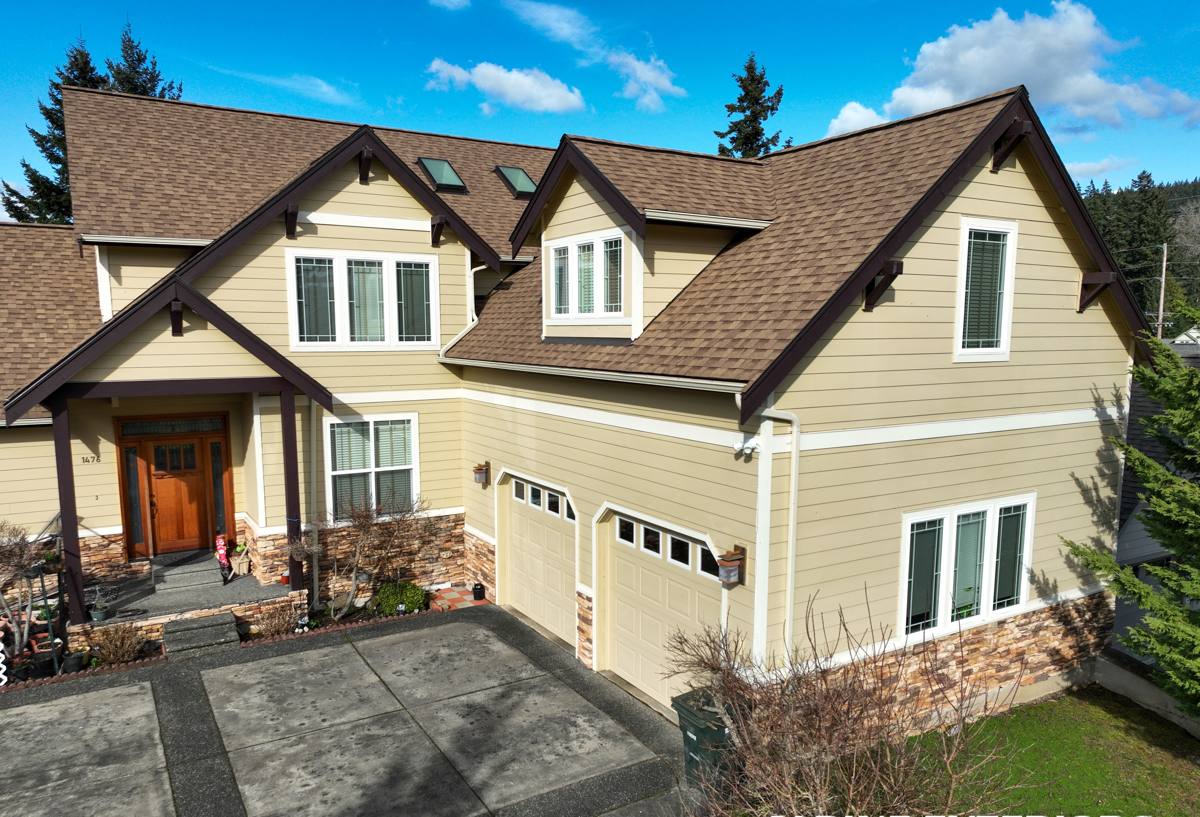
What Ferndale's Climate Does to a Deck Over Time
Every material and fastener choice on this page traces back to three local realities:
- Salt air: Properties closer to the water see accelerated corrosion on any metal that isn't rated for it — screws, joist hangers, post bases, and railing hardware all take the hit faster here than fifty miles inland.
- Driving rain: Wind-driven rain gets pushed sideways into ledger connections, stair stringers, and any horizontal surface that isn't sloped or flashed correctly. Standing water is the single biggest cause of early deck failure we see.
- Long moss season: Shaded, damp decks in Whatcom County can grow moss and algae nearly year-round. Beyond being slippery, moss holds moisture against the deck surface and accelerates rot in wood and staining in composite.
None of this means a deck in Ferndale can't last decades — it means the build has to account for these conditions instead of ignoring them.
Choosing the Right Decking Material
There's no single "best" decking material — there's a best material for your budget, your sun exposure, and how much upkeep you actually want to do. Here's how the common options hold up under Ferndale conditions specifically:
| Material | How it handles salt air & rain | Moss/algae resistance | Upkeep |
|---|---|---|---|
| Pressure-treated wood | Good if fasteners and connectors are corrosion-rated; wood itself needs sealing | Needs regular cleaning and sealing to resist moss growth | Annual cleaning, re-staining every 2-3 years |
| Cedar | Naturally rot-resistant but still needs sealed end cuts and good drainage | Moderate — still grows moss in shaded, damp spots without maintenance | Annual cleaning, periodic oiling to hold color and grain |
| Capped composite | Handles moisture and salt air well; capped surface resists moisture intrusion | Better resistance, but still needs washing in shaded areas | Low — periodic washing, no staining or sealing |
| PVC/cellular decking | Excellent moisture resistance, doesn't absorb water | Best resistance of the common options | Lowest — occasional washing only |
We won't push composite or PVC on every job just because it's lower maintenance — plenty of Ferndale homeowners want the look and feel of real wood and are willing to keep up with sealing. Our job is to walk you through the honest trade-offs for your specific yard: how much sun and shade it gets, how close you are to open water, and how much annual upkeep you actually want to commit to.
A Note on Fasteners and Hardware
This is where a lot of decks quietly fail years before the decking boards do. Standard coated screws and joist hangers can start corroding within a few years in a salt-air environment, especially on decks facing open water or exposed to prevailing wind. We use stainless steel or hot-dip galvanized hardware rated for coastal exposure on every Ferndale build — it costs more up front and it's not visible once the deck is finished, but it's the difference between a structure that's still solid in fifteen years and one that needs hardware replaced in five.
Framing and Structure: The Part You Don't See
A custom deck is only as good as what's underneath it, and this is where corners get cut on rushed jobs. The details that matter most in our climate:
Ledger Attachment and Flashing
Where the deck attaches to the house is the single most common source of hidden water damage. Proper flashing — installed so water sheds away from the house rather than behind the ledger board — is non-negotiable on every job we do, driving rain makes an improperly flashed ledger a slow-motion problem waiting to surface as rot in the house's rim joist.
Footings Below Frost Depth
Whatcom County building code requires footings set below the local frost line so seasonal ground movement doesn't heave posts out of level. We size and set footings to code on every project, not as an afterthought during inspection.
Joist Spacing and Board Direction
Tighter joist spacing than the material minimum reduces bounce and extends board life, especially with composite decking, which can be more sensitive to spanning than solid wood. We also plan board direction and drainage slope together so water actually runs off the surface instead of pooling between boards.
Design Considerations for Ferndale Lots
Layout decisions that look purely aesthetic often have a functional reason behind them once you factor in local conditions:
- Orientation and shade: North- and west-facing decks under tree cover stay damp longer and need either more sun exposure designed into the layout or a material choice that tolerates it.
- Drainage away from the house: Grading and gutter placement near the deck matter as much as the deck itself — water shed off a roof onto a deck surface accelerates every problem above.
- Ventilation underneath: Low-clearance decks with poor underside airflow trap moisture and speed up rot in framing. We build in enough clearance and, where needed, vents to keep air moving underneath.
- Railings and fasteners exposed to weather: Anything at the perimeter takes the most direct hit from driving rain and salt air, so we spec hardware there the same as we do for ledger connections — no downgrading visible parts to standard-grade fasteners.
Our Process From Estimate to Finished Deck
We keep the process straightforward because a good deck project shouldn't feel like a mystery:
- On-site assessment: We walk the yard, check sun exposure, drainage, and how close the property is to salt air influence, and talk through how you actually plan to use the space.
- Material and design walkthrough: We go over the honest trade-offs between wood, composite, and PVC for your specific site — no default upsell to whatever has the best margin.
- Permit handling: We pull the required permits and build to Whatcom County and Ferndale code, including footing depth and railing height requirements.
- Build: Footings, framing, and ledger flashing get done right first — these are the parts that determine how the deck performs in five, ten, and twenty years.
- Final walkthrough: We go over care and maintenance specific to the material you chose, so you know exactly what upkeep to expect.
Maintenance: What a Ferndale Deck Actually Needs Each Year
Every deck needs some upkeep — the amount just depends on the material. A simple annual checklist keeps most Ferndale decks in good shape without a big time investment:
- Wash the surface in early spring to remove winter moss and algae buildup before it stains or gets slick
- Check and clear drainage gaps between boards so water isn't pooling
- Inspect ledger flashing and railing connections for any sign of water staining or loose hardware
- For wood decks: re-seal or re-stain on the schedule appropriate to the product, typically every 2-3 years
- For composite or PVC decks: wash off pollen, dirt, and organic debris a couple times a year to prevent staining
- Trim back overhanging branches or vegetation that keeps the deck surface shaded and damp longer than necessary
Permits and Local Code
Deck projects in Ferndale generally require a permit through the appropriate local building authority, and inspections typically check footing depth, ledger attachment, and railing height and spacing. We handle the permit process as part of the job rather than leaving it to the homeowner, and we build to pass inspection the first time rather than treating code minimums as optional.
Why Hire a Crew That Already Works in Ferndale
A contractor who mostly builds inland or in drier climates can still build a structurally sound deck — but they may not default to corrosion-rated hardware, may not think through shaded moss zones in the layout, or may not have a feel for how Whatcom County inspectors expect footing and flashing details handled. None of that shows up in a proposal; it shows up three or five years later. We build decks in this specific area regularly, which means the material choices, hardware specs, and drainage details on this page aren't theoretical for us — they're what we do by default because we've seen what happens when they're skipped.
If you're planning a new deck or replacing one that's showing its age, we're happy to take a look and give you a straightforward, no-pressure estimate — just fill out the form below.