 Bellingham Exterior
 Deck Repair in Lynden: What Local Homes Are Up Against
Lynden sits in a part of Whatcom County that gets the full weather package — long, wet winters, moss that never seems to fully quit, and enough driving rain off the Salish Sea air to work its way into every joint, screw hole, and seam a deck has. A deck built anywhere else in the country might go a decade without a real problem. Here, that same deck is fighting moisture nine or ten months of the year, and it shows in ways that are easy to miss until they aren't: soft spots underfoot, rust bleeding from fastener heads, ledger boards that have quietly been absorbing water behind the siding for years.
We repair decks around Lynden and the rest of the Bellingham area regularly, and the pattern is consistent. It's rarely one catastrophic failure — it's slow, moisture-driven wear that homeowners live with until a board finally gives or a railing starts to wobble. Catching it earlier costs less and keeps the deck safer in the meantime.
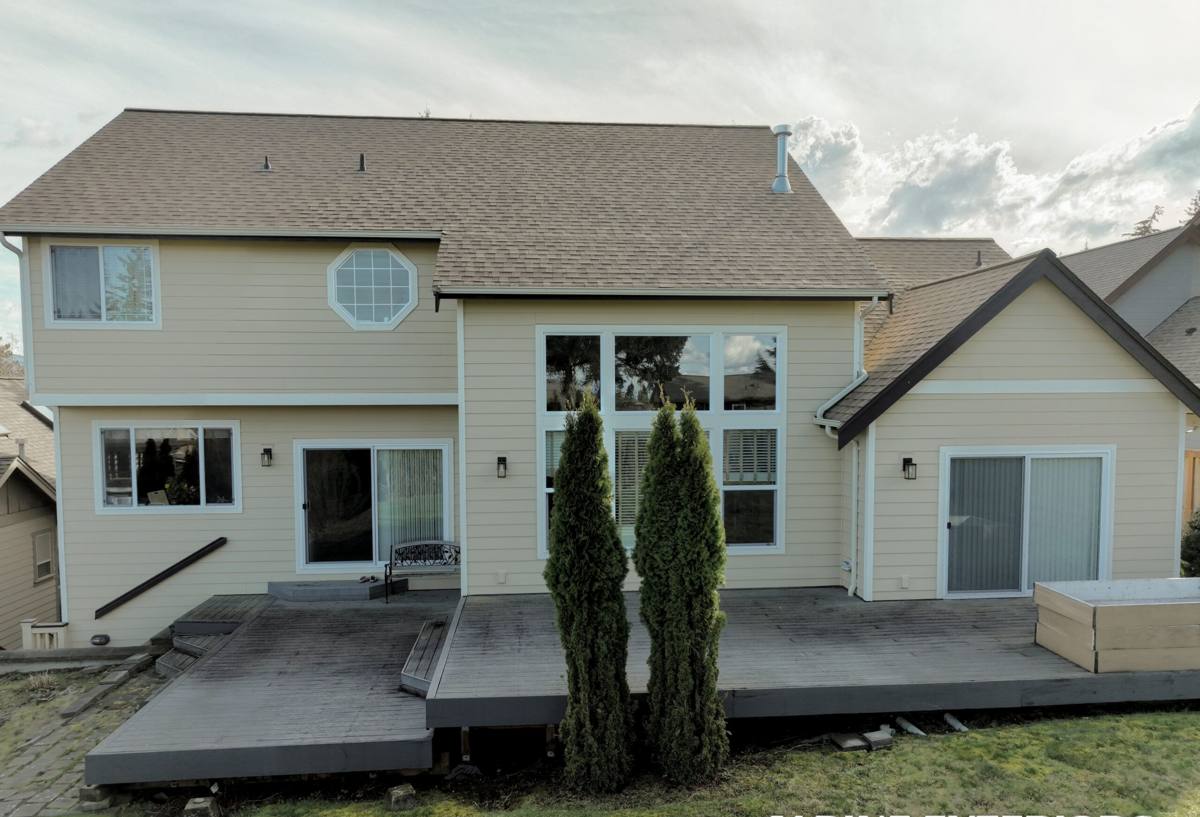
Signs Your Deck Needs Repair, Not Replacement
Most decks we're called out to don't need to be torn out and rebuilt — they need targeted repair of the parts that took the brunt of the moisture. Knowing the difference matters, because a full rebuild costs several times what a repair does.
- Individual boards that flex, feel spongy, or show dark staining along the edges — usually isolated, usually fixable board by board
- A railing or post that wiggles at the base — often a fastener or connection issue, not a sign the whole structure is failing
- Stair stringers or treads that feel uneven or soft — a common wear point because stairs shed water slower than open deck surfaces
- Green or black moss buildup concentrated in shaded corners or under overhangs — a maintenance and drainage issue more than a structural one, in most cases
- Rust streaks running down from screws or nail heads — tells us the original fasteners weren't rated for exterior/coastal exposure
- Gaps opening up where the deck meets the house (the ledger board connection) — this one we take seriously, because it's the connection point most responsible for keeping a deck attached to your home
The exceptions that usually do call for full replacement: rot that's spread through the main structural framing (not just surface boards), a ledger board connection that's been compromised for years, or a deck that was undersized or under-fastened for its actual use from day one. We'll tell you honestly which category yours falls into — we don't have any incentive to sell a full rebuild when a repair will hold up.
What a Correct Deck Repair Actually Involves
Structural Components Come First
Before we touch a single visible board, we check what's underneath: joists, beams, posts, and — most importantly in this climate — the ledger board where the deck attaches to the house. That connection is required to be properly flashed to keep water from tracking behind the siding and into the wall framing. In our experience, a surprising number of older Lynden-area decks were built or added on without adequate ledger flashing, which is exactly the kind of hidden problem that turns into a much bigger repair if it's ignored.
Decking and Railing
Once the structure underneath is sound, we address the surface: replacing rotted or split boards, resetting or replacing loose railings and balusters, and rebuilding stair components that have taken on water damage. We match materials as closely as practical to what's already there, unless you'd rather use the repair as a chance to switch a problem section over to composite (more on that below).
Fasteners and Flashing — the Part That's Easy to Skip
This is where a lot of cut-rate repairs fall short. Standard interior-grade screws and nails rust and fail fast in our coastal, high-moisture air, which is exactly why you see rust streaking on so many older decks in this area. We use fasteners rated for exterior and coastal exposure, and we flash any point where wood meets wood or wood meets the house — ledger boards, stair stringer connections, post bases. Skipping this step is the single biggest reason a "repaired" deck ends up back on someone's repair list within a couple of years.
Our Deck Repair Process
1. On-Site Inspection
We walk the whole deck — not just the spot you called about. Moisture damage in this climate rarely stays contained to one board, and it's common to find a second issue (a soft stair tread, a loose railing post) that hasn't announced itself yet. We check the ledger connection, the framing underneath where accessible, and the condition of the fasteners.
2. Honest Repair Plan and Estimate
You get a written scope: what's being replaced, what's being repaired in place, what materials and fasteners we're using, and a price. If we find something during the walk-through that changes the picture — say, framing rot we can't see until a board comes up — we tell you before we proceed, not after the invoice.
3. The Work Itself
We remove and replace only what needs it, working from the structure outward: framing and flashing first, then decking, then railings and stairs. Anything structural gets proper exterior-rated fasteners and flashing, even if that wasn't how the original section was built.
4. Cleanup and Walkthrough
We clear debris and old material, and walk the finished repair with you so you can see exactly what was done and ask questions on the spot.
Repair vs. Replace: Cost Factors
Every deck is different, but these are the questions that generally decide whether repair or replacement makes more financial sense for a Lynden-area home.
| Factor | Leans Toward Repair | Leans Toward Replacement |
|---|---|---|
| Structural framing | Solid, dry, no rot found on inspection | Rot or softness found in joists, beams, or posts |
| Ledger board connection | Properly flashed, no water intrusion behind siding | Long-term moisture intrusion at the house connection |
| Extent of damaged boards | Isolated to a handful of boards or one section | Widespread soft spots across most of the surface |
| Age and original build quality | Reasonably recent, built to a decent standard | Old, undersized, or built without proper permits/inspection |
| Budget goal | Lower upfront cost, extends useful life | Higher upfront cost, resets the clock and updates materials |
Materials We Work With
Most Lynden-area decks we repair are pressure-treated wood, cedar, or a mix — with a growing number of composite sections as owners replace problem boards over time. Each has real trade-offs worth knowing before you decide what to repair with:
- Pressure-treated wood — affordable, widely used, and easy to match to existing decking, but it needs regular sealing or staining in this climate to keep moisture from working into the grain
- Cedar — naturally more rot-resistant and a better look for many homes, but still needs maintenance and costs more than pressure-treated
- Composite — resists rot and doesn't need staining, which appeals to a lot of homeowners tired of the maintenance cycle; the trade-off is a higher upfront cost and the fact that it still needs a properly flashed, well-ventilated structure underneath — composite decking doesn't fix a moisture problem in the framing, it just hides it longer
We're upfront that no decking material is maintenance-free in a climate this wet — the honest goal is choosing the material and repair approach that fits your budget and how much upkeep you're willing to do.
Why a Bellingham-Based Crew That Works Lynden Matters
Deck repair done right in Whatcom County isn't quite the same job as deck repair in a dry climate. A crew that mostly works drier regions can under-flash a connection or use fasteners that aren't rated for our conditions, and the deck looks fine for a year or two before the moisture problems resurface. Working this area regularly means we've seen how local decks actually fail — where moss builds up, which connections take on water first, what a Whatcom County winter does to an unsealed board — and we build the repair to hold up against that, not against a generic spec sheet.
Being local also means we're not driving in from out of the area for a callback if something needs a second look after the repair. That's a straightforward, practical reason to hire a crew that's already established in Bellingham and the surrounding communities.
Maintaining Your Deck After Repair
A repair holds up a lot longer with a little seasonal attention. This is the routine we tell every Lynden customer to follow:
- Sweep off leaves and debris regularly, especially in fall — trapped organic matter holds moisture against the boards and feeds moss growth
- Rinse or gently scrub moss and algae off the surface before it gets a foothold, particularly in shaded or low-airflow corners
- Check that gaps between boards stay clear so water can drain through instead of pooling
- Reseal or restain wood decking on the schedule your material calls for — don't wait for it to look obviously weathered
- Do a quick walk-through once or twice a year checking for loose railings, soft spots, or new rust streaks at fastener heads
- Keep an eye on the ledger board area where the deck meets the house — it's the connection most worth catching early if something's wrong
None of this is complicated, but skipping it is exactly how a solid repair turns into another repair call in a few years.
Get a Free, No-Pressure Estimate
If your deck has a soft board, a loose railing, or you just want an honest read on whether it needs repair or replacement, we're happy to take a look. Fill out the form below and we'll set up a time to walk your deck and give you a straightforward estimate — no pressure, no upsell.