 Bellingham Exterior
 Roofing in Edgemoor: A Different Set of Conditions
Edgemoor sits close to the water, and that proximity shapes everything about how a roof ages here. Homes along this stretch of Bellingham take on salt-laden air off Bellingham Bay, near-constant marine humidity, and wind-driven rain that doesn't fall straight down so much as get pushed sideways under eaves and around flashing. Add Whatcom County's long, wet moss season — often eight or nine months of the year when conditions favor growth — and you have a roofing environment that's genuinely harder on materials than most of the country deals with. An asphalt shingle roof installed the same way it would be in a drier inland climate will not perform the same way in Edgemoor. The install has to account for the site.
We're not describing a generic asphalt shingle roofing page here. This is specifically about what a correct shingle roof looks like on a home in this neighborhood, why certain details matter more here than elsewhere in Bellingham, and what our process looks like when we're on an Edgemoor roof.
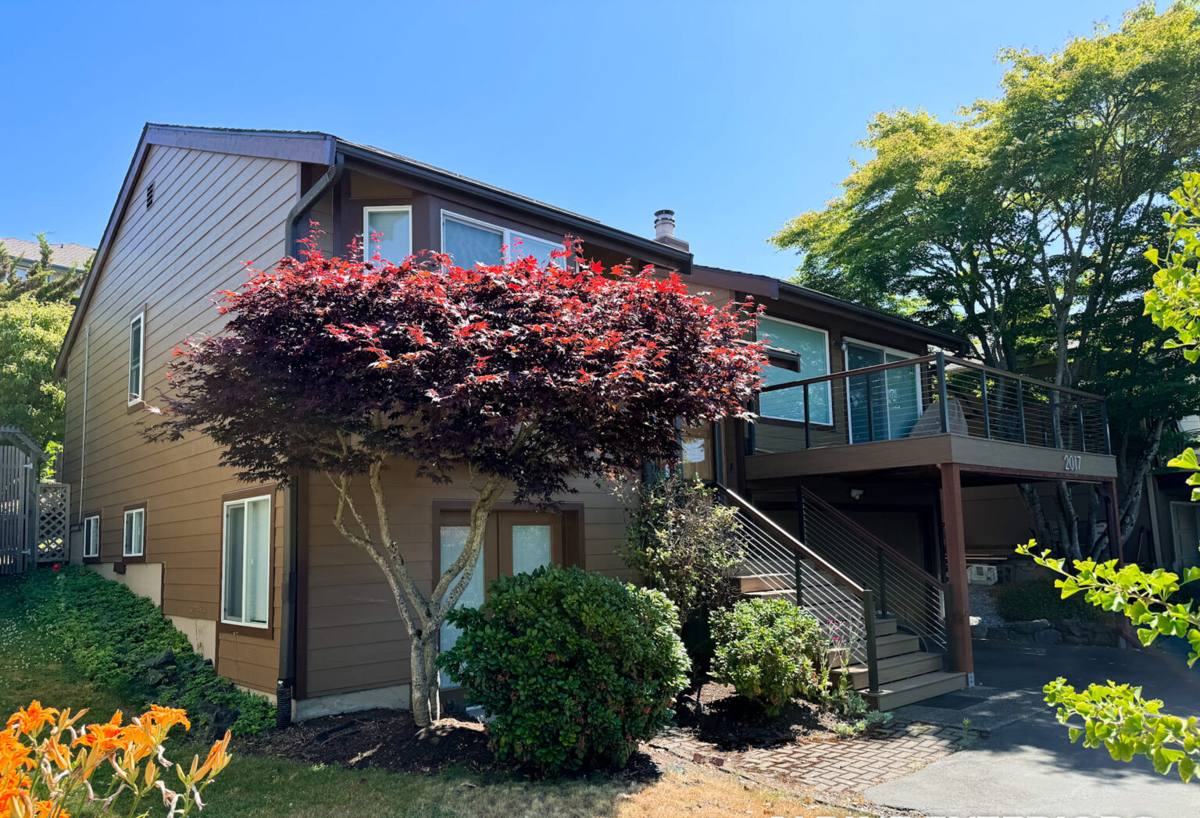
What Salt Air and Coastal Wind Actually Do to a Roof
Salt air doesn't just sit on the surface — it works into fasteners, flashing seams, and any exposed metal on the roof. Over years, that accelerates corrosion on lower-grade nails, vent boots, and flashing that wasn't spec'd for a marine environment. It's a slow process, but it's a real one, and it's why material choice on the metal components of the roof matters as much as the shingle itself in a location like Edgemoor.
Wind off the water also changes how rain behaves on the roof surface. Driving rain doesn't just run downhill and off the eave — it gets pushed uphill under shingle tabs and into any gap in the underlayment or flashing that a inland installer might not think twice about. That's the difference between a roof that's "basically sealed" and one that's actually sealed against the way weather moves in this specific spot.
Moss: The Slow, Constant Threat
Whatcom County's moss season is long, and Edgemoor's mature tree canopy and coastal humidity make it worse than average. Moss isn't just cosmetic. As it establishes on a shingle roof, it holds moisture against the surface, lifts shingle tabs as it grows under the edges, and works its way into fastener penetrations over time. Left unchecked for a few seasons, moss growth can meaningfully shorten the life of an otherwise sound roof — and by the time it's visibly thick, the shingles underneath have usually already been compromised.
What a Correct Asphalt Shingle Install Looks Like Here
A shingle roof that's built to hold up in Edgemoor's conditions isn't a different product line — it's the same asphalt shingle system installed with attention to the details that matter most in a coastal, high-moisture setting. That comes down to a handful of things done right, every time, not as upgrades but as the baseline standard.
- Full synthetic underlayment, not felt, as the water-resistive barrier beneath the shingles — felt degrades faster under sustained moisture exposure.
- Ice-and-water shield at eaves, valleys, and around every penetration — these are the spots wind-driven rain actually reaches, not just the general field of the roof.
- Corrosion-resistant flashing and fasteners suited to a marine-influenced environment, particularly at chimneys, skylights, and wall-to-roof transitions.
- Proper nailing pattern and shingle exposure per manufacturer spec — under-nailing is a common shortcut that shows up as blow-offs in the first big coastal windstorm.
- Balanced attic ventilation — intake at the eaves, exhaust at the ridge — so moisture from inside the home doesn't condense against the underside of the roof deck during our wet winters.
- Ridge and hip detailing that sheds water cleanly rather than relying on excess sealant as a patch.
None of this is exotic. It's disciplined, standard best practice applied consistently — which is exactly what a roof exposed to Bellingham's coastal weather needs, and exactly what gets skipped when a crew is moving fast or unfamiliar with what this specific area throws at a roof.
Shingle Options and How They Hold Up Locally
Not every asphalt shingle product performs the same way in a coastal, moss-prone climate. The table below is a general guide to how common asphalt shingle tiers compare for a home in Edgemoor's conditions — it's not a substitute for a specific product recommendation, which depends on your roof's exposure, pitch, and shading.
| Shingle Type | Typical Lifespan (this climate) | Moss Resistance | Notes for Coastal Bellingham |
|---|---|---|---|
| 3-tab shingle | 15–20 years | Standard | Lower upfront cost; less wind resistance than architectural profiles, which matters in an exposed coastal spot. |
| Architectural (laminated) | 25–30 years | Standard to algae-resistant options available | Heavier, better wind rating, the common choice for most Edgemoor re-roofs. |
| Algae-resistant (copper/zinc granules) | 25–30 years | Higher — granules inhibit growth | Worth the modest upcharge on shaded or north-facing roof planes where moss pressure is highest. |
| Premium/designer laminated | 30+ years | Algae-resistant standard on most lines | Best long-term value on roofs with heavy tree cover or difficult access for maintenance. |
For most homes in this neighborhood, we lean toward an architectural shingle with algae-resistant granules as the practical baseline — the moss pressure here is high enough that the extra resistance pays for itself over the roof's life, especially on planes that stay shaded through the day.
Roof Inspections: What We Actually Look For
When we assess a shingle roof in Edgemoor, we're not just checking for obvious damage. Given the local conditions, we look specifically at:
- Granule loss on shingle surfaces, especially on the weather-facing slopes catching the most wind and salt exposure
- Moss and lichen establishment at the eaves, valleys, and any shaded plane, and whether it's already lifting shingle edges
- Flashing condition around chimneys, skylights, and roof-to-wall intersections — the spots most vulnerable to corrosion and wind-driven leaks
- Fastener condition where accessible, particularly on older roofs that may not have used coastal-grade hardware originally
- Attic ventilation and any sign of moisture buildup or condensation on the underside of the deck
- Gutter and downspout function, since clogged gutters back water up under the shingle edge exactly where it does the most damage
A roof that looks fine from the ground can still have moss working under the tabs or flashing that's started to corrode at the seams. That's why an in-person look matters more than a drive-by estimate, especially on a roof that's been up for ten-plus years in this environment.
Our Process on an Edgemoor Roof
1. On-Site Assessment
We walk the roof, not just look at it from the driveway. That means checking the field, the valleys, the flashing details, and the attic ventilation from inside if accessible. We'll tell you honestly whether you're looking at a repair, a partial re-roof, or a full replacement — and why.
2. Straightforward Scope and Estimate
You get a written scope that spells out the underlayment, flashing, fastener, and ventilation details — not just "shingles and labor." If moss removal or deck repair is needed before shingles go on, that's called out separately so there are no surprises mid-job.
3. Install, Done Right the First Time
Full tear-off when warranted, deck inspection and repair as needed, synthetic underlayment, ice-and-water shield at the vulnerable points, coastal-grade flashing and fasteners, and a nailing pattern that meets manufacturer spec for wind resistance. We don't shortcut the parts of the job that don't show up in a final walk-around but absolutely show up in year three or four.
4. Cleanup and Walkthrough
Magnetic sweep for stray fasteners, full site cleanup, and a walkthrough so you understand what was done and what to expect from the roof going forward — including a reasonable moss maintenance schedule given your property's tree cover and sun exposure.
Repair, Re-Roof, or Replace: How We Help You Decide
Not every roofing problem in Edgemoor calls for a full replacement. The right call depends on the roof's age, how much of the damage is localized versus roof-wide, and whether the underlying deck and structure are still sound.
| Situation | Likely Path | Why |
|---|---|---|
| Isolated flashing leak, roof under 15 years old | Targeted repair | The shingle field is still sound; the failure is localized to a detail, not the material. |
| Heavy moss coverage, shingles otherwise intact | Moss treatment and removal, possible spot repair | Moss alone doesn't always mean the shingles are failing — but it needs to come off carefully, not be pressure-washed off. |
| Widespread granule loss, roof 18+ years old | Full replacement | The shingles are past their functional life; patching won't extend it meaningfully. |
| Soft spots or sagging in the deck | Full replacement with deck repair | Structural moisture damage needs to be addressed at the source, not shingled over. |
We'll walk you through which category your roof falls into and give you the reasoning, not just a recommendation to take on faith.
Moss Care Between Roofing Jobs
Whether your roof is new or has a few years left, moss management in Edgemoor should be routine, not reactive. A few honest notes on this:
- Pressure washing shingles is hard on the granule surface and can shorten shingle life — it's not the right method for moss removal on asphalt roofing.
- Zinc or copper strips near the ridge can help slow regrowth over time as rain carries trace metal down the roof plane, though they're a supplement, not a substitute for periodic cleaning.
- Keeping overhanging branches trimmed back reduces shade and debris buildup, both of which drive moss growth.
- Clearing valleys and gutters before the wet season starts prevents water from sitting against shingle edges where moss and rot both take hold.
Why a Locally Familiar Crew Matters Here
A roofing crew that already works in Edgemoor and along the Bellingham waterfront has already seen how this specific environment ages a roof — which flashing details fail first, which shingle exposures hold up to the wind off the bay, and how aggressive the moss season really gets on shaded, tree-covered lots. That's not something you get from a general roofing spec sheet; it comes from doing the work in this exact setting, season after season. It shows up in the small decisions on your roof: the fastener grade we use, where we put the ice-and-water shield, how we detail the valleys. Those choices are the difference between a roof that needs attention again in five years and one that goes the distance.
If you're dealing with moss buildup, a suspected leak, or a roof that's simply due for a look, we're glad to come out for a free, no-pressure estimate. You'll get a straight answer about the condition of your roof and what it actually needs — use the form below to get started.