 Bellingham Exterior
 Fairhaven's Climate Puts Real Stress on Siding
Fairhaven sits close to Bellingham Bay, and that waterfront position shapes what siding has to survive here. Salt-laden air off the bay works into seams and fastener heads over time. Driving rain off Puget Sound hits west- and south-facing walls at an angle, not just straight down, which pushes water into laps and joints that a fair-weather installation would never test. And Whatcom County's long, wet, mild winters mean moss and algae get months to establish themselves on any siding that stays damp and shaded — which describes a lot of walls in a tree-covered, hillside neighborhood like Fairhaven.
None of this is exotic. It's just Pacific Northwest coastal exposure, concentrated. But it means a siding installation done to a generic national standard, without accounting for salt exposure and sustained moisture, tends to show problems years before it should — peeling paint, soft trim, streaking, and in the worst cases moisture intrusion behind the cladding itself.
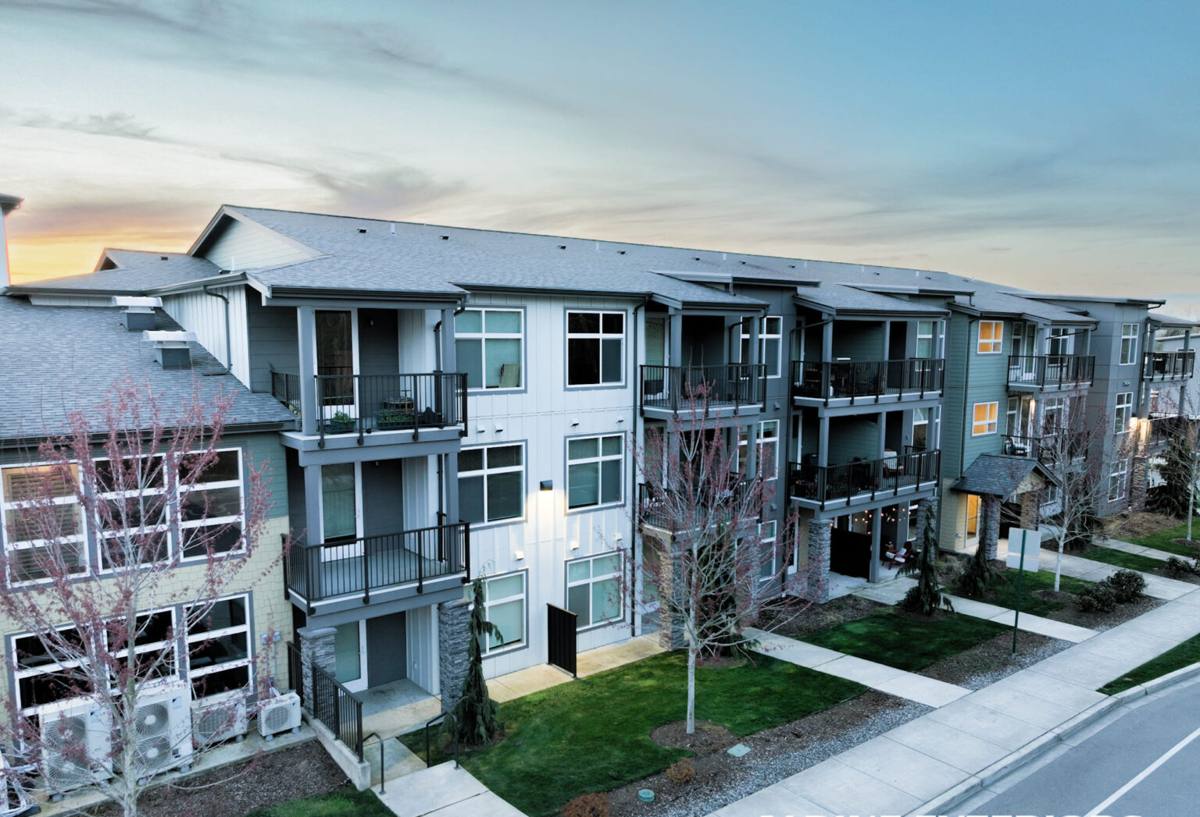
What Fairhaven Homes Actually Need From Their Siding
Moisture Management, Not Just a Weatherproof Surface
The siding itself is only part of the system. What keeps a wall dry is the combination of the weather-resistive barrier underneath, correctly lapped and taped flashing at every window, door, and penetration, and a drainage path that lets any water that does get behind the cladding find its way back out instead of sitting against the sheathing. In a climate that sees rain for a large share of the year, that drainage path isn't optional — it's the difference between siding that lasts decades and siding that hides rot for years before anyone notices.
A Product That Doesn't Feed Moss and Doesn't Absorb Water
Wood-based and wood-composite sidings give moss and algae something to root into, and they take on moisture at cut edges and fastener points if those aren't sealed correctly. Fiber cement doesn't feed organic growth the way wood does, and it doesn't swell, cup, or rot when it gets wet — which matters directly in a neighborhood where north- and shade-facing walls can stay damp for weeks at a stretch during the winter.
Salt-Tolerant Fasteners and Trim Details
Close to the bay, standard fasteners and trim hardware corrode faster than they would a few miles inland. Correct installation calls for fasteners rated for coastal exposure and flashing details that don't rely on caulk alone to stay watertight — caulk is a maintenance item, not a moisture barrier, and treating it as the latter is one of the more common shortcuts that shows up as staining and soft spots within a few years.
Why We Install Only James Hardie Fiber Cement
We standardized on James Hardie siding for every home we side, including in Fairhaven, and we don't install vinyl, LP SmartSide, primed spruce, cedar, or other fiber cement brands. That's a deliberate choice, not a default:
- Non-combustible core. Fiber cement doesn't burn, which matters anywhere wildfire smoke and ember exposure have become a regional concern in the Pacific Northwest.
- Climate-engineered product lines. James Hardie makes HZ5 siding specifically engineered for the moisture and freeze-thaw conditions of the Pacific Northwest and North — it's not a one-size-fits-all product adapted after the fact.
- Factory-applied ColorPlus finish. The finish is baked on under controlled conditions rather than field-painted, which gives it far more consistent resistance to fading and moisture than a job-site paint job — a real advantage under sustained bay-side sun and rain cycles.
- Doesn't feed moss or rot. Fiber cement holds up to sustained dampness without the organic decay risk of wood-based products, which matters in Fairhaven's long moss season.
- A warranty that's actually transferable. If the home sells, the coverage on the siding and finish moves with it, which matters in a desirable neighborhood where resale is common.
We're not going to tell you vinyl or LP SmartSide are bad products in some general sense — plenty of homes around Whatcom County have them and get years of service. Vinyl is inexpensive and low-maintenance in mild conditions, but it can crack in cold snaps, fade unevenly in strong sun exposure, and it doesn't hold paint if you ever want to change the color. LP SmartSide is a wood-strand product that performs well when installation and caulking are kept up on schedule, but it's still an engineered wood product, and wood-based sidings are the ones most sensitive to the sustained moisture and moss pressure that define this stretch of coastline. Those are real trade-offs, not defects — they're just the reasons we made fiber cement our standard rather than an upsell.
What a Correct Installation Actually Involves
- Tear-off and substrate inspection. Old siding comes off down to the sheathing so we can actually see what's underneath — soft sheathing, hidden rot, or old flashing failures don't get covered up, they get fixed first.
- Weather-resistive barrier. A new barrier goes on correctly lapped, shingle-style, so water always sheds downward and outward rather than working its way behind a seam.
- Flashing at every penetration. Windows, doors, hose bibs, vents, and any other wall penetration get flashed individually — this is the step that determines whether a wall actually stays dry, far more than the siding itself.
- Rainscreen gap where called for. Depending on the wall assembly, a drainage gap behind the siding lets bulk water and moisture vapor escape instead of sitting against the sheathing — important given how much rain this area sees.
- Installing to James Hardie's fastening and clearance specs. Correct fastener spacing, proper ground clearance, and correct clearance from roof lines and decks are what the manufacturer's warranty is actually contingent on — skipping these is the most common way an otherwise good product fails early.
- Sealing and finish-out. Factory-cut edges get treated per manufacturer spec, joints get sealed with the right materials, and trim gets finished to match.
- Final walk-through. We check the finished job against the install spec before we call it done, not just for looks.
Signs a Fairhaven Home May Need New Siding
- Persistent moss, algae, or dark streaking that comes back within weeks of cleaning
- Paint that's peeling, bubbling, or chalking well before it should
- Soft or spongy spots when you press on the siding, especially near the bottom courses
- Visible warping, cupping, or separation at seams and corners
- Rising energy bills that suggest the wall assembly isn't performing the way it used to
- Siding that's simply original to an older home and has never been opened up for inspection
Any one of these is worth a look. Several together usually means the moisture management behind the siding — not just the surface — has been compromised for a while.
What Drives the Cost of a Siding Installation
| Factor | Why It Matters |
|---|---|
| Home size and wall complexity | More square footage and more corners, gables, and dormers mean more cutting, flashing, and labor time |
| Condition of existing sheathing | Hidden rot or moisture damage found during tear-off adds repair work before new siding can go on |
| Trim and detail work | Window and door trim, fascia, and corner details take more time than plain wall runs |
| Siding profile chosen | Lap siding, shingle-style panels, and board-and-batten each carry different material and labor costs |
| Access and site conditions | Sloped lots, mature landscaping, and tight setbacks — common on Fairhaven's hillside streets — can affect staging and labor time |
| Number of stories | Second- and third-story work requires more scaffolding or lift time than single-story walls |
We won't quote a number without seeing the home — anyone who does is guessing. What we can tell you is that tear-off-and-replace, done to spec, almost always costs less over the life of the siding than installing over unresolved moisture problems and dealing with them again in five years.
Why a Crew That Already Works Fairhaven Matters
A lot of siding failures aren't the product's fault — they're an installation crew treating a bay-side, moss-prone wall the same way they'd treat a dry inland one. A crew that already works Fairhaven and the rest of Bellingham knows which walls take the worst weather exposure, understands how much moss and algae pressure to plan for in the maintenance conversation, and is used to Whatcom County's permitting process and inspection expectations. That local familiarity shows up in the details — flashing choices, fastener selection, and where extra care goes into sealing — more than it shows up in anything you'd notice just by looking at the finished wall.
Fairhaven's mix of older homes and a walkable, tree-lined character also means access and site protection matter during the job itself — protecting landscaping, working carefully around mature trees, and keeping a tidy site in a neighborhood where homes sit close together.
Caring for Your Siding After Installation
James Hardie siding is low-maintenance, not no-maintenance. In a climate like this one, a periodic soft wash to clear moss, algae, and salt residue — especially on shaded, north-facing walls — goes a long way toward keeping the finish looking like it did on installation day. Beyond that, an occasional visual check of caulking at trim joints and penetrations is the kind of small habit that catches a problem while it's still small.
If your Fairhaven home's siding is showing its age, or you're planning ahead rather than reacting to a problem, we're glad to take a look and talk through what correct installation looks like for your specific home. The estimate is free, there's no pressure, and you'll get a straight answer about what your home actually needs.