 Bellingham Exterior
 Fairhaven's Waterfront Setting Is Hard on Exterior Siding
Fairhaven sits close to Bellingham Bay, and that proximity to open water shapes what a home's siding has to survive year after year. Salt-laden air off the water accelerates corrosion on fasteners and trim, driving rain off the Sound finds every gap in a poorly flashed wall, and the long, damp Pacific Northwest moss season keeps north- and west-facing walls wet for weeks at a stretch. None of this is unique to any one house — it's the baseline condition for siding anywhere in this part of Whatcom County, and it's worse the closer you sit to the water.
Older siding materials that were adequate when a Fairhaven home was built decades ago are often past the point where patching makes sense. Cedar shingles cup and split. Old vinyl fades, cracks in cold snaps, and was never designed to stop moisture on its own. Even sound-looking siding can be hiding soaked sheathing underneath if the water-resistive barrier and flashing details were never installed correctly in the first place. Replacement isn't just a cosmetic upgrade in this environment — it's the point where a home either gets a wall assembly that can actually handle salt air and driving rain, or it gets another decade of the same slow damage.
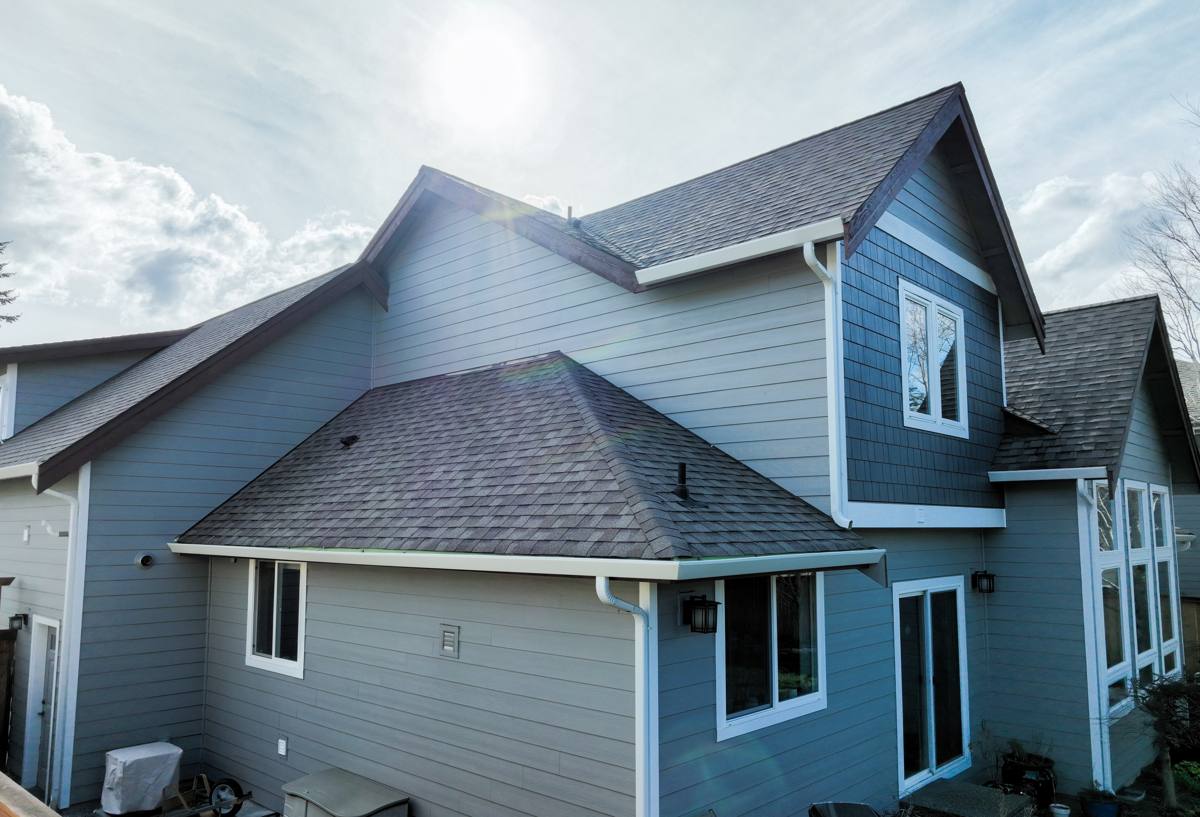
Signs a Fairhaven Home Is Due for Replacement, Not Repair
Repair makes sense when the damage is isolated and the underlying wall is dry. Replacement is the right call once the problems are spread across multiple walls or the siding is no longer doing its actual job — keeping bulk water out. Walk your home's exterior and look for these signs:
- Soft or spongy spots when you press on siding near the bottom of walls, around windows, or at deck ledgers
- Persistent moss or algae growth that comes back within weeks of cleaning, especially on north and west elevations
- Cupping, splitting, or delaminating boards, particularly on original cedar or older composite siding
- Paint that won't hold — blistering, peeling, or needing a full repaint far more often than every 6-8 years
- Visible gaps, warping, or fastener corrosion (rust streaks bleeding down the face of the siding)
- A musty smell or visible staining on interior walls that share an exterior wall with damaged siding
Any one of these on its own might be a repair. Several of them together, especially on the sides of the house that catch the most weather off the bay, usually means the whole wall system needs to come off and be rebuilt correctly.
What Correct Siding Replacement Actually Involves
It Starts Underneath the Siding, Not With It
The siding itself is the last layer installed and the first thing anyone sees, but it's not what keeps a Fairhaven home dry. That job belongs to the water-resistive barrier (housewrap or building paper), the flashing at every window, door, and penetration, and the way those layers are lapped so water sheds downward and outward instead of working its way behind the wall. A full replacement is the one chance to get all of that right — inspecting the sheathing for rot, replacing anything soft or compromised, and correcting any old flashing shortcuts before new siding ever goes up.
Fastening and Clearances Matter More Here Than in Drier Climates
In a region with this much annual rainfall and a coastal moss season, small installation details make an outsized difference. Fasteners need to be corrosion-resistant given the salt air. Siding needs proper clearance from grade, decks, and roof lines so it isn't sitting in standing water or trapped moisture. Butt joints and corners need to be caulked and flashed, not just butted together and painted over. These aren't optional refinements — they're the difference between siding that lasts its full service life on the Bellingham waterfront and siding that starts failing again in five years.
What a Complete Job Includes
- Full removal and disposal of old siding and damaged trim
- Inspection and repair of sheathing and framing found to be wet or rotted
- New water-resistive barrier installed with correct shingle-lap sequencing
- Properly flashed windows, doors, and any wall penetrations (vents, hose bibs, electrical)
- Correct fastening pattern and clearances per manufacturer installation specs
- New trim, corners, and caulking at all transitions
- Factory-finished siding installed to the manufacturer's climate-zone specification
Why We Install Only James Hardie Fiber Cement
We standardized on James Hardie fiber cement siding and don't install vinyl, LP SmartSide, or bare cedar, and it's worth being straightforward about why. Vinyl is inexpensive and low-maintenance, but it's a thin material that can crack in a hard freeze, fade unevenly over time, and it doesn't manage moisture behind the wall the way a proper fiber cement and flashing assembly does — it just hangs on the wall and hopes the layers underneath are doing the real work. LP SmartSide is a wood-strand product with a resin coating; it performs reasonably when detailing is perfect, but wood-based siding is inherently more sensitive to sustained moisture exposure than fiber cement, which matters in a climate with a real moss season and near-constant humidity off the bay. Bare or primed cedar looks great initially but demands ongoing refinishing to keep water out, and driving coastal rain shortens the interval between recoats.
James Hardie fiber cement is non-combustible, dimensionally stable in wet-dry cycling, and comes with a factory-applied ColorPlus finish that's baked on rather than field-painted, which matters when your siding is going to spend its life in salt air and rain. It's engineered in HZ (HardieZone) product lines specifically calibrated to regional moisture and freeze-thaw conditions, and it carries a strong transferable warranty when installed to spec. We're not saying every other product is unusable everywhere — we're saying that for what a wall on the Bellingham waterfront has to survive, Hardie is the material we're willing to put our name behind.
Choosing the Right Hardie Line for a Fairhaven Home
Fairhaven's older, architecturally distinct homes and its newer construction call for different siding profiles, and part of our job is matching the product to the house rather than defaulting to one look. HardiePlank lap siding in a smooth or cedarmill texture suits traditional and craftsman-style homes well and is the most common choice in this neighborhood. HardieShingle panels are a strong option where a home's original character called for shingle siding and the owner wants to keep that look without the maintenance burden of real cedar shakes. HardiePanel vertical siding works for board-and-batten accents or more contemporary builds. All of these are available in a range of ColorPlus finishes, so matching or updating a home's palette doesn't require field painting.
| Factor | Why It Affects Cost |
|---|---|
| Home size and wall area | More square footage means more material, labor, and disposal |
| Condition of existing sheathing | Rot or water damage found during tear-off adds repair scope |
| Trim and detail complexity | Multiple gables, dormers, and window trim take more time per square foot |
| Siding profile chosen | Lap, shingle, and panel products differ in material and install labor |
| Site accessibility | Tight lots, slopes, or limited staging area near the water can slow crews down |
| Number of stories | Second- and third-story work requires more scaffolding and safety setup |
We give a firm, itemized number after an in-person walk-around — not a phone estimate — because the condition of what's under the old siding is often the biggest cost variable, and that's something no one can see from the street.
Our Process, Start to Finish
- Walk-around and assessment. We look at every elevation, check for soft spots and moisture signs, and talk through what you've noticed from the inside.
- Written estimate. A clear scope and price, including what we expect to find once tear-off starts and how that would change cost if we're wrong.
- Tear-off and inspection. Old siding comes off, sheathing is inspected, and any rot is documented and repaired before anything new goes up.
- Weather barrier and flashing. This is the step that actually keeps water out — done correctly, in the right sequence, at every window and penetration.
- Hardie siding installation. Installed to the manufacturer's fastening, clearance, and caulking specifications so the warranty is valid and the wall performs as designed.
- Final walkthrough. We review the finished work with you, including trim, caulking lines, and touch-up paint where needed.
Why a Crew That Already Works Fairhaven Matters
Siding installation isn't identical everywhere in Whatcom County. A crew that regularly works homes near Bellingham Bay already knows to spec corrosion-resistant fasteners without being asked, already understands how much clearance a wall needs given the rainfall here, and has seen firsthand what happens when moss is left to sit on north-facing siding for a full winter. That's not something you can fully substitute with a general contractor's crew working outside their normal territory for the first time. Local permitting familiarity also matters — knowing what Bellingham's building department typically wants to see on a siding replacement permit keeps the project moving instead of stalling on paperwork.
There's also a practical maintenance case: a contractor who's still local years after the install is a contractor who stands behind the work and can actually get back out to your home if a warranty question comes up.
Maintaining Hardie Siding in Fairhaven's Climate
Fiber cement siding is genuinely low-maintenance compared to wood, but "low-maintenance" doesn't mean "no maintenance" in a climate this wet. A yearly rinse-down, especially on shaded north and west walls, keeps moss and algae from establishing before it stains the ColorPlus finish. Keep gutters clear so water isn't sheeting down the siding face, and keep an eye on caulking at trim joints and penetrations every couple of years — caulk is the one component that wears out well before the siding itself does. Beyond that, correctly installed Hardie siding is built to handle what this coastline sends its way for decades.
If your Fairhaven home's siding is showing its age, or you just want an honest read on whether you're looking at repair or full replacement, we're happy to walk the property with you. Use the form below to request a free, no-pressure estimate.