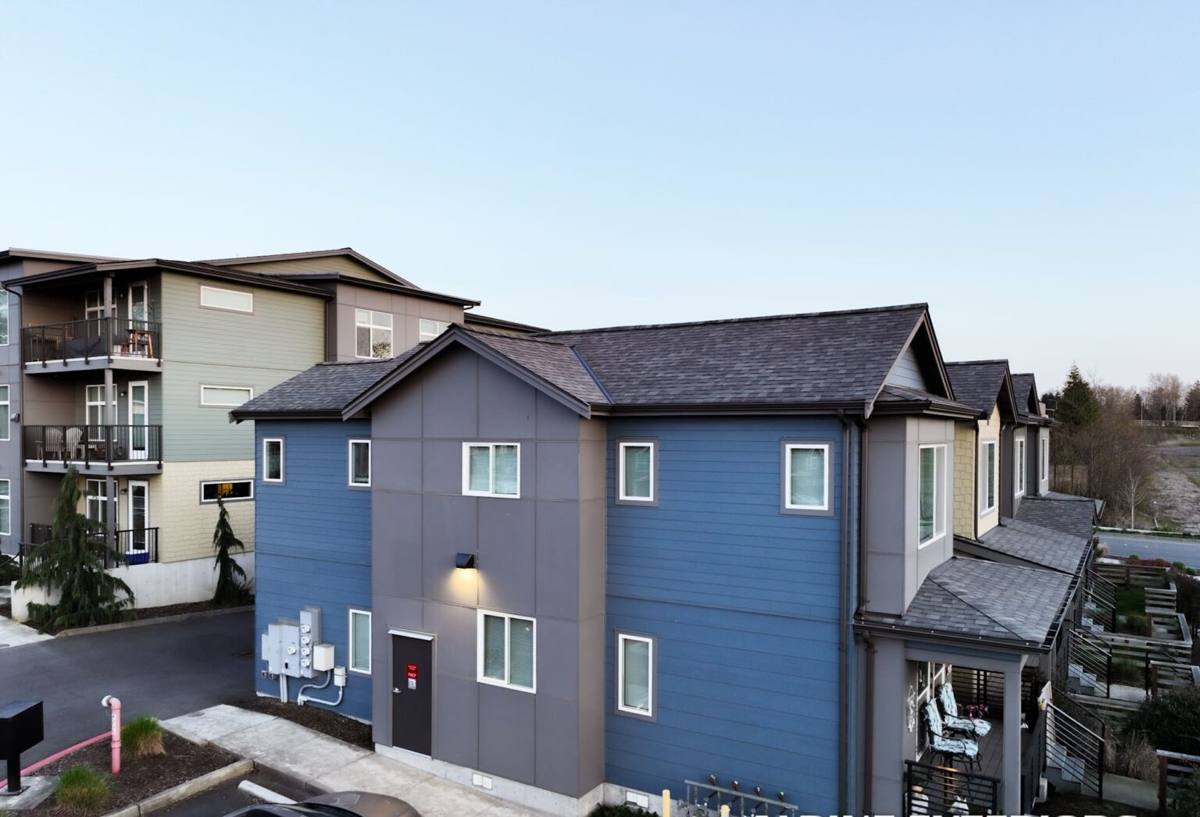
 Bellingham Exterior
 Roof Repair in Happy Valley: Built for What This Neighborhood Actually Faces
Happy Valley sits close enough to Bellingham Bay and the surrounding hills that its roofs take a different kind of beating than roofs twenty miles inland. The combination of salt-laden air moving off the water, long stretches of driving rain through fall and winter, and a moss season that can run eight months out of the year means roofs here age differently than the manufacturer's warranty paperwork assumes. A roof repair that works in a dry, sheltered climate can fail here in a season if it doesn't account for that combination.
This page is about roof repair specifically — not full tear-offs or new installs. Most roofs in Whatcom County don't need to be replaced when a leak shows up or shingles start lifting; they need the right diagnosis and a repair that's built to hold up against the next wet winter, not just patched to get through the next dry week.
Signs a Happy Valley Roof Needs Repair
Roof problems in this area rarely announce themselves with a dramatic hole. They show up as small, easy-to-miss signs that get worse with every rainy season they're ignored.
- Dark streaking or green-black growth on north-facing slopes or shaded sections — usually moss or algae getting a foothold
- Granules collecting in gutters or at downspout outlets, a sign the shingle surface is wearing thin
- Curling, cupping, or lifted shingle edges, especially on slopes that catch wind off the water
- Water stains on interior ceilings or in the attic near chimneys, skylights, or roof valleys
- Rust streaks or soft spots around metal flashing, vent boots, or chimney counterflashing
- Sagging or spongy spots when walking the roof or viewing it from a ladder
- Daylight visible through the roof deck from inside the attic
Any one of these on its own might be minor. Two or three together, especially combined with an older roof, usually means it's worth getting a real look before the next storm system moves through.
What a Correct Roof Repair Actually Involves
Diagnosis Before Anything Gets Touched
A repair is only as good as the diagnosis behind it. Water rarely leaks straight down from where it enters — it travels along the underlayment, decking, and framing before it shows up as a stain inside the house. That means a repair crew has to trace the actual path of the water, not just patch the spot where the ceiling stain appeared. We check the roof deck condition, underlayment, flashing details, and ventilation before deciding what the fix actually needs to include.
Matching Materials, Not Just Covering the Spot
A patch that doesn't match the surrounding shingle's age, exposure, and granule wear will fail faster than the rest of the roof and stand out visually. Where possible, we source shingles that match the existing roof's style and color family, and we blend repair sections into natural break points — ridges, valleys, or hips — rather than leaving an obvious rectangle of new material in the middle of a slope.
Flashing and Moss-Prone Details Get Extra Attention
In this climate, most repeat leaks come back to the same handful of details: chimney flashing, skylight curbs, valleys, and any place moss has been allowed to build up and hold moisture against the shingle surface. A repair that doesn't address the flashing or clear the moss that caused the problem in the first place is a repair that's likely to be revisited within a year or two.
Common Roof Repair Issues We See in Happy Valley
Moss and Organic Growth
Shaded slopes, tree cover, and Bellingham's damp winters give moss everything it needs to establish itself. Moss holds moisture against the shingle surface long after the rest of the roof has dried, which accelerates granule loss and, over time, can lift shingle edges enough to let water underneath. Treating moss as a cosmetic issue and leaving it alone is one of the most common ways a small, cheap repair turns into a bigger one.
Salt Air and Metal Corrosion
Proximity to the bay means fasteners, flashing, and vent boots corrode faster here than they would further inland. Galvanized flashing and standard fasteners can show rust and pitting years before a manufacturer's rated lifespan would suggest, and once flashing starts to fail at the seams, water finds its way in at exactly the joints and transitions that are hardest to inspect from the ground.
Wind-Driven and Driving Rain
Bellingham's rain doesn't always fall straight down — wind off the water pushes it sideways into valleys, under shingle tabs, and around flashing that would otherwise shed water fine in a calm rain. Repairs in this area need to account for wind-driven moisture, not just vertical drainage, which is part of why flashing detail and shingle sealing matter more here than in drier, calmer climates.
Repair or Replace? How We Help You Decide
Not every roof problem calls for a full replacement, and not every roof is a good candidate for another round of patching. The table below covers the general factors that push a decision one way or the other — every roof is different, so this is a starting point for the conversation, not a substitute for an actual inspection.
| Factor | Leans Toward Repair | Leans Toward Replacement |
|---|---|---|
| Roof age | Under 15-18 years, or a newer roof with isolated damage | Approaching or past its expected lifespan |
| Extent of damage | Localized — one slope, one flashing detail, one leak source | Widespread granule loss, multiple leak points, or deck damage in several areas |
| Moss/algae condition | Surface growth that can be treated and cleared | Long-term growth that has already degraded shingles underneath |
| Underlying deck | Solid, dry decking under the damaged section | Soft, rotted, or water-damaged decking found during inspection |
| History of repairs | First or second repair on this roof | Repeated repairs to the same areas over several years |
Where a roof falls on this table isn't always obvious from the ground, which is why an in-person look matters more than a guess based on the roof's age alone.
How Our Repair Process Works
1. Inspection and Honest Assessment
We walk the roof (weather permitting) and check the attic from the inside where accessible, looking at decking, insulation, and any signs of past or active moisture. We'll tell you plainly if what you're dealing with is a straightforward repair, a bigger repair than expected, or a case where replacement makes more financial sense than continuing to patch.
2. A Written Scope, Not a Vague Estimate
Before any work starts, you get a written explanation of what's being repaired, why, and what materials will be used. No surprise add-ons once the crew is already on the roof.
3. The Repair Itself
Depending on the issue, this might mean replacing damaged shingles, resealing or replacing flashing, rebuilding a valley, clearing and treating moss, or repairing deck damage found underneath a leak. We use materials suited to this region's wind and moisture exposure, not just whatever is cheapest to source.
4. Cleanup and Final Check
We clear debris, old materials, and any moss or granules removed during the work, then do a final check of the repaired area and surrounding flashing before calling the job done.
What Roof Repair Typically Costs — and Why It Varies
Roof repair costs in this area cover a wide range because the work itself varies so much from one roof to the next. The table below outlines the main factors that drive cost up or down — we don't quote a number until we've actually seen the roof, but this gives you a sense of what moves the price.
| Cost Factor | Why It Matters |
|---|---|
| Roof pitch and access | Steep or hard-to-access slopes take longer and need more safety setup |
| Extent of deck damage | Rotted decking under the leak adds material and labor beyond the visible repair |
| Material match | Matching older or discontinued shingle styles can cost more to source |
| Flashing complexity | Chimneys, skylights, and multiple valleys mean more detail work than a flat repair area |
| Moss/algae treatment | Heavy growth needs removal and treatment, not just a shingle swap |
Why Hiring a Crew That Already Works Happy Valley Matters
A roofer who works across a lot of different climates might not think twice about skipping extra flashing sealant or leaving moss treatment out of a repair scope — in a drier region, that shortcut might not matter for years. In Happy Valley, it usually shows up again by the following winter. A crew that regularly works this specific area already knows which details fail first here: which flashing styles hold up against salt air, which shingle lines handle driving rain without lifting at the tabs, and which roofs in this neighborhood tend to need moss treatment worked into the repair rather than treated as a separate service.
That local familiarity also means a faster, more accurate diagnosis. We're not guessing at how Bellingham's weather patterns affect a roof — we see the results of that weather on repair calls throughout Whatcom County on a regular basis.
Keeping a Repaired Roof in Good Shape
A repair holds up longest when it's not immediately undone by the same conditions that caused the original problem. A few habits make a real difference in this climate:
- Keep gutters and downspouts clear, especially before the fall rains start
- Trim back tree limbs that shade roof sections and keep them damp
- Have moss treated before it spreads, not after it's visibly taken over a slope
- Check attic ventilation — poor airflow traps moisture and speeds up shingle aging from underneath
- Get a roof looked at after any major windstorm, even if nothing looks obviously wrong from the ground
If you're seeing signs of a problem, or just want an honest read on a roof's condition before it turns into a bigger issue, we're glad to take a look. Fill out the form below for a free, no-pressure estimate on roof repair in Happy Valley.