 Bellingham Exterior
 Why Siding Wears Differently in Happy Valley
Happy Valley sits close enough to Bellingham Bay and the surrounding waterways that homes here deal with a specific combination of weather stress: salt-laden air moving in off the water, long stretches of driving rain through fall and winter, and a wet, shaded climate that keeps moss and algae active for most of the year. None of that is unusual for Whatcom County, but it adds up faster on siding than most homeowners expect. Salt air accelerates corrosion on fasteners and trim metal. Wind-driven rain finds every gap in flashing and caulk instead of just running down the wall face. And moss doesn't just look bad — it holds moisture against the siding surface long after a storm has passed, which is exactly the condition that rots wood-based products and swells engineered wood siding from the inside out.
None of this means Happy Valley is a hard place to keep a house looking good. It means the siding system and the installation details matter more here than they would somewhere drier. A product and installation approach that's fine in an arid climate can fail years early in this one.
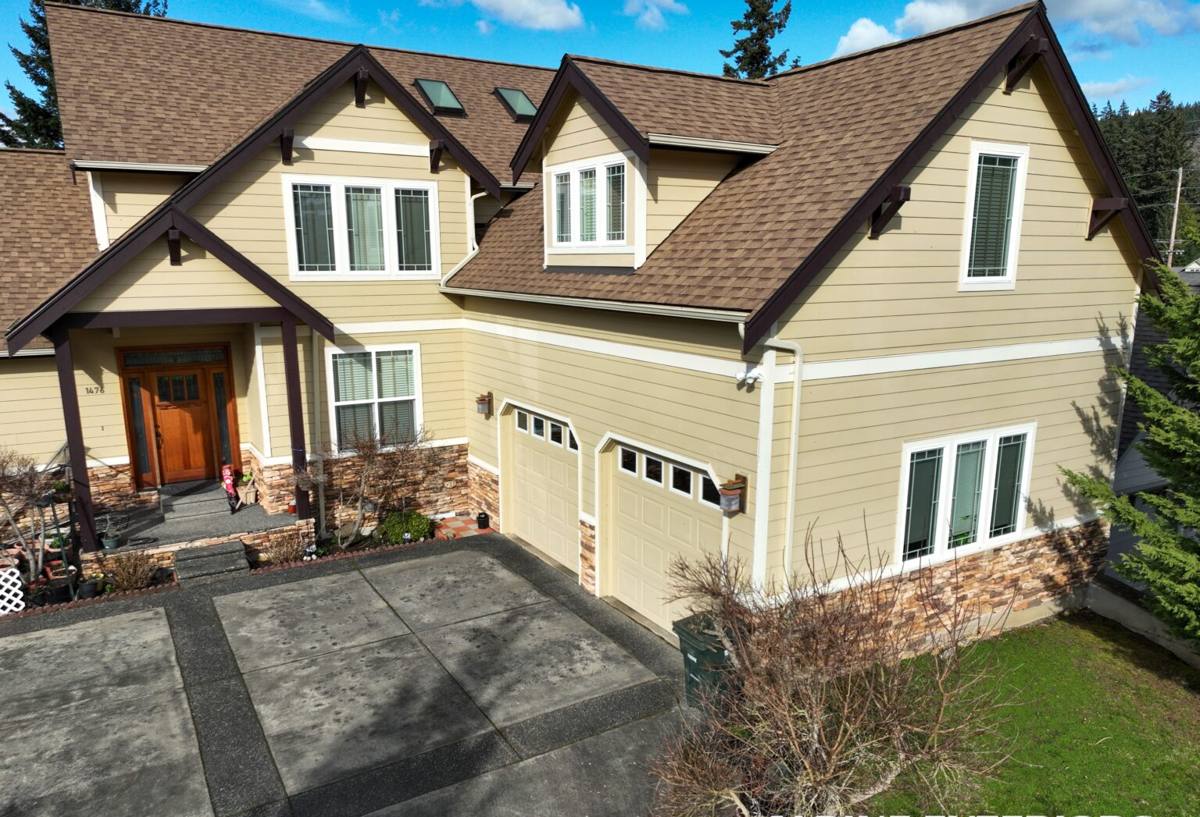
Signs a Happy Valley Home Needs Siding Replacement
Siding problems in this climate tend to show up gradually, then all at once. Homeowners usually notice one or two of these first, not all of them — but any one is worth having looked at before it spreads.
- Soft or spongy spots when you press on the siding, especially near the bottom courses and around windows
- Paint that's peeling, bubbling, or needing repainting far more often than it used to
- Persistent moss or dark streaking that comes back within a season of cleaning
- Visible gaps, warping, or buckling panels, particularly on walls that face prevailing wind and rain
- Rising energy bills that can't be explained by anything else, suggesting the wall assembly is no longer sealing properly
- Rot or staining around window and door trim, which usually means water has been getting behind the siding for a while
- Siding that's original to a home built more than 20-25 years ago, especially wood-based or older composite products
If you're seeing more than one of these, it's usually not a cosmetic issue anymore — it's a sign the water-management layer behind the siding has been compromised.
What a Correct Siding Replacement Actually Involves
Siding replacement done right is not just swapping old panels for new ones. The siding itself is the last layer installed and the most visible, but the work that matters most for long-term performance happens underneath it.
Tear-off and inspection
Full removal of the old siding lets us actually see the sheathing and framing underneath — something you can't evaluate from a ladder. In a climate like this, it's common to find water damage that wasn't visible from outside, especially around old flashing details or penetrations that were never properly sealed.
Repair before re-cover
Any soft or rotted sheathing gets replaced before anything new goes up. Installing new siding over compromised sheathing just hides the problem and guarantees it comes back.
Weather-resistive barrier and flashing
A correctly lapped weather-resistive barrier, paired with proper flashing at windows, doors, and every roof-to-wall transition, is what actually keeps wind-driven rain out of the wall assembly. This detail work is where most siding failures start — not with the siding material itself.
Fastening and gapping to spec
Fiber cement siding has specific fastening patterns, gap requirements, and clearances from grade, decks, and roof lines that are engineered into the manufacturer's installation instructions. Skipping these to save time is the single most common cause of early siding failure in our region.
Why We Install Only James Hardie Fiber Cement
We install James Hardie fiber cement siding exclusively. We don't install vinyl, LP SmartSide, Cemplank, Allura, primed spruce, or cedar, and we think homeowners deserve an honest explanation of why — not just a sales pitch.
Vinyl siding is affordable and low-maintenance, but it's a thin plastic product that can crack in cold snaps, fade in UV exposure, and doesn't hold paint if you ever want to change the color. Wood-based products like LP SmartSide use engineered wood strand technology that performs well when installation and maintenance are perfect, but wood-based cores are inherently more vulnerable to the kind of sustained moisture exposure Happy Valley sees for months at a time — any breach in the factory coating opens a path for swelling and rot. Primed spruce and cedar are traditional, attractive materials, but they require ongoing painting, staining, and moisture vigilance that most homeowners don't want to sign up for indefinitely, especially in a climate this wet.
James Hardie fiber cement is cement, sand, and cellulose fiber — it doesn't have an organic core to rot, it's non-combustible, and it holds its factory-applied ColorPlus finish far longer than field-applied paint. Hardie also engineers climate-specific HZ product lines, and the HZ5 formulation is built for the freeze-thaw and moisture cycling common to the Pacific Northwest. That's the version we install on Bellingham homes, including in Happy Valley.
We're not saying every other product is unusable everywhere. We're saying that after years of doing this work in this specific climate, we decided we'd rather stand behind one system installed correctly than offer several options and hope each one holds up.
James Hardie's Warranty Advantage
Hardie backs its siding with a strong, transferable limited warranty — a real asset if you ever sell the home, since it gives buyers confidence the exterior was done with a manufacturer-backed product rather than something with a shorter or more limited coverage window.
Comparing Siding Options for a Happy Valley Home
| Factor | James Hardie Fiber Cement | Vinyl | Engineered Wood (LP SmartSide) |
|---|---|---|---|
| Core material | Cement, sand, cellulose fiber | PVC plastic | Wood strand composite |
| Combustibility | Non-combustible | Combustible | Combustible |
| Moisture/rot resistance | Excellent — no organic core | Good, but seams can trap moisture | Good if coating stays intact; vulnerable if breached |
| Salt air / coastal exposure | Strong, especially HZ5 line | Can become brittle over time | Coating wear increases exposure risk |
| Finish/paint | Factory ColorPlus, long-lasting | Color molded in, can't repaint easily | Factory primed or coated, needs upkeep |
| Warranty | Strong, transferable | Varies by manufacturer | Varies, moisture exclusions common |
Our Process, Start to Finish
- On-site evaluation. We look at your current siding, trim, and any visible trouble spots before quoting anything.
- Written estimate. A clear scope of work and pricing, with no pressure to sign on the spot.
- Scheduling around weather. Given how much rain this area gets, we plan tear-off and dry-in carefully so your home isn't left exposed longer than necessary.
- Tear-off and sheathing inspection. Old siding comes off, and we address any damage found underneath before moving forward.
- Weather barrier and flashing installation. This is the layer that actually keeps water out — done to manufacturer and code specifications.
- Hardie siding installation. Installed to James Hardie's fastening, clearance, and gapping specifications, not shortcuts.
- Final walkthrough. We go over the finished work with you before considering the job done.
What Affects the Cost of Siding Replacement
Every home is different, so we don't quote prices without seeing the project, but these are the main factors that drive cost up or down on a typical siding replacement:
| Cost Factor | Why It Matters |
|---|---|
| Extent of sheathing damage found during tear-off | Hidden rot repair adds material and labor beyond the siding itself |
| Home size and wall complexity | More corners, dormers, and trim details mean more labor and cutting |
| Siding profile and trim selection | Lap width, trim boards, and accent details affect material cost |
| Number of stories and access | Second-story and steep-site work requires more setup and safety equipment |
| Existing window and door flashing condition | Failed flashing found underneath often needs correction before re-siding |
Why Local Experience in Happy Valley and Bellingham Matters
A siding crew that hasn't worked in Whatcom County before doesn't have a feel for how aggressively moss establishes itself here, how far salt air travels inland from the bay, or how long a wall stays wet after a typical fall storm system moves through. Those aren't things you can fully account for from a general installation manual — they come from doing this work, on homes like yours, in this specific climate, year after year. That local pattern recognition shows up in small decisions during a project: where extra flashing attention is worth it, which details tend to fail first on homes in this area, and how to sequence a job around Bellingham's rain windows instead of fighting them.
It also matters after the work is done. A contractor who's still doing business in Bellingham next year, and the year after that, has every incentive to install things correctly the first time.
Ready for a Straight Answer on Your Siding?
If your Happy Valley home is showing any of the warning signs above, or you're simply planning ahead, we're glad to take a look and give you an honest read on what your siding needs — no pressure, no obligation. Fill out the form below for a free estimate.