 Bellingham Exterior
 Why Lynden Siding Takes a Beating
Lynden sits inland from Bellingham Bay in the Nooksack River valley, which changes the way weather works on a house here compared to homes right on the water. Direct salt spray is lighter than it is along the coast, but Whatcom County's broader climate still does plenty of damage on its own. Rain moves through in long, low-pressure systems for months at a stretch, humidity sits high in the valley air, and morning fog can linger over Lynden longer than it does in windier, more exposed parts of Bellingham. That combination — moisture that arrives often and takes its time leaving — is exactly what siding struggles with over the long run.
Add a moss season that realistically runs from early fall through late spring, and you have a climate that rewards siding built to shed water fast and punishes anything that traps it. Wood-based products swell and check. Caulk joints that looked fine in July open up by February. Panels with weak factory sealing on the cut edges start wicking moisture from the inside out, which is often invisible until the damage is well established.
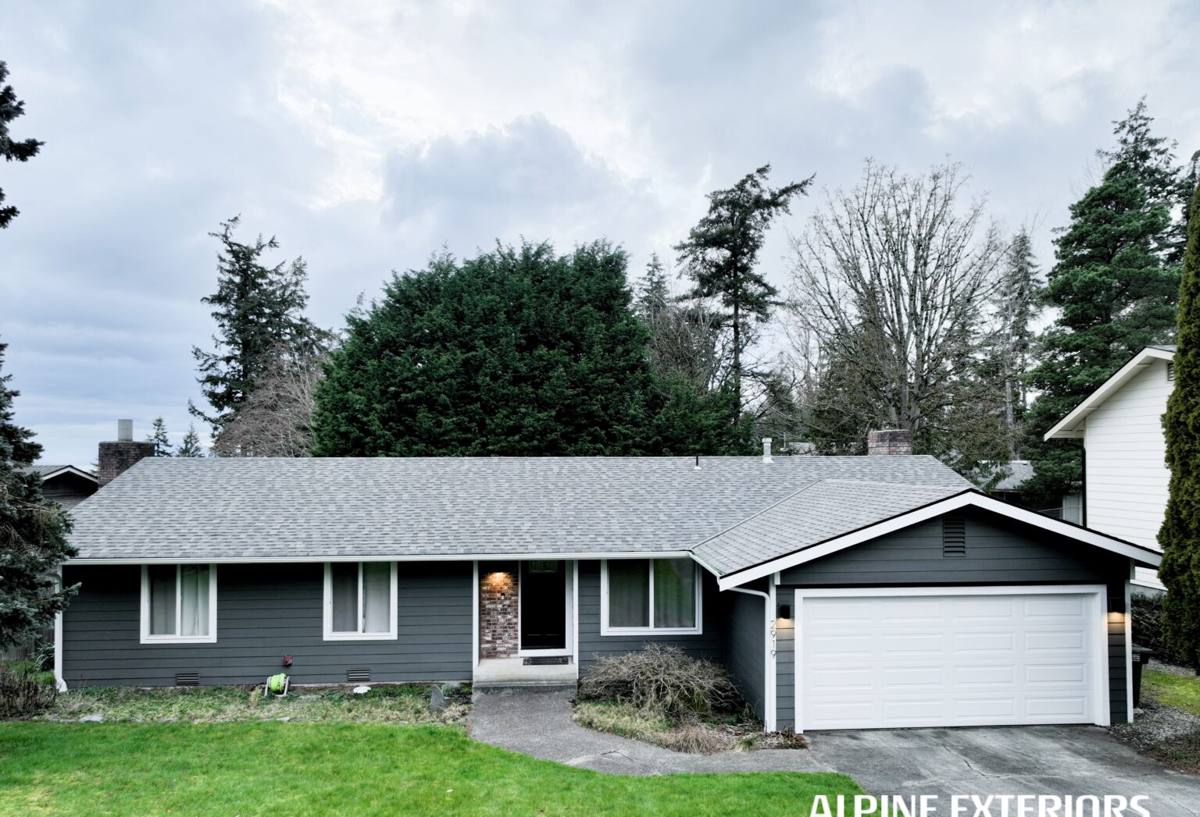
Reading the Damage: What We Look For
Not all siding fails the same way, and the repair that actually fixes the problem depends on knowing which failure mode you're dealing with. When we inspect a Lynden home, we're looking at the material itself as much as the visible symptom.
Vinyl Siding
Cracking and brittleness after repeated freeze-thaw cycles, panels that have bowed or buckled from heat and then never sat flat again, and moisture working its way behind the panel through gaps at corners and J-channels. Vinyl rarely rots, but it also does very little to stop water once it gets behind it — the sheathing underneath is doing all the real work, and often quietly failing.
Wood, Primed Spruce, and Cedar
Soft spots, delamination at butt joints, paint that's peeling rather than fading, and visible rot at the bottom courses closest to grade or near roof-to-wall transitions. These materials depend entirely on paint film and caulk staying intact. Once that skin breaks down in a wet climate like this one, deterioration moves faster than most homeowners expect.
Fiber Cement (Including James Hardie)
Fiber cement doesn't rot or absorb bulk water the way wood does, so damage here is usually installation-related rather than material-related: caulk failure at seams, nail heads that were driven too hard and cracked the board, cut edges that were never primed and sealed on-site, or flashing details that were missed during the original install. When we see failure on Hardie siding, it's almost always traceable to how it went up, not the product itself.
LP SmartSide and Similar Engineered Wood
Edge swelling is the telltale sign — a puffy, soft ridge along the bottom edge or at seams where the factory coating has been compromised and moisture has reached the wood strand core. Once that swelling starts, it tends to spread along the board rather than staying contained to one spot.
What a Correct Repair Actually Involves
A lot of siding "repair" in this climate is really just a cosmetic patch — new caulk, a fresh coat of paint, maybe a section of siding swapped out — done without ever checking what's happening behind the surface. That approach buys a season or two, then the same spot fails again, usually worse.
A repair done right starts with finding out how far the moisture has actually traveled. That means:
- Removing enough siding around the damaged area to see the housewrap or building paper underneath, not just patching over it
- Checking the sheathing for softness, staining, or delamination — sheathing damage changes the scope of the job entirely
- Verifying flashing at windows, doors, and roof lines is actually directing water out and away, not just present
- Matching replacement material correctly, including profile, exposure, and finish, so the repair doesn't stand out or create a new water path at the seam
- Resealing cut edges and fastener penetrations to manufacturer spec, not just caulking the visible gap
Skip any of those steps and you've covered up a problem instead of solving it. On a Lynden home getting eight-plus months of wet-season exposure a year, an undiagnosed repair tends to resurface within a couple of winters.
Repair or Replace? How We Decide
Not every damaged section needs to come off the house, and not every repair is worth doing. The honest answer depends on how much of the wall is affected, what's underneath, and how old the existing siding already is. Here's roughly how we sort it out during an inspection:
| What We Find | Typical Path | Why |
|---|---|---|
| Isolated caulk failure or minor cracking, sheathing dry | Targeted repair | Damage hasn't spread past the surface layer; a proper repair holds |
| Soft or swollen boards in one or two spots, sheathing mostly sound | Section replacement | Localized failure can be cut out and replaced without touching the whole wall |
| Rot or staining across multiple courses, or repeated failure at the same wall | Full elevation or full replacement | Pattern damage usually means a systemic flashing or drainage problem, not a one-time defect |
| Siding is near or past its expected service life (varies by material) | Replacement, even if current damage is minor | Patching aging siding is short-term money spent chasing a material that's already declining |
We'll always tell you honestly which category your siding falls into, including when a repair is genuinely the right call and full replacement would be overkill.
Our Process, Start to Finish
- Inspection. We walk the exterior, check the specific damaged areas, and probe for hidden moisture rather than just assessing what's visible from the ground.
- Diagnosis. We open up enough siding to confirm what's happening at the sheathing and framing level before quoting anything.
- Honest recommendation. You get a clear explanation of repair versus replace, in plain terms, with the reasoning behind it.
- Correct execution. Matching material, proper flashing and sealing, and fastener placement done to spec — not just a visual match from the street.
- Final check. We walk the completed work with you before we consider the job done.
Why We Only Install James Hardie When Replacement Is the Right Call
When a repair inspection turns into a replacement conversation, homeowners want to know what we'll actually put back on the wall. We install James Hardie fiber cement siding exclusively — we don't install vinyl, LP SmartSide, Cemplank, Allura, primed spruce, or cedar. That's a deliberate standard, not a brand preference we picked at random.
Fiber cement doesn't feed moisture into a wood-strand core the way engineered wood products can, and it doesn't rely on paint film alone to stay protected the way primed spruce and cedar do. It's non-combustible, which matters in a region where wildfire smoke and dry summer stretches are becoming a bigger part of the year. Hardie's ColorPlus factory finish is baked on under controlled conditions rather than field-applied, and it carries a stronger, more specific finish warranty than most site-painted alternatives. Hardie also engineers regional HZ product lines specifically for climates like ours, which matters more in the Pacific Northwest than in a lot of other markets.
None of that means Hardie is maintenance-free or repair-proof — we see Hardie siding with real problems, almost always tied to how it was originally installed. But when we're the ones putting new siding on a wall, we want a material where the failure points are limited to workmanship, not the product's own moisture behavior. That's the whole reason we standardized on it.
Why a Bellingham Crew That Already Works Lynden Matters
Siding repair is a job where local familiarity actually changes outcomes. A crew that already works throughout Whatcom County has seen how differently siding ages on a shaded, moss-prone north wall versus a wall that gets more sun and wind exposure, and adjusts the repair approach accordingly rather than applying a one-size-fits-all fix. We know what a normal amount of moss growth on an exterior wall looks like in this climate versus what signals a drainage problem underneath.
There's also a practical side to it. A local crew can get out to look at a repair quickly, source matching material without long lead times, and stand behind the work because we're not driving in from out of the area for a single job. If a repair needs a follow-up visit, that's a short trip, not a scheduling headache.
Between-Repair Maintenance Checklist
Whether your siding was just repaired or hasn't needed attention yet, a little seasonal upkeep goes a long way in a climate this wet. Twice a year — once heading into the wet season and once coming out of it — walk the exterior and check for:
- Caulk lines at windows, doors, and trim that have cracked, shrunk, or pulled away
- Moss or algae buildup on north-facing or shaded walls, especially where tree cover blocks sun and airflow
- Soft spots you can press with a thumb, particularly near the bottom courses and any roof-to-wall intersections
- Gutters and downspouts directing water away from siding rather than dumping it against a wall
- Paint or finish that's peeling or chalking rather than just fading evenly
- Gaps or separation at outside corners, where two planes of siding meet and water likes to find a way in
Catching these early is almost always the difference between a small, inexpensive repair and a much bigger one a year or two later.
If you're seeing any of these signs on a Lynden home, we're happy to take a look. The estimate is free, there's no pressure to move forward, and you'll get an honest answer about whether you're looking at a simple repair or something more — just fill out the form below to get started.