 Bellingham Exterior
 Building New in Sehome? The Windows Are Where Most Long-Term Problems Start
Sehome sits close enough to Bellingham Bay and the WWU hillside that new construction here has to answer to two things at once: a wet, wind-driven marine climate and a mix of lots ranging from tight infill parcels to older large lots being redeveloped. Whether you're framing a new single-family home, an ADU, or a full remodel down to the studs, the window openings are one of the few places in the building envelope where a small installation error turns into a slow, expensive leak years later. New-construction windows aren't just "bigger replacement windows" — they're a different install method entirely, and getting that method right the first time matters more in Whatcom County than almost anywhere else in the state.
This page covers what we look at specifically for new-construction window installs in the Sehome area — the climate demands, the flashing and rough-opening work that actually determines whether a window leaks, material choices that hold up locally, and what our process looks like from rough opening to final trim.
What Bellingham's Climate Actually Does to a Window Opening
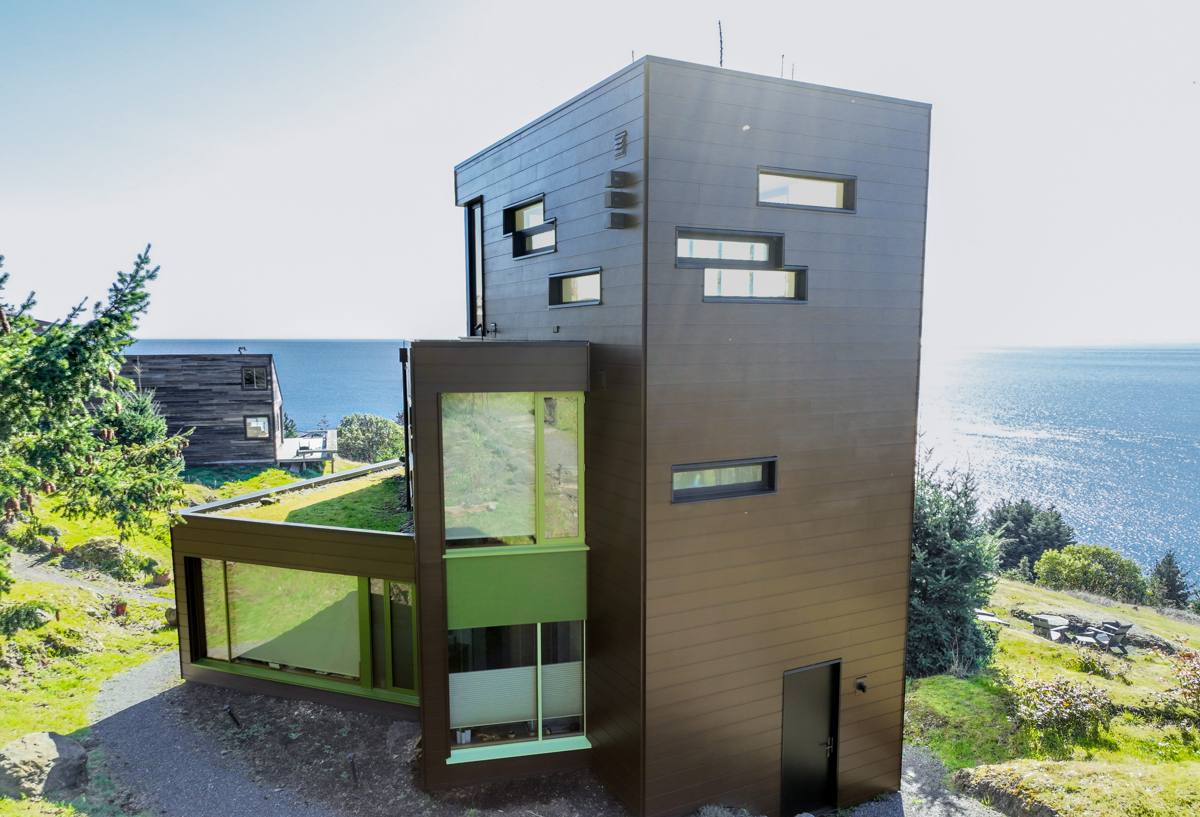
Whatcom County's marine west coast climate isn't dramatic — it's persistent, and persistence is what wears down a poorly built window opening. Three factors matter most for new construction in Sehome:
- Salt air: Proximity to Bellingham Bay means airborne salt reaches hardware, fasteners, and exposed metal faster than it would inland. Untreated or low-grade fasteners and flashing corrode years ahead of schedule.
- Driving rain: Storms off the Salish Sea regularly push rain sideways, not straight down. A window installed to shed vertical rain but not wind-driven rain will eventually leak at the sill or jambs, especially on west- and south-facing walls that catch the weather.
- A long moss and moisture season: Mild, wet weather runs most of the year here. Any spot where water can sit against wood trim, sill flashing, or sealant — rather than drain away — becomes a place for moss, algae, and eventual rot to take hold.
None of this is exotic engineering. It's about disciplined, correct sequencing during the rough-in — the part of the job nobody sees once siding and trim go on.
Rough Opening and Flashing: The Part That Determines Whether It Leaks
On a new build, the window itself is rarely the weak point — the opening around it is. We treat this stage as the most important part of the whole install.
Sequencing matters more than product
Water has to be directed out of the wall assembly, not just blocked at the surface. That means a specific order of operations: sill pan flashing first (sloped to drain outward, not just laid flat), then the window set into the pan, then jamb flashing that laps over the sill flashing, then head flashing that laps over the jambs and integrates with the weather-resistant barrier (WRB) above it. Every layer has to shingle over the one below it, the same way roofing shingles overlap — reversed order invites water behind the wall.
Sill pans aren't optional in this climate
Some builders skip a true sloped sill pan and rely on sealant alone. In a climate with this much sustained rain, sealant is a backup, not a strategy — it degrades with UV and temperature cycling and eventually fails silently behind the trim. A properly formed sill pan gives water somewhere to go even after sealant ages.
Fastening and nailing fins
New-construction windows use a nailing flange (fin) fastened directly to the sheathing, which is what lets the flashing and WRB integrate cleanly over the frame — this is the main thing that separates a true new-construction install from a retrofit "pocket" replacement. Fastener spacing, type, and placement affect both structural performance and how well the flange seals against wind-driven rain.
Choosing Frame Materials and Glass for Sehome Conditions
There's no single "correct" window product — the right choice depends on exposure, budget, and how the home is finished. Here's how the common frame options compare for a coastal Whatcom County build:
| Frame Material | Salt Air / Moisture Behavior | Maintenance | Typical Cost Factor |
|---|---|---|---|
| Vinyl | Good — won't corrode or rot; UV-stable finishes hold up well | Low — occasional cleaning | Lowest to mid-range |
| Fiberglass | Very good — dimensionally stable in wet/dry cycling, resists warping | Low | Mid to upper-mid |
| Wood-clad (metal or fiberglass exterior) | Good on the exterior face; interior wood needs protection from condensation | Moderate — interior finish maintenance | Higher |
| Solid wood | Requires diligent maintenance in this climate; exposed exterior wood is the most vulnerable to our wet season | High | Highest |
For most new builds in Sehome, we steer clients toward vinyl or fiberglass on exposed elevations because they shrug off the wet-dry cycling and salt exposure with the least upkeep. Wood-clad units still make sense where the interior look matters and the exterior cladding is protected under generous overhangs. We're honest about the trade-off with solid wood exteriors here: they can look great, but they demand a maintenance commitment most homeowners underestimate in a climate this wet.
Glass and gas fill
Double-pane, Low-E glass with argon fill is the baseline we recommend for Sehome new construction — it meets Washington's energy code requirements and performs well against our mild-but-cold winter nights. On north-facing walls or exposed upper stories that take the brunt of storms, upgrading to a higher-performance Low-E coating or triple-pane glass can reduce condensation risk and improve comfort near the glass, though it's not always necessary for every elevation.
Our New-Construction Window Installation Process
- Rough opening check: We verify the opening is square, plumb, and sized correctly before any window arrives on site — catching framing errors now is far cheaper than after the windows are ordered.
- Sill pan flashing: Sloped, sealed, and integrated with the WRB before the window ever touches the opening.
- Window set and fastened: Set into the pan, shimmed and squared, fastened per the manufacturer's schedule.
- Jamb and head flashing: Installed in the correct shingled order, tied into the house wrap so water sheds outward at every layer.
- Air seal and insulate: Gaps between frame and rough opening are sealed and insulated — not stuffed — to control both air leakage and condensation risk.
- Final inspection: Operation, seal, and flashing lap are checked before siding and trim close the opening up for good.
Energy Code and Permitting in Whatcom County
New windows on new construction in Bellingham and Whatcom County are subject to Washington's state energy code, which sets minimum U-factor and solar heat gain requirements based on the home's overall energy path. On a new build, window selection is usually part of the broader permit and energy compliance package your builder or designer submits — we coordinate window specs so they meet code without over-spending on performance the project doesn't need. If you're building an ADU or infill home on a smaller Sehome lot, it's worth confirming window specs early, since egress and setback requirements can affect which openings work where.
Mistakes We See Corrected on New Builds
- Sealant used as the primary water barrier instead of proper flashing sequencing
- Flashing installed in the wrong order (head flashing under the WRB instead of over the jamb flashing)
- Rough openings cut oversized "for wiggle room," leaving gaps too wide to insulate or seal properly
- Standard fasteners used where corrosion-resistant hardware is needed near the bay-facing side of a build
- Windows ordered before final framing dimensions are confirmed, forcing field modifications that compromise the opening
Why It Matters to Hire a Crew That Already Works in Sehome
New-construction window installation is a sequencing job — the order matters as much as the materials. A crew that regularly works Sehome and greater Bellingham knows how the neighborhood's mix of lot orientations, tree cover, and exposure to weather off the bay affects which elevations need extra attention, and has already worked through the local permitting process with the county and city. That familiarity shows up in fewer surprises during framing inspections and fewer callbacks after the home is finished and living through its first wet season.
Before you hire anyone for a new-construction window install, ask:
- Do you install a true sloped sill pan on every opening, or rely on sealant alone?
- Can you walk me through your flashing sequence before siding goes on?
- Are you licensed and bonded to work in Washington, and can you provide proof?
- How do you handle fastener and hardware selection for bay-adjacent exposure?
- Will someone inspect the flashing before it's covered by siding, and can I see it before it's closed up?
What to Expect After Move-In
A correctly installed new-construction window shouldn't need attention for years beyond normal cleaning and occasional hardware lubrication. In this climate, it's worth a seasonal habit of checking exterior sills and trim for early moss growth or trapped debris, since catching it early is a five-minute fix rather than a maintenance project. If you ever notice staining below a window, soft trim, or a draft that wasn't there before, that's worth a look sooner rather than later — those are usually flashing issues, not glass issues, and they're far easier to correct while still small.
If you're planning new construction, an addition, or an ADU in Sehome and want windows installed the way this climate actually requires, we're happy to walk the plans and give you a straightforward, no-pressure estimate — just fill out the form below.