 Bellingham Exterior
 New Roof Installation in Puget: Built for Bellingham's Coastal Climate
Puget is one of the residential pockets in and around Bellingham where homes sit close enough to the water and the marine weather system that moves through Whatcom County to take a real, sustained beating from it year after year. A roof here isn't just shedding the occasional storm — it's living under salt-tinged air, rain that regularly comes in sideways instead of straight down, and a moss season that can run for most of the calendar year on shaded or north-facing slopes. When a roof in this kind of setting is nearing the end of its life, patched one too many times, or was installed years ago without this specific climate in mind, a full new roof installation is usually the more honest answer than another round of repairs.
This page is about that one job specifically: putting a new roof on a Puget-area home, done in a way that actually accounts for salt air, driving rain, and long moss seasons instead of following a generic install checklist written for a drier part of the country.
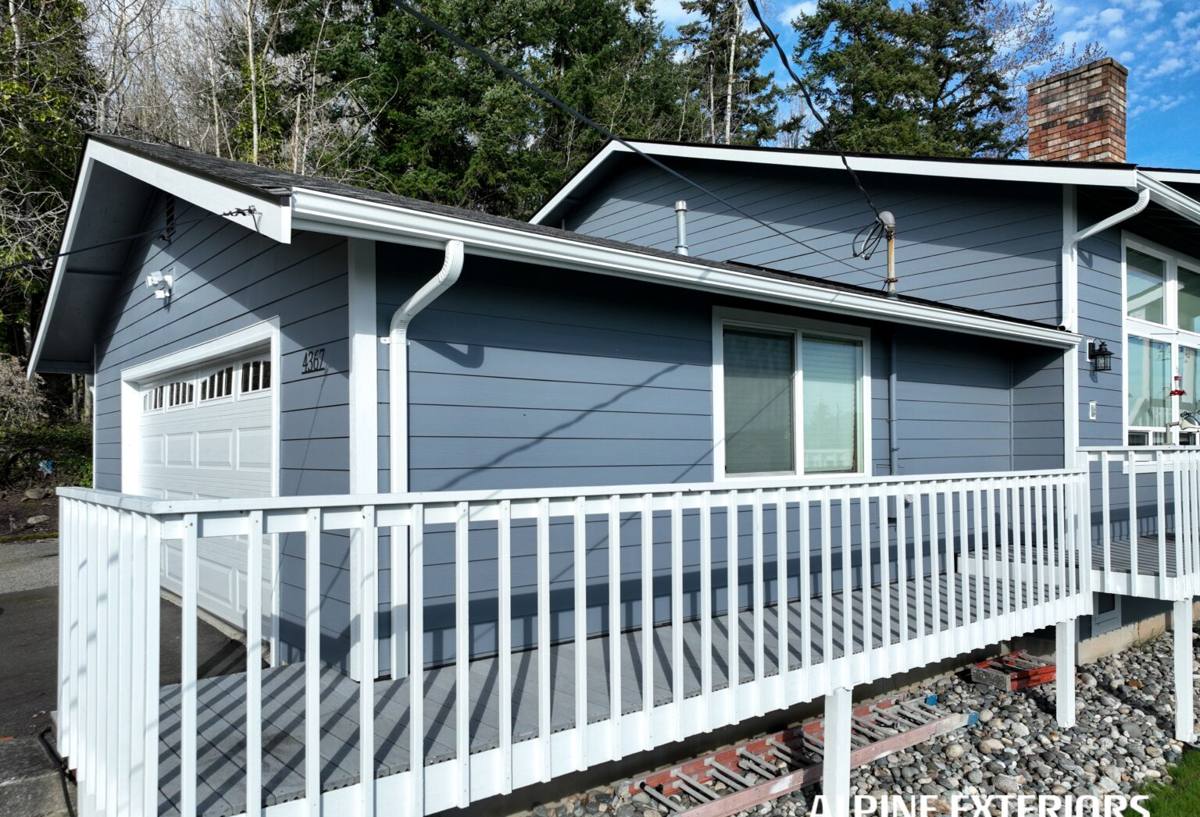
What Puget's Climate Actually Asks of a New Roof
Salt Air and Marine Exposure
Homes in Puget sit close enough to Bellingham's marine air system that fasteners, flashing, and lower-grade metal components take on corrosion risk that an inland roof simply doesn't face in the same way. It's a slow process — nothing about it looks dramatic in year one — but standard galvanized hardware and thin flashing metal can start losing integrity years before the shingles or panels above them are anywhere near due for replacement. A new roof installation here needs corrosion-resistant fasteners and properly detailed flashing built in from the start, not added later as a repair.
Wind-Driven Rain
Rain in this part of Whatcom County rarely just falls straight down. Wind pushes it sideways into valleys, around chimneys and vent penetrations, and up under shingle tabs and lap seams in a way that a roof designed only for vertical rainfall isn't built to handle. This is the single biggest reason a roof that would perform fine in a calmer, drier region can still leak here — not because the material failed, but because the underlayment, flashing, and edge details weren't built for water arriving from an angle.
A Long Moss Season
Mild temperatures, tree cover, and near-constant dampness give moss and algae an unusually long growing window on Puget roofs, especially on shaded slopes and anything facing north. Moss isn't just a cosmetic problem — it holds moisture against the roofing surface, works under shingle edges as it spreads, and can lift or loosen roofing material over several wet seasons if it's never addressed. A new roof installed without moss-resistant details is often fighting the same battle again within a few years.
What a Correct New Roof Installation Actually Involves
The shingles or panels on top get all the attention, but most roof failures in this climate trace back to something underneath them that was rushed, skipped, or built to a bare minimum standard. A correct installation treats the roof as a full system, not a single layer of material.
Tear-Off and Deck Inspection
A proper new roof installation starts with a full tear-off to bare decking, not a layer installed over the old one. That's the only way to actually see the plywood or board decking underneath, and in a climate with this much sustained winter moisture, it's common to find soft or delaminated sections around valleys, chimneys, and old vent penetrations — spots where water has been finding small gaps for years without showing itself inside the attic. Any decking that's been compromised gets replaced before anything new goes down; installing new roofing over a weak deck just hides the problem under a fresh layer.
Underlayment, Flashing, and Ice-and-Water Shield
Given how much wind-driven rain a Puget roof deals with, underlayment and flashing aren't places to use the minimum code-rated product. That means a full synthetic underlayment rather than a thin, minimal option, self-adhered ice-and-water shield at eaves, valleys, and every penetration, and flashing that's properly lapped and sealed at every valley, chimney, vent pipe, and roof-to-wall transition. These details rarely add much to the overall cost of a job relative to the roofing material itself, but they're exactly what determines whether a roof stays dry through its rated lifespan or starts leaking a decade early.
Ventilation
A lot of older homes in this area were built with less attic ventilation than current practice calls for. Balanced intake and exhaust ventilation lets moisture escape from the attic space instead of condensing against the underside of the deck, which matters even more in a climate where the roof rarely gets a long, fully dry stretch to reset. Correcting inadequate ventilation during a new roof installation is one of the more overlooked ways to add real years to a roof's service life.
Put together, every new roof installation we do in Puget includes:
- Full tear-off to bare decking, with any soft or damaged sheets identified and replaced
- Corrosion-resistant fasteners and flashing suited to sustained marine air exposure
- Full synthetic underlayment, not a minimum-code product
- Self-adhered ice-and-water shield at eaves, valleys, and all penetrations
- Properly lapped and sealed flashing at every valley, chimney, vent, and wall transition
- Balanced attic ventilation, corrected where the existing setup falls short
- Moss-resistant detailing at ridges and shaded slopes where regrowth is most likely
Choosing the Right Roofing Material for a Puget Home
There's no single material that's automatically correct for every roof, and we don't default to whatever's easiest to sell. The right choice depends on your roof's pitch, how much shade it gets, your budget, and how long you're planning to stay in the home. What matters is understanding the real trade-offs for this specific climate before you decide.
| Material | Moss & Moisture Behavior | Typical Maintenance | Realistic Lifespan Here |
|---|---|---|---|
| Architectural asphalt shingle | Solid when installed with proper ventilation; algae-resistant granule options help against moss | Periodic moss removal and gutter checks | 20-30 years |
| Standing seam metal | Sheds water and moss buildup very well due to its smooth, non-porous surface | Low; occasional fastener and sealant checks | 40-60 years |
| Cedar shake | Absorbs moisture readily; needs airflow underneath to dry fully between rain events | Higher; regular treatment and moss control | 20-30 years with consistent upkeep |
| Composite/synthetic shingle | Resists moisture absorption well; performance varies by manufacturer and product tier | Low to moderate | 30-50 years depending on product |
For most Puget homes, an architectural shingle with algae-resistant granules is the practical middle ground between upfront cost and how well it holds up to moss. Homeowners planning to stay long-term, or with roofs that sit under heavy shade most of the day, often find the added upfront cost of metal pays for itself in the maintenance and moss control it avoids over the decades that follow.
Our New Roof Installation Process, Start to Finish
The steps themselves aren't a secret — most reputable roofers follow a similar sequence. What separates a good result from a bad one is how carefully each step actually gets done, particularly the parts nobody sees once the roof is finished.
- On-site inspection and estimate. We walk the existing roof, check the attic for ventilation and moisture signs, and give you a written estimate based on what we actually find, not a square-footage guess.
- Material selection. We walk through the realistic options for your roof's pitch, shade exposure, and budget, and explain the trade-offs honestly rather than pushing whichever product is easiest for us to sell.
- Permitting. We pull the required building permit before work starts, which also confirms any code-required ventilation or detail upgrades get built into the job rather than surfacing as a surprise later.
- Full tear-off. Old roofing comes off down to bare decking so it can actually be inspected, not covered over.
- Deck repair. Any soft, delaminated, or rotted decking is replaced before new roofing goes down.
- Underlayment, ice-and-water shield, and flashing. This is the layer that does the real work of keeping wind-driven rain out, and it gets the same attention as the visible roofing material.
- Roofing installation. Shingles, panels, or shakes go down to manufacturer spec, with fastening patterns and exposure suited to a coastal Whatcom County climate.
- Ventilation and moss-resistant details. Ridge and soffit ventilation is corrected where needed, and moss-resistant products go in on shaded slopes.
- Final walkthrough and cleanup. We walk the finished roof with you, answer questions, and make sure the property is cleared of debris and stray fasteners before we leave.
Cost Factors for a New Roof in Puget
| Factor | What It Affects | Why It Matters Here |
|---|---|---|
| Roof size and complexity | Total material and labor, priced per roofing square | Homes with multiple valleys, dormers, or roof-to-wall intersections need more flashing and detail work per square |
| Existing layers and tear-off scope | Labor time and disposal cost | A roof with two layers stacked from a prior "roof-over" takes longer to strip and produces more debris to haul |
| Decking condition | Repair cost, priced per sheet once uncovered | Years of wind-driven rain finding small gaps often leaves soft decking around valleys and penetrations that can't be quoted until tear-off is underway |
| Material choice | Upfront material cost and long-run maintenance | Moss-resistant granules or metal roofing cost more initially but reduce the maintenance burden this climate creates |
| Corrosion-resistant hardware and flashing | Fastener and flashing material cost | Standard galvanized hardware corrodes faster under sustained marine air exposure than in an inland climate |
| Ventilation upgrades | Added labor and material for intake/exhaust venting | Many older Puget-area homes need ventilation brought up to current standard to avoid trapped attic moisture |
Real numbers depend on your specific roof, which is why we inspect the property and check the attic before quoting rather than pricing off square footage alone.
Repair or Replace? Signs a Puget Roof Is Ready for a New One
Not every roofing problem in Puget calls for a full new installation, and we don't default to recommending one. A single damaged section, an isolated leak around a vent pipe, or storm damage on an otherwise sound roof is often a straightforward repair. A full new roof installation usually makes more sense when several of the following are true at once:
- The roof is at or past its material's realistic lifespan for this climate
- Moss or moisture damage is spread across multiple slopes rather than one isolated spot
- The decking has soft spots or visible sagging in more than one area
- You've already had multiple repairs in the last few years and keep finding new problems
- Granules are collecting heavily in gutters, signaling the shingles are past their functional life
- Daylight is visible through the roof deck from inside the attic
- Interior water staining is showing up near exterior walls or around chimneys
We'll tell you plainly which situation you're actually in, and explain what we found rather than steering you toward whichever option is more profitable for us.
Why a Crew That Already Works Puget Matters
A crew that installs roofs across this stretch of Bellingham and Whatcom County regularly sees how salt air, wind-driven rain, and moss actually behave on real houses over years, not just how a product performs on a spec sheet. That shows up in practical decisions on install day: which roof orientations in Puget need extra ice-and-water shield because of shade and slow drying, how much corrosion resistance a given fastener really needs this close to the water, and which flashing details are worth the extra time so you're not dealing with a callback two winters from now. Puget's mix of marine exposure and mature tree cover isn't identical to every neighborhood in Bellingham, and a crew with real hands-on experience here accounts for that instead of applying a one-size-fits-all install to every roof.
We also handle siding, windows, and decks, so if a new roof installation turns up moisture damage at a wall-to-roof transition or aging trim nearby, we can address it as part of the same conversation instead of sending you off to find a second contractor.
Get a Free, No-Pressure Roof Estimate
If your Puget home needs a new roof, or you're not sure yet whether you're looking at a repair or a full replacement, we're glad to take a look and give you a straightforward, honest read on what it actually needs. Reach out using the form below to schedule a free estimate — no pressure, no upsell script.