 Bellingham Exterior
 Roofing in York Isn't the Same Job as Roofing Inland
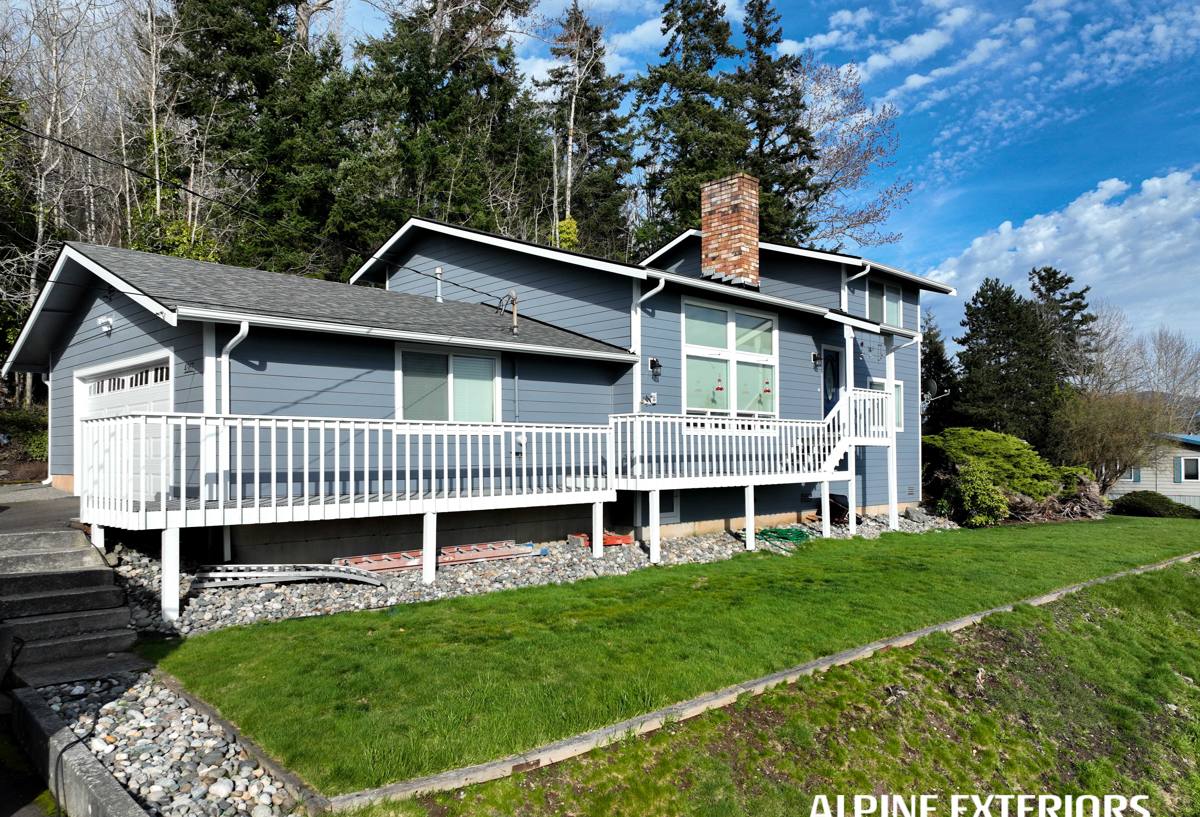
The York neighborhood sits close enough to Bellingham Bay that homes here take a different kind of weathering than roofs even a few miles inland. Salt-laden air off the water accelerates corrosion on metal fasteners, flashing, and vents. Wind-driven rain off the Sound doesn't just fall on a roof — it gets pushed sideways under shingle edges and around penetrations that would stay dry in a calmer climate. And the tree cover that makes this part of Bellingham so pleasant to live in also means more shade, more damp organic debris, and a longer moss season than you'd deal with in a drier part of Washington. A roof replacement done to a generic spec doesn't hold up here. One done with this specific exposure in mind does.
What Whatcom County's Climate Actually Does to a Roof
Understanding the failure pattern is the first step to avoiding a repeat of it.
Moss and Organic Growth
Bellingham's combination of moisture, mild temperatures, and shade gives moss a long window to establish itself — often nine or ten months a year on north-facing or heavily shaded slopes. Moss holds water directly against the roofing material, which shortens the life of asphalt shingles, promotes wood rot on cedar, and can lift shingle tabs enough for wind and rain to work underneath.
Driving Rain and Wind-Driven Moisture
Storms coming off the water frequently arrive at an angle rather than straight down. That matters because a roof detailed only for vertical rain — thin flashing laps, minimal underlayment overlap, standard nailing patterns — can still leak in a sideways storm even though it would be watertight in calmer weather.
Salt Air and Corrosion
Proximity to the bay means airborne salt settles on exposed metal — flashing, roof vents, fasteners, gutter hardware. Untreated or low-grade steel components corrode faster here than they would twenty miles inland, which is why material selection for hardware matters as much as the shingle or panel itself.
Signs a York Roof Needs Replacement, Not Another Repair
Not every roof problem calls for a full tear-off, but several signs point toward replacement being the more honest answer:
- Granule loss heavy enough that you're finding grit in gutters and downspouts every season
- Moss or algae staining that keeps returning within months of a cleaning
- Curling, cupping, or cracked shingles across multiple slopes, not just one isolated area
- Soft spots or visible sagging in the roof deck when walked
- Daylight visible through the roof deck from inside the attic
- Repeated flashing leaks around chimneys, skylights, or valleys despite past repairs
- A roof already at or past the manufacturer's expected service life for this climate
If a roof is showing one or two of these in isolation, a targeted repair may still make sense. When several show up together, patching becomes a short-term fix on a system that's failing as a whole.
What a Correct Roof Replacement Actually Involves
A roof replacement is more than swapping old shingles for new ones. Done right, it addresses everything underneath the visible surface:
Tear-Off and Deck Inspection
Full removal of the old roofing down to the deck lets us actually see the plywood or plank sheathing underneath — something no re-roof-over-existing-layers approach allows. Any rotted, delaminated, or soft decking gets replaced before anything new goes down. Skipping this step is the single most common cause of early roof failure we see on older York-area homes.
Underlayment Built for Wind-Driven Rain
Given how often storms here arrive at an angle, we don't treat underlayment as a formality. Proper overlap, ice-and-water-shield protection at eaves and valleys, and full coverage rather than minimal-code coverage give the roof a real second line of defense if wind ever forces water past the top layer.
Flashing and Penetration Detail
Chimneys, skylights, vent stacks, and valleys are where the overwhelming majority of roof leaks start — not the open field of shingles. Correctly stepped and counter-flashed details, with corrosion-resistant metal given the salt-air exposure, are what actually keep water out long-term.
Ventilation
A roof that can't breathe traps moisture in the attic, which speeds up deck rot from underneath and gives moss and mildew an assist from the inside. Balanced intake and exhaust ventilation is part of a correct replacement, not an optional add-on.
Choosing Materials for This Climate
There's no single "best" roofing material — the right choice depends on the home, the budget, and how much long-term maintenance an owner wants to take on. Here's how the common options stack up for a York-area home:
| Material | Moss/Moisture Resistance | Wind-Driven Rain Performance | Typical Lifespan Here | Maintenance Load |
|---|---|---|---|---|
| Architectural asphalt shingle | Good with proper ventilation; needs periodic moss treatment | Strong when installed with full underlayment coverage | 20–30 years | Low to moderate |
| Standing seam metal | Excellent — sheds moisture, doesn't hold organic debris | Excellent | 40–50+ years | Low, but coastal-grade fasteners are a must |
| Cedar shake | Poor without diligent upkeep — retains moisture, prone to rot and moss | Moderate, sensitive to installation quality | 20–30 years with heavy maintenance | High |
| Synthetic composite shingle | Very good — engineered to resist moisture uptake | Strong | 30–50 years | Low |
Cedar shake has real aesthetic appeal and is a traditional look for this region, but our professional standard is to be upfront about its trade-offs here: it's the most moisture- and moss-sensitive option on this list, and in a climate with our rainfall and shade patterns, it demands more frequent, more careful maintenance to reach its full lifespan. We'll still install it for homeowners who want that look and understand the upkeep — we just won't oversell it as low-maintenance, because it isn't in this climate.
Our Roof Replacement Process
- On-site assessment — we inspect the existing roof, deck condition, ventilation, and flashing details, and take real measurements rather than estimating from the ground.
- Written estimate — a clear breakdown of material, labor, and any deck repair contingencies, so there are no surprise line items mid-project.
- Material selection — we walk through the options above against your budget and how much maintenance you want to take on long-term.
- Permitting — we handle the City of Bellingham or Whatcom County permit process as required for the scope of work.
- Tear-off and deck repair — full removal, deck inspection, and replacement of any compromised sheathing.
- Underlayment, flashing, and ventilation install — the parts that determine whether the roof actually performs in our weather.
- Final roofing material installation — installed to manufacturer spec, not just to a passing inspection.
- Cleanup and walk-through — magnetic sweep for stray fasteners, full site cleanup, and a final walk-through so you know exactly what was done.
Why a Crew That Already Works in York Matters
Roofing crews that work regularly in this specific part of Bellingham build up knowledge that's hard to get any other way: which slopes in this neighborhood tend to hold moss longest based on tree cover and sun exposure, how salt exposure from the bay affects fastener and flashing choices, and what the local permitting process actually requires versus what gets assumed. That familiarity shows up in fewer surprises during the job and a roof detailed for the conditions it will actually face — not a generic install that happens to be located in Bellingham.
What Affects Roof Replacement Cost in Whatcom County
Costs vary enough by home and material that we won't quote a number without seeing the roof, but the main factors are consistent:
- Roof size and number of slopes/planes — more cuts and valleys means more labor
- Roof pitch — steep roofs require more safety equipment and time
- Current layer count — tear-off of multiple existing layers adds labor and disposal cost
- Deck condition — hidden rot found during tear-off adds material and labor
- Material choice — asphalt, metal, synthetic, and cedar carry different material and labor costs
- Access — trees, tight lot lines, or limited staging area affect crew efficiency
- Flashing and penetration count — chimneys, skylights, and multiple vents add detail work
Broadly, a straightforward asphalt shingle replacement on a moderate-size home tends to run in the lower-to-mid five figures, with metal and synthetic materials running higher and cedar varying widely based on complexity. Your actual number depends on the specifics above, which is why we assess in person rather than quoting over the phone.
Protecting Your Investment After Installation
A well-installed roof still benefits from basic upkeep in this climate. A short list worth keeping to:
- Have moss growth treated or removed before it establishes on shaded slopes, rather than after
- Keep gutters and downspouts clear so water doesn't back up under the roof edge
- Trim back overhanging branches to reduce shade and debris buildup
- Schedule a visual inspection after major windstorms, not just on a fixed annual schedule
- Address flashing or sealant issues as soon as they're spotted — small leaks are cheap; water damage isn't
If your York-area roof is showing wear, or you just want an honest read on whether repair or replacement makes sense, we're glad to come take a look. The estimate is free, there's no pressure attached to it, and you'll get a straight answer either way — just fill out the form below to get started.