 Bellingham Exterior
 Decks in Sehome Take a Different Kind of Beating
Sehome sits close enough to Bellingham Bay that salt-laden air reaches fasteners, flashing, and exposed end grain year-round, while the neighborhood's tree cover and sloped, shaded lots mean a lot of decks never fully dry out between storms. Add in a Pacific Northwest wet season that can stretch from October well into spring, and you've got the three things that age a deck faster than anything else: standing moisture, corrosion, and moss. None of that means a deck is doomed — it means repair work here has to be done with those specific stresses in mind, not treated like a generic patch job.
We've worked on enough decks in this part of Bellingham to know the difference between a board that needs replacing and a board that's telling you the framing underneath is the real problem. That distinction is where most of the value in a proper repair comes from.
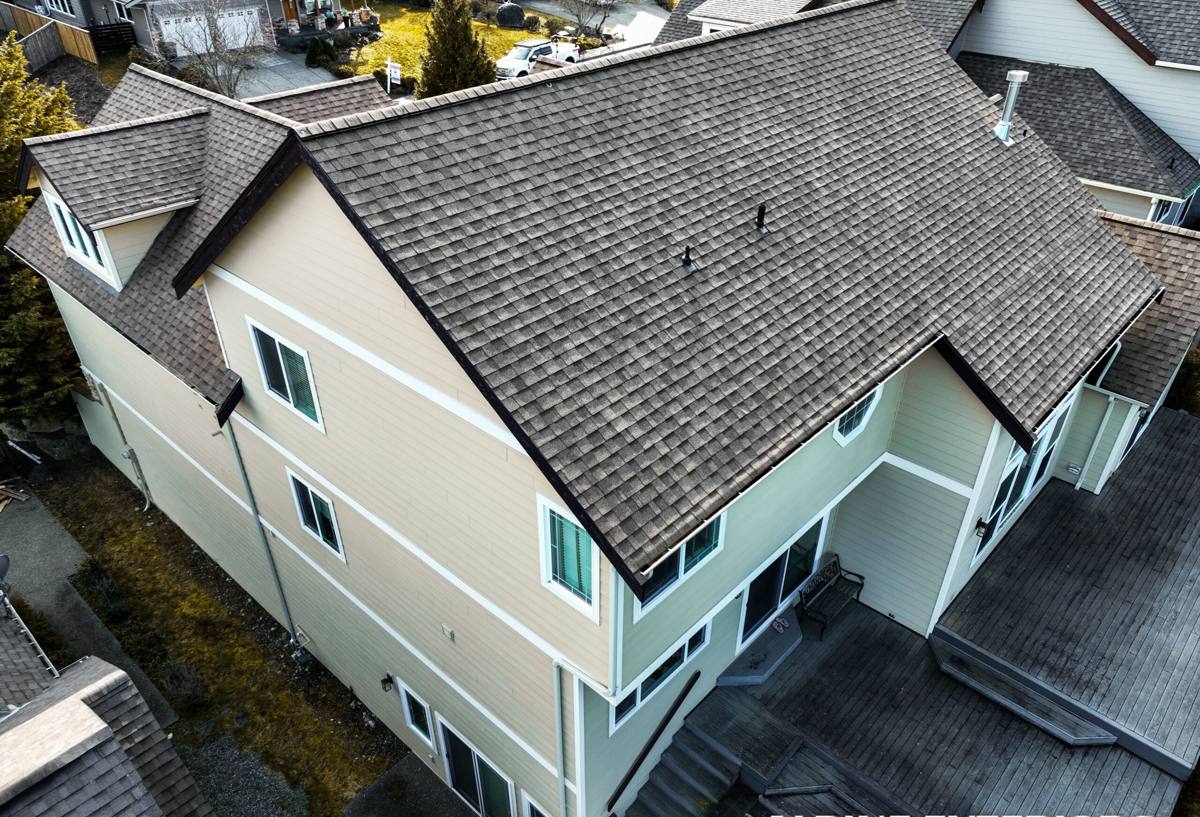
Signs a Sehome Deck Needs Repair
Most deck problems don't show up as one dramatic failure — they show up as a handful of small warning signs that get ignored until they're not small anymore. Walk your deck and check for these:
- Soft or spongy spots underfoot, especially near the house, stairs, or rail posts
- Boards that stay dark, damp, or mossy longer than the rest of the deck after a dry spell
- Gaps or rust streaks around fasteners and joist hangers
- Rail posts that wiggle when pushed, or a top rail that flexes more than it used to
- A ledger board (where the deck meets the house) with a visible gap, water staining, or peeling flashing
- Stair stringers that feel bouncy or uneven step to step
- Any wood that's gone gray, splintery, or punky (soft enough to push a screwdriver in without much force)
Any one of these on its own might be minor. Two or three together, especially around the ledger or stairs, usually means it's time to get someone to look underneath, not just at the surface boards.
What a Correct Deck Repair Actually Involves
Start Below the Decking, Not On It
A repair that only replaces visible boards without checking the framing underneath is a cosmetic fix, not a structural one. Every repair we do starts with an inspection of the ledger board, joists, beams, posts, and footings — the parts you don't see but that carry the actual weight. In a climate like ours, rot at the ledger connection or a compromised footing is far more common than most homeowners expect, because it's the part of the deck that stays wettest the longest.
Match Materials to the Load and the Location
Not every repair calls for the same fix. A single cracked board near the rail edge is a different job than a joist that's lost structural integrity from years of trapped moisture. We replace what's failed with material rated for the job it's doing — structural lumber where structural lumber belongs, proper flashing where water meets the house, and fasteners that won't corrode out from under the repair in five years.
Fix the Cause, Not Just the Symptom
If a deck is rotting because water is pooling against the house due to missing or failed flashing, replacing the boards without fixing the flashing just buys you a few more years before the same spot fails again. Good repair work asks why the damage happened in the first place — poor drainage, missing ventilation underneath, undersized fasteners, or ground contact — and addresses that, not just the visible symptom.
Common Deck Problems We See Around Sehome
| Issue | Likely Cause Here | What the Fix Involves |
|---|---|---|
| Rot at the ledger board | Missing or failed flashing where deck meets house, trapped moisture | Remove affected framing, install proper flashing, rebuild the connection |
| Persistent moss and dark staining | Shaded, tree-covered lots that stay damp longer between rains | Clean and treat boards, improve airflow/drainage, replace saturated sections |
| Loose or wobbly rail posts | Fastener corrosion or a post base that's been wicking moisture | Reset or sister the post, replace corroded hardware, reinforce the base connection |
| Rusted or failing fasteners | Salt air combined with standard (non-coated) hardware | Replace with corrosion-resistant fasteners rated for coastal exposure |
| Soft joists or beams | Long-term moisture trapped underneath the deck with poor ventilation | Sister or replace framing members, address the underlying moisture path |
Repair or Replace? How We Help You Decide
Not every deck with problems needs to come out. The honest answer depends on how much of the structure is still sound, how old the deck is, and whether the damage is isolated or spread across the framing.
| Factor | Leans Toward Repair | Leans Toward Replacement |
|---|---|---|
| Extent of damage | Isolated to a few boards, posts, or one section | Rot or corrosion found throughout the framing |
| Age of the deck | Under 15-20 years, built to a reasonable structural standard | Original construction is old, undersized, or was never permitted correctly |
| Footings and framing | Solid, dry, no movement | Footings shifted, cracked, or undersized for current code |
| Cause of the damage | Fixable (bad flashing, wrong fasteners, one wet spot) | Systemic (deck was never properly ventilated or built on poor drainage) |
We'll tell you honestly which category your deck falls into. There's no benefit to us talking a homeowner into a full replacement when a targeted repair will hold up fine — and there's no benefit to patching a deck that's going to need the same work again in two years.
How Our Repair Process Works
- Inspection. We check decking, framing, ledger connection, posts, footings, and stairs — not just what's visible from the top.
- Written scope. You get a clear explanation of what's failing, why, and what it will take to fix it — repair or replace, no pressure either direction.
- Structural work first. Any framing, ledger, or footing issues get addressed before new decking goes down. Cosmetic fixes over a bad structure aren't worth doing.
- Decking and rail repair. Damaged boards, rail sections, and hardware get replaced with materials suited to our climate.
- Final check. We walk the deck with you, point out what was done, and flag anything worth watching going forward.
Materials: Why We Choose What We Choose
For structural framing, we use lumber rated for exterior structural use, and we're deliberate about fasteners — in a coastal, high-moisture area like Bellingham, standard hardware corrodes faster than it should, so we use fasteners and connectors rated for that exposure even when it costs a little more upfront.
For decking surfaces, both quality wood and composite materials have a place, and the right choice depends on the deck, the budget, and how much upkeep the homeowner wants going forward. Wood decking is more affordable and repairable board by board, but it needs periodic cleaning and sealing to hold up to our moss season. Composite decking costs more initially and resists moisture and moss buildup better, but it has its own installation requirements — proper spacing and ventilation matter more with composite, not less, because trapped moisture underneath still causes problems even if the boards themselves won't rot. We size the recommendation to the deck in front of us, not to whichever material is easiest to sell.
Why Hire a Crew That Already Works in Sehome
Deck repair here isn't identical to deck repair in a drier climate, and it isn't identical to deck repair on a flat, sun-exposed lot either. Sehome's mix of tree cover, sloped yards, and proximity to the bay means moisture management — drainage, ventilation, flashing, fastener selection — matters more here than in most places. A crew that regularly works this neighborhood already knows what tends to fail first on these lots and checks for it without being told.
Local experience also means straightforward answers about scope of work and what typically requires a permit through the City of Bellingham versus what's routine maintenance-level repair — something worth clarifying before work starts, not after.
Keeping a Repaired Deck in Good Shape
A repair is only as good as the maintenance that follows it, especially through a Whatcom County wet season. A few habits go a long way:
- Sweep leaves and debris off the deck regularly, especially in fall — trapped organic matter holds moisture and feeds moss
- Clean and re-seal wood decking on a regular schedule rather than waiting until it looks gray
- Keep gutters and downspouts clear so water isn't dumping onto or under the deck
- Check rail connections and stair fasteners once a year for movement or corrosion
- Make sure vegetation isn't growing up against the ledger board or framing underneath
Catching small issues early is almost always cheaper and less disruptive than waiting for a small problem to become a structural one.
If your deck in Sehome has soft spots, moss that won't quit, a wobbly rail, or you're just not sure whether it needs repair or replacement, we're happy to take a look. Estimates are free, honest, and come with no pressure to do more work than the deck actually needs.